Adhyaya 128
Droṇa’s Ācārya-Dakṣiṇā: Capture of Drupada and Division of Pāñcāla (द्रोण-आचार्यदक्षिणा)
Upa-parva: Drona–Drupada Saṃbandha (Ācārya-Dakṣiṇā Episode)
Vaiśaṃpāyana recounts how Droṇa convenes his students and demands an ācārya-dakṣiṇā: the capture of Pāñcāla’s king Drupada during a strategic engagement. The disciples swiftly mobilize in chariots, enter Pāñcāla territory, subdue resistance, and seize Drupada with his ministers, delivering him to Droṇa. Droṇa addresses Drupada by reframing their former friendship: a king cannot properly befriend one without kingship, so Droṇa claims a political basis for renewed equality. He releases Drupada, grants him half the kingdom, and retains the northern portion, explicitly locating the division along the Bhāgīrathī (Gaṅgā). Drupada, though outwardly conciliatory, remains internally preoccupied with the humiliation and later seeks means (including the desire for progeny) to counter Droṇa’s advantage. The chapter closes by noting Droṇa’s acquisition of Ahicchatra and its territory as the concrete outcome of the settlement.
Chapter Arc: पाण्डु के दाह-संस्कार के उपरान्त कौरवों और सहस्रों ब्राह्मणों का सत्कार—दान, रत्न, और ग्राम-दान—से हस्तिनापुर में शोक का आवरण एक औपचारिक धर्म-कर्म में बदल जाता है। → शौच-निवृत्ति और वेदोक्त संस्कारों के बाद पाण्डव पितृ-गृह में भोग-वैभव के बीच बढ़ते हैं, पर भीतर-भीतर दुर्योधन का पाप-निश्चय पकता है—वह भीम पर निरन्तर दृष्टि रखता है और उसे बलपूर्वक बाँधकर वश में करने का संकल्प करता है। → दुर्योधन की कुटिल योजना के बीच भीम का अद्भुत प्रसंग उभरता है—नागलोक में वह एक ही श्वास में कुण्ड-कुण्ड का रस पी जाता है और नागदत्त दिव्य शय्या पर निर्भय विश्राम करता है; यह दृश्य उसके अतिमानवीय बल और भाग्य-रक्षा को चरम पर ले आता है। → भीम की शक्ति-प्राप्ति और नागों के संस्पर्श से उसका जीवन-रक्षण सुनिश्चित होता है; पाण्डव बाह्यतः संस्कार-पालन और गृहस्थ-समृद्धि में स्थित दिखते हैं, पर दुर्योधन की शत्रुता अब छिपी नहीं रहती—वह अवसर की प्रतीक्षा में है। → भीम के जीवित लौट आने और असाधारण सामर्थ्य के बाद दुर्योधन की अगली चाल क्या होगी—और यह वैर किस रूप में फूटेगा?
Shlokas
Verse 1
इस प्रकार श्रीमह्ाभारत आदिपरव्वके अन्तर्गत सम्भवपर्वमें पाण्डुके दाहसंस्कारसे सम्बन्ध रखनेवाला एक सौ छब्बीसवाँ अध्याय पूरा हुआ ॥/ १२६ ॥। (दाक्षिणात्य अधिक पाठका १ श्लोक मिलाकर कुल ३३ श्लोक हैं) सप्तविशर्त्याधिकशततमो< ध्याय: पाण्डवों तथा धृतराष्ट्रपुत्रोंकी बालक्रीड़ा, दुर्योधनका भीमसेनको विष खिलाना तथा गंगामें ढकेलना और भीमका नागलोकमें पहुँचकर आठ कुण्डोंके दिव्य रसका पान करना वैशम्पायन उवाच ततः कुन्ती च राजा च भीष्मश्न सह बन्धुभि: । ददुः श्राद्ध तदा पाण्डो: स्वधामृतमयं तदा,वैशम्पायनजी कहते हैं--राजन्! तदनन्तर कुन्ती, राजा धृतराष्ट्र तथा बन्धुओंसहित भीष्मजीने पाण्डुके लिये उस समय अमृतस्वरूप स्वधामय श्राद्धदान किया
Vaiśampāyana said: Then Kuntī, King Dhṛtarāṣṭra, and Bhīṣma—together with their kinsmen—performed the śrāddha rites for Pāṇḍu, offering the ancestral oblations that are spoken of as ‘svadhā’, and thus honoring him with a rite regarded as life-giving and sanctifying.
Verse 2
कुरुंशश्च॒ विप्रमुख्यांश्व भोजयित्वा सहस्रश: । रत्नौघान् विप्रमुख्येभ्यो दत्त्वा ग्रामवरांस्तथा,उन्होंने समस्त कौरवों तथा सहसौ्रों मुख्य-मुख्य ब्राह्मगोंको भोजन कराकर उन्हें रत्नोंके ढेर तथा उत्तम-उत्तम गाँव दिये
Vaiśampāyana said: Having fed the Kurus and thousands of foremost brāhmaṇas, he then bestowed upon those eminent brāhmaṇas heaps of jewels and likewise excellent villages.
Verse 3
कृतशौचांस्ततस्तांस्तु पाण्डवान् भरतर्षभान् । आदाय विविशु: सर्वे पुरं वारणसाह्नयम्,मरणाशौचसे निवृत्त होकर भरतवंशशिरोमणि पाण्डवोंने जब शुद्धिका स्नान कर लिया, तब उन्हें साथ लेकर सबने हस्तिनापुर नगरमें प्रवेश किया
Vaiśampāyana said: After the Pāṇḍavas—foremost among the Bharatas—had completed the prescribed rites of purification (śauca) and bathed, all the elders took them with them and entered the city called Vāraṇasāhvaya (Hastināpura).
Verse 4
सततं स्मानुशोचन्तस्तमेव भरतर्षभम् | पौरजानपदा: सर्वे मृतं स््वमिव बान्धवम्,नगर और जनपदके सभी लोग मानो कोई अपना ही भाई-बन्धु मर गया हो, इस प्रकार उन भरतकुलतिलक पाण्डुके लिये निरन्तर शोकमग्न हो गये
All the townspeople and the folk of the countryside, grieving without cease, mourned Pāṇḍu—that bull among the Bharatas—as though one of their own kinsmen had died.
Verse 5
भ्राद्धावसाने तु तदा दृष्टवा तं दु:खितं जनम् । सम्मूढां दुःखशोकार्ता व्यासो मातरमब्रवीत्,श्राद्धकी समाप्तिपर सब लोगोंको दुःखी देखकर व्यासजीने दुःख-शोकसे आतुर एवं मोहमें पड़ी हुई माता सत्यवतीसे कहा--
When the śrāddha rites had concluded, Vyāsa, seeing the people overwhelmed with grief, addressed his mother Satyavatī, who herself was distraught—stricken by sorrow and confusion.
Verse 6
अतिक्रान्तसुखा: काला: पर्युपस्थितदारुणा: । श्रः श्र: पापिष्ठदिवसा: पृथिवी गतयौवना,“माँ! अब सुखके दिन बीत गये। बड़ा भयंकर समय उपस्थित होनेवाला है। उत्तरोत्तर बुरे दिन आ रहे हैं। पृथ्वीकी जवानी चली गयी
Vaiśampāyana said: “Mother, the days of happiness have passed. A dreadful time is now drawing near. Day after day, ever more sinful and inauspicious days are arriving. The earth has lost her youth—her former vigor and prosperity are fading.”
Verse 7
बहुमायासमाकीर्णो नानादोषसमाकुल: । लुप्तधर्मक्रियाचारो घोर: कालो भविष्यति,“अब ऐसा भयंकर समय आयेगा, जिसमें सब ओर छल-कपट और मायाका बोलबाला होगा। संसारमें अनेक प्रकारके दोष प्रकट होंगे और धर्म-कर्म तथा सदाचारका लोप हो जायगा”
Vaiśampāyana said: “A dreadful age will come—pervaded everywhere by deception and illusion, crowded with many kinds of faults. The practices of dharma—ritual duty, right conduct, and ethical discipline—will fade away, and society will lose its moral bearings.”
Verse 8
कुरूणामनयाच्चापि पृथिवी न भविष्यति । गच्छ त्वं योगमास्थाय युक्ता वस तपोवने,“दुर्योधन आदि कौरवोंके अन्यायसे सारी पृथ्वी वीरोंसे शून्य हो जायगी; अतः तुम योगका आश्रय लेकर यहाँसे चली जाओ और योगपरायण हो तपोवनमें निवास करो
Vaiśampāyana said: “Because of the Kurus’ injustice, the earth will no longer remain as it should—indeed it will be emptied of heroes. Therefore, depart from here taking refuge in yoga; live disciplined and steadfast in a forest of austerities.”
Verse 9
मा द्राक्षीस्त्वं कुलस्यास्य घोरं संक्षयमात्मन: । तथेति समनुज्ञाय सा प्रविश्याब्रवीत् स्नुषाम्,“तुम अपनी आँखोंसे इस कुलका भयंकर संहार न देखो।” तब व्यासजीसे “तथास्तु/ कहकर सत्यवती अंदर गयी और अपनी पुत्रवधूसे बोली--
Vaiśampāyana said: “Do not behold with your own eyes the dreadful destruction of this lineage.” Having granted assent with “So be it,” she went inside and spoke to her daughter-in-law—thus acting to spare her family from the moral and emotional burden of witnessing an impending catastrophe.
Verse 10
अम्बिके तव पौत्रस्य दुर्नयात् किल भारता: । सानुबन्धा विनडृशक्ष्यन्ति पौराश्चैवेति नः श्रुतम्,“अम्बिके! तुम्हारे पौत्रके अन्यायसे भरतवंशी वीर तथा इस नगरके लोग सगे- सम्बन्धियोंसहित नष्ट हो जायँगे--ऐसी बात मैंने सुनी है
Vaiśampāyana said: “O Ambikā, it is said that because of your grandson’s wrongful conduct the Bhāratas will be ruined—along with their kinsmen and dependents—and the citizens of this city as well. This is what I have heard.”
Verse 11
तत् कौसल्यामिमामार्ता पुत्रशोकाभिपीडिताम् | वनमादाय भद्रं ते गच्छामि यदि मन्यसे,“अतः तुम्हारी राय हो, तो पुत्रशोकसे पीड़ित इस दुःखिनी अम्बालिकाको साथ ले मैं वनमें चली जाऊँ। तुम्हारा कल्याण हो”
Vaiśampāyana said: “If you approve, then taking with me this Kausalyā—stricken with grief and crushed by sorrow for her son—I shall go to the forest. May welfare be yours.”
Verse 12
तथेत्युक्ता त्वम्बिकया भीष्ममामन्त्रय सुव्रता । वन॑ ययौ सत्यवती स्नुषाभ्यां सह भारत,अम्बिका भी “तथास्तु” कहकर साथ जानेको तैयार हो गयी। जनमेजय! फिर उत्तम व्रतका पालन करनेवाली सत्यवती भीष्मजीसे पूछकर अपनी दोनों पतोहुओंको साथ ले वनको चली गयी
Vaiśampāyana said: Thus addressed by Ambikā, Satyavatī—steadfast in her vows—took leave of Bhīṣma and departed for the forest, accompanied by her two daughters-in-law, O Bhārata.
Verse 13
ता: सुघोरं तपस्तप्त्वा देव्यो भरतसत्तम । देहं त्यक्त्वा महाराज गतिमिष्टां ययुस्तदा,भरतवंशशिरोमणि महाराज जनमेजय! तब वे देवियाँ वनमें अत्यन्त घोर तपस्या करके शरीर त्यागकर अभीष्ट गतिको प्राप्त हो गयीं
Vaiśampāyana said: “O best of the Bharatas, those divine women, having performed exceedingly severe austerities, then abandoned their bodies and attained the desired state of existence. O great king!”
Verse 14
वैशम्पायन उवाच अथाप्तवन्तो वेदोक्तान् संस्कारान् पाण्डवास्तदा | संव्यवर्धन्त भोगांस्ते भुज्जाना: पितृवेश्मनि,वैशम्पायनजी कहते हैं--राजन्! उस समय पाण्डवोंके वेदोक्त (समावर्तन आदि) संस्कार हुए। वे पिताके घरमें नाना प्रकारके भोग भोगते हुए पलने और पुष्ट होने लगे
Vaiśampāyana said: “Then, at that time, the Pāṇḍavas duly underwent the Veda-prescribed rites of passage (such as the completion-of-studentship and related sacraments). Living in their father’s house, they enjoyed various lawful comforts and, while partaking of those enjoyments, they grew up and flourished in strength and well-being.”
Verse 15
धार्तराष्ट्रश्न सहिता: क्रीडन्तो मुदिता: सुखम् । बालक्रीडासु सर्वासु विशिष्टास्तेजसा भवन्,धृतराष्ट्रके पुत्रोंके साथ सुखपूर्वक खेलते हुए वे सदा प्रसन्न रहते थे। सब प्रकारकी बालक्रीड़ाओंमें अपने तेजसे वे बढ़-चढ़कर सिद्ध होते थे
Vaiśampāyana said: “Along with the sons of Dhṛtarāṣṭra, they played happily and remained continually cheerful. In every kind of childhood game, they proved outstanding, surpassing the others by the force of their natural brilliance and vigor.”
Verse 16
जवे लक्ष्याभिहरणे भोज्ये पांसुविकर्षणे | धार्तराष्ट्रान भीमसेन: सर्वान् स परिमर्दति,दौड़नेमें, दूर रखी हुई किसी प्रत्यक्ष वस्तुको सबसे पहले पहुँचकर उठा लेनेमें, खान- पानमें तथा धूल उछालनेके खेलमें भीमसेन धृतराष्ट्रके सभी पुत्रोंका मानमर्दन कर डालते थे
“In speed of running, in reaching first and fetching an object set far away as a mark, in eating and drinking, and even in games of dragging and kicking up dust, Bhīmasena would outdo and humble all the sons of Dhṛtarāṣṭra.”
Verse 17
हर्षात् प्रक्रीडमानांस्तान् गृह राजन् निलीयते । शिर:सु विनिगृहौतान् योधयामास पाण्डवै:,राजन! हर्षसे खेल-कूदमें लगे हुए उन कौरवोंको पकड़कर भीमसेन कहीं छिप जाते थे। कभी उनके सिर पकड़कर पाण्डवोंसे लड़ा देते थे। धृतराष्ट्रके एक सौ एक कुमार बड़े बलवान थे; किंतु भीमसेन बिना अधिक कष्ट उठाये अकेले ही उन सबको अपने वशमें कर लेते थे। बलवान् भीम उनके बाल पकड़कर बलपूर्वक उन्हें एक-दूसरेसे टकरा देते और उनके चीखने-चिल्लानेपर भी उन्हें धरतीपर घसीटते रहते थे। उस समय उनके घुटने, मस्तक और कंधे छिल जाया करते थे
Vaiśampāyana said: “O king, when those Kaurava boys were joyfully engaged in play, Bhīmasena would catch them and hide within the house. Seizing them by the head, he would make them grapple with the Pāṇḍavas.”
Verse 18
शतमेकोत्तरं तेषां कुमाराणां महौजसाम् | एक एव निगृह्नाति नातिकृच्छाद् वृकोदर:,राजन! हर्षसे खेल-कूदमें लगे हुए उन कौरवोंको पकड़कर भीमसेन कहीं छिप जाते थे। कभी उनके सिर पकड़कर पाण्डवोंसे लड़ा देते थे। धृतराष्ट्रके एक सौ एक कुमार बड़े बलवान थे; किंतु भीमसेन बिना अधिक कष्ट उठाये अकेले ही उन सबको अपने वशमें कर लेते थे। बलवान् भीम उनके बाल पकड़कर बलपूर्वक उन्हें एक-दूसरेसे टकरा देते और उनके चीखने-चिल्लानेपर भी उन्हें धरतीपर घसीटते रहते थे। उस समय उनके घुटने, मस्तक और कंधे छिल जाया करते थे
Vaiśaṃpāyana said: Those princes—one hundred and one in number—were of great might; yet Vṛkodara (Bhīma) alone subdued them all, and that too without much effort. The episode reveals Bhīma’s overwhelming physical power and the imbalance it bred in the boys’ play, foreshadowing how unchecked rivalry and humiliation can harden into lasting enmity within a royal house.
Verse 19
कचेषु च निगृहौनान् विनिहत्य बलाद् बली | चकर्ष क्रोशतो भूमौ घृष्टजानुशिरोंड्सकान्,राजन! हर्षसे खेल-कूदमें लगे हुए उन कौरवोंको पकड़कर भीमसेन कहीं छिप जाते थे। कभी उनके सिर पकड़कर पाण्डवोंसे लड़ा देते थे। धृतराष्ट्रके एक सौ एक कुमार बड़े बलवान थे; किंतु भीमसेन बिना अधिक कष्ट उठाये अकेले ही उन सबको अपने वशमें कर लेते थे। बलवान् भीम उनके बाल पकड़कर बलपूर्वक उन्हें एक-दूसरेसे टकरा देते और उनके चीखने-चिल्लानेपर भी उन्हें धरतीपर घसीटते रहते थे। उस समय उनके घुटने, मस्तक और कंधे छिल जाया करते थे
Vaiśampāyana said: Mighty Bhīma, seizing them by force and overpowering them, dragged the Kaurava boys along the ground as they cried out, so that their knees, heads, and shoulders were scraped. The passage shows how overwhelming strength in childhood play turns into humiliation and injury—an early seed of resentment and moral imbalance that later hardens into open hostility between the cousins.
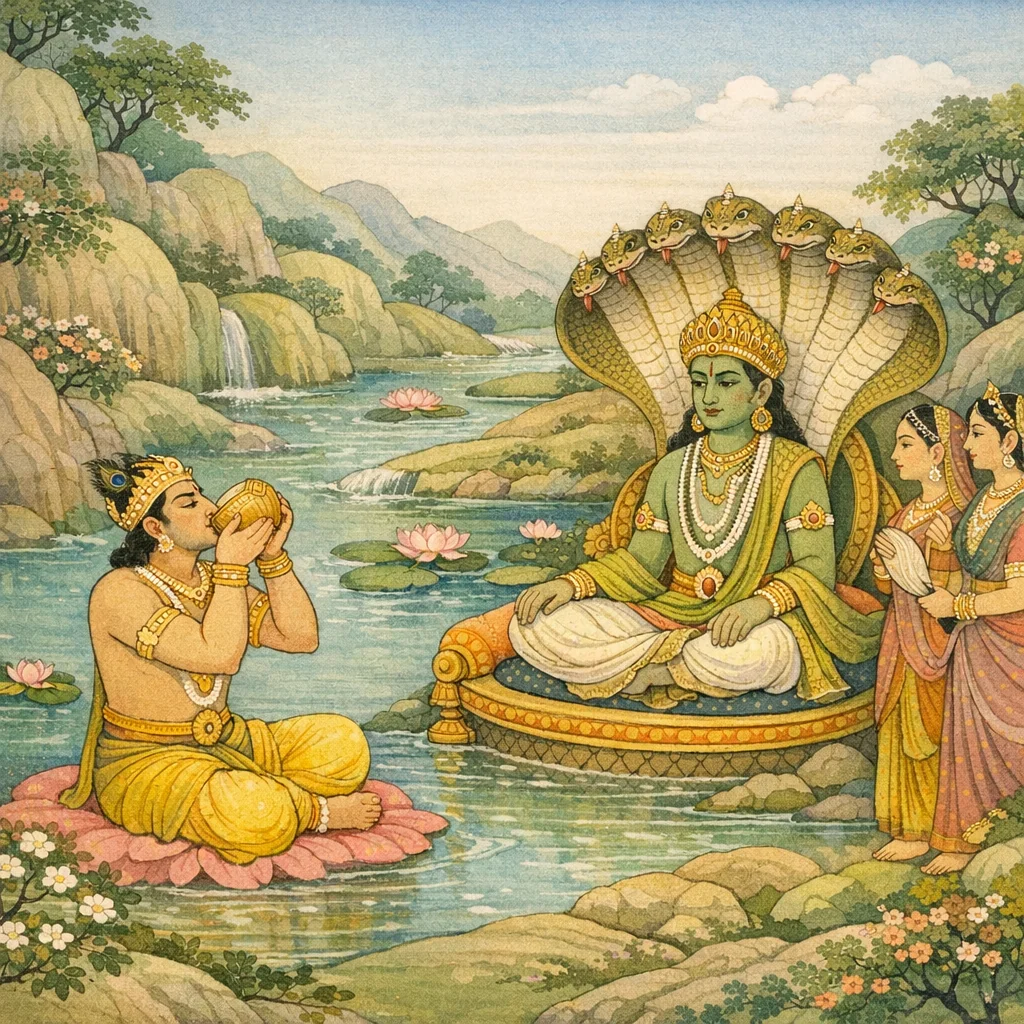
Verse 20
दश बालाज्जले क्रीडन् भुजाभ्यां परिगृहार सः । आस्ते सम सलिले मग्नो मृतकल्पान् विमुड्चति,वे जलमें क्रीड़ा करते समय अपनी दोनों भुजाओंसे धृतराष्ट्रके दस बालकोंको पकड़ लेते और देरतक पानीमें गोते लगाते रहते थे। जब वे अधमरे-से हो जाते, तब उन्हें छोड़ते थे
Vaiśampāyana said: While playing in the water, he would seize Dhṛtarāṣṭra’s ten boys with both arms and remain submerged in the same water for a long time; only when they had become as if dead—half-senseless and near lifeless—would he release them. The episode underscores a cruel misuse of strength in play, turning sport into harm and foreshadowing the ethical corrosion that fuels later enmity.
Verse 21
फलानि वृक्षमारुह् विचिन्वन्ति च ते तदा । तदा पादप्रहारेण भीम: कम्पयते द्रुमान्,जब कौरव वृक्षपर चढ़कर फल तोड़ने लगते, तब भीमसेन पैरसे ठोकर मारकर उन पेड़ोंको हिला देते थे
Vaiśampāyana said: When they climbed the trees and began picking the fruits, Bhīma at that very time would strike the trunks with his feet and make the trees shake. In this episode, Bhīma’s physical power becomes a tool of intimidation and rough play, revealing the growing strain and rivalry among the princes—an early sign of the ethical imbalance that later hardens into open hostility.
Verse 22
प्रहारवेगाभिहता द्रुमा व्याघूर्णितास्तत: । सफलाः: प्रपतन्ति स्म द्रुतं त्रस्ता: कुमारका:,उनके वेगपूर्वक प्रहारसे आहत हो वे वृक्ष हिलने लगते और उनपर चढ़े हुए धृतराष्ट्रकुमार भयभीत हो फलोंसहित नीचे गिर पड़ते थे
Vaiśampāyana said: Struck by the force of the blows, the trees began to sway violently. Then the princes—terrified—fell down quickly along with the fruits. The scene shows how reckless aggression and intimidation can turn even play or a display of strength into harm, revealing fear and instability rather than true valor.
Verse 23
न ते नियुद्धे न जवे न योग्यासु कदाचन | कुमारा उत्तरं चक्कुः स्पर्धभाना वृकोदरम्,कुश्तीमें, दौड़ लगानेमें तथा शिक्षाके अभ्यासमें धृतराष्ट्रकुमार सदा लाग-डाँट रखते हुए भी कभी भीमसेनकी बराबरी नहीं कर पाते थे
Vaiśampāyana said: In regulated combat, in speed, and in the disciplines of training, those princes—the sons of Dhṛtarāṣṭra—though constantly striving and competing, could never surpass, nor even match, Vṛkodara (Bhīma). The passage underscores Bhīma’s natural superiority and hints at the growing envy and rivalry that would later harden into open hostility.
Verse 24
एवं स धारतराष्ट्रां क्ष स्पर्धभानो वृकोदर: । अप्रियेडतिष्ठदत्यन्तं बाल्यान्न द्रोहचेतसा,इसी प्रकार भीमसेन भी धृतराष्ट्रपुत्रोंसे स्पर्धा रखते हुए उनके अत्यन्त अप्रिय कार्योमें ही लगे रहते थे। परंतु उनके मनमें कौरवोंके प्रति द्वेष नहीं था, वे बाल-स्वभावके कारण ही वैसा करते थे
Thus Vṛkodara (Bhīma), competing with the sons of Dhṛtarāṣṭra, persisted intensely in actions that were highly displeasing to them. Yet his mind was not set on malice toward the Kauravas; he acted so only out of childishness, not from a deliberate intent to harm.
Verse 25
ततो बलमतिख्यात॑ धारतराष्ट्र: प्रतापवान् । भीमसेनस्य तज्ज्ञात्वा दुष्टरभावमदर्शयत्,तब धृतराष्ट्रका प्रतापी पुत्र दुर्योधन यह जानकर कि भीमसेनमें अत्यन्त विख्यात बल है, उनके प्रति दुष्टभाव प्रदर्शित करने लगा
Then Duryodhana, the valiant son of Dhṛtarāṣṭra, learning of Bhīmasena’s exceedingly renowned strength, began to display a malicious intent toward him. The episode marks the early rise of envy and hostility, where recognition of another’s excellence becomes the seed of unethical rivalry rather than respectful emulation.
Verse 26
तस्य धर्मादपेतस्य पापानि परिपश्यत: । मोहादैश्वर्यलोभाच्च पापा मतिरजायत,वह सदा धर्मसे दूर रहता और पापकर्मोंपर ही दृष्टि रखता था। मोह और ऐश्वर्यके लोभसे उसके मनमें पापपूर्ण विचार भर गये थे
Seeing only sinful courses and having fallen away from dharma, his mind became filled with wicked intentions—born of delusion and of greed for power and sovereignty. The verse underscores how estrangement from righteousness, when joined to infatuation and ambition, ripens into deliberate moral corruption.
Verse 27
अयं बलवतां श्रेष्ठ: कुन्तीपुत्रो वृकोदर: । मध्यम: पाण्डुपुत्राणां निकृत्या संनिगृह्मुताम्,वह अपने भाइयोंके साथ विचार करने लगा कि “यह मध्यम पाण्डुपुत्र कुन्तीनन्दन भीम बलवानोंमें सबसे बढ़कर है। इसे धोखा देकर कैद कर लेना चाहिये
Vaiśampāyana said: “This Bhīma—Kuntī’s son, called Vṛkodara—is the foremost among the strong and the middle one among Pāṇḍu’s sons. He should be seized and confined by deceit.” The line highlights an unethical strategy: instead of meeting strength with rightful means, the plotters choose treachery and unlawful restraint against a virtuous rival.
Verse 28
प्राणवान् विक्रमी चैव शौर्येण महतान्वित: । स्पर्थते चापि सहितानस्मानेको वृकोदर:,“यह बलवान् और पराक्रमी तो है ही, महान् शौर्यसे भी सम्पन्न है। भीमसेन अकेला ही हम सब लोगोंसे होड़ बद लेता है
Vaiśampāyana said: “He is full of vitality and truly valorous, endowed with great heroism. Vṛkodara (Bhīma) alone can rival all of us even when we stand united.”
Verse 29
तं तु सुप्तं पुरोद्याने गड्जायां प्रक्षिपामहे । अथ तस्मादवरजं श्रेष्ठ चैव युधिष्ठिरम्,“इसलिये नगरोद्यानमें जब वह सो जाय, तब उसे उठाकर हमलोग गंगाजीमें फेंक दें। इसके बाद उसके छोटे भाई अर्जुन और बड़े भाई युधिष्ठिरको बलपूर्वक कैदमें डालकर मैं अकेला ही सारी पृथ्वीका शासन करूँगा।' ऐसा निश्चय करके पापी दुर्योधन महात्मा भीमसेनका अनिष्ट करनेके लिये सदा मौका ढूँढ़ता रहता था
Vaiśampāyana said: “When he falls asleep in the city garden, let us lift him up and cast him into the Gaṅgā. Then, having forcibly confined his younger brother Arjuna and his elder brother, the noble Yudhiṣṭhira, I alone shall rule the whole earth.” Having thus resolved, the sinful Duryodhana kept constantly seeking an opportunity to bring harm upon the great-souled Bhīmasena—driven by envy and a will to violate dharma through treachery rather than rightful contest.
Verse 30
प्रसह बन्धने बद्ध्वा प्रशासिष्ये वसुंधराम् । एवं स निश्चयं पाप: कृत्वा दुर्योधनस्तदा । नित्यमेवान्तरप्रेक्षी भीमस्यासीन्महात्मन:,“इसलिये नगरोद्यानमें जब वह सो जाय, तब उसे उठाकर हमलोग गंगाजीमें फेंक दें। इसके बाद उसके छोटे भाई अर्जुन और बड़े भाई युधिष्ठिरको बलपूर्वक कैदमें डालकर मैं अकेला ही सारी पृथ्वीका शासन करूँगा।' ऐसा निश्चय करके पापी दुर्योधन महात्मा भीमसेनका अनिष्ट करनेके लिये सदा मौका ढूँढ़ता रहता था
Vaiśampāyana said: “Having forcibly bound them in captivity, I shall rule the earth.” Having thus formed this wicked resolve, Duryodhana from that time onward kept constantly watching for an opening to harm the noble Bhīma—his mind fixed on deceit and domination rather than righteousness.
Verse 31
जनमेजय! तदनन्तर दुर्योधनने गंगातटपर जल-विहारके लिये ऊनी और सूती कपड़ोंके विचित्र एवं विशाल गृह तैयार कराये
Vaiśampāyana said: “O Janamejaya, thereafter Duryodhana had an elaborate and spacious pavilion prepared on the bank of the Gaṅgā for water-sport, furnished with varied woollen and cotton cloths.”
Verse 32
सर्वकामै: सुपूर्णानि पताकोच्छायवन्ति च । तत्र संजनयामास नानागाराण्यनेकश:,वे गृह सब प्रकारकी अभीष्ट सामग्रियोंसे भरे-पूरे थे। उनके ऊपर ऊँची-ऊँची पताकाएँ फहरा रही थीं। उनमें उसने अलग-अलग अनेक प्रकारके बहुत-से कमरे बनवाये थे
Vaiśampāyana said: The residences there were fully stocked with every desired comfort and provision, and they were shaded and adorned by lofty banners. In that place he caused many kinds of buildings to be constructed in great number—arranging the space so that prosperity, order, and hospitality were visibly established.
Verse 33
ततो जलविहारार्थ कारयामास भारत | चैलकम्बलवेश्मानि विचित्राणि महान्ति च,उदकक्रीडनं नाम कारयामास भारत | प्रमाणकोट्यां तं देशं स्थलं किंचिदुपेत्य ह भारत! गंगातटवर्ती प्रमाणकोटि तीर्थमें किसी स्थानपर जाकर दुर्योधनने यह सारा आयोजन करवाया था। उसने उस स्थानका नाम रखा था उदकक्रीडन
Vaiśampāyana said: Then, O descendant of Bharata, he had arrangements made for water-sport—large and splendid pavilions of cloth and blankets, wondrous in design. Reaching a certain spot in the region called Pramāṇakoṭi, O Bhārata, he caused a pleasure-ground to be built and gave it the name “Udakakrīḍana” (“Water-play”).
Verse 34
भक्ष्यं भोज्यं च पेयं च चोष्यं लेहुमथापि च । उपपादितं नरैस्तत्र कुशलै: सूदकर्मणि,वहाँ रसोईके काममें कुशल कितने ही मनुष्योंने जुटकर खाने-पीनेके बहुत-से भक्ष्य, भोज्यर, पेयर, चोष्य* और लेह्यः पदार्थ तैयार किये
Vaiśampāyana said: There, many men skilled in the work of cooking and kitchen service joined together and prepared an abundance of foods and drinks—items to be eaten, meals to be chewed, beverages to be drunk, things to be sucked, and delicacies to be licked.
Verse 35
न्यवेदयंस्तत् पुरुषा धार्तराष्ट्राय वै तदा । ततो दुर्योधनस्तत्र पाण्डवानाह दुर्मति:,तदनन्तर राजपुरुषोंने दुर्योधनको सूचना दी कि “सब तैयारी पूरी हो गयी है।' तब खोटी बुद्धिवाले दुर्योधनने पाण्डवोंसे कहा--
Then the king’s attendants reported the matter to Dhṛtarāṣṭra. Thereupon, Duryodhana—of perverse judgment—addressed the Pāṇḍavas.
Verse 36
गड्जां चैवानुयास्याम उद्यानवनशोभिताम् | सहिता भ्रातर: सर्वे जलक्रीडामवाप्नुम:,“आज हमलोग भाँति-भाँतिके उद्यान और वनोंसे सुशोभित गंगाजीके तटपर चलें। वहाँ हम सब भाई एक साथ जलविहार करेंगे”
Vaiśampāyana said: “Come, let us all go to the bank of the Gaṅgā, beautified by gardens and woodland groves. There, all of us brothers together shall enjoy water-sport.”
Verse 37
एवमस्त्विति तं चापि प्रत्युवाच युधिष्ठिर: । ते रथैर्नगराकारैदेशजैक्ष गजोत्तमै:,यह सुनकर युधिष्ठिरने 'एवमस्तु” कहकर दुर्योधनकी बात मान ली। फिर वे सभी शूरवीर कौरव पाण्डवोंके साथ नगराकार रथों तथा स्वदेशमें उत्पन्न श्रेष्ठ हाथियोंपर सवार हो नगरसे निकले और उद्यान-वनके समीप पहुँचकर साथ आये हुए प्रजावर्गके बड़े-बड़े लोगोंको विदा करके जैसे सिंह पर्वतकी गुफामें प्रवेश करे, उसी प्रकार वे सब वीर भ्राता उद्यानकी शोभा देखते हुए उसमें प्रविष्ट हुए
Vaiśampāyana said: Hearing this, Yudhiṣṭhira replied, “So be it,” accepting Duryodhana’s proposal. Then those heroes—Kauravas and Pāṇḍavas together—set out from the city mounted on grand, city-like chariots and on excellent elephants bred in their own land, proceeding toward the garden-woods. After reaching the vicinity, they dismissed the leading citizens who had accompanied them, and, like lions entering a mountain cave, the brothers entered the garden, taking in its beauty.
Verse 38
निर्ययुर्नगराच्छूरा: कौरवा: पाण्डवै: सह | उद्यानवनमासाद्य विसृज्य च महाजनम्,यह सुनकर युधिष्ठिरने 'एवमस्तु” कहकर दुर्योधनकी बात मान ली। फिर वे सभी शूरवीर कौरव पाण्डवोंके साथ नगराकार रथों तथा स्वदेशमें उत्पन्न श्रेष्ठ हाथियोंपर सवार हो नगरसे निकले और उद्यान-वनके समीप पहुँचकर साथ आये हुए प्रजावर्गके बड़े-बड़े लोगोंको विदा करके जैसे सिंह पर्वतकी गुफामें प्रवेश करे, उसी प्रकार वे सब वीर भ्राता उद्यानकी शोभा देखते हुए उसमें प्रविष्ट हुए
Vaiśampāyana said: The valiant Kauravas set out from the city together with the Pāṇḍavas. Reaching the pleasure-grove and forest, they dismissed the notable elders and leading citizens who had accompanied them; then the brothers entered the garden, taking in its beauty—like lions entering a mountain cave.
Verse 39
विशन्ति सम तदा वीरा: सिंहा इव गिरेगुहाम् | उद्यानमभिपश्यन्तो भ्रातर: सर्व एव ते,यह सुनकर युधिष्ठिरने 'एवमस्तु” कहकर दुर्योधनकी बात मान ली। फिर वे सभी शूरवीर कौरव पाण्डवोंके साथ नगराकार रथों तथा स्वदेशमें उत्पन्न श्रेष्ठ हाथियोंपर सवार हो नगरसे निकले और उद्यान-वनके समीप पहुँचकर साथ आये हुए प्रजावर्गके बड़े-बड़े लोगोंको विदा करके जैसे सिंह पर्वतकी गुफामें प्रवेश करे, उसी प्रकार वे सब वीर भ्राता उद्यानकी शोभा देखते हुए उसमें प्रविष्ट हुए
Vaiśampāyana said: Then those heroes—all the brothers—entered the garden, gazing upon it, just as lions enter a mountain cave.
Verse 40
उपस्थानगहै: शुभ्रेवलभीभिश्न शोभितम् । गवाक्षकैस्तथा जालैर्यन्त्रै: सांचारिकेरपि,वह उद्यान राजाओंकी गोष्ठी और बैठकके स्थानोंसे, श्वेत वर्णके छज्जोंसे, जालियों और झरोखोंसे तथा इधर-उधर ले जानेयोग्य जलवर्षक यन्त्रोंसे सुशोभित हो रहा था। महल बनानेवाले शिल्पियोंने उस उद्यान एवं क्रीड़ाभवनको झाड़-पोंछकर साफ कर दिया था। चित्रकारोंने वहाँ चित्रकारी की थी। जलसे भरी बावलियों तथा तालाबोंद्वारा उसकी बड़ी शोभा हो रही थी। खिले हुए कमलोंसे आच्छादित वहाँका जल बड़ा सुन्दर प्रतीत होता था। ऋतुके अनुकूल खिलकर झड़े हुए फूलोंसे वहाँकी सारी पृथ्वी ढँक गयी थी
Vaiśampāyana said: The pleasure-garden and its royal pavilion complex shone with elegant reception-halls, bright white balconies and projecting eaves, latticed screens and window-openings, and even portable water-sprinkling devices that could be moved about. The craftsmen had swept and cleansed the garden and the play-house; painters had adorned it with paintings. Wells and ponds filled with water enhanced its splendor; the lotus-covered waters looked especially beautiful. In season, blossoms had opened and fallen so that the very ground there seemed carpeted with flowers.
Verse 41
सम्मार्जितं सौधकारैश्षित्रकारैश्व चित्रितम् । दीर्घिकाभिश्न पूर्णाभिस्तथा पद्माकरैरपि,वह उद्यान राजाओंकी गोष्ठी और बैठकके स्थानोंसे, श्वेत वर्णके छज्जोंसे, जालियों और झरोखोंसे तथा इधर-उधर ले जानेयोग्य जलवर्षक यन्त्रोंसे सुशोभित हो रहा था। महल बनानेवाले शिल्पियोंने उस उद्यान एवं क्रीड़ाभवनको झाड़-पोंछकर साफ कर दिया था। चित्रकारोंने वहाँ चित्रकारी की थी। जलसे भरी बावलियों तथा तालाबोंद्वारा उसकी बड़ी शोभा हो रही थी। खिले हुए कमलोंसे आच्छादित वहाँका जल बड़ा सुन्दर प्रतीत होता था। ऋतुके अनुकूल खिलकर झड़े हुए फूलोंसे वहाँकी सारी पृथ्वी ढँक गयी थी
Vaiśampāyana said: The pleasure-garden and its play-pavilion were thoroughly cleaned and made spotless by the builders of mansions, and the painters adorned it with paintings. Its beauty was further enhanced by deep tanks and wells filled with water, and by lotus-ponds as well. The waters there appeared especially charming, covered with blooming lotuses, while the ground was strewn and carpeted with seasonally blossoming and fallen flowers.
Verse 42
जल तच्छुशुभे छन्न॑ फुल्लैर्जलरुहैस्तथा । उपच्छन्ना वसुमती तथा पुष्पैर्यथर्तुकै:,वह उद्यान राजाओंकी गोष्ठी और बैठकके स्थानोंसे, श्वेत वर्णके छज्जोंसे, जालियों और झरोखोंसे तथा इधर-उधर ले जानेयोग्य जलवर्षक यन्त्रोंसे सुशोभित हो रहा था। महल बनानेवाले शिल्पियोंने उस उद्यान एवं क्रीड़ाभवनको झाड़-पोंछकर साफ कर दिया था। चित्रकारोंने वहाँ चित्रकारी की थी। जलसे भरी बावलियों तथा तालाबोंद्वारा उसकी बड़ी शोभा हो रही थी। खिले हुए कमलोंसे आच्छादित वहाँका जल बड़ा सुन्दर प्रतीत होता था। ऋतुके अनुकूल खिलकर झड़े हुए फूलोंसे वहाँकी सारी पृथ्वी ढँक गयी थी
Vaiśampāyana said: The water there looked exceedingly beautiful, covered with fully blossomed lotuses. Likewise, the earth was carpeted over with flowers that had bloomed and fallen in season, so that the whole garden-ground appeared richly adorned and festive.
Verse 43
तत्रोपविष्टास्ते सर्वे पाण्डवा: कौरवाश्न ह । उपपन्नान् बहून् कामांस्ते भुज्जन्ति ततस्ततः,वहाँ पहुँचकर समस्त कौरव और पाण्डव यथायोग्य स्थानोंपर बैठ गये और स्वतः प्राप्त हुए नाना प्रकारके भोगोंका उपभोग करने लगे
Vaiśampāyana said: Having arrived there, all the Pāṇḍavas and the Kauravas sat down in their proper places. Then, as various provisions and comforts presented themselves without effort, they partook of those many enjoyments, each in turn—an orderly scene of shared hospitality, though rivalry lay hidden beneath.
Verse 44
अथोयद्यानवरे तस्मिंस्तथा क्रीडागताश्न ते । परस्परस्य वक्त्रेभ्यो ददुर्भक्ष्यांस्ततस्तत:,तदनन्तर उस सुन्दर उद्यानमें क्रीड़ाके लिये आये हुए कौरव और पाण्डव एक-दूसरेके मुँहमें खानेकी वस्तुएँ डालने लगे। उस समय पापी दुर्योधनने भीमसेनको मार डालनेकी इच्छासे उनके भोजनमें कालकूट नामक विष डलवा दिया
Vaiśampāyana said: Then, in that delightful garden, having come there for play and sport, the Kauravas and the Pāṇḍavas began, in friendly jest, placing morsels of food into one another’s mouths. Yet in that very setting, the sinful Duryodhana—desiring to kill Bhīmasena—had the deadly poison called Kālakūṭa mixed into his food, showing how envy and adharma can hide beneath the appearance of companionship.
Verse 45
ततो दुर्योधन: पापस्तद्धक्ष्ये कालकूटकम् । विषं प्रक्षेपपामास भीमसेनजिघांसया,तदनन्तर उस सुन्दर उद्यानमें क्रीड़ाके लिये आये हुए कौरव और पाण्डव एक-दूसरेके मुँहमें खानेकी वस्तुएँ डालने लगे। उस समय पापी दुर्योधनने भीमसेनको मार डालनेकी इच्छासे उनके भोजनमें कालकूट नामक विष डलवा दिया
Then the sinful Duryodhana, intent on destroying Bhīmasena, caused the deadly poison called Kālakūṭa to be mixed into his food. In the background, the Kauravas and the Pāṇḍavas—come to play in that lovely garden—were still playfully feeding one another; yet Duryodhana’s heart turned that innocent sport into an occasion for treachery and attempted murder.
Verse 46
स्वयमुत्थाय चैवाथ हृदयेन क्षुरोपम: । स वाचामृतकल्पश्च भ्रातृवच्च सुहृदू यथा,उस पापात्माका हृदय छूरेके समान तीखा था; परंतु बातें वह ऐसी करता था, मानो उनसे अमृत झर रहा हो। वह सगे भाई और हितैषी सुहृदकी भाँति स्वयं भीमसेनके लिये भाँति-भाँतिके भक्ष्य पदार्थ परोसने लगा। भीमसेन भोजनके दोषसे अपरिचित थे; अतः दुर्योधनने जितना परोसा, वह सब-का-सब खा गये। यह देख नीच दुर्योधन मन-ही-मन हँसता हुआ-सा अपने-आपको कृतार्थ मानने लगा
Vaiśampāyana said: Then, rising up himself, though his heart was as sharp as a razor, he spoke words that seemed like nectar; and, like a true brother and well-wishing friend, he personally began serving Bhīmasena various kinds of food. Bhīma, unacquainted with any fault in the meal, ate everything that Duryodhana placed before him. Seeing this, the base-minded Duryodhana, as if laughing inwardly, considered himself successful.
Verse 47
स्वयं प्रक्षिपते भक्ष्यं बहु भीमस्य पापकृत् प्रतीच्छितं सम भीमेन त॑ं वै दोषमजानता,उस पापात्माका हृदय छूरेके समान तीखा था; परंतु बातें वह ऐसी करता था, मानो उनसे अमृत झर रहा हो। वह सगे भाई और हितैषी सुहृदकी भाँति स्वयं भीमसेनके लिये भाँति-भाँतिके भक्ष्य पदार्थ परोसने लगा। भीमसेन भोजनके दोषसे अपरिचित थे; अतः दुर्योधनने जितना परोसा, वह सब-का-सब खा गये। यह देख नीच दुर्योधन मन-ही-मन हँसता हुआ-सा अपने-आपको कृतार्थ मानने लगा
Vaiśampāyana said: The sinful one himself kept serving abundant food to Bhīma. Bhīma, unaware of the fault—the hidden harm—in that food, accepted it as it was offered and ate it all. Thus Duryodhana, whose heart was sharp like a dagger though his speech seemed sweet, acted outwardly like a true brother and well-wisher—yet inwardly rejoiced, thinking his deceit had succeeded.
Verse 48
ततो दुर्योधनस्तत्र हृदयेन हसन्निव | कृतकृत्यमिवात्मानं मन्यते पुरुषाधम:,उस पापात्माका हृदय छूरेके समान तीखा था; परंतु बातें वह ऐसी करता था, मानो उनसे अमृत झर रहा हो। वह सगे भाई और हितैषी सुहृदकी भाँति स्वयं भीमसेनके लिये भाँति-भाँतिके भक्ष्य पदार्थ परोसने लगा। भीमसेन भोजनके दोषसे अपरिचित थे; अतः दुर्योधनने जितना परोसा, वह सब-का-सब खा गये। यह देख नीच दुर्योधन मन-ही-मन हँसता हुआ-सा अपने-आपको कृतार्थ मानने लगा
Then Duryodhana, as though laughing within his heart, deemed himself one who had accomplished his purpose—base of men that he was. His heart was sharp as a knife, yet his speech seemed to drip with nectar. Like a true brother and well-wishing friend, he himself set before Bhīmasena many kinds of food. Bhīma, unacquainted with any fault in the meal, ate all that Duryodhana served. Seeing this, the low Duryodhana smiled to himself and thought his design fulfilled.
Verse 49
ततस्ते सहिता: सर्वे जलक्रीडामकुर्वत । पाण्डवा धार्तराष्ट्रश्न तदा मुदितमानसा:,तब भोजनके पश्चात् पाण्डव तथा धुतराष्ट्रके पुत्र सभी प्रसन्नचित्त हो एक साथ जलक्रीड़ा करने लगे
Then all of them together—both the Pāṇḍavas and the sons of Dhṛtarāṣṭra—joyful at heart, began to sport in the water. It was a moment of shared companionship and innocent recreation, before later rivalries hardened into conflict.
Verse 50
क्रीडावसाने ते सर्वे शुचिवस्त्रा: स्वलंकृता: । दिवसान्ते परिश्रान्ता विहृत्य च कुरूद्वहा:,जलक्रीड़ा समाप्त होनेपर दिनके अन्तमें विहारसे थके हुए वे समस्त कुरुश्रेष्ठ वीर शुद्ध वस्त्र धारणकर सुन्दर आभूषणोंसे विभूषित हो उन क्रीड़ाभवनोंमें ही रात बितानेका विचार करने लगे। बलवान् भीमसेन उस समय अधिक परिश्रम करनेके कारण बहुत थक गये थे
Vaiśampāyana said: When the water-sport and play had ended, all those foremost of the Kurus—having enjoyed themselves and now weary at day’s close—put on clean garments and adorned themselves with ornaments, turning their minds to spending the night there in the pleasure-pavilions. Bhīmasena, though mighty, was at that time especially exhausted from greater exertion.
Verse 51
विहारावसथेष्वेव वीरा वासमरोचयन् । खिन्नस्तु बलवान् भीमो व्यायम्याभ्यधिकं तदा,जलक्रीड़ा समाप्त होनेपर दिनके अन्तमें विहारसे थके हुए वे समस्त कुरुश्रेष्ठ वीर शुद्ध वस्त्र धारणकर सुन्दर आभूषणोंसे विभूषित हो उन क्रीड़ाभवनोंमें ही रात बितानेका विचार करने लगे। बलवान् भीमसेन उस समय अधिक परिश्रम करनेके कारण बहुत थक गये थे
Vaiśampāyana said: When the day’s water-sport and recreation had ended, those foremost Kuru heroes—wearied from their amusements—put on clean garments and fine ornaments and chose to spend the night in the very pleasure-pavilions. At that time, however, mighty Bhīma, having exerted himself beyond measure, was especially exhausted.
Verse 52
वाहयित्वा कुमारांस्ताञ्जलक्रीडागतांस्तदा । प्रमाणकोट्यां वासार्थी सुष्वापावाप्य तत् स्थलम्,वे जलक्रीड़ाके लिये आये हुए उन कुमारोंको साथ लेकर विश्राम करनेकी इच्छासे प्रमाणकोटिके उस गृहमें आये और वहीं एक स्थानमें सो गये
Vaiśaṃpāyana said: Having brought along those boys who had come for water-sport, he then, seeking a place to rest, entered the house at Pramāṇakoṭī and lay down to sleep there in a certain spot. The scene underscores how ordinary needs—rest and shelter—can set the stage for consequential events, and how vigilance in shared spaces is part of right conduct.
Verse 53
शीतं वातं समासाद्य श्रान्तो मदविमोहित: । विषेण च परीताड़्रो निश्रैष्ट: पाण्डुनन्दन:,पाण्डुनन्दन भीम थके तो थे ही, विषके मदसे भी अचेत हो रहे थे। उनके अंग-अंगमें विषका प्रभाव फैल गया था। अतः वहाँ ठंडी हवा पाकर ऐसे सोये कि जडके समान निश्रेष्ट प्रतीत होने लगे
Vaiśampāyana said: Worn out, and his senses clouded by the stupor of poison, the son of Pāṇḍu, having come upon a cool breeze, lay down. With the venom spreading through his limbs, he appeared as if utterly inert.
Verse 54
ततो बद्ध्वा लतापाशैर्भीम॑ दुर्योधन: स्वयम् | मृतकल्पं तदा वीर॑ स्थलाज्जलमपातयत्,तब दुर्योधनने स्वयं लताओंके पाशमें वीरवर भीमको कसकर बाँधा। वे मुर्देके समान हो रहे थे। फिर उसने गंगाजीके ऊँचे तटसे उन्हें जलमें ढकेल दिया
Then Duryodhana himself bound Bhīma tightly with nooses made of creepers. When that hero had become as if lifeless, he cast him from the high bank down into the water of the Gaṅgā.
Verse 55
स निःसज्रो जलस्यान्तमथ वै पाण्डवोडविशत् । आक्रामन्नागभवने तदा नागकुमारकान्,भीमसेन बेहोशीकी ही दशामें जलके भीतर डूबकर नागलोकमें जा पहुँचे। उस समय कितने ही नागकुमार उनके शरीरसे दब गये। तब बहुत-से महाविषधर नागोंने मिलकर अपनी भयंकर विषवाली बड़ी-बड़ी दाढ़ोंसे भीमसेनको खूब डँसा
Vaiśampāyana said: Having sunk down to the depths of the water, the Pāṇḍava (Bhīmasena) entered the realm of the Nāgas. As he moved within the Nāga-dwelling, many young Nāgas were crushed beneath his body. Then numerous great, highly venomous Nāgas together bit Bhīmasena fiercely with their terrible poison-bearing fangs.
Verse 56
ततः समेत्य बहुभिस्तदा नागैर्महाविषै: । अदश्यत भृशं भीमो महादंष्टविषोल्बणै:,भीमसेन बेहोशीकी ही दशामें जलके भीतर डूबकर नागलोकमें जा पहुँचे। उस समय कितने ही नागकुमार उनके शरीरसे दब गये। तब बहुत-से महाविषधर नागोंने मिलकर अपनी भयंकर विषवाली बड़ी-बड़ी दाढ़ोंसे भीमसेनको खूब डँसा
Vaiśampāyana said: Then many serpents, charged with deadly venom, gathered together and bit Bhīma repeatedly with their huge fangs, made terrible by poison.
Verse 57
ततो<स्य दश्यमानस्य तद् विषं कालकूटकम् | हतं सर्पविषेणैव स्थावरं जड़मेन तु,उनके द्वारा डँसे जानेसे कालकूट विषका प्रभाव नष्ट हो गया। सर्पोंके जंगम विषने खाये हुए स्थावर विषको हर लिया
Vaiśaṃpāyana said: Then, as he was being bitten, that Kālakūṭa poison in him was neutralized. The snakes’ moving venom overcame and destroyed the inert, fixed poison—so the deadly effect was removed by a stronger counter-venom.
Verse 58
दंष्टाश्न देष्टिणां तेषां मर्मस्वपि निपातिता: । त्वचं नैवास्य बिभिदु: सारत्वात् पृथुवक्षस:,चौड़ी छातीवाले भीमसेनकी त्वचा लोहेके समान कठोर थी; अतः यद्यपि उनके मर्मस्थानोंमें सर्पोने दाँत गड़ाये थे, तो भी वे उनकी त्वचाको भेद न सके
Vaiśampāyana said: Though those serpents sank their fangs even into his vital spots, they could not pierce his skin; for Bhīmasena, broad-chested and of firm substance, had a hide as hard as iron. The episode shows how innate strength and endurance can thwart malice, and how harm meant for the righteous may fail when guarded by natural vigor and merit.
Verse 59
ततः प्रबुद्ध: कौन्तेय: सर्व संछिद्य बन्धनम् | पोथयामास तान् सर्वान् केचिद् भीताः: प्रदुद्रुवु:,तत्पश्चात् कुन्तीनन्दन भीम जाग उठे। उन्होंने अपने सारे बन्धनोंको तोड़कर उन सभी सर्पोंको पकड़-पकड़कर धरतीपर दे मारा। कितने ही सर्प भयके मारे भाग खड़े हुए
Then the son of Kuntī awoke. He tore apart all his bonds and, seizing the serpents one by one, dashed them upon the earth. Many, stricken with fear, fled in all directions.
Verse 60
हतावशेषा भीमेन सर्वे वासुकिम भ्ययु: । ऊचुश्न सर्पराजानं वासुकिं वासवोपमम्,भीमके हाथों मरनेसे बचे हुए सभी सर्प इन्द्रके समान तेजस्वी नागराज वासुकिके समीप गये और इस प्रकार बोले---
Those serpents who had survived Bhīma’s slaughter all went to Vāsuki. Approaching the serpent-king—Vāsuki, radiant like Indra—they addressed him thus.
Verse 61
अयं नरो वै नागेन्द्र हप्सु बद्ध्वा प्रवेशित: । यथा च नो मतिर्वीर विषपीतो भविष्यति,“नागेन्द्र! एक मनुष्य है, जिसे बाँधकर जलमें डाल दिया गया है। वीरवर! जैसा कि हमारा विश्वास है, उसने विष पी लिया होगा
Vaiśampāyana said: “O lord of serpents, this man has been bound and cast into the waters. And, O hero, as we judge it, he must have drunk poison.”
Verse 62
निश्रैष्टोडस्माननुप्राप्त: स च दष्टोडन्वबुध्यत । ससंज्ञश्नापि संवृत्तश्छित््वा बन्धनमाशु न:
Vaiśampāyana said: “He came back to us after having been struck down; and, though bitten, he regained awareness. Recovering his senses, he quickly cut through his bonds and rejoined us.”
Verse 63
ततो वासुकिरभ्येत्य नागैरनुगतस्तदा,तब वासुकिने उन नागोंके साथ आकर भयंकर पराक्रमी महाबाहु भीमसेनको देखा। उसी समय नागराज आर्यकने भी उन्हें देखा, जो पृथाके पिता शूरसेनके नाना थे। उन्होंने अपने दौहित्रके दौहित्रको कसकर छातीसे लगा लिया। महायशस्वी नागराज वासुकि भी भीमसेनपर बहुत प्रसन्न हुए और बोले--“इनका कौन-सा प्रिय कार्य किया जाय? इन्हें धन, सोना और रत्नोंकी राशि भेंट की जाय”
Then Vāsuki drew near, attended by the Nāgas. He beheld Bhīmasena—mighty, fearsome, long-armed; and at that very moment the Nāga-king Āryaka also saw him—Āryaka being the maternal grandsire of Śūrasena, the father of Pṛthā. Recognizing his descendant’s descendant, Āryaka clasped him tightly to his chest and rejoiced. The illustrious Nāga-king Vāsuki too was greatly pleased with Bhīma and said: “What dear service shall be done for him? Shall we present him heaps of wealth—gold and masses of jewels?”
Verse 64
पश्यति सम महाबाहुं भीम॑ भीमपराक्रमम् । आर्यकेण च दृष्ट: स पृथाया आर्यकेण च,तब वासुकिने उन नागोंके साथ आकर भयंकर पराक्रमी महाबाहु भीमसेनको देखा। उसी समय नागराज आर्यकने भी उन्हें देखा, जो पृथाके पिता शूरसेनके नाना थे। उन्होंने अपने दौहित्रके दौहित्रको कसकर छातीसे लगा लिया। महायशस्वी नागराज वासुकि भी भीमसेनपर बहुत प्रसन्न हुए और बोले--“इनका कौन-सा प्रिय कार्य किया जाय? इन्हें धन, सोना और रत्नोंकी राशि भेंट की जाय”
Vaiśampāyana said: Then he beheld Bhīma—mighty-armed and terrible in prowess. At that very time he was also seen by Āryaka, the venerable Nāga elder connected with Pṛthā’s lineage. Recognizing his descendant, Āryaka embraced him tightly to his chest. The illustrious Nāga-king Vāsuki too was greatly pleased with Bhīmasena and spoke: “What dear service shall be done for him? Shall we present him with wealth—gold and heaps of jewels?”
Verse 65
तदा दौहित्रदौहित्र: परिष्वक्त: सुपीडितम् । सुप्रीतश्चाभवत् तस्य वासुकि: स महायशा:,तब वासुकिने उन नागोंके साथ आकर भयंकर पराक्रमी महाबाहु भीमसेनको देखा। उसी समय नागराज आर्यकने भी उन्हें देखा, जो पृथाके पिता शूरसेनके नाना थे। उन्होंने अपने दौहित्रके दौहित्रको कसकर छातीसे लगा लिया। महायशस्वी नागराज वासुकि भी भीमसेनपर बहुत प्रसन्न हुए और बोले--“इनका कौन-सा प्रिय कार्य किया जाय? इन्हें धन, सोना और रत्नोंकी राशि भेंट की जाय”
Then Āryaka, beholding his daughter’s daughter’s son, embraced him tightly, pressing him close in affection. At that sight the illustrious serpent-king Vāsuki too became greatly pleased with Bhīmasena, and spoke of honoring him—asking what dear service should be done for him, whether gifts of wealth, gold, and heaps of jewels should be offered. The episode underscores the ethic of gratitude and kinship: protection and generosity are shown to one who is recognized as family and worthy of care.
Verse 66
अब्रवीत् तं च नागेन्द्र: किमस्य क्रियतां प्रियम् धनौघो रत्ननिचयो वसु चास्य प्रदीयताम्,तब वासुकिने उन नागोंके साथ आकर भयंकर पराक्रमी महाबाहु भीमसेनको देखा। उसी समय नागराज आर्यकने भी उन्हें देखा, जो पृथाके पिता शूरसेनके नाना थे। उन्होंने अपने दौहित्रके दौहित्रको कसकर छातीसे लगा लिया। महायशस्वी नागराज वासुकि भी भीमसेनपर बहुत प्रसन्न हुए और बोले--“इनका कौन-सा प्रिय कार्य किया जाय? इन्हें धन, सोना और रत्नोंकी राशि भेंट की जाय”
Vaiśaṃpāyana said: Then the lord of the Nāgas spoke to him: “What pleasing service should be done for him? Let a heap of wealth, a store of jewels, and other riches be bestowed upon him.”
Verse 67
एवमुक्तस्तदा नागो वासुकिं प्रत्यभाषत । यदि नागेन्द्र तुष्टो&सि किमस्य धनसंचयै:,उनके यों कहनेपर आर्यक नागने वासुकिसे कहा--“नागराज! यदि आप प्रसन्न हैं तो यह धनराशि लेकर क्या करेगा”
Thus addressed, the serpent replied to Vāsuki: “O lord of serpents, if you are already pleased, what use is this hoard of wealth to him?”
Verse 68
रसं पिबेत् कुमारो<यं त्वयि प्रीते महाबल: । बल॑ नागसहस्रस्य यस्मिन् कुण्डे प्रतिष्ठितम्,“आपके संतुष्ट होनेपर तो इस महाबली राजकुमारको आपकी आज्ञासे उस कुण्डका रस पीना चाहिये, जिससे एक हजार हाथियोंका बल प्राप्त होता है
Vaiśampāyana said: “When you are pleased, this mighty prince should, by your permission, drink the essence from that pool—the essence in which the strength of a thousand elephants is established.”
Verse 69
यावत् पिबति बालो<यं तावदस्मै प्रदीयताम् । एवमस्त्विति तं नागं वासुकि: प्रत्यभाषत,“यह बालक जितना रस पी सके, उतना इसे दिया जाय।” यह सुनकर वासुकिने आर्यक नागसे कहा 'ऐसा ही हो”
Vaiśampāyana said: “Let as much be given to this boy as he is able to drink.” Hearing this, Vāsuki replied to that Nāga, “So be it.”
Verse 70
ततो भीमस्तदा नागै: कृतस्वस्त्ययन: शुचि: । प्राड्मुखश्नोपविष्टश्न॒ रसं पिबति पाण्डव:,तब नागोंने भीमसेनके लिये स्वस्तिवाचन किया। फिर वे पाण्डुकुमार पवित्र हो पूर्वाभिमुख बैठकर कुण्डका रस पीने लगे
Then Bhīma, after the Nāgas had performed auspicious benedictions for him, became ritually pure. Facing east and seated, the Pāṇḍava began to drink the essence from that pool.
Verse 71
एकोच्छवासात् तत: कुण्ड पिबति सम महाबल: । एवमष्टौ स कुण्डानि हापिबत् पाण्डुनन्दन:,वे एक ही साँसमें एक कुण्डका रस पी जाते थे। इस प्रकार उन महाबली पाण्डुनन्दनने आठ कुण्डोंका रस पी लिया
Vaiśaṃpāyana said: Then, with a single breath, that mighty one drank up the contents of a vat. In this manner the son of Pāṇḍu, possessed of great strength and self-control, drank the contents of eight such vats.
Verse 72
ततस्तु शयने दिव्ये नागदत्ते महाभुज: । अशेत भीमसेनस्तु यथासुखमरिंदम:,इसके बाद शत्रुओंका दमन करनेवाले महाबाहु भीमसेन नागोंकी दी हुई दिव्य शय्यापर सुखपूर्वक सो गये
Then the mighty-armed Bhīmasena, the subduer of foes, lay down at ease upon the wondrous couch bestowed by the Nāgas.
Verse 127
इति श्रीमहाभारते आदिपर्वणि सम्भवपर्वणि भीमसेनरसपाने सप्तविंशत्यधिकशततमो< ध्याय:,इस प्रकार श्रीमह्या भारत आदिपव॑के अन्तर्गत सम्भवपर्वमें भीमसेनके रसपानसे सम्बन। रखनेवाला एक सौ सत्ताईसवाँ अध्याय पूरा हुआ
Thus ends the one hundred and twenty-seventh chapter of the Sambhava section within the Ādi Parva of the Śrī Mahābhārata, concerning Bhīmasena’s drinking of the potent essence. This closing formula marks the completion of a narrative unit and signals that the episode’s moral weight—strength used in the service of rightful protection rather than arrogance—will be carried forward into the unfolding lineage and conflicts.
Verse 623
पोथयन्तं महाबाहुं त्वं वै तं ज्ञातुमरहसि । “वह हमलोगोंके पास बेहोशीकी हालतमें आया था, किंतु हमारे डँसनेपर जाग उठा और होशमें आ गया। होशमें आनेपर तो वह महाबाहु अपने सारे बन्धनोंको शीघ्र तोड़कर हमें पछाड़ने लगा है। आप चलकर उसे पहचानें"
Vaiśampāyana said: “You ought to recognize that mighty-armed man who is striking us down. He came to us in a faint, but when we bit him he awoke and regained consciousness. Once he came to himself, that powerful warrior quickly snapped all his bonds and has begun to overpower us. Go and identify him.”
Frequently Asked Questions
The chapter tests whether a teacher’s rightful due (ācārya-dakṣiṇā) can be ethically enforced through political coercion, and whether restoring “friendship” by redefining status through territorial control is compatible with dharmic restraint.
Institutional roles shape moral claims: friendship, authority, and reciprocity are mediated by social status and power; unresolved resentment after a coerced settlement can persist as a latent causal force in later events.
No explicit phalaśruti is stated; the meta-function is etiological—explaining how a formal compromise (release and partition) can still generate enduring enmity, thereby preparing narrative causality for later confrontations.