Adhyaya 121
Droṇotpattiḥ and Dhanurveda-Prāpti (Origin of Droṇa and Acquisition of Martial Science)
Upa-parva: Sambhava Upa-Parva (Origin Narratives of Key Figures)
Vaiśaṃpāyana describes Bhīṣma’s intent to secure a superior instructor for the Kuru princes, noting that only a person of keen intellect, broad astra-knowledge, and disciplined temperament can train powerful Kurus in warfare. The narration then shifts to Droṇa’s origins: the sage Bharadvāja encounters the apsaras Ghṛtācī; due to a wind-displaced garment, his emitted seed is preserved in a vessel (droṇa), from which Droṇa is born. Droṇa masters the Vedas and Vedāṅgas, and the transmission of the Agneya weapon is traced through Bharadvāja and Agniveśya, situating martial knowledge within a sacral-ritual lineage. Bharadvāja’s friendship with King Pṛṣata establishes Droṇa’s association with Pāñcāla; Pṛṣata’s son Drupada studies and plays with Droṇa in the āśrama before later becoming king. After Bharadvāja’s ascent, Droṇa marries Kṛpī and fathers Aśvatthāmā, named for a cry likened to a celestial horse. Seeking wealth and complete weapon-lore, Droṇa approaches Paraśurāma, who has already gifted away land and riches but grants Droṇa the full dhanurveda with operational secrets, after which Droṇa proceeds toward Drupada—closing the chapter with the renewed contact that foreshadows later rupture.
Chapter Arc: पाण्डु के निषेध और शाप-जनित विवशता के सामने पृथा (कुन्ती) धर्मपत्नी-भाव से दृढ़ होकर कहती है—‘धर्मज्ञ! आप मुझसे ऐसी बात न कहें; मैं आपकी ही हूँ।’ → पाण्डु की संतान-चिन्ता और राजवंश की निरन्तरता का संकट बढ़ता है; पृथा अपने पतिव्रत और मर्यादा की सीमा रेखा खींचते हुए भी समाधान खोजने का आग्रह करती है—वह किसी अन्य पुरुष की ओर मन से भी न जाने का व्रत दोहराती है। → उपाख्यान के केन्द्र में ‘व्युषिताश्व’ का उदाहरण आता है—यज्ञ-प्रसंग, इन्द्र का सोमपान से उन्मत्त होना, और पुराणविदों द्वारा गायी जाने वाली गाथा; इसी के सहारे पृथा निर्णायक प्रस्ताव रखती है कि ‘मानसिक संकल्प/तप-योगबल’ से भी धर्मपूर्वक पुत्रोत्पत्ति सम्भव है—अर्थात् देह-समागम के बिना भी वंश-रक्षा का मार्ग। → पृथा व्युषिताश्व-उपाख्यान से यह स्थापित करती है कि असाधारण परिस्थिति में असाधारण, परन्तु धर्म-सम्मत उपाय अपनाया जा सकता है; वह पाण्डु को आश्वस्त करती है कि पुत्र-प्राप्ति का उपाय ‘धर्मतः’ होगा और पति की मर्यादा अक्षुण्ण रहेगी। → पाण्डु इस प्रस्ताव को कैसे स्वीकार करेगा और आगे किस विधि से पुत्र-प्राप्ति का विधान होगा—यह प्रश्न अगले प्रसंग के लिए खुला रह जाता है।
Shlokas
Verse 1
इस प्रकार श्रीमह्माभारत आदिपर्वके अन्तर्गत सम्भवपर्वमें पाण्डु-पृथा-संवादाविषयक एक सौ उन्नीसवाँ अध्याय पूरा हुआ ॥/ ११९ ॥। ऑपन-माज बक। डे $. बन्धु शब्दका अर्थ संस्कृत-शब्दार्थकौस्तुभमें आत्मबन्धु, पितृबन्धु, मातृबन्धु माना गया है, इसलिये बन्धुका अर्थ कुटुम्बी किया है। दायादका अर्थ उसी कोषमें “उत्तराधिकारी” है। इसीलिये बन्धुदायादका अर्थ “कुटुम्बी' होनेसे उत्तराधिकारी” किया है। इसके विपरीत, अबन्धुदायादका अर्थ अबन्धु यानी कुट॒म्बी न होनेपर उत्तराधिकारी किया है। २. 'पौनर्भव”का अर्थ पद्मचन्द्रकोषके अनुसार दूसरी बार ब्याही हुई स्त्रीसे उत्पन्न पुत्र लिया गया है। 3. कानीन--यह अर्थ नीलकण्ठजीने अपनी टीकामें किया है। विशर्त्याधिकशततमो< ध्याय: कुन्तीका पाण्डुको व्युषिताश्वके मृत शरीरसे उसकी पतिव्रता पत्नी भद्राके द्वारा पुत्र-प्राप्तिका कथन वैशम्पायन उवाच एवमुक्ता महाराज कुन्ती पाण्डुमभाषत । कुरूणामृषभं वीरं तदा भूमिपतिं पतिम्,वैशम्पायनजी कहते हैं--महाराज जनमेजय! इस प्रकार कहे जानेपर कुन्ती अपने पति कुरुश्रेष्ठ वीरवर राजा पाण्डुसे इस प्रकार बोली--
Thus, in the Mahābhārata’s Ādi Parva, within the Sambhava Parva, the one-hundred-and-nineteenth chapter—concerning the dialogue of Pāṇḍu and Pṛthā (Kuntī)—was concluded. Vaiśampāyana said: O King Janamejaya, when she had been addressed in this way, Kuntī spoke to Pāṇḍu—her husband, the heroic lord of the earth, the bull among the Kurus—saying:
Verse 2
न मा्महसि धर्मज्ञ वक्तुमेवं कथंचन । धर्मपत्नीमभिरतां त्वयि राजीवलोचने,“धर्मज्ञ! आप मुझसे किसी तरह ऐसी बात न कहें; मैं आपकी धर्मपत्नी हूँ और कमलके समान विशाल नेत्रोंवाले आपमें ही अनुराग रखती हूँ
She said: “O knower of dharma, do not speak to me in any way like this. I am your lawful wife, and, O lotus-eyed one, my love and fidelity are fixed upon you alone.”
Verse 3
त्वमेव तु महाबाहो मय्यपत्यानि भारत । वीर वीर्योपपन्नानि धर्मतो जनयिष्यसि,“महाबाहु वीर भारत! आप ही मेरे गर्भसे धर्मपूर्वक अनेक पराक्रमी पुत्र उत्पन्न करेंगे
Vaiśampāyana said: “O mighty-armed hero of the Bharata line, you alone will beget in my womb many children—valiant and endowed with true prowess—bringing them forth in accordance with dharma.”
Verse 4
स्वर्ग मनुजशार्दूल गच्छेयं सहिता त्वया । अपत्याय च मां गच्छ त्वमेव कुरुनन्दन,“नरश्रेष्ठ! मैं आपके साथ ही स्वर्गलोकमें चलूँगी। कुरुनन्दन! पुत्रकी उत्पत्तिके लिये आप ही मेरे साथ समागम कीजिये
Vaiśampāyana said: “O tiger among men, I would go to heaven only together with you. And, O joy of the Kurus, for the sake of begetting offspring, you yourself should unite with me.”
Verse 5
न हाहं मनसाप्यन्यं गच्छेयं त्वदृते नरम् । त्वत्त: प्रतिविशिष्टश्ष॒ कोडन्यो5स्ति भुवि मानव:,“मैं आपके सिवा किसी दूसरे पुरुषसे समागम करनेकी बात मनमें भी नहीं ला सकती। फिर इस पृथ्वीपर आपसे श्रेष्ठ दूसरा मनुष्य है भी कौन
Vaiśampāyana said: “No—never. Even in my mind I could not consent to union with any man other than you. And who, on this earth, is there among mortals superior to you?”
Verse 6
इमां च तावद् धर्मात्मन् पौराणीं शूणु मे कथाम् । परिश्रुतां विशालाक्ष कीर्तयिष्यामि यामहम्,“धर्मात्मन्! पहले आप मेरे मुँहसे यह पौराणिक कथा सुन लीजिये। विशालाक्ष! यह जो कथा मैं कहने जा रही हूँ, सर्वत्र विख्यात है
Vaiśampāyana said: “O righteous one, first listen to this ancient (Purāṇic) tale from me. O wide-eyed one, I shall recount the story that I have heard in full—one that is renowned everywhere.”
Verse 7
व्युषिताश्व इति ख्यातो बभूव किल पार्थिव: । पुरा परमधर्मिष्ठ: पूरोर्वशविवर्धन:,“कहते हैं, पूर्वकालमें एक परम धर्मात्मा राजा हो गये हैं। उनका नाम था व्युषिताश्व। वे पूरुवंशकी वृद्धि करनेवाले थे
Vaiśampāyana said: “In ancient times there indeed arose a king renowned by the name Vyuṣitāśva—supremely devoted to dharma—who became a source of increase and prosperity for the lineage of Pūru.”
Verse 8
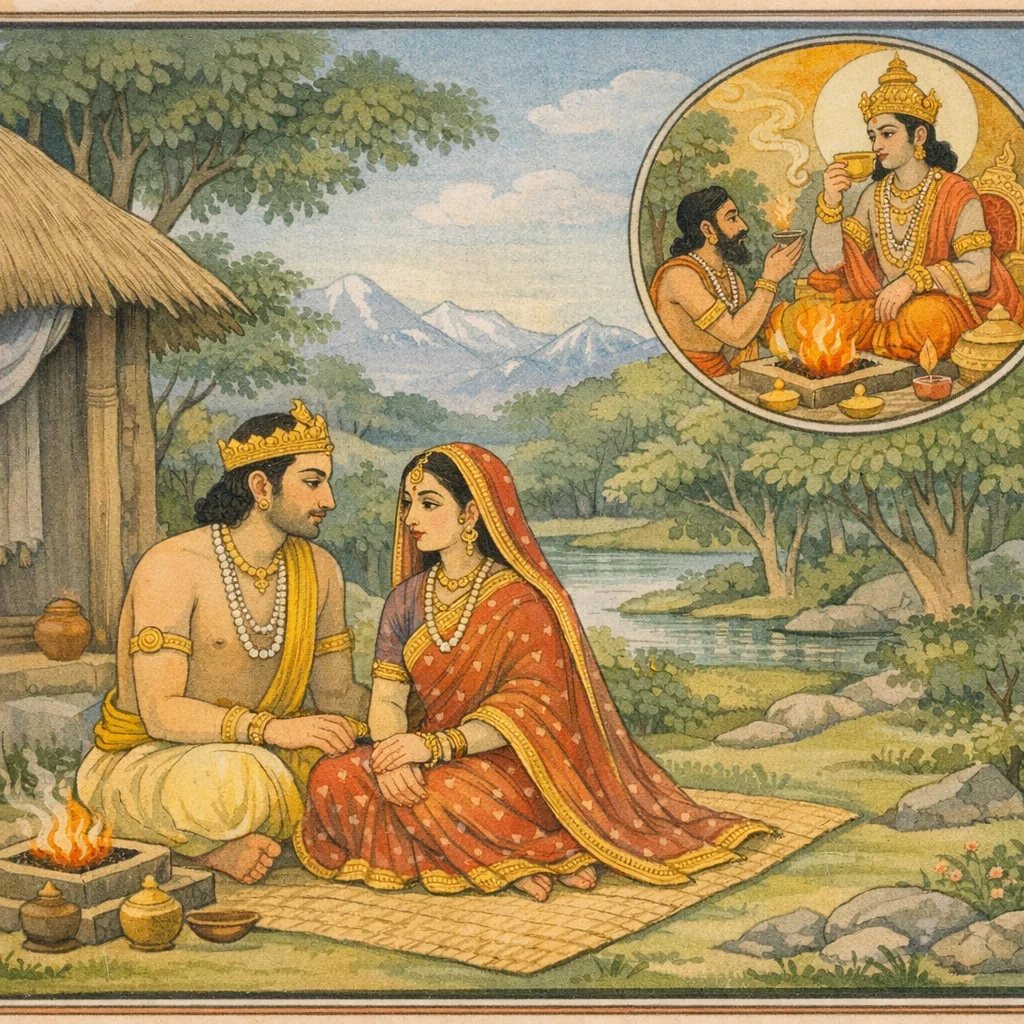
तस्मिंश्न॒ यजमाने वै धर्मात्मनि महाभुजे । उपागमंस्ततो देवा: सेन्द्रा देवर्षिभि: सह,“एक समय वे महाबाहु धर्मात्मा नरेश जब यज्ञ करने लगे, उस समय इन्द्र आदि देवता देवर्षियोंके साथ उस यज्ञमें पधारे थे
Vaiśampāyana said: “While that righteous, mighty-armed king was performing the sacrifice, the gods—led by Indra—arrived there, accompanied by the divine seers.”
Verse 9
अमाद्यदिन्द्र: सोमेन दक्षिणाभिद्धिजातय: । व्युषिताश्वस्य राजर्षेस्ततो यज्ञे महात्मन:,“उसमें देवराज इन्द्र सोमपान करके उन्मत्त हो उठे थे तथा ब्राह्मणलोग पर्याप्त दक्षिणा पाकर हर्षसे फूल उठे थे। महामना राजर्षि व्युषिताश्वके यज्ञमें उस समय देवता और ब्रह्मर्षि स्वयं सब कार्य कर रहे थे। राजन! इससे व्युषिताश्व सब मनुष्योंसे ऊँची स्थितिमें पहुँचकर बड़ी शोभा पा रहे थे
Vaiśampāyana said: Indra grew exhilarated by drinking Soma, and the twice-born (Brahmins) rejoiced, having received abundant dakṣiṇā, the sacrificial gifts. In the sacrifice of the great-souled royal sage Vyuṣitāśva, the gods and the brahmarṣis themselves seemed to carry out the rites and duties with their own hands. Thus Vyuṣitāśva rose above other men in eminence and shone with exceptional splendor.
Verse 10
देवा ब्रह्मर्षयश्चैव चक्रुः कर्म स्वयं तदा । व्युषिताश्व॒स्ततो राजन्नति मर्त्यान् व्यरोचत,“उसमें देवराज इन्द्र सोमपान करके उन्मत्त हो उठे थे तथा ब्राह्मणलोग पर्याप्त दक्षिणा पाकर हर्षसे फूल उठे थे। महामना राजर्षि व्युषिताश्वके यज्ञमें उस समय देवता और ब्रह्मर्षि स्वयं सब कार्य कर रहे थे। राजन! इससे व्युषिताश्व सब मनुष्योंसे ऊँची स्थितिमें पहुँचकर बड़ी शोभा पा रहे थे
Vaiśampāyana said: At that time the gods and the brahmarṣis themselves carried out the ritual duties. And King Vyuṣitāśva, O king, then outshone mortal men.
Verse 11
सर्वभूतान् प्रति यथा तपन: शिशिरात्यये । स विजित्य गृहीत्वा च नृपतीन् राजसत्तम:,'राजा व्युषिताश्व॒ समस्त भूतोंके प्रीतिपात्र थे। राजाओंमें श्रेष्ठ प्रतापी व्युषिताश्वने अश्वमेध नामक महान् यजञ्ञमें पूर्व, उत्तर, पश्चिम और दक्षिण--चारों दिशाओंके राजाओंको जीतकर अपने वशमें कर लिया--ठीक जिस प्रकार शिशिरकालके अन्तमें भगवान् सूर्य- देव सभी प्राणियोंपर विजय कर लेते हैं--सबको तपाने लगते हैं
Vaiśampāyana said: Just as the Sun, at the end of winter, overcomes all beings by spreading its heat everywhere, so that best of kings, having conquered the other rulers and brought them under his control, established his supremacy.
Verse 12
प्राच्यानुदीच्यान् पाश्चात्त्यान् दाक्षिणात्यानकालयत् । अश्वमेधे महायज्ञे व्युषिताश्वः प्रतापवान्,'राजा व्युषिताश्व॒ समस्त भूतोंके प्रीतिपात्र थे। राजाओंमें श्रेष्ठ प्रतापी व्युषिताश्वने अश्वमेध नामक महान् यजञ्ञमें पूर्व, उत्तर, पश्चिम और दक्षिण--चारों दिशाओंके राजाओंको जीतकर अपने वशमें कर लिया--ठीक जिस प्रकार शिशिरकालके अन्तमें भगवान् सूर्य- देव सभी प्राणियोंपर विजय कर लेते हैं--सबको तपाने लगते हैं
Vaiśampāyana said: In the great sacrifice known as the Aśvamedha, the mighty and valorous King Vyuṣitāśva brought under his control the rulers of the eastern, northern, western, and southern regions.
Verse 13
बभूव स हि राजेन्द्रो दशनागबलान्वित: । अप्यत्र गाथां गायन्ति ये पुराणविदो जना:,“उन महाराजमें दस हाथियोंका बल था। कुरुश्रेष्ठ! पुराणवेत्ता विद्वान् यशमें बढ़े-चढ़े हुए नरेन्द्र व्युषिताश्वके विषयमें यह यशोगाथा गाते हैं--“राजा व्युषिताश्व समुद्रपर्यन्त इस सारी पृथ्वीको जीतकर जैसे पिता अपने औरस पुत्रोंका पालन करता है, उसी प्रकार सभी वर्णके लोगोंका पालन करते थे। उन्होंने बड़े-बड़े यज्ञोंका अनुष्ठान करके ब्राह्मणोंको बहुत धन दिया
Vaiśampāyana said: That king indeed possessed the strength of ten elephants. O best of the Kurus, learned men who know the ancient lore sing here a traditional praise-verse about King Vyuṣitāśva: having conquered the earth up to the encircling ocean, he protected people of all social orders as a father nurtures his own legitimate sons, and by performing great sacrifices he bestowed abundant wealth upon the Brahmins.
Verse 14
व्युषिताश्वे यशोवृद्धे मनुष्येन्द्रे कुरूत्तम । व्युषिताश्व: समुद्रान्तां विजित्येमां वसुंधराम्,“उन महाराजमें दस हाथियोंका बल था। कुरुश्रेष्ठ! पुराणवेत्ता विद्वान् यशमें बढ़े-चढ़े हुए नरेन्द्र व्युषिताश्वके विषयमें यह यशोगाथा गाते हैं--“राजा व्युषिताश्व समुद्रपर्यन्त इस सारी पृथ्वीको जीतकर जैसे पिता अपने औरस पुत्रोंका पालन करता है, उसी प्रकार सभी वर्णके लोगोंका पालन करते थे। उन्होंने बड़े-बड़े यज्ञोंका अनुष्ठान करके ब्राह्मणोंको बहुत धन दिया
Vaiśampāyana said: O best of the Kurus, concerning King Vyuṣitāśva—an eminent ruler whose fame had grown great—the learned keepers of ancient tradition sing this praise: “Having conquered this earth bounded by the ocean, King Vyuṣitāśva protected people of all social orders as a father nurtures his own legitimate sons.”
Verse 15
अपालयत् सर्ववर्णान् पिता पुत्रानिवौरसान् । यजमानो महायज्जैत्रद्वाणेभ्यो धनं ददौ,“उन महाराजमें दस हाथियोंका बल था। कुरुश्रेष्ठ! पुराणवेत्ता विद्वान् यशमें बढ़े-चढ़े हुए नरेन्द्र व्युषिताश्वके विषयमें यह यशोगाथा गाते हैं--“राजा व्युषिताश्व समुद्रपर्यन्त इस सारी पृथ्वीको जीतकर जैसे पिता अपने औरस पुत्रोंका पालन करता है, उसी प्रकार सभी वर्णके लोगोंका पालन करते थे। उन्होंने बड़े-बड़े यज्ञोंका अनुष्ठान करके ब्राह्मणोंको बहुत धन दिया
Vaiśampāyana said: He protected and cared for people of all social orders, just as a father nurtures his own legitimate sons. Performing great sacrificial rites as a patron, he bestowed wealth upon the twice-born, especially the Brahmins.
Verse 16
अनन्तरत्नान्यादाय स जहार महाक्रतून् । सुषाव च बहून् सोमान् सोमसंस्थास्ततान च,“अनन्त रत्नोंकी भेंट लेकर उन्होंने बड़े-बड़े यज्ञ किये। अनेक सोमयागोंका आयोजन करके उनमें बहुत-सा सोमरस संग्रह करके अग्निष्टोम-अत्यग्निष्टोम आदि सात प्रकारकी सोमयाग-संस्थाओंका भी अनुष्ठान किया
Vaiśampāyana said: Having accepted countless precious gifts, he performed great sacrificial rites. He pressed Soma in abundance and duly carried out the prescribed Soma-sacrifice arrangements (saṁsthās), completing the full range of Soma-ritual forms.
Verse 17
आसीत् काक्षीवती चास्य भार्या परमसम्मता | भद्रा नाम मनुष्येन्द्र रूपेणासदृशी भुवि,“नरेन्द्र! राजा कक्षीवान्की पुत्री भद्रा उनकी अत्यन्त प्यारी पत्नी थी। उन दिनों इस पृथ्वीपर उसके रूपकी समानता करनेवाली दूसरी कोई स्त्री न थी
Vaiśampāyana said: He had a wife named Bhadrā, the daughter of King Kakṣīvān, and she was exceedingly dear and fully approved in every way. O best of men, on earth there was no other woman comparable to her in beauty.
Verse 18
कामयामासतुस्तौ च परस्परमिति श्रुतम् । स तस्यां कामसम्पन्नो यक्ष्मणा समपद्यत,“मैंने सुना है, वे दोनों पति-पत्नी एक-दूसरेको बहुत चाहते थे। पत्नीके प्रति अत्यन्त कामासक्त होनेके कारण राजा व्युषिताश्व राजयक्ष्माके शिकार हो गये
Vaiśaṃpāyana said: “It is heard that the two of them—husband and wife—longed for one another deeply. But the king, overcome by sensual desire for her, fell into consumption (rājayakṣmā), a wasting disease.”
Verse 19
तेनाचिरेण कालेन जगामास्तमिवांशुमान् | तस्मिन् प्रेते मनुष्येन्द्रे भार्यास्थ भृशदु:खिता,“इस कारण वे थोड़े ही समयमें सूर्यकी भाँति अस्त हो गये। उन महाराजके परलोकवासी हो जानेपर उनकी पत्नीको बड़ा दुःख हुआ
And in no long time he set, like the sun. When that lord among men had departed this world, his wife was overwhelmed with intense grief.
Verse 20
अपुत्रा पुरुषव्याप्र विललापेति न: श्रुतम् । भद्रा परमदु:खार्ता तन्निबोध जनाधिप,“नरव्याप्र जनेश्वर! हमने सुना है कि भद्राके तबतक कोई पुत्र नहीं हुआ था। इस कारण वह अत्यन्त दुःखसे आतुर होकर विलाप करने लगी; वह विलाप सुनिये”
Vaiśampāyana said: “O tiger among men, we have heard that Bhadrā was without a son and therefore lamented. Overwhelmed by the deepest sorrow, she cried out—now hear of it, O king.”
Verse 21
भद्रोवाच नारी परमधर्मज्ञ सर्वा भर्तृविनाकृता । पतिं विना जीवति या न सा जीवति दुःखिता,भद्रा बोली--परमधर्मज्ञ महाराज! जो कोई भी विधवा स्त्री पतिके बिना जीवन धारण करती है, वह निरन्तर दु:खमें डूबी रहनेके कारण वास्तवमें जीती नहीं, अपितु मृततुल्या है
Bhadra said: “O king, knower of the highest dharma! A woman, once deprived of her husband, is wholly bereft. She who continues to live without her lord does not truly live at all; consumed by sorrow, she exists as one already dead.”
Verse 22
पतिं विना मृतं श्रेयो नार्या: क्षत्रियपुड्भव | त्वद्गतिं गन्तुमिच्छामि प्रसीदस्व नयस्व माम्,क्षत्रियशिरोमणे! पतिके न रहनेपर नारीकी मृत्यु हो जाय, इसीमें उसका कल्याण है। अतः मैं भी आपके ही मार्गपर चलना चाहती हूँ, प्रसन्न होइये और मुझे अपने साथ ले चलिये। आपके बिना एक क्षण भी जीवित रहनेका मुझमें उत्साह नहीं है। राजन्! कृपा कीजिये और यहाँसे शीघ्र मुझे ले चलिये
Bhadra said: “For a woman born in the Kṣatriya line, it is held better to die than to live without her husband. I wish to follow the very path you have taken. Be gracious—lead me with you, O crest-jewel among Kṣatriyas.”
Verse 23
त्वया हीना क्षणमपि नाहं जीवितुमुत्सहे । प्रसादं कुरु मे राजन्नितस्तूर्ण नयस्व माम्,क्षत्रियशिरोमणे! पतिके न रहनेपर नारीकी मृत्यु हो जाय, इसीमें उसका कल्याण है। अतः मैं भी आपके ही मार्गपर चलना चाहती हूँ, प्रसन्न होइये और मुझे अपने साथ ले चलिये। आपके बिना एक क्षण भी जीवित रहनेका मुझमें उत्साह नहीं है। राजन्! कृपा कीजिये और यहाँसे शीघ्र मुझे ले चलिये
Bhadra said: “Without you, I do not have the heart to live even for a moment. Be gracious to me, O King; quickly lead me away from here, O crest-jewel among kṣatriyas.”
Verse 24
पृष्ठतो$नुगमिष्यामि समेषु विषमेषु च । त्वामहं नरशार्दूल गच्छन्तमनिवर्तितुम्,नरश्रेष्ठ आप जहाँ कभी न लौटनेके लिये गये हैं, वहाँका मार्ग समतल हो या विषम, मैं आपके पीछे-पीछे अवश्य चली चलूँगी
Vaiśampāyana said: “I will follow behind you—whether the path is level or rough. O tiger among men, as you go on, never to turn back, I too will go after you.”
Verse 25
छायेवानुगता राजन् सततं वशवर्तिनी | भविष्यामि नरव्याप्र नित्यं प्रियहिते रता,राजन! मैं छायाकी भाँति आपके पीछे लगी रहूँगी एवं सदा आपकी आज्ञाके अधीन रहूँगी। नरव्याप्र! मैं सदा आपके प्रिय और हितमें लगी रहूँगी
She declares to the king: “Like a shadow I will follow you always, remaining continually under your command. O tiger among men, I will ever be devoted to what is dear and beneficial to you.”
Verse 26
अद्यप्रभृति मां राजन् कष्टा हृदयशोषणा: । आधयो<5भिभविष्यन्ति त्वामृते पुष्करेक्षण,कमलके समान नेत्रोंवाले महाराज! आपके बिना आजसे हृदयको सुखा देनेवाले कष्ट और मानसिक चिन्ताएँ मुझे सताती रहेंगी
Vaiśampāyana said: “From today onward, O King, harsh afflictions that parch the heart—anxieties and inward torments—will overpower me in your absence, O lotus-eyed one.”
Verse 27
अभाग्यया मया नून॑ वियुक्ता: सहचारिण: । तेन मे विप्रयोगो5यमुपपन्नस्त्वया सह,मुझ अभागिनीने निश्चय ही कितने ही जीवनसंगियों (स्त्री-पुरुषों)-में विछोह कराया होगा। इसीलिये आज आपके साथ मेरा वियोग घटित हुआ है
Surely, through my own ill fortune, many companions in life must have been separated from their partners. Therefore it is fitting that this separation has now come to pass for me as well—this parting from you.
Verse 28
विप्रयुक्ता तु या पत्या मुहूर्तमपि जीवति । दुःखं जीवति सा पापा नरकस्थेव पार्थिव,महाराज! जो स्त्री पतिसे बिछुड़ जानेपर दो घड़ी भी जीवन धारण करती है, वह पापिनी नरकमें पड़ी हुई-सी दुःखमय जीवन बिताती है
Vaiśaṃpāyana said: “O king, that woman who, separated from her husband, continues to live even for a moment lives in misery—like one dwelling in hell—bearing the burden of sin and sorrow.”
Verse 29
संयुक्ता विप्रयुक्ता श्च पूर्वदेहे कृता मया । तदिदं कर्मभि: पापै: पूर्वदेहेषु संचितम्,राजन! पूर्वजन्मके शरीरमें स्थित रहकर मैंने एक साथ रहनेवाले कुछ स्त्री-पुरुषोंमें अवश्य वियोग कराया है। उन्हीं पापकर्माद्वारा मेरे पूर्वशरीरोंमें जो बीजरूपसे संचित हो रहा था, वही यह आपके वियोगका दुःख आज मुझे प्राप्त हुआ है। महाराज! मैं दुःखमें डूबी हुई हूँ, अत: आजसे आपके दर्शनकी इच्छा रखकर मैं कुशके बिछौनेपर सोऊँगी
Vaiśampāyana said: “In a former body I caused the separation of men and women who were living together. By those sinful deeds, accumulated as a latent seed through my previous embodiments, this very sorrow of separation has now come upon me, O king.”
Verse 30
दुःखं मामनुसम्प्राप्तं राजंस्त्वद्विप्रयोगजम् । अद्यप्रभृत्यहं राजन् कुशसंस्तरशायिनी । भविष्याम्यसुखाविष्टा त्वद्दर्शनपरायणा,राजन! पूर्वजन्मके शरीरमें स्थित रहकर मैंने एक साथ रहनेवाले कुछ स्त्री-पुरुषोंमें अवश्य वियोग कराया है। उन्हीं पापकर्माद्वारा मेरे पूर्वशरीरोंमें जो बीजरूपसे संचित हो रहा था, वही यह आपके वियोगका दुःख आज मुझे प्राप्त हुआ है। महाराज! मैं दुःखमें डूबी हुई हूँ, अत: आजसे आपके दर्शनकी इच्छा रखकर मैं कुशके बिछौनेपर सोऊँगी
Vaiśampāyana said: “O King, sorrow born of separation from you has come upon me. From today onward, O King, I shall lie upon a bed of kuśa grass, overwhelmed by grief, living only for the hope of seeing you again.”
Verse 31
दर्शयस्व नरव्यापत्र शाधि मामसुखान्विताम् | कृपणां चाथ करुणं विलपन्न्तीं नरेश्वर,नरश्रेष्ठ नरेश्वरर करुण विलाप करती हुई मुझ दीन-दु:ःखिया अबलाको आज अपना दर्शन और कर्तव्यका आदेश दीजिये
Vaiśampāyana said: “O tiger among men, reveal yourself to me and instruct me in my duty. I am afflicted with sorrow—wretched and helpless—and I lament piteously. O lord of men, grant me your presence and command what should be done.”
Verse 32
कुन्त्युवाच एवं बहुविध॑ तस्यां विलपन्त्यां पुन: पुनः । तं॑ शवं सम्परिष्वज्य वाक् किलान्तर्तहिताब्रवीत्,कुन्तीने कहा--महाराज! इस प्रकार जब राजाके शवका आलिंगन करके वह बार- बार अनेक प्रकारसे विलाप करने लगी, तब आकाशवाणी बोली---
Vaiśampāyana said: Kuntī said—As she lamented again and again in many ways, clasping that corpse in her embrace, a disembodied voice—unseen—was heard to speak.
Verse 33
उत्तिष्ठ भद्रे गच्छ त्वं ददानीह वरं तव । जनयिष्याम्यपत्यानि त्वय्यहं चारुहासिनि,“भद्रे! उठो और जाओ, इस समय मैं तुम्हें वर देता हूँ। चारुहासिनि! मैं तुम्हारे गर्भसे कई पुत्रोंकोी जन्म दूँगा
Vaiśampāyana said: “Rise, auspicious lady, and go. Here and now I grant you a boon. O fair-smiling one, through you I shall beget offspring.”
Verse 34
आत्मकीये वरारोहे शयनीये चतुर्दशीम् । अष्टमी वा ऋतुस्नाता संविशेथा मया सह,“वरारोहे! तुम ऋतुस्नाता होनेपर चतुर्दशी या अष्टमीकी रातमें अपनी शय्यापर मेरे इस शवके साथ सो जाना”
Vaiśampāyana said: “O fair-hipped lady, after you have bathed in purification at the close of your menstrual period, on the fourteenth night—or else on the eighth—lie down on your own bed together with me.”
Verse 35
एवमुक्ता तु सा देवी तथा चक्रे पतिव्रता । यथोक्तमेव तद्वाक्यं भद्रा पुत्रार्थिनी तदा,आकाशवाणीके यों कहनेपर पुत्रकी इच्छा रखनेवाली पतिव्रता भद्रादेवीने पतिकी पूर्वोक्त आज्ञाका अक्षरश: पालन किया
Vaiśampāyana said: Thus addressed, that noble lady—steadfast in wifely fidelity—did exactly so. At that time Bhadrā, longing for a son, carried out her husband’s instruction precisely as it had been spoken.
Verse 36
सा तेन सुषुवे देवी शवेन भरतर्षभ । त्रीन् शाल्वांश्षतुरो मद्रान् सुतान् भरतसत्तम,भरतमश्रेष्ठ! रानी भद्गराने उस शवके द्वारा सात पुत्र उत्पन्न किये, जिनमें तीन शाल्वदेशके और चार मद्रदेशके शासक हुए
Vaiśampāyana said: O bull among the Bharatas, that queen bore seven sons by Śava—three who became rulers in the Śālva country and four who became rulers in the Madra land.
Verse 37
तथा त्वमपि मय्येवं मनसा भरतर्षभ । शक्तो जनयितु पुत्रांस्तपोयोगबलान्वित:,भरतवंशशिरोमणे! इसी प्रकार आप भी मेरे गर्भसे मानसिक संकल्पद्वारा अनेक पुत्र उत्पन्न कर सकते हैं; क्योंकि आप तपस्या और योगबलसे सम्पन्न हैं
“So you too, O bull among the Bharatas, can in the same way beget many sons in me by a mere act of mental resolve; for you are endowed with the power born of austerity and yogic discipline.”
Verse 120
इति श्रीमहा भारते आदिपर्वणि सम्भवपर्वणि व्युषिताश्वोपाख्याने विंशत्यधिकशततमो<ध्याय:
Thus ends the one-hundred-and-twentieth chapter of the Sambhava section of the Ādi Parva in the sacred Mahābhārata, within the episode concerning Vyuṣitāśva.
Frequently Asked Questions
The chapter frames a governance dilemma: how to select an instructor for elite warriors when training amplifies state power—requiring not only technical mastery but also disciplined character, because knowledge transmission can later shape political outcomes.
Competence is ethically consequential: education, especially in high-impact skills, must be anchored in restraint and responsibility; personal relationships (friendship, obligation, patronage) can become causal forces in public history.
No explicit phalaśruti appears in this passage; the meta-function is etiological—explaining origins and knowledge lineages to clarify later narrative causality and the dharma-implications of instruction.