Adhyaya 12
Āstīka-śravaṇa-prastāvaḥ (Prelude to the Account of Āstīka) | Chapter 12 (Ādi Parva)
Upa-parva: Āstīkopākhyāna (The Episode of Āstīka) — within Ādi Parva
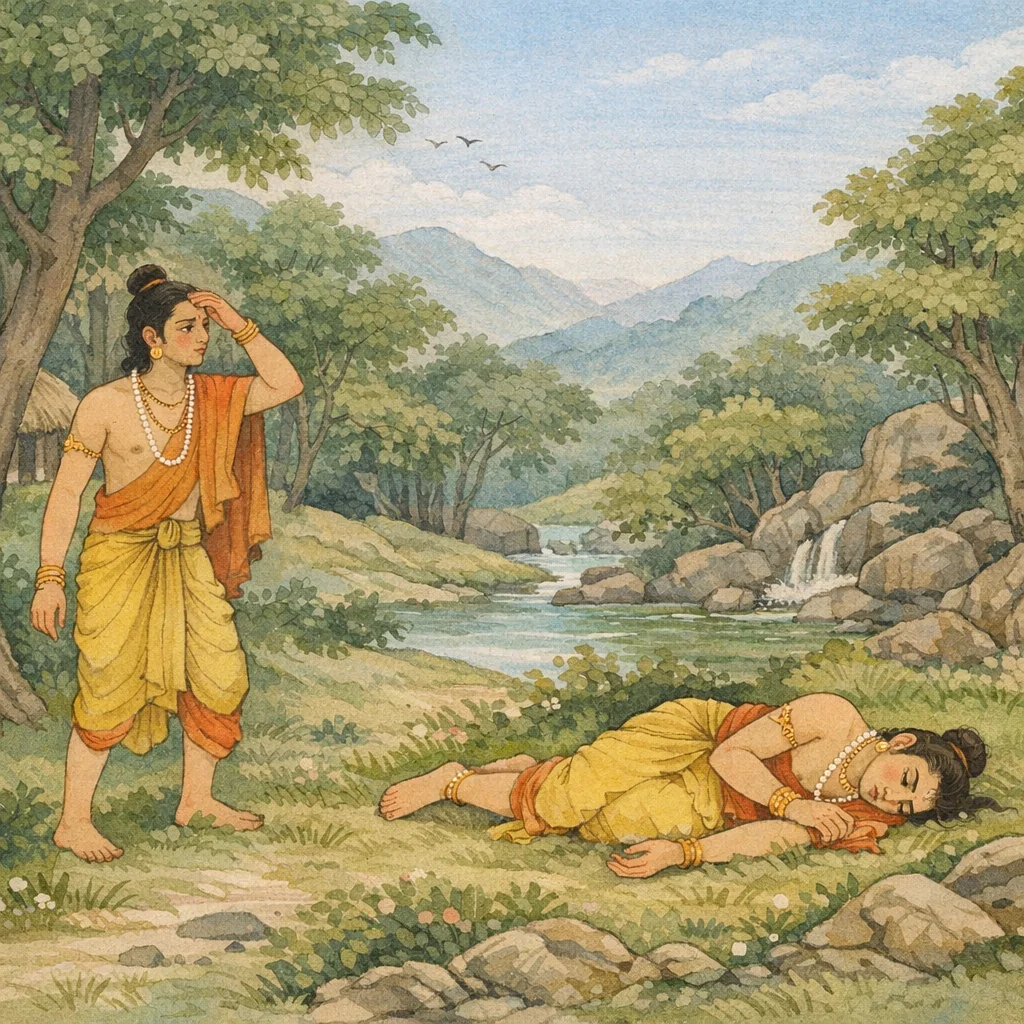
The chapter opens with Ruru questioning a sage about the rationale for King Janamejaya’s harm to serpents and, critically, why and by what means the serpents were later released. Ruru requests a complete account, explicitly naming Āstīka as the agent of liberation and seeking an exhaustive narration. The sage agrees, promising the ‘great conduct/story of Āstīka’ as a forthcoming discourse, and then withdraws from view, marking a transition into a more extended embedded narrative. The frame then returns to Sauti’s narration: Ruru searches the forest for the sage, becomes exhausted, and collapses. Regaining consciousness, he returns and reports the encounter to his father, who, when questioned, recounts the matter in full. The passage functions as a narrative hinge—motivating the Āstīka story, establishing inquiry as a legitimate epistemic method, and signaling the authority of transmitted testimony (father-to-son; narrator-to-audience) within the epic’s layered structure.
Chapter Arc: जनमेजय, अपने सर्पसत्र की ज्वाला के बीच, एक तीक्ष्ण जिज्ञासा उठाता है—परम बुद्धिमान् आस्तीक ने किस कारण उस यज्ञ से सर्पों को मुक्त कराया? → कथावाचक ऋषि रुरु को संकेत देते हैं कि आस्तीक-चरित महान है और ब्राह्मणों के मुख से सुना जाएगा; पर संकेत देकर वे अंतर्धान हो जाते हैं। रुरु उस अदृश्य ऋषि को खोजने वन में भटकता है, थककर गिर पड़ता है और मूर्च्छित-सा हो जाता है—कथा का सूत्र हाथ से छूटता प्रतीत होता है। → रुरु का वन में गिरना और मोह/मूर्च्छा में डूब जाना—ऋषि के ‘अंतर्धान’ के बाद ज्ञान-प्राप्ति की आकांक्षा का अचानक टूटना; वह बार-बार ऋषि-वचन की सत्यता पर मनन करता है। → चेतना लौटने पर रुरु पिता के पास जाकर सब कहता है; पिता उससे पूछे जाने पर पूरा वृत्तांत निवेदित करता है—आस्तीक-चरित की ओर कथा को व्यवस्थित रूप से मोड़ने की तैयारी हो जाती है। → आस्तीक ने सर्पसत्र को कैसे रोका और किस धर्म-युक्ति से सर्पों को छुड़ाया—यह ‘अगले कथन’ के लिए सुरक्षित रह जाता है।
Shlokas
Verse 1
अपर बक। है २ >> द्वादशोड् ध्याय: जनमेजयके सर्पसत्रके विषयमें रुरुकी जिज्ञासा और पिताद्वारा उसकी पूर्ति रुस्स्वाच कथं हिंसितवान् सर्पानू स राजा जनमेजय: । सर्पा वा हिंसितास्तत्र किमर्थ द्विजसत्तम,रुरुने पूछा-<द्धिजश्रेष्ठ] राजा जनमेजयने सर्पोंकी हिंसा कैसे की? अथवा उन्होंने किसलिये यज्ञमें सर्पोंकी हिंसा करवायी?
Ruru asked: “How did King Janamejaya cause the serpents to be harmed? Or for what reason were the serpents harmed there, O best of Brahmins?” The question frames the moral tension of the serpent-sacrifice: whether violence was carried out as royal retribution and ritual duty, and what justification—if any—can ethically support such harm.
Verse 2
किमर्थ मोक्षिताश्वैव पन्नगास्तेन धीमता । आस्तीकेन द्विजश्रेष्ठ श्रोतुमिच्छाम्यशेषत:,विप्रवर! परम बुद्धिमान् महात्मा आस्तीकने किसलिये सर्पोंको उस यज्ञसे बचाया था? यह सब मैं पूर्णरूपसे सुनना चाहता हूँ
“For what reason were the serpents released by that wise Āstīka, O best of twice-born ones? I wish to hear the whole matter in full.”
Verse 3
ऋषिरुवाच श्रोष्यसि त्वं रुरो सर्वमास्तीकचरितं महत् | ब्राह्मणानां कथयतामित्युक्त्वान्तरधीयत,ऋषिने कहा--'रुरो! तुम कथावाचक ब्राह्मणोंके मुखसे आस्तीकका महान चरित्र सुनोगे।' ऐसा कहकर सहस्रपाद मुनि अन्तर्धान हो गये
The sage said: “O Ruru, you shall hear in full the great life-story of Āstīka, as it is recounted by Brahmin narrators.” Having spoken thus, the sage vanished from sight.
Verse 4
सौतिर्वाच रुरुश्षापि वनं सर्व पर्यधावत् समन्ततः । तमृषिं नष्टमन्विच्छन् संश्रान्तो न््यपतद् भुवि,उग्रश्रवाजी कहते हैं--तदनन्तर रुरु वहाँ अदृश्य हुए मुनिकी खोजमें उस वनके भीतर सब ओर दौड़ता रहा और अन्तमें थककर पृथ्वीपर गिर पड़ा
Sauti said: Thereafter Ruru, driven by the curse’s consequence, ran all around through the forest in every direction, searching for the vanished sage. Exhausted by the fruitless pursuit, he finally collapsed upon the earth.
Verse 5
स मोहं परमं गत्वा नष्टसंज्ञ इवाभवत् | तदृषेर्वचनं तथ्यं चिन्तयान: पुनः पुनः,गिरनेपर उसे बड़ी भारी मूर्च्छने दबा लिया। उसकी चेतना नष्ट-सी हो गयी। महर्षिके यथार्थ वचनका बार-बार चिन्तन करते हुए होशमें आनेपर रुकु घर लौट आया। उस समय उसने पितासे वे सब बातें कह सुनायीं और पितासे भी आस्तीकका उपाख्यान पूछा। रुरुके पूछनेपर पिताने सब कुछ बता दिया
Overwhelmed by extreme bewilderment, he became as if bereft of consciousness. Again and again reflecting on the sage’s truthful words, he gradually regained awareness.
Verse 6
लब्धसंज्ञो रुरुक्षायात् तदाचख्यौ पितुस्तदा । पिता चास्य तदाख्यान॑ पृष्ट: सर्व न्यवेदयत्,गिरनेपर उसे बड़ी भारी मूर्च्छने दबा लिया। उसकी चेतना नष्ट-सी हो गयी। महर्षिके यथार्थ वचनका बार-बार चिन्तन करते हुए होशमें आनेपर रुकु घर लौट आया। उस समय उसने पितासे वे सब बातें कह सुनायीं और पितासे भी आस्तीकका उपाख्यान पूछा। रुरुके पूछनेपर पिताने सब कुछ बता दिया
When Ruru regained consciousness, he returned home. Then he related the entire matter to his father; and when he asked about that account, his father, being questioned, told him everything in full.
Verse 12
इति श्रीमहाभारते आदिपर्वणि पौलोमपर्वणि सर्पसत्रप्रस्तावनायां द्वादशो5्ध्याय: ।। १२२ || इस प्रकार श्रीमह्योा भारत आदिपव॑ीके अन्तर्गत पौलोगपर्वमें सर्पसत्रप्रस्तावनाविषयक बारहवाँ अध्याय पूरा हुआ
Thus ends the twelfth chapter of the Ādi Parva of the Śrī Mahābhārata, within the Pauloma section, in the portion introducing the Snake Sacrifice.
Frequently Asked Questions
The chapter foregrounds the ethical problem of collective harm enacted through royal-ritual authority: why serpents are targeted and, conversely, what justifies stopping that harm—raising questions of proportionality, responsibility, and corrective restraint.
It presents inquiry and accountable narration as instruments of dharma: before endorsing or continuing punitive action, one should seek complete causal explanation and attend to counsel that can prevent escalation.
No explicit phalaśruti appears in these verses; the meta-commentary is structural—an announced shift into the ‘Āstīka-carita’ and a reinforcement of epic authority through framed transmission (promise to narrate, disappearance, and subsequent reporting).