Adhyaya 115
Ādi Parva, Adhyāya 115 — Mādri’s request; invocation of the Aśvins; birth and naming of the Pāṇḍavas
Upa-parva: Pāṇḍava-Janma (Births of the Pāṇḍavas) — Mādri’s appeal and the Aśvinīkumāras
Vaiśaṃpāyana reports that after Kuntī’s sons are born and Dhṛtarāṣṭra’s line has expanded, Mādri privately addresses Pāṇḍu: she expresses that her deeper sorrow is not rivalry but childlessness amid parity, and she asks for an act of favor—access to Kuntī’s means of obtaining offspring. She notes her hesitation to speak directly to Kuntī due to the social delicacy of co-wife relations and requests Pāṇḍu to encourage Kuntī himself. Pāṇḍu acknowledges the same concern and then privately urges Kuntī to act for dynastic continuity, social goodwill, and the welfare of ancestors, framing the act as difficult yet honor-conferring. Kuntī agrees, instructing Mādri to contemplate a deity once; Mādri mentally invokes the Aśvinīkumāras, who beget the twins Nakula and Sahadeva. The narrative includes their exceptional qualities and the formalization of names for all five brothers. When Pāṇḍu later asks Kuntī to repeat the arrangement for Mādri, Kuntī refuses, stating she has learned (after being urged once) that the invocation yields a “double result,” and she fears being disadvantaged; the chapter closes by describing the rapid growth and excellence of the brothers in the Himalayan setting.
Chapter Arc: Janamejaya asks the rishi how Gandhari—one woman—could bear a hundred sons, in what manner and in what span of time, and what their destined life would be. → Gandhari conceives after Kunti’s radiant son is heard of; yet her pregnancy stretches unnaturally long. When the term passes and despair swells, she brings forth not a child but a single mass of flesh—an omen-heavy rupture of maternal hope and royal expectation. → Vyasa intervenes: the flesh-mass is divided into one hundred and one portions, each placed in vessels to mature in due course. At the same time, dreadful portents arise at the birth of the eldest—signs that the firstborn will be a calamity to the line. Brahmanas counsel the king to abandon that one child for the welfare of the kula and the world, but Dhritarashtra, bound by पुत्रस्नेह, refuses. → In time, Gandhari’s hundred sons are completed ‘yathayogam’; a daughter is also born, and from a Vaishya woman Dhritarashtra fathers Yuyutsu. Thus the Kuru household fills with heirs—yet the seed of ruin is acknowledged and still preserved. → The dynasty gains its long-awaited multitude of children, but the king’s refusal to heed the warning leaves the future poised on a knife-edge: the protected firstborn will grow into the very storm the omens foretold.
Shlokas
Verse 1
अफ्-#-रल चतुर्दशाधिकशततमो< ध्याय: भूतराष्ट्रके गान्धारीसे एक सौ पुत्र तथा एक कन्याकी तथा करनेवाली वैश्यजातीय युवतीसे युयुत्सु नामक एक पुत्रकी उत्पत्ति वैशम्पायन उवाच ततः पुत्रशतं जज्ञे गान्धार्या जनमेजय । धृतराष्ट्रस्य वैश्यायामेकश्चापि शतात् पर:,वैशम्पायनजी कहते हैं--जनमेजय! तदनन्तर धृतराष्ट्रके उनकी पत्नी गान्धारीके गर्भसे एक सौ पुत्र उत्पन्न हुए। धृतराष्ट्रकी एक दूसरी पत्नी वैश्यजातिकी कन्या थी। उससे भी एक पुत्रका जन्म हुआ। यह पूर्वोक्त सौ पुत्रोंसे भिन्न था
Vaiśampāyana said: “Then, O Janamejaya, a hundred sons were born to Gāndhārī. And to Dhṛtarāṣṭra, by a woman of the Vaiśya class, there was also one son—distinct from those hundred.”
Verse 2
पाण्डो: कुन्त्यां च माद्रयां च पुत्रा: पजच महारथा: । देवेभ्य: समपद्यन्त संतानाय कुलस्य वै,पाण्डुके कुन्ती और माद्रीके गर्भसे पाँच महारथी पुत्र उत्पन्न हुए। वे सब कुरुकुलकी संतानपरम्पराकी रक्षाके लिये देवताओंके अंशसे प्रकट हुए थे
Vaiśampāyana said: From Pāṇḍu, through Kuntī and also Mādrī, were born five sons—great chariot-warriors. They came forth as portions of the gods, for the continuance and safeguarding of the family line.
Verse 3
जनमेजय उवाच कथं पुत्रशतं जज्ञे गान्धार्या द्विजसत्तम | कियता चैव कालेन तेषामायुश्न कि परम्,जनमेजयने पूछा--द्विजश्रेष्ठ! गान्धारीसे सौ पुत्र किस प्रकार और कितने समयमें उत्पन्न हुए? और उन सबकी पूरी आयु कितनी थी?
Janamejaya said: “O best of twice-born sages, how did Gāndhārī give birth to a hundred sons? And after how long a time were they born? What, moreover, was the full span of their lives?”
Verse 4
कथं चैक: स वैश्यायां धृतराष्ट्रसुतो&भवत् । कथं च सदृशीं भार्या गान्धारीं धर्मचारिणीम्
Janamejaya asked: “How did that one son of Dhṛtarāṣṭra come to be born from a Vaiśyā woman? And how did he obtain as his wife the well-matched Gāndhārī, a woman devoted to righteous conduct?”
Verse 5
आनुकूल्ये वर्तमानां धृतराष्ट्रो भ्यवर्तत । कथं च शप्तस्य सत: पाण्डोस्तेन महात्मना
Janamejaya asked: “While they were acting with goodwill and compliance, how did Dhṛtarāṣṭra come to oppose them? And how did that great-souled one deal with Pāṇḍu, even though Pāṇḍu was under a curse?”
Verse 6
समुत्पन्ना दैवतेभ्य: पुत्रा: पठच महारथा: । एतदू विद्वन् यथान्यायं विस्तरेण तपोधन
Janamejaya said: “Those sons—each a great chariot-warrior—who were born from the gods: O wise one, O treasure of austerity, tell me of this in due order and in full detail, as is proper.”
Verse 7
कथयस्व न मे तृप्ति: कथ्यमानेषु बन्धुषु । वैश्यजातीय स्त्रीके गर्भसे धृतराष्ट्रका वह एक पुत्र किस प्रकार उत्पन्न हुआ? राजा धृतराष्ट्र सदा अपने अनुकूल चलनेवाली योग्य पत्नी धर्मपरायणा गान्धारीके साथ कैसा बर्ताव करते थे? महात्मा मुनि-द्वारा शापको प्राप्त हुए राजा पाण्डुके वे पाँचों महारथी पुत्र देवताओंके अंशसे कैसे उत्पन्न हुए? विद्वान् तपोधन! ये सब बातें यथोचित रूपसे विस्तारपूर्वक कहिये। अपने बन्धुजनोंकी यह चर्चा सुनकर मुझे तृप्ति नहीं होती || ४-६ $ई || वैशम्पायन उवाच क्षुच्छूमाभिपरिग्लानं द्वैपायनमुपस्थितम्,वैशम्पायनजीने कहा--राजन्! एक समयकी बात है, महर्षि व्यास भूख और परिश्रमसे खिन्न होकर धृतराष्ट्रके यहाँ आये। उस समय गान्धारीने भोजन और विश्रामकी व्यवस्थाद्वारा उन्हें संतुष्ट किया। तब व्यासजीने गान्धारीको वर देनेकी इच्छा प्रकट की। गान्धारीने अपने पतिके समान ही सौ पुत्र माँगे
Janamejaya urges: “Tell me more; I am not satisfied when the stories of my kinsmen are being recounted.” Then Vaiśampāyana narrates: Once the great sage Dvaipāyana (Vyāsa), worn down by hunger and fatigue, arrived at Dhṛtarāṣṭra’s residence. Gāndhārī honored him with food and rest and thus pleased him. Vyāsa, wishing to grant her a boon, offered her a choice; and Gāndhārī, aligning her desire with her husband’s royal lineage, asked for a hundred sons.
Verse 8
तोषयामास गान्धारी व्यासस्तस्यै वरं ददौ । सा वत्रे सदृशं भर्तु: पुत्राणां शतमात्मन:,वैशम्पायनजीने कहा--राजन्! एक समयकी बात है, महर्षि व्यास भूख और परिश्रमसे खिन्न होकर धृतराष्ट्रके यहाँ आये। उस समय गान्धारीने भोजन और विश्रामकी व्यवस्थाद्वारा उन्हें संतुष्ट किया। तब व्यासजीने गान्धारीको वर देनेकी इच्छा प्रकट की। गान्धारीने अपने पतिके समान ही सौ पुत्र माँगे
Vaiśampāyana said: Gandhārī pleased Vyāsa, and he granted her a boon. She chose for herself a hundred sons, equal in stature and worth to her husband.
Verse 9
# 7 ७ हे ३ ॥ [8१ ३९4, |॥| हा दर / 7५) नष्ट 2 3209.. १२३० ३५९ न ॥ ४५ [7 ष &..) है जे / डे हि 5 क >> ७... 2 हि 7५ |] । ््ज्फ ५ ५ स् ) है कल ह। ॥ न्ड़ा ५ व ततः कालेन सा गर्भ धृतराष्ट्रादथाग्रहीत् । संवत्सरद्वयं तं तु गान्धारी गर्भभाहितम्,तदनन्तर समयानुसार गान्धारीने धृतराष्ट्रसे गर्भ धारण किया। दो वर्ष व्यतीत हो गये, तबतक गान्धारी उस गर्भको धारण किये रही। फिर भी प्रसव नहीं हुआ। इसी बीचमें गान्धारीने जब यह सुना कि कुन्तीके गर्भसे प्रातः:कालीन सूर्यके समान तेजस्वी पुत्रका जन्म हुआ है, तब उसे बड़ा दुःख हुआ
In due course she conceived a child by Dhṛtarāṣṭra. Gāndhārī then carried that pregnancy for two full years.
Verse 10
अप्रजा धारयामास ततस्तां दुःखमाविशत् | श्रुत्वा कुन्तीसुतं जातं॑ बालार्कसमतेजसम्,तदनन्तर समयानुसार गान्धारीने धृतराष्ट्रसे गर्भ धारण किया। दो वर्ष व्यतीत हो गये, तबतक गान्धारी उस गर्भको धारण किये रही। फिर भी प्रसव नहीं हुआ। इसी बीचमें गान्धारीने जब यह सुना कि कुन्तीके गर्भसे प्रातः:कालीन सूर्यके समान तेजस्वी पुत्रका जन्म हुआ है, तब उसे बड़ा दुःख हुआ
Vaiśampāyana said: Gandhārī remained without giving birth, continuing to carry the pregnancy; then sorrow seized her. When she heard that Kuntī’s son had been born—radiant like the morning sun—her distress deepened.
Verse 11
उदरस्यात्मन: स्थैर्यमुपलभ्यान्वचिन्तयत् । अज्ञातं धृतराष्ट्रस्य यत्नेन महता तत:,उसे अपने उदरकी स्थिरतापर बड़ी चिन्ता हुई। गान्धारी दुः:खसे मूर्च्छित हो रही थी। उसने धृतराष्ट्रकी अनजानमें ही महान् प्रयत्न करके अपने उदरपर आघात किया। तब उसके गर्भसे एक मांसका पिण्ड प्रकट हुआ, जो लोहेके पिण्डके समान कड़ा था
Vaiśampāyana said: Perceiving the firmness and unyielding state of her own womb, she became deeply anxious. Then, without Dhṛtarāṣṭra’s knowledge, she made a great and deliberate effort—striking her abdomen. Thereupon, from her pregnancy emerged a lump of flesh, hard like a mass of iron.
Verse 12
सोदरं घातयामास गान्धारी दुःखमूर्च्छिता । ततो जज्ञे मांसपेशी लोहाषछ्ठीलेव संहता,उसे अपने उदरकी स्थिरतापर बड़ी चिन्ता हुई। गान्धारी दुः:खसे मूर्च्छित हो रही थी। उसने धृतराष्ट्रकी अनजानमें ही महान् प्रयत्न करके अपने उदरपर आघात किया। तब उसके गर्भसे एक मांसका पिण्ड प्रकट हुआ, जो लोहेके पिण्डके समान कड़ा था
Vaiśampāyana said: Overwhelmed and fainting with grief, Gāndhārī struck her own womb. From that, there emerged a compact mass of flesh, hard and consolidated like a lump of iron—an ominous turn in the narrative.
Verse 13
द्विवर्षसम्भृता कुक्षौ तामुत्स्रष्ठं प्रचक्रमे । अथ दड्वैपायनो ज्ञात्वा त्वरित: समुपागमत्,उसने दो वर्षोतक उसे पेटमें धारण किया था, तो भी उसने उसे इतना कड़ा देखकर फेंक देनेका विचार किया। इधर यह बात महर्षि व्यासको मालूम हुई। तब वे बड़ी उतावलीके साथ वहाँ आये
Though she had borne it in her womb for two full years, on seeing it so hard she began to think of casting it away. When the great sage Dvaipāyana (Vyāsa) learned of this, he hastened at once to that place.
Verse 14
तां स मांसमयीं पेशीं ददर्श जपतां वर: । ततोअ<ब्रवीत् सौबलेयीं किमिदं ते चिकीर्षितम्,जप करनेवालोंमें श्रेष्ठ व्यासजीने उस मांसपिण्डको देखा और गान्धारीसे पूछा--“तुम इसका क्या करना चाहती थीं?”
Then Vyāsa, foremost among those devoted to sacred recitation, saw that lump of flesh. He addressed Gāndhārī, daughter of Subala: “What did you intend to do with this?”
Verse 15
सा चात्मनो मतं सत्यं शशंस परमर्षये । और उसने महर्षिको अपने मनकी बात सच-सच बता दी। गान्धायुवाच ज्येष्ठ कुन्तीसुतं जात॑ श्रुत्वा रविसमप्रभम्,इयं च मे मांसपेशी जाता पुत्रशताय वै | गान्धारीने कहा--मुने! मैंने सुना है, कुन्तीके एक ज्येष्ठ पुत्र उत्पन्न हुआ है, जो सूर्यके समान तेजस्वी है। यह समाचार सुनकर अत्यन्त दुःखके कारण मैंने अपने उदरपर आघात करके गर्भ गिराया है। आपने पहले मुझे ही सौ पुत्र होनेका वरदान दिया था; परंतु आज इतने दिनों बाद मेरे गर्भसे सौ पुत्रोंकी जगह यह मांसपिण्ड पैदा हुआ है
Vaiśaṃpāyana said: She truthfully disclosed her own intention to the great sage. Gāndhārī said: “O sage, I have heard that Kuntī’s eldest son has been born, radiant like the sun. Stricken with grief on hearing this, I struck my own belly and cast down the embryo. You had earlier granted me the boon of a hundred sons; yet after so many days, instead of a hundred sons, this lump of flesh has been produced from my womb.”
Verse 16
दुःखेन परमेणेदमुदरं घातितं मया । शतं च किल पुत्राणां वितीर्ण मे त्वया पुरा
Vaiśaṃpāyana said: “With the most intense sorrow I have struck this very heart within me; and indeed, long ago you granted me a hundred sons.”
Verse 17
व्यास उवाच एवमेतत् सौबलेयि नैतज्जात्वन्यथा भवेत्,व्यासजीने कहा--सुबलकुमारी! यह सब मेरे वरदानके अनुसार ही हो रहा है; वह कभी अन्यथा नहीं हो सकता
Vyāsa said: “So it is indeed, O Saubalī. This will never turn out otherwise.”
Verse 18
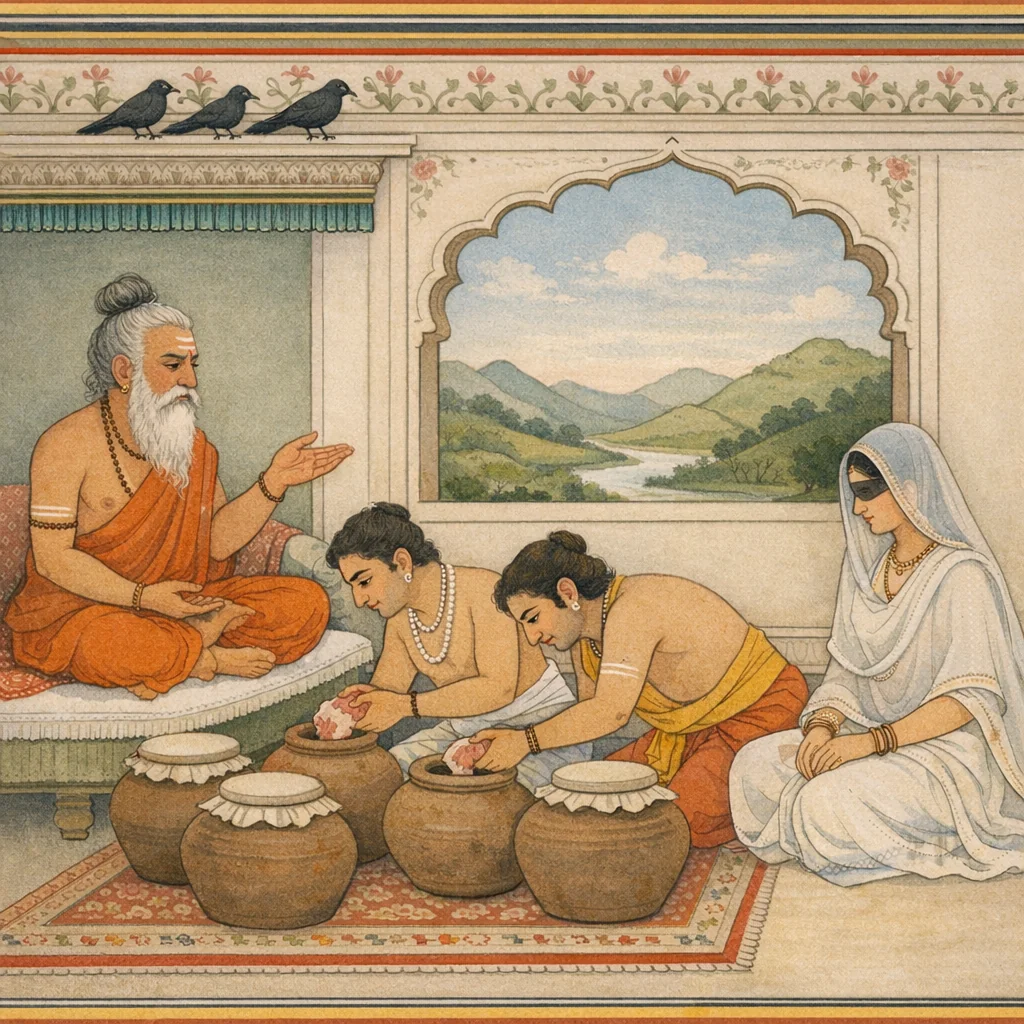
वितथं नोक्तपूर्व मे स्वैरेष्वपि कुतो5न्यथा । घृतपूर्ण कुण्डशतं क्षिप्रमेव विधीयताम्,मैंने कभी हास-परिहासके समय भी झूठी बात मुहसे नहीं निकाली है। फिर वरदान आदि अन्य अवसरोंपर कही हुई मेरी बात झूठी कैसे हो सकती है। तुम शीघ्र ही सौ मटके (कुण्ड) तैयार कराओ और उन्हें घीसे भरवा दो
Vyāsa said: “Never before have I spoken falsely—not even in moments of casual jest. How then could my word, spoken on other occasions such as the granting of a boon, be untrue? Therefore, have a hundred jars prepared at once and quickly fill them with ghee.”
Verse 19
सुगुप्तेषु च देशेषु रक्षा चैव विधीयताम् शीताभिरद्धिरष्ठीलामिमां च परिषेचय,फिर अत्यन्त गुप्त स्थानोंमें रखकर उनकी रक्षा की भी पूरी व्यवस्था करो। इस मांसपिण्डको ठंडे जलसे सींचो
Vyāsa said: “Let full protection be arranged, and keep it in places that are thoroughly concealed. And this fleshy mass—this embryo—should be sprinkled with cold water.”
Verse 20
वैशम्पायन उवाच सा सिच्यमाना त्वष्ठीला बभूव शतधा तदा । अड्गुष्ठपर्वमात्राणां गर्भाणां पृथगेव तु,वैशम्पायनजी कहते हैं--जनमेजय! उस समय सींचे जानेपर उस मांसपिण्डके सौ टुकड़े हो गये। वे अलग-अलग आँगूठेके पोरुवे बराबर सौ गर्भोंके रूपमें परिणत हो गये
Vaiśampāyana said: “As that mass was being sprinkled, it then split into a hundred parts. Indeed, each part separately became an embryo, each no larger than the joint of a thumb—thus the wondrous unfolding of destiny through careful observance of the prescribed rite.”
Verse 21
एकाधिकशतं पूर्ण यथायोगं विशाम्पते । मांसपेश्यास्तदा राजन् क्रमश: कालपर्ययात्,राजन! कालके परिवर्तनसे क्रमश: उस मांसपिण्डके यथायोग्य पूरे एक सौ एक भाग हुए
Vaiśampāyana said: “O lord of the people, O king—when time passed in due course, that mass of flesh was, in the proper manner, gradually divided into a complete one hundred and one portions.”
Verse 22
ततस्तांस्तेषु कुण्डेषु गर्भानवदधे तदा । स्वनुगुप्तेषु देशेषु रक्षां वै व्यद्धात् ततः,तत्पश्चात् गान्धारीने उन सभी गर्भोको उन पूर्वोक्त कुण्डोंमें रखा। वे सभी कुण्ड अत्यन्त गुप्त स्थानोंमें रखे हुए थे। उनकी रक्षाकी ठीक-ठीक व्यवस्था कर दी गयी
Then she placed those embryos into those cauldrons. All the cauldrons were kept in exceedingly secret places, and thereafter proper arrangements were made for their protection.
Verse 23
शशंस चैव भगवान् कालेनैतावता पुन: । उद्घाटनीयान्येतानि कुण्डानीति च सौबलीम्,तब भगवान् व्यासने गान्धारीसे कहा--“इतने ही दिन अर्थात् पूरे दो वर्षोतक प्रतीक्षा करनेके बाद इन कुण्डोंका ढककन खोल देना चाहिये"
The revered sage then declared again: “After the passage of this much time, these cauldrons should now be opened”—thus instructing Saubalī (Gāndhārī).
Verse 24
इत्युक्त्वा भगवान् व्यासस्तथा प्रतिनिधाय च । जगाम तपसे धीमान् हिमवन्तं शिलोच्चयम्,यों कहकर और पूर्वोक्त प्रकारसे रक्षाकी व्यवस्था कराकर परम बुद्धिमान् भगवान् व्यास हिमालय पर्वतपर तपस्याके लिये चले गये
Having spoken thus, the venerable Vyāsa—after arranging protection and oversight in the manner previously described—departed with clear intelligence to the Himalayan mountain heights, to undertake austerities.
Verse 25
जज्ञे क्रमेण चैतेन तेषां दुर्योधनो नृपः । जन्मतस्तु प्रमाणेन ज्येष्ठो राजा युधिछ्िर:,तदनन्तर दो वर्ष बीतनेपर जिस क्रमसे वे गर्भ उन कुण्डोंमें स्थापित किये गये थे, उसी क्रमसे उनमें सबसे पहले राजा दुर्योधन उत्पन्न हुआ। जन्मकालके प्रमाणसे राजा युधिष्ठिर उससे भी ज्येष्ठ थे
In the very order in which they had been placed, King Duryodhana was born first among them. Yet by the true measure of birth-time, King Yudhiṣṭhira was the elder.
Verse 26
तदाख्यातं॑ तु भीष्माय विदुराय च धीमते । यस्मिन्नहनि दुर्धर्षो जज्ञे दुर्योधनस्तदा,दुर्योधनके जन्मका समाचार परम बुद्धिमान् भीष्म तथा विदुरजीको बताया गया। जिस दिन दुर्धर्ष वीर दुर्योधनका जन्म हुआ, उसी दिन परम पराक्रमी महाबाहु भीमसेन भी उत्पन्न हुए। राजन! धृतराष्ट्रका वह पुत्र जन्म लेते ही गदहेके रेंकनेकी-सी आवाजमें रोने-चिल्लाने लगा। उसकी आवाज सुनकर बदलेमें दूसरे गदहे भी रेंकने लगे। गीध, गीदड़ और कौए भी कोलाहल करने लगे
Vaiśampāyana said: This account was then related to Bhīṣma and to the wise Vidura. On the very day when the hard-to-subdue Duryodhana was born, ominous signs accompanied his arrival—portents that the elders would later weigh in light of dharma and the future welfare of the Kuru line.
Verse 27
तस्मिन्नेव महाबाहुर्जज्ञे भीमो5पि वीर्यवान् । स जातमात्र एवाथ धृतराष्ट्रसुतो नृप,दुर्योधनके जन्मका समाचार परम बुद्धिमान् भीष्म तथा विदुरजीको बताया गया। जिस दिन दुर्धर्ष वीर दुर्योधनका जन्म हुआ, उसी दिन परम पराक्रमी महाबाहु भीमसेन भी उत्पन्न हुए। राजन! धृतराष्ट्रका वह पुत्र जन्म लेते ही गदहेके रेंकनेकी-सी आवाजमें रोने-चिल्लाने लगा। उसकी आवाज सुनकर बदलेमें दूसरे गदहे भी रेंकने लगे। गीध, गीदड़ और कौए भी कोलाहल करने लगे
Vaiśampāyana said: On that very same day, mighty-armed Bhīma too was born, a hero of great strength. But as soon as Dhṛtarāṣṭra’s son came into the world, O king, ominous signs began to manifest—suggesting a birth that would disturb the moral order and foreshadow conflict rather than harmony.
Verse 28
रासभारावसदृशं रुराव च ननाद च | त॑ खरा: प्रत्यभाषन्त गृध्रगोमायुवायसा:,दुर्योधनके जन्मका समाचार परम बुद्धिमान् भीष्म तथा विदुरजीको बताया गया। जिस दिन दुर्धर्ष वीर दुर्योधनका जन्म हुआ, उसी दिन परम पराक्रमी महाबाहु भीमसेन भी उत्पन्न हुए। राजन! धृतराष्ट्रका वह पुत्र जन्म लेते ही गदहेके रेंकनेकी-सी आवाजमें रोने-चिल्लाने लगा। उसकी आवाज सुनकर बदलेमें दूसरे गदहे भी रेंकने लगे। गीध, गीदड़ और कौए भी कोलाहल करने लगे
Vaiśampāyana said: At his birth he cried out and bellowed with a sound like a donkey’s bray. Hearing that, other donkeys brayed back in response, and vultures, jackals, and crows also raised a clamorous din. In the narrative’s moral frame, these inauspicious cries function as omens, signaling a birth associated with disorder and future harm to the realm rather than the quiet auspiciousness expected of a dharmic heir.
Verse 29
वाताश्ष प्रववुश्चापि दिग्दाहश्वाभवत् तदा । ततस्तु भीतवद् राजा धृतराष्ट्रोडब्रवीदिदम्,बड़े जोरकी आँधी चलने लगी। सम्पूर्ण दिशाओंमें दाह-सा होने लगा। राजन्! तब राजा धुृतराष्ट्र भयभीत-से हो उठे और बहुत-से ब्राह्मणोंको, भीष्मजी और विदुरजीको, दूसरे-दूसरे सुहृदों तथा समस्त कुरुवंशियोंको अपने समीप बुलवाकर उनसे इस प्रकार बोले --
Vaiśampāyana said: Strong winds began to blow, and it seemed as though the quarters of the sky were aflame. Then King Dhṛtarāṣṭra, shaken with fear at these ominous signs, spoke as follows—calling near to him many brāhmaṇas, Bhīṣma, Vidura, other well-wishers, and the members of the Kuru line. The scene frames a moral atmosphere of foreboding: when disorder appears in nature, the wise seek counsel and interpret it as a warning about impending adharma and calamity within the realm.
Verse 30
समानीय बहून् विप्रान् भीष्मं विदुरमेव च । अन््यांश्व सुह्ृदो राजन् कुरून् सर्वास्तथैव च,बड़े जोरकी आँधी चलने लगी। सम्पूर्ण दिशाओंमें दाह-सा होने लगा। राजन्! तब राजा धुृतराष्ट्र भयभीत-से हो उठे और बहुत-से ब्राह्मणोंको, भीष्मजी और विदुरजीको, दूसरे-दूसरे सुहृदों तथा समस्त कुरुवंशियोंको अपने समीप बुलवाकर उनसे इस प्रकार बोले --
Vaiśampāyana said: Summoning many brāhmaṇas—along with Bhīṣma and Vidura—and also other well-wishing friends, O King, and all the Kurus as well, (Dhṛtarāṣṭra gathered them close). In the backdrop of ominous signs, the king, shaken by fear, prepared to speak—seeking counsel and support from those bound to him by duty, kinship, and goodwill.
Verse 31
युधिष्ठिरो राजपुत्रो ज्येष्टो न: कुलवर्धन: । प्राप्त: स्वगुणतो राज्यं न तस्मिन् वाच्यमस्ति न:,“आदरणीय गुरुजनो! हमारे कुलकी कीर्ति बढ़ानेवाले राजकुमार युधिष्ठिर सबसे ज्येष्ठ हैं। वे अपने गुणोंसे राज्यको पानेके अधिकारी हो चुके हैं। उनके विषयमें हमें कुछ नहीं कहना है
Vaiśampāyana said: “Yudhiṣṭhira, the royal prince, is our eldest and the one who enhances the glory of our lineage. By virtue of his own qualities he has become entitled to the kingdom; therefore, regarding him, there is nothing for us to object to or say against.”
Verse 32
अयं त्वनन्तरस्तस्मादपि राजा भविष्यति । एतदू विन्रूत मे तथ्यं यदत्र भविता ध्रुवम्,“किंतु उनके बाद मेरा यह पुत्र ही ज्येष्ठ है। क्या यह भी राजा बन सकेगा? इस बातपर विचार करके आपलोग ठीक-ठीक बतायें। जो बात अवश्य होनेवाली है, उसे स्पष्ट कहें"
Vaiśampāyana said: “This one, though coming after him, will still become king. Tell me this truly and with certainty—after due consideration—what is bound to happen here; state plainly what will inevitably come to pass.”
Verse 33
वाक्यस्यैतस्य निधने दिक्षु सर्वासु भारत । क्रव्यादा: प्राणदन् घोरा: शिवाश्चलाशिवशंसिन:,जनमेजय! धृतराष्ट्रकी यह बात समाप्त होते ही चारों दिशाओंमें भयंकर मांसाहारी जीव गर्जना करने लगे। गीदड़ अमंगलसूचक बोली बोलने लगे
Vaiśampāyana said: When these words came to an end, O Bhārata, in all the directions terrifying flesh-eating creatures began to roar; and jackals, foretelling misfortune, cried out with inauspicious calls—an ominous sign marking the moral darkness gathering around the events to come.
Verse 34
लक्षयित्वा निमित्तानि तानि घोराणि सर्वश: । तेअब्रुवन् ब्राह्मणा राजन् विदुरश्ष महामति:,राजन्! सब ओर होनेवाले उन भयानक अप-शकुनोंको लक्ष्य करके ब्राह्मणलोग तथा परम बुद्धिमान् विदुरजी इस प्रकार बोले--“नरश्रेष्ठ नरेश्वर! आपके ज्येष्ठ पुत्रके जन्म लेनेपर जिस प्रकार ये भयंकर अपशकुन प्रकट हो रहे हैं, उनसे स्पष्ट जान पड़ता है कि आपका यह पुत्र समूचे कुलका संहार करनेवाला होगा। यदि इसका त्याग कर दिया जाय तो सब विघ्नोंकी शान्ति हो जायगी और यदि इसकी रक्षा की गयी तो आगे चलकर बड़ा भारी उपद्रव खड़ा होगा
Seeing on every side those dreadful omens, the Brahmins, and Vidura—of great wisdom—addressed the king: “O best of men, O lord of men! Since such terrible portents have appeared at the birth of your eldest son, it is evident that this child will become the destroyer of the entire lineage. If he is abandoned, all obstacles will be pacified; but if he is protected, a great calamity will arise in the future.”
Verse 35
यथेमानि निमित्तानि घोराणि मनुजाधिप । उत्थितानि सुते जाते ज्येछे ते पुरुषर्षभ,राजन्! सब ओर होनेवाले उन भयानक अप-शकुनोंको लक्ष्य करके ब्राह्मणलोग तथा परम बुद्धिमान् विदुरजी इस प्रकार बोले--“नरश्रेष्ठ नरेश्वर! आपके ज्येष्ठ पुत्रके जन्म लेनेपर जिस प्रकार ये भयंकर अपशकुन प्रकट हो रहे हैं, उनसे स्पष्ट जान पड़ता है कि आपका यह पुत्र समूचे कुलका संहार करनेवाला होगा। यदि इसका त्याग कर दिया जाय तो सब विघ्नोंकी शान्ति हो जायगी और यदि इसकी रक्षा की गयी तो आगे चलकर बड़ा भारी उपद्रव खड़ा होगा
Vaiśampāyana said: “O lord of men, O bull among men—just as these dreadful portents have arisen at the birth of your eldest son, so do they signal grave danger for the royal house.”
Verse 36
व्यक्त कुलान्तकरणो भवितैष सुतस्तव । तस्य शान्ति: परित्यागे गुप्तावपनयों महान्,राजन्! सब ओर होनेवाले उन भयानक अप-शकुनोंको लक्ष्य करके ब्राह्मणलोग तथा परम बुद्धिमान् विदुरजी इस प्रकार बोले--“नरश्रेष्ठ नरेश्वर! आपके ज्येष्ठ पुत्रके जन्म लेनेपर जिस प्रकार ये भयंकर अपशकुन प्रकट हो रहे हैं, उनसे स्पष्ट जान पड़ता है कि आपका यह पुत्र समूचे कुलका संहार करनेवाला होगा। यदि इसका त्याग कर दिया जाय तो सब विघ्नोंकी शान्ति हो जायगी और यदि इसकी रक्षा की गयी तो आगे चलकर बड़ा भारी उपद्रव खड़ा होगा
Vaiśampāyana said: “O King, it is evident that this son of yours will become the cause of your lineage’s destruction. If he is abandoned, calamities will be pacified; but if he is protected and kept, a great and grievous upheaval will arise in the future.”
Verse 37
शतमेकोनमप्यस्तु पुत्राणां ते महीपते । त्यजैनमेकं शान्तिं चेत् कुलस्येच्छसि भारत,“महीपते! आपके निन््यानबे पुत्र ही रहें; भारत! यदि आप अपने कुलकी शान्ति चाहते हैं तो इस एक पुत्रको त्याग दें
Vaiśampāyana said: “O king, let there be ninety-nine sons for you. O Bhārata, if you desire peace for your lineage, abandon this one son.”
Verse 38
एकेन कुरु वै क्षेमं कुलस्य जगतस्तथा । त्यजेदेकं॑ कुलस्यार्थे ग्रामस्यार्थे कुलं त्यजेत्,“केवल एक पुत्रके त्यागद्वारा इस सम्पूर्ण कुलका तथा समस्त जगत्का कल्याण कीजिये। नीति कहती है कि समूचे कुलके हितके लिये एक व्यक्तिको त्याग दे, गाँवके हितके लिये एक कुलको छोड़ दे, देशके हितके लिये एक गाँवका परित्याग कर दे और आत्माके कल्याणके लिये सारे भूमण्डलको त्याग दे।” विदुर तथा उन सभी श्रेष्ठ ब्राह्मणोंके यों कहनेपर भी पुत्रस्नेहके बन्धनमें बँधे हुए राजा धृतराष्ट्रने वैला नहीं किया। जनमेजय! इस प्रकार राजा धृतराष्ट्रके पूरे सौ पुत्र हुए
Vaiśampāyana said: “By sacrificing a single person, secure the welfare of the whole family—and likewise of the wider world. One should give up one for the sake of the family; for the sake of a village, one should give up a family.”
Verse 39
ग्रामं जनपदस्यार्थ आत्मार्थे पृथिवीं त्यजेत् । स तथा विदुरेणोक्तस्तैश्व सर्वैर्द्धिजोत्तमै:,“केवल एक पुत्रके त्यागद्वारा इस सम्पूर्ण कुलका तथा समस्त जगत्का कल्याण कीजिये। नीति कहती है कि समूचे कुलके हितके लिये एक व्यक्तिको त्याग दे, गाँवके हितके लिये एक कुलको छोड़ दे, देशके हितके लिये एक गाँवका परित्याग कर दे और आत्माके कल्याणके लिये सारे भूमण्डलको त्याग दे।” विदुर तथा उन सभी श्रेष्ठ ब्राह्मणोंके यों कहनेपर भी पुत्रस्नेहके बन्धनमें बँधे हुए राजा धृतराष्ट्रने वैला नहीं किया। जनमेजय! इस प्रकार राजा धृतराष्ट्रके पूरे सौ पुत्र हुए
Vaiśampāyana said: “For the sake of a district one should abandon a village; for the sake of one’s own highest good one should even renounce the whole earth.” Thus was Dhṛtarāṣṭra advised by Vidura and by all those foremost Brāhmaṇas—urging him to sacrifice a single son for the welfare of the entire lineage and, indeed, of the world. Yet Dhṛtarāṣṭra, bound by attachment to his sons, did not act accordingly. In this way, O Janamejaya, King Dhṛtarāṣṭra came to have a full hundred sons.
Verse 40
न चकार तथा राजा पुत्रस्नेहसमन्वित: । ततः पुत्रशतं पूर्ण धृतराष्ट्रस्य पार्थिव,“केवल एक पुत्रके त्यागद्वारा इस सम्पूर्ण कुलका तथा समस्त जगत्का कल्याण कीजिये। नीति कहती है कि समूचे कुलके हितके लिये एक व्यक्तिको त्याग दे, गाँवके हितके लिये एक कुलको छोड़ दे, देशके हितके लिये एक गाँवका परित्याग कर दे और आत्माके कल्याणके लिये सारे भूमण्डलको त्याग दे।” विदुर तथा उन सभी श्रेष्ठ ब्राह्मणोंके यों कहनेपर भी पुत्रस्नेहके बन्धनमें बँधे हुए राजा धृतराष्ट्रने वैला नहीं किया। जनमेजय! इस प्रकार राजा धृतराष्ट्रके पूरे सौ पुत्र हुए
Vaiśampāyana said: But the king, bound fast by affection for his sons, did not act in that manner. Consequently, O king, Dhṛtarāṣṭra came to have a full hundred sons.
Verse 41
मासमात्रेण संजज्ञे कन्या चैका शताधिका । गान्धार्या क्लिश्यमानायामुदरेण विवर्धता,तदनन्तर एक ही मासमें गान्धारीसे एक कन्या उत्पन्न हुई, जो सौ पुत्रोंके अतिरिक्त थी। जिन दिनों गर्भ धारण करनेके कारण गान्धारीका पेट बढ़ गया था और वह क्लेशमें पड़ी रहती थी, उन दिनों महाराज धृतराष्ट्रकी सेवामें एक वैश्यजातीय स्त्री रहती थी। राजन! उस वर्ष धृतराष्ट्रके अंशसे उस वैश्यजातीय भार्यके द्वारा महायशस्वी बुद्धिमान् युयुत्सुका जन्म हुआ। जनमेजय! युयुत्सु करण कहे जाते थे। इस प्रकार बुद्धिमान् राजा धृतराष्ट्रके एक सौ वीर महारथी पुत्र हुए। तत्पश्चात् एक कन्या हुई, जो सौ पुत्रोंके अतिरिक्त थी। इन सबके सिवा महातेजस्वी परम प्रतापी वैश्यापुत्र युयुत्सु भी थे
Vaiśampāyana said: After only one month, a single daughter was born—beyond the hundred sons. At that time, as Gāndhārī suffered while her womb continued to swell, the tale marks the completion of Dhṛtarāṣṭra’s issue: the hundred sons are followed by one daughter, showing how dynastic longing and the burdens of succession shape the fate of the household.
Verse 42
धृतराष्ट्रं महाराजं वैश्या पर्यचरत् किल । तस्मिन् संवत्सरे राजन् धृतराष्ट्रान्महायशा:,तदनन्तर एक ही मासमें गान्धारीसे एक कन्या उत्पन्न हुई, जो सौ पुत्रोंके अतिरिक्त थी। जिन दिनों गर्भ धारण करनेके कारण गान्धारीका पेट बढ़ गया था और वह क्लेशमें पड़ी रहती थी, उन दिनों महाराज धृतराष्ट्रकी सेवामें एक वैश्यजातीय स्त्री रहती थी। राजन! उस वर्ष धृतराष्ट्रके अंशसे उस वैश्यजातीय भार्यके द्वारा महायशस्वी बुद्धिमान् युयुत्सुका जन्म हुआ। जनमेजय! युयुत्सु करण कहे जाते थे। इस प्रकार बुद्धिमान् राजा धृतराष्ट्रके एक सौ वीर महारथी पुत्र हुए। तत्पश्चात् एक कन्या हुई, जो सौ पुत्रोंके अतिरिक्त थी। इन सबके सिवा महातेजस्वी परम प्रतापी वैश्यापुत्र युयुत्सु भी थे
Vaiśampāyana said: It is said that a woman of the Vaiśya class attended upon King Dhṛtarāṣṭra. O king, in that very year, from Dhṛtarāṣṭra was born, through that Vaiśya woman, a son of great renown—Yuyutsu—thus adding to Dhṛtarāṣṭra’s line alongside the children borne by Gāndhārī. The passage shows how lineage and duty grow tangled where royal desire meets household order, yet the birth is recorded plainly as part of the Kuru house’s unfolding fate.
Verse 43
जज्ञे धीमांस्ततस्तस्यां युयुत्सु: करणो नृप । एवं पुत्रशतं जज्ञे धृतराष्ट्रस्य धीमत:,तदनन्तर एक ही मासमें गान्धारीसे एक कन्या उत्पन्न हुई, जो सौ पुत्रोंके अतिरिक्त थी। जिन दिनों गर्भ धारण करनेके कारण गान्धारीका पेट बढ़ गया था और वह क्लेशमें पड़ी रहती थी, उन दिनों महाराज धृतराष्ट्रकी सेवामें एक वैश्यजातीय स्त्री रहती थी। राजन! उस वर्ष धृतराष्ट्रके अंशसे उस वैश्यजातीय भार्यके द्वारा महायशस्वी बुद्धिमान् युयुत्सुका जन्म हुआ। जनमेजय! युयुत्सु करण कहे जाते थे। इस प्रकार बुद्धिमान् राजा धृतराष्ट्रके एक सौ वीर महारथी पुत्र हुए। तत्पश्चात् एक कन्या हुई, जो सौ पुत्रोंके अतिरिक्त थी। इन सबके सिवा महातेजस्वी परम प्रतापी वैश्यापुत्र युयुत्सु भी थे
Vaiśampāyana said: Then, O king, from her was born the wise Yuyutsu, also known as Karaṇa. Thus were born a hundred sons to the intelligent Dhṛtarāṣṭra. (In the surrounding tale, this birth stands beside the Kauravas’ hundred sons and the later birth of a daughter, showing how lineage, social station, and personal virtue meet—Yuyutsu, though born of a Vaiśya woman, is remembered for choosing the side of dharma.)
Verse 44
महारथानां वीराणां कन्या चैका शताधिका । युयुत्सुश्चन महातेजा वैश्यापुत्र: प्रतापवान्,तदनन्तर एक ही मासमें गान्धारीसे एक कन्या उत्पन्न हुई, जो सौ पुत्रोंके अतिरिक्त थी। जिन दिनों गर्भ धारण करनेके कारण गान्धारीका पेट बढ़ गया था और वह क्लेशमें पड़ी रहती थी, उन दिनों महाराज धृतराष्ट्रकी सेवामें एक वैश्यजातीय स्त्री रहती थी। राजन! उस वर्ष धृतराष्ट्रके अंशसे उस वैश्यजातीय भार्यके द्वारा महायशस्वी बुद्धिमान् युयुत्सुका जन्म हुआ। जनमेजय! युयुत्सु करण कहे जाते थे। इस प्रकार बुद्धिमान् राजा धृतराष्ट्रके एक सौ वीर महारथी पुत्र हुए। तत्पश्चात् एक कन्या हुई, जो सौ पुत्रोंके अतिरिक्त थी। इन सबके सिवा महातेजस्वी परम प्रतापी वैश्यापुत्र युयुत्सु भी थे
Vaiśaṃpāyana said: Dhṛtarāṣṭra had a hundred heroic sons, all great chariot-warriors; and besides them there was also one daughter. Further, there was Yuyutsu—high-souled and mighty—born of a Vaiśya woman, renowned for his valor. The passage affirms that lineage and station alone do not determine worth: even outside the queen’s womb, a son of the king may bear acknowledged prowess and a distinct place in the moral and dynastic tale.
Verse 114
इति श्रीमहाभारते आदिपर्वणि सम्भवपर्वणि गान्धारीपूत्रोत्पत्तौ चतुर्दशाधिकशततमो<ध्याय:
Thus, in the Śrī Mahābhārata, within the Ādi Parva—specifically the Sambhava Parva—this concludes the one hundred and fourteenth chapter, concerning the birth of Gāndhārī’s sons. The colophon marks a transition: the account of lineage and origin is complete, framing the ethical weight of dynastic continuity that will later ripen into conflict.
Verse 163
इयं च मे मांसपेशी जाता पुत्रशताय वै | गान्धारीने कहा--मुने! मैंने सुना है, कुन्तीके एक ज्येष्ठ पुत्र उत्पन्न हुआ है, जो सूर्यके समान तेजस्वी है। यह समाचार सुनकर अत्यन्त दुःखके कारण मैंने अपने उदरपर आघात करके गर्भ गिराया है। आपने पहले मुझे ही सौ पुत्र होनेका वरदान दिया था; परंतु आज इतने दिनों बाद मेरे गर्भसे सौ पुत्रोंकी जगह यह मांसपिण्ड पैदा हुआ है
Vaiśaṃpāyana said: “And in my case, instead of the promised hundred sons, there has been born only a lump of flesh.” In the surrounding narrative, Gāndhārī—hearing that Kuntī has borne an illustrious firstborn, radiant as the sun—falls into grief and jealousy, strikes her own womb, and miscarries; thus the boon of a hundred sons appears in a distorted form, setting the stage for later ethical tensions within the Kuru house.
Frequently Asked Questions
The dilemma concerns equitable sharing versus self-protection: Kuntī is asked to extend a unique boon to a co-wife for dynastic duty, but must weigh fairness, household stability, and the risk of disadvantaging her own position.
Private choices in family governance carry public and intergenerational consequences; dharma is operationalized through consent, mediation, and ritual responsibility rather than abstract ideals alone.
No explicit phalaśruti is stated; the meta-emphasis appears indirectly through the narration’s linkage of progeny to ancestral welfare and social legitimacy, implying the interpretive value of understanding lineage-duty logic in the epic.