Adhyaya 112
Kuntī’s Appeal for Progeny and the Vyuṣitāśva–Bhadrā Precedent (कुन्ती-पाण्डु संवादः; व्युषिताश्व-भद्रा आख्यानम्)
Upa-parva: Sambhava Upa-Parva (Genealogies and Origins)
Vaiśaṃpāyana narrates Kuntī addressing Pāṇḍu with a fidelity-centered yet succession-oriented argument: she rejects the suggestion of seeking another partner and asserts that Pāṇḍu himself should ensure offspring “by dharma.” To substantiate the possibility of dharmically sanctioned exception, she introduces an inherited purāṇic account of King Vyuṣitāśva, an exemplary ruler and sacrificer, who dies after illness; his wife Bhadrā laments childlessness and expresses an extreme dependence on marital union and lineage fulfillment. A disembodied voice grants a boon: on specified fertile nights she may unite with her deceased husband and conceive. Bhadrā complies as a pativratā seeking sons and bears children, demonstrating a precedent where extraordinary conception is narrated as permitted through vow, boon, and ritual timing. Kuntī then applies the analogy to Pāṇḍu: through tapas-yoga power and intention, he can generate progeny without violating her marital loyalty, thereby aligning private chastity with public dynastic necessity.
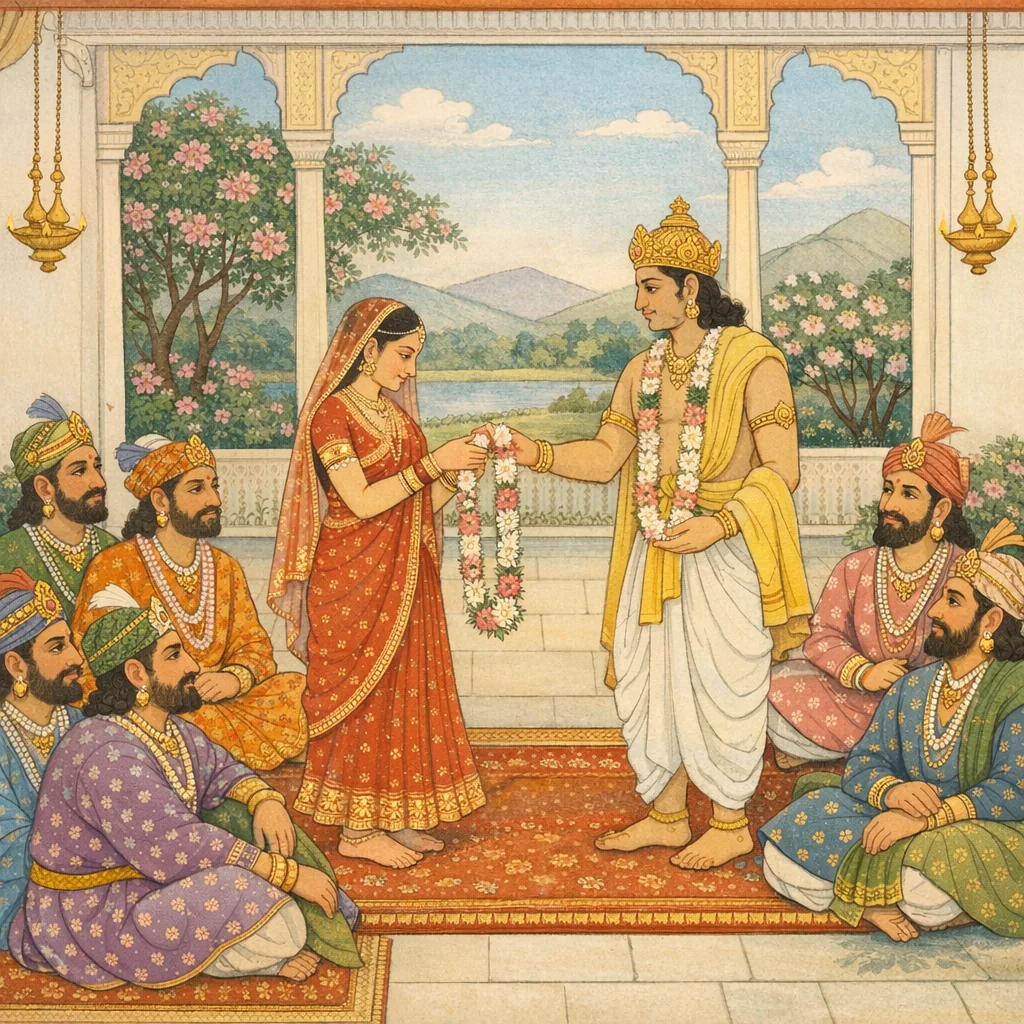
Chapter Arc: Kuntibhoja proclaims a grand svayamvara for his radiant daughter Kunti, summoning kings from many lands—each arriving with pride and expectation. → The assembled rulers, lion-chested and sun-bright in splendor, vie in presence and reputation; amid this blaze of royal ambition, Kunti’s gaze and heart begin to waver toward one figure—Pandu—standing like a second Indra among men. → Overcome by love and modest trembling, Kunti chooses Pandu in the svayamvara, placing the victory garland upon him before the watching court. → Kuntibhoja completes the marriage rites with rich gifts and honors; the newly wedded pair depart in a great procession, blessed by brahmins and sages, and Pandu installs Kunti as queen in his own palace. → The marriage is secured, but the future of this union—its trials, vows, and the destiny it will seed—waits just beyond the wedding songs.
Shlokas
Verse 1
(दाक्षिणात्य अधिक पाठके १३ ३ श्लोक मिलाकर कुल ४४ ६ “लोक हैं) न्च्स्स्त्ािस्सि (9) £:ानप्ट् एकादशाधिकशततमोड< ध्याय: कुन्तीद्वारा स्वयंवरमें पाण्डुका वरण और उनके साथ विवाह वैशम्पायन उवाच सत्त्वरूपगुणोपेता धर्मारामा महाव्रता । दुहिता कुन्तिभोजस्य पृथा पृुथुललोचना,वैशम्पायनजी कहते हैं--जनमेजय! राजा कुन्तिभोजकी पुत्री विशाल नेत्रोंवाली पृथा धर्म, सुन्दर रूप तथा उत्तम गुणोंसे सम्पन्न थी। वह एकमात्र धर्ममें ही रत रहनेवाली और महान् व्रतोंका पालन करनेवाली थी
Vaiśampāyana said: Janamejaya, Kuntibhoja’s daughter Pṛthā—wide-eyed, endowed with a noble disposition, beauty, and excellent qualities—was devoted to dharma alone and steadfast in great vows.
Verse 2
तां तु तेजस्विनीं कन्यां रूपयौवनशालिनीम् । व्यवृण्वन् पार्थिवा: केचिदतीव स्त्रीगुणैर्युताम्,सत्रीजनोचित सर्वोत्तम गुण अधिक मात्रामें प्रकट होकर उसकी शोभा बढ़ा रहे थे। मनोहर रूप तथा युवावस्थासे सुशोभित उस तेजस्विनी राजकन्याके लिये कई राजाओंने महाराज कुन्तिभोजसे याचना की
Vaiśampāyana said: Many kings sought that radiant maiden, endowed with beauty and the bloom of youth, and richly possessed of the finest qualities befitting a noble woman. Thus, her excellence became widely manifest, enhancing her renown; and for that illustrious princess, several rulers petitioned King Kuntibhoja for her hand.
Verse 3
ततः सा कुन्तिभोजेन राज्ञा55हूय नराधिपान् । पित्रा स्वयंवरे दत्ता दुहिता राजसत्तम,राजेन्द्र! तब कन्याके पिता राजा कुन्तिभोजने उन सब राजाओंको बुलाकर अपनी पुत्री पृथाको स्वयंवरमें उपस्थित किया
Then King Kuntibhoja summoned the other rulers; and at her svayaṃvara, her father bestowed his daughter Pṛthā in marriage—O best of kings, O lord of kings.
Verse 4
ततः सा रड्भरमध्यस्थं तेषां राज्ञां मनस्विनी । ददर्श राजशार्दूलं पाण्डु भरतसत्तमम्,मनस्विनी कुन्तीने सब राजाओंके बीच रंगमंचपर बैठे हुए भरतवंशशिरोमणि नृपश्रेष्ठ पाएको देखा
Then Kuntī, a woman of resolute mind, saw Pāṇḍu—the tiger among kings, the finest of the Bharata line—seated amid those assembled monarchs at the center of the arena.
Verse 5
सिंहदर्प महोरस्कं वृषभाक्षं महाबलम् | आदित्यमिव सर्वेषां राज्ञां प्रच्छाद्य वै प्रभा:,उनमें सिंहके समान अभिमान जाग रहा था। उनकी छाती बहुत चौड़ी थी। उनके नेत्र बैलकी आँखोंके समान बड़े-बड़े थे। उनका बल महान् था। वे सब राजाओंकी प्रभाको अपने तेजसे आच्छादित करके भगवान् सूर्यकी भाँति प्रकाशित हो रहे थे
Vaiśampāyana said: He was lion-proud, broad-chested, bull-eyed, and of immense strength. By the radiance of his own splendor he outshone the glory of all the kings, shining like the Sun.
Verse 6
तिष्ठन्तं राजसमितौ पुरन्दरमिवापरम् | त॑ दृष्टवा सानवद्याज्ी कुन्तिभोजसुता शुभा,उस राजसमाजमें वे द्वितीय इन्द्रके समान विराजमान थे। निर्दोष अंगोंवाली कुन्तिभोजकुमारी शुभलक्षणा कुन्ती स्वयंवरकी रंगभूमिमें नरश्रेष्ठ पाण्डुको देखकर मन- ही-मन उन्हें पानेके लिये व्याकुल हो उठी। उसके सब अंग कामसे व्याप्त हो गये और चित्त एकबारगी चंचल हो उठा
Vaiśaṃpāyana said: In the royal assembly he stood resplendent like a second Indra. Seeing that foremost of men, Pāṇḍu, upon the arena of the svayaṃvara, the auspicious Kuntī—daughter of Kuntibhoja, flawless in her limbs—became inwardly agitated with the desire to win him. Love pervaded her whole being, and her mind at once grew unsteady.
Verse 7
पाण्डुं नरवरं रड्जे हृदयेनाकुलाभवत् । ततः कामपरीताज्ी सकृत् प्रचलमानसा,उस राजसमाजमें वे द्वितीय इन्द्रके समान विराजमान थे। निर्दोष अंगोंवाली कुन्तिभोजकुमारी शुभलक्षणा कुन्ती स्वयंवरकी रंगभूमिमें नरश्रेष्ठ पाण्डुको देखकर मन- ही-मन उन्हें पानेके लिये व्याकुल हो उठी। उसके सब अंग कामसे व्याप्त हो गये और चित्त एकबारगी चंचल हो उठा
Vaiśampāyana said: Seeing Pāṇḍu, the foremost of men, Kuntī became inwardly agitated at heart. Then, overcome by desire, her mind at once grew unsteady.
Verse 8
व्रीडमाना स््र॒जं कुन्ती राज्ञ: स्कन्धे समासजत् । त॑ निशम्य वृतं पाण्डुं कुन्त्या सर्वे नराधिपा:,कुन्तीने लजाते-लजाते राजा पाण्डुके गलेमें जयमाला डाल दी। सब राजाओंने जब सुना कि कुन्तीने महाराज पाण्डुका वरण कर लिया, तब वे हाथी, घोड़े एवं रथों आदि वाहनोंद्वारा जैसे आये थे, वैसे ही अपने अपने स्थानको लौट गये। राजन! तब उसके पिताने (पाण्डुके साथ शास्त्रविधिके अनुसार) कुन्तीका विवाह कर दिया
Vaiśampāyana said: Modestly, Kuntī placed the victory garland upon the king’s shoulder. When all the assembled rulers heard that Kuntī had chosen Pāṇḍu, they withdrew and returned to their own realms with the same retinues of elephants, horses, and chariots with which they had come. Thereafter, her father duly gave Kuntī in marriage to Pāṇḍu according to the prescribed rites.
Verse 9
यथागतं समाजम्मुर्गजैरश्चै रथैस्तथा । ततस्तस्या: पिता राजन विवाहमकरोत् प्रभु:,कुन्तीने लजाते-लजाते राजा पाण्डुके गलेमें जयमाला डाल दी। सब राजाओंने जब सुना कि कुन्तीने महाराज पाण्डुका वरण कर लिया, तब वे हाथी, घोड़े एवं रथों आदि वाहनोंद्वारा जैसे आये थे, वैसे ही अपने अपने स्थानको लौट गये। राजन! तब उसके पिताने (पाण्डुके साथ शास्त्रविधिके अनुसार) कुन्तीका विवाह कर दिया
Vaiśampāyana said: “Just as the assembled kings had come—accompanied by their deer-skins, horses, and chariots—so too they departed back to their own realms when they heard that Kuntī had chosen King Pāṇḍu. Then, O King, her father, acting with due authority, duly solemnized Kuntī’s marriage with Pāṇḍu according to prescribed rites.”
Verse 10
स तया कुन्तिभोजस्य दुहित्रा कुरुनन्दन: । युयुजेडमितसौभाग्य: पौलोम्या मघवानिव,अनन्त सौभाग्यशाली कुरुनन्दन पाए कुन्तिभोज-कुमारी कुन्तीसे संयुक्त हो शचीके साथ इन्द्रकी भाँति सुशोभित हुए
Vaiśampāyana said: That delight of the Kurus, endowed with immeasurable good fortune, was united in marriage with Kuntī, the daughter of Kuntibhoja; and, like Indra with Paulomī (Śacī), he shone resplendent with her.
Verse 11
कुन्त्या: पाण्डोश्व राजेन्द्र कुन्तिभोजो महीपति: । कृत्वोद्वाहं तदा तं तु नानावसुभिरचिंतम् । स्वपुरं प्रेषयामास स राजा कुरुसत्तम,राजेन्द्र! महाराज कुन्तिभोजने कुन्ती और पाण्डुका विवाहसंस्कार सम्पन्न करके उस समय उन्हें नाना प्रकारके धन और रत्नोंद्वारा सम्मानित किया। तत्पश्चात् पाण्डुको उनकी राजधानीमें भेज दिया। कुरुश्रेष्ठ जनमेजय! तब कौरवनन्दन राजा पाण्डु नाना प्रकारकी ध्वजापताकाओंसे सुशोभित विशाल सेनाके साथ चले। उस समय बहुत-से ब्राह्मण एवं महर्षि आशीर्वाद देते हुए उनकी स्तुति करवाते थे। हस्तिनापुरमें आकर उन शक्तिशाली नरेशने अपनी प्यारी पत्नी कुन्तीको राजमहलमें पहुँचा दिया
Vaiśampāyana said: O king, Kuntibhoja, the lord of the land, having then solemnized the marriage of Kuntī and Pāṇḍu, honored them with countless and splendid riches. Thereafter that king sent Pāṇḍu to his own capital.
Verse 12
ततो बलेन महता नानाथ्वजपताकिना । स्तूयमान: स चाशीर्भित्रिद्यिणैश्व महर्षिभि:,राजेन्द्र! महाराज कुन्तिभोजने कुन्ती और पाण्डुका विवाहसंस्कार सम्पन्न करके उस समय उन्हें नाना प्रकारके धन और रत्नोंद्वारा सम्मानित किया। तत्पश्चात् पाण्डुको उनकी राजधानीमें भेज दिया। कुरुश्रेष्ठ जनमेजय! तब कौरवनन्दन राजा पाण्डु नाना प्रकारकी ध्वजापताकाओंसे सुशोभित विशाल सेनाके साथ चले। उस समय बहुत-से ब्राह्मण एवं महर्षि आशीर्वाद देते हुए उनकी स्तुति करवाते थे। हस्तिनापुरमें आकर उन शक्तिशाली नरेशने अपनी प्यारी पत्नी कुन्तीको राजमहलमें पहुँचा दिया
Vaiśampāyana said: Thereafter, King Pāṇḍu set out with a mighty host, adorned with many banners and standards. As he proceeded, great sages and brāhmaṇas praised him and bestowed auspicious blessings, as if heavenly in their power.
Verse 13
सम्प्राप्य नगर राजा पाण्डु: कौरवनन्दन: । न्यवेशयत तां भार्या कुन्तीं स्वभवने प्रभु:,राजेन्द्र! महाराज कुन्तिभोजने कुन्ती और पाण्डुका विवाहसंस्कार सम्पन्न करके उस समय उन्हें नाना प्रकारके धन और रत्नोंद्वारा सम्मानित किया। तत्पश्चात् पाण्डुको उनकी राजधानीमें भेज दिया। कुरुश्रेष्ठ जनमेजय! तब कौरवनन्दन राजा पाण्डु नाना प्रकारकी ध्वजापताकाओंसे सुशोभित विशाल सेनाके साथ चले। उस समय बहुत-से ब्राह्मण एवं महर्षि आशीर्वाद देते हुए उनकी स्तुति करवाते थे। हस्तिनापुरमें आकर उन शक्तिशाली नरेशने अपनी प्यारी पत्नी कुन्तीको राजमहलमें पहुँचा दिया
Vaiśampāyana said: Having reached the city, King Pāṇḍu—delight of the Kuru line—settled his wife Kuntī in his own royal residence. The verse highlights the dharmic completion of marriage through proper establishment of the bride in the husband’s household, marking public legitimacy, protection, and honor within the royal order.
Verse 111
इति श्रीमहाभारते आदिपर्वणि सम्भवपर्वणि कुन्तीविवाहे एकादशाधिकशततमो<ध्याय:
Thus, in the Śrī Mahābhārata, within the Ādi Parva—specifically the Sambhava Parva—this concludes the one-hundred-and-eleventh chapter, concerning the marriage of Kuntī. The colophon marks the close of a narrative unit, situating Kuntī’s marriage within the larger account of origins and lineage that will shape later duties, alliances, and the moral pressures of dynastic life.
Frequently Asked Questions
The dilemma is how to fulfill the dynastic duty of producing heirs while maintaining marital fidelity and dharmic legitimacy under conditions where ordinary conjugal means are constrained or ethically contested.
Dharma is presented as context-sensitive and precedent-guided: extraordinary measures may be narrated as permissible when motivated by duty, bounded by consent, and anchored in recognized tradition rather than unilateral desire.
No explicit phalaśruti is stated in this excerpt; the meta-function is justificatory—using purāṇic precedent to normalize an exceptional solution within the epic’s broader dharma discourse on lineage and obligation.