Adhyaya 110
पाण्डोः प्रव्रज्या-व्रतवर्णनम् | Pāṇḍu’s Resolve for Renunciation and Forest Discipline
Upa-parva: Sambhava Upaparva (Genealogical and Succession Narratives)
Vaiśaṃpāyana narrates Pāṇḍu’s grief-stricken reflection and ethical self-critique. Pāṇḍu interprets misfortune as linked to unregulated desire and vows to pursue mokṣa-oriented discipline through solitary mendicancy, emotional equanimity, non-violence, minimal possessions, and measured alms-taking. He outlines a rigorous behavioral code: impartiality toward praise/blame, avoidance of harm, controlled diet, and indifference to life/death outcomes. He rejects a “debased path” of dependency framed as unworthy of kṣatriya integrity. Turning to Kuntī and Mādrī, he instructs that elders and court authorities be informed of his forest departure; both wives articulate their intention to follow him and undertake austerities. Pāṇḍu then distributes valuables to Brahmins, formally renounces artha and kāma, and departs with his wives, traveling through named regions toward Gandhamādana and settling among ascetic landscapes protected by siddhas and great beings.
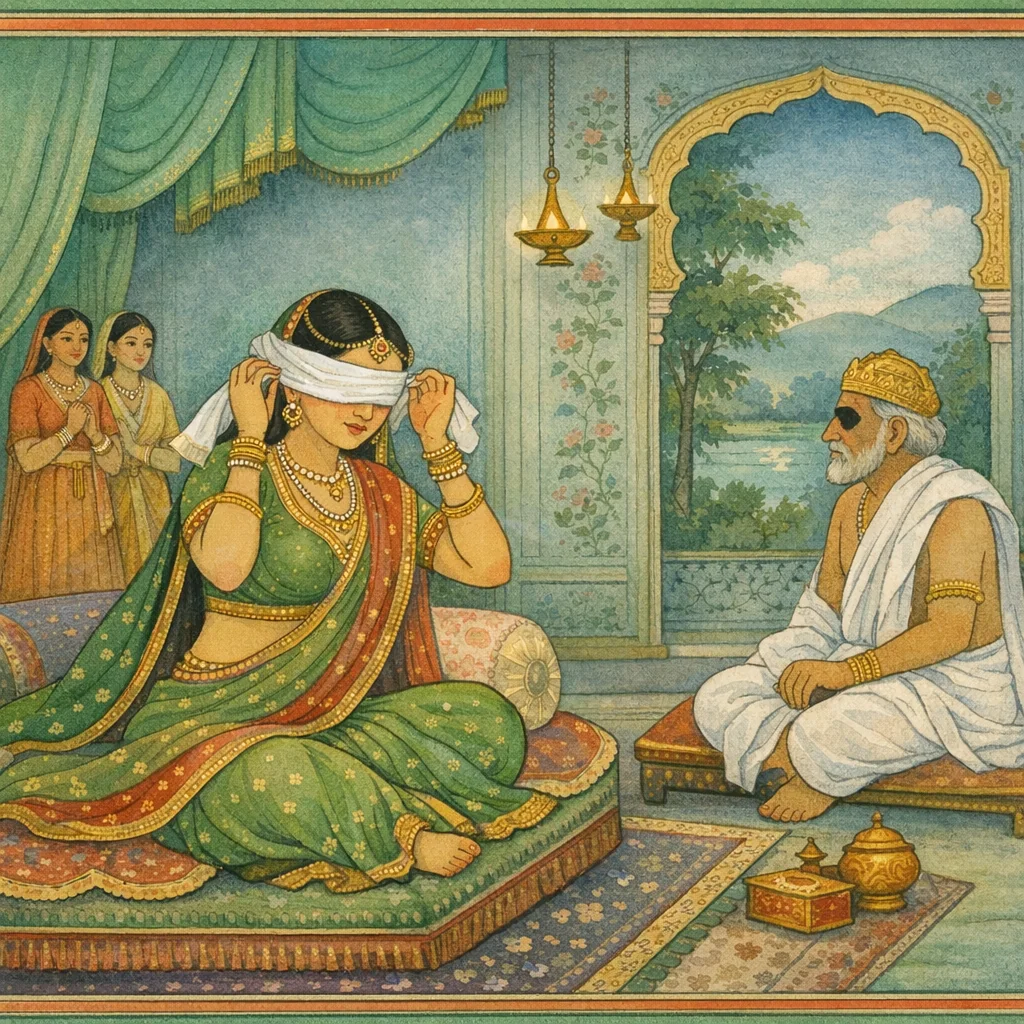
Chapter Arc: कुरुवंश की दीर्घ परंपरा और ‘परमो धर्म’ की स्मृति के बीच वंश-रक्षा का प्रश्न उठता है—राजधर्म और कुलधर्म को अक्षुण्ण रखने हेतु योग्य विवाह-संबंध खोजे जाते हैं। → भीष्म/कुरु-नीति के केंद्र में संतानार्थ गठबंधन की आवश्यकता तीव्र होती है; विदुर से परामर्श लेकर उपयुक्त कन्याओं की चर्चा होती है—यादवी पृथा (कुन्ती) तथा गांधार-राजकुमारी गांधारी जैसे संबंधों का संकेत मिलता है। → गांधारी को धृतराष्ट्र के अंधत्व का ज्ञान होता है; पतिव्रता-धर्म को सर्वोपरि मानकर वह स्वयं अपनी आँखों पर पट्टी बाँध लेती है—पति के भाग्य को अपना भाग्य बना लेने का कठोर व्रत। → गांधारी अपने आचरण, विनय और सेवा से समस्त गुरुजनों को संतुष्ट करती है; शकुनि का आगमन भी होता है—विवाह-संबंध स्थापित होकर कुरुवंश की संतान-परंपरा का मार्ग प्रशस्त दिखता है। → शकुनि के साथ गांधार का प्रभाव हस्तिनापुर में प्रवेश करता है—यह संबंध भविष्य में किस दिशा में कुरुवंश को मोड़ेगा?
Shlokas
Verse 1
(दाक्षिणात्य अधिक पाठका $ “लोक मिलाकर कुल २६३ श्लोक हैं) #ीी:)#ी >> श््य बीज नस -“अयं तु परमो धर्मो यद् योगेनात्मदर्शनम्' याज्ञवल्क्यस्मृतिके इस कथनके अनुसार आत्मदर्शन ही सबसे उत्त्ृष्ट धर्म है। नवाधिकशततमो<्ध्याय: राजा धृतराष्ट्रका विवाह भीष्म उवाच गुणै: समुदितं सम्यगिदं न: प्रथितं कुलम् अत्यन्यान् पृथिवीपालान् पृथिव्यामधिराज्यभाक्,भीष्मजीने कहा--बेटा विदुर! हमारा यह कुल अनेक सदगुणोंसे सम्पन्न होकर इस जगत्में विख्यात हो रहा है। यह अन्य भूपालोंको जीतकर इस भूमण्डलके साम्राज्यका अधिकारी हुआ है
Bhishma said: “Son Vidura, our lineage—rich in virtues—has rightly become renowned in the world. Having surpassed other rulers, it has attained the right to sovereign rule over the earth.”
Verse 2
रक्षितं राजभि: पूर्व धर्मविद्धिर्महात्मभि: । नोत्सादमगमच्चेदं कदाचिदिह न: कुलम्,पहलेके धर्मज्ञ एवं महात्मा राजाओंने इसकी रक्षा की थी; अतः हमारा यह कुल इस भूतलपर कभी उच्छिन्न नहीं हुआ
Bhīṣma said: “In former times this lineage was protected by kings who knew dharma and were great-souled. Therefore, here on this earth, our family has never at any time fallen into ruin or been cut off.”
Verse 3
मया च सत्यवत्या च कृष्णेन च महात्मना । समवस्थापितं भूयो युष्मासु कुलतन्तुषु,(बीचमें संकटकाल उपस्थित हुआ था किंतु) मैंने, माता सत्यवतीने तथा महात्मा श्रीकृष्णद्वैपायन व्यासजीने मिलकर पुन: इस कुलको स्थापित किया है। तुम तीनों भाई इस कुलके तंतु हो और तुम्हींपर अब इसकी प्रतिष्ठा है
Bhishma said: “By me, by Satyavatī, and by the great-souled Kṛṣṇa (Vyāsa) as well, this lineage was once again re-established after it had fallen into peril. You are the threads of this family line; upon you now rests its continuity and standing.”
Verse 4
तच्चैतद् वर्धते भूय: कुलं सागरवद् यथा । तथा मया विधातव्यं त्वया चैव न संशय:,वत्स! यह हमारा वही कुल आगे भी जिस प्रकार समुद्रकी भाँति बढ़ता रहे, नि:संदेह वही उपाय मुझे और तुम्हें भी करना चाहिये
Bhīṣma said: “May this very lineage continue to grow still further, like the ocean in its vast increase. Therefore, without doubt, the means to secure that must be undertaken—by me, and by you as well, dear child.”
Verse 5
श्रूयते यादवी कन्या स्वनुरूपा कुलस्य नः । सुबलस्यात्मजा चैव तथा मद्रेश्वरस्प च,सुना जाता है, यदुवंशी शूरसेनकी कन्या पृथा (जो अब राजा कुन्तिभोजकी गोद ली हुई पुत्री है) भलीभाँति हमारे कुलके अनुरूप है। इसी प्रकार गान्धारराज सुबल और मद्रनरेशके यहाँ भी एक-एक कन्या सुनी जाती है
Bhīṣma said: “It is reported that there is a maiden of the Yādava line, well-suited in every way to our family. Likewise, it is said that the king of Gāndhāra, Subala, and also the lord of Madra each have a daughter.”
Verse 6
कुलीना रूपवत्यश्व ता: कन्या: पुत्र सर्वश: । उचिताश्रवैव सम्बन्धे ते>स्माकं क्षत्रियर्षभा:,बेटा! वे सब कन्याएँ बड़ी सुन्दरी तथा उत्तम कुलमें उत्पन्न हैं। वे श्रेष्ठ क्षत्रियगण हमारे साथ विवाह-सम्बन्धकरनेके सर्वथा योग्य हैं
Bhīṣma said: “Son, all these maidens are of noble lineage and of great beauty. O bull among kṣatriyas, they are in every way suitable for forming a marriage alliance with our house.”
Verse 7
मन्ये वरयितव्यास्ता इत्यहं धीमतां वर । संतानार्थ कुलस्यास्य यद् वा विदुर मन्यसे,बुद्धिमानोंमें श्रेष्ठ विदुर! मेरी राय है कि इस कुलकी संतानपरम्पराको बढ़ानेके लिये उक्त कन्याओंका वरण करना चाहिये अथवा जैसी तुम्हारी सम्मति हो, वैसा किया जाय
Bhīṣma said: “In my judgment, O best among the wise, those maidens should be chosen in marriage, so that the lineage of this house may continue. Yet, Vidura, let it be done as you deem proper.”
Verse 8
विदुर उवाच भवान् पिता भवान् माता भवान् नः परमो गुरु: । तस्मात् स्वयं कुलस्यास्य विचार्य कुरु यद्धितम्,विदुर बोले--प्रभो! आप हमारे पिता हैं, आप ही माता हैं और आप ही परम गुरु हैं; अतः: स्वयं विचार करके जिस बातमें इस कुलका हित हो, वह कीजिये
Vidura said: “You are our father, you are our mother, and you are our highest teacher. Therefore, after reflecting for yourself, do what is truly beneficial for this family.”
Verse 9
वैशम्पायन उवाच अथ शुश्राव विप्रेभ्यो गान्धारीं सुबलात्मजाम् | आराध्य वरदं देवं भगनेत्रहरं हरम्,वैशम्पायनजी कहते हैं--जनमेजय! इसके बाद भीष्मजीने ब्राह्मणोंसे गान्धारराज सुबलकी पुत्री शुभलक्षणा गान्धारीके विषयमें सुना कि वह भगदेवताके नेत्रोंका नाश करनेवाले वरदायक भगवान् शंकरकी आराधना करके अपने लिये सौ पुत्र होनेका वरदान प्राप्त कर चुकी है। भारत! जब इस बातका ठीक-ठीक पता लग गया, तब कुरुपितामह भीष्मने गान्धारराजके पास अपना दूत भेजा। धृतराष्ट्र अंधे हैं, इस बातको लेकर सुबलके मनमें बड़ा विचार हुआ
Vaiśampāyana said: Then (Bhīṣma) heard from the brāhmaṇas about Gāndhārī, the daughter of Subala of Gandhāra—that she had worshipped Hara (Śiva), the boon-giving god famed as the destroyer of Bhaga’s eyes, and had obtained a boon for herself (concerning many sons).
Verse 10
गान्धारी किल पुत्राणां शतं लेभे वरं शुभा । इति शुश्राव तत्त्वेन भीष्म: कुरुपितामह:,वैशम्पायनजी कहते हैं--जनमेजय! इसके बाद भीष्मजीने ब्राह्मणोंसे गान्धारराज सुबलकी पुत्री शुभलक्षणा गान्धारीके विषयमें सुना कि वह भगदेवताके नेत्रोंका नाश करनेवाले वरदायक भगवान् शंकरकी आराधना करके अपने लिये सौ पुत्र होनेका वरदान प्राप्त कर चुकी है। भारत! जब इस बातका ठीक-ठीक पता लग गया, तब कुरुपितामह भीष्मने गान्धारराजके पास अपना दूत भेजा। धृतराष्ट्र अंधे हैं, इस बातको लेकर सुबलके मनमें बड़ा विचार हुआ
Vaiśampāyana said: Auspicious Gandhārī, it is said, obtained a boon for a hundred sons. Bhīṣma, the grandsire of the Kurus, learned this as a confirmed fact.
Verse 11
ततो गान्धारराजस्य प्रेषयामास भारत । अचक्षुरिति तत्रासीत् सुबलस्य विचारणा,वैशम्पायनजी कहते हैं--जनमेजय! इसके बाद भीष्मजीने ब्राह्मणोंसे गान्धारराज सुबलकी पुत्री शुभलक्षणा गान्धारीके विषयमें सुना कि वह भगदेवताके नेत्रोंका नाश करनेवाले वरदायक भगवान् शंकरकी आराधना करके अपने लिये सौ पुत्र होनेका वरदान प्राप्त कर चुकी है। भारत! जब इस बातका ठीक-ठीक पता लग गया, तब कुरुपितामह भीष्मने गान्धारराजके पास अपना दूत भेजा। धृतराष्ट्र अंधे हैं, इस बातको लेकर सुबलके मनमें बड़ा विचार हुआ
Then Bhīṣma sent a messenger to the king of Gāndhāra. O Bhārata (Janamejaya), there arose in Subala’s mind a serious deliberation on the matter, because Dhṛtarāṣṭra was without sight.
Verse 12
कुलं॑ ख्यातिं च वृत्तं च बुद्धया तु प्रसमीक्ष्य सः । ददौ तां धृतराष्ट्राय गान्धारीं धर्मचारिणीम्,परंतु उनके कुल, प्रसिद्धि और आचार आदिके विषयमें बुद्धिपूर्वक विचार करके उसने धर्मपरायणा गान्धारीका धृतराष्ट्रके लिये वाग्दान कर दिया
After thoughtfully examining the lineage, reputation, and conduct, he gave Gandhārī—steadfast in dharma—in marriage to Dhṛtarāṣṭra.
Verse 13
गान्धारी त्वथ शुश्राव धृतराष्ट्रमचक्षुषम् । आत्मानं दित्सितं चास्मै पित्रा मात्रा च भारत,जनमेजय! गान्धारीने जब सुना कि धूृतराष्ट्र अंधे हैं और पिता-माता मेरा विवाह उन्हींके साथ करना चाहते हैं, तब उन्होंने रेशमी वस्त्र लेकर उसके कई तह करके उसीसे अपनी आँखें बाँध लीं। राजन! गान्धारी बड़ी पतिव्रता थीं। उन्होंने निश्चय कर लिया था कि मैं (सदा पतिके अनुकूल रहूँगी,, उनके दोष नहीं देखूँगी। तदनन्तर एक दिन गान्धारराजकुमार शकुनि युवावस्था तथा लक्ष्मीके समान मनोहर शोभासे युक्त अपनी बहिन गान्धारीको साथ लेकर कौरवोंके यहाँ गये और उन्होंने बड़े आदर-सत्कारके साथ धृतराष्ट्रको अपनी बहिन सौंप दी। शकुनिने भीष्मजीकी सम्मतिके अनुसार विवाह-कार्य सम्पन्न किया
Vaiśampāyana said: Then Gāndhārī heard, O Bhārata Janamejaya, that Dhṛtarāṣṭra was without sight, and that her father and mother intended to give her in marriage to him. The episode brings forth the tension between personal choice and familial duty, and foreshadows Gāndhārī’s later ideal of wifely fidelity—understood as a deliberate sharing in her husband’s condition and a resolve to shape her life in accord with his, whatever his limitations.
Verse 14
ततः सा पट्टमादाय कृत्वा बहुगुणं तदा । बबन्ध नेत्रे स्वे राजन् पतिव्रतपरायणा,जनमेजय! गान्धारीने जब सुना कि धूृतराष्ट्र अंधे हैं और पिता-माता मेरा विवाह उन्हींके साथ करना चाहते हैं, तब उन्होंने रेशमी वस्त्र लेकर उसके कई तह करके उसीसे अपनी आँखें बाँध लीं। राजन! गान्धारी बड़ी पतिव्रता थीं। उन्होंने निश्चय कर लिया था कि मैं (सदा पतिके अनुकूल रहूँगी,, उनके दोष नहीं देखूँगी। तदनन्तर एक दिन गान्धारराजकुमार शकुनि युवावस्था तथा लक्ष्मीके समान मनोहर शोभासे युक्त अपनी बहिन गान्धारीको साथ लेकर कौरवोंके यहाँ गये और उन्होंने बड़े आदर-सत्कारके साथ धृतराष्ट्रको अपनी बहिन सौंप दी। शकुनिने भीष्मजीकी सम्मतिके अनुसार विवाह-कार्य सम्पन्न किया
Vaiśaṃpāyana said: Then she, taking a strip of silk and folding it into many layers, bound her own eyes, O king Janamejaya—Gāndhārī, wholly devoted to the vow of wifely fidelity. Hearing that Dhṛtarāṣṭra was blind and that her parents intended her marriage to him, she chose by her own resolve to share his condition, embodying a severe ideal of devotion and self-restraint.
Verse 15
नाभ्यसूयां पतिमहमित्येवं कृतनिश्चया । ततो गान्धारराजस्य पुत्र: शकुनिरभ्ययात्,जनमेजय! गान्धारीने जब सुना कि धूृतराष्ट्र अंधे हैं और पिता-माता मेरा विवाह उन्हींके साथ करना चाहते हैं, तब उन्होंने रेशमी वस्त्र लेकर उसके कई तह करके उसीसे अपनी आँखें बाँध लीं। राजन! गान्धारी बड़ी पतिव्रता थीं। उन्होंने निश्चय कर लिया था कि मैं (सदा पतिके अनुकूल रहूँगी,, उनके दोष नहीं देखूँगी। तदनन्तर एक दिन गान्धारराजकुमार शकुनि युवावस्था तथा लक्ष्मीके समान मनोहर शोभासे युक्त अपनी बहिन गान्धारीको साथ लेकर कौरवोंके यहाँ गये और उन्होंने बड़े आदर-सत्कारके साथ धृतराष्ट्रको अपनी बहिन सौंप दी। शकुनिने भीष्मजीकी सम्मतिके अनुसार विवाह-कार्य सम्पन्न किया
Vaiśaṃpāyana said: “Having thus resolved, ‘I shall not find fault with my husband,’ she remained firm in her decision. Then Śakuni, the son of the king of Gāndhāra, came there, O Janamejaya.”
Verse 16
स्वसारं वयसा लक्ष्म्या युक्तामादाय कौरवान् | तां तदा धृतराष्ट्राय ददौ परमसत्कृताम् । भीष्मस्यानुमते चैव विवाहं समकारयत्,जनमेजय! गान्धारीने जब सुना कि धूृतराष्ट्र अंधे हैं और पिता-माता मेरा विवाह उन्हींके साथ करना चाहते हैं, तब उन्होंने रेशमी वस्त्र लेकर उसके कई तह करके उसीसे अपनी आँखें बाँध लीं। राजन! गान्धारी बड़ी पतिव्रता थीं। उन्होंने निश्चय कर लिया था कि मैं (सदा पतिके अनुकूल रहूँगी,, उनके दोष नहीं देखूँगी। तदनन्तर एक दिन गान्धारराजकुमार शकुनि युवावस्था तथा लक्ष्मीके समान मनोहर शोभासे युक्त अपनी बहिन गान्धारीको साथ लेकर कौरवोंके यहाँ गये और उन्होंने बड़े आदर-सत्कारके साथ धृतराष्ट्रको अपनी बहिन सौंप दी। शकुनिने भीष्मजीकी सम्मतिके अनुसार विवाह-कार्य सम्पन्न किया
Vaiśampāyana said: Taking his sister—endowed with youthful grace and auspicious beauty like Lakṣmī—to the Kauravas, he then presented her to Dhṛtarāṣṭra with the highest honor. And, O Janamejaya, with Bhīṣma’s consent he duly had the marriage rites performed.
Verse 17
दत्त्वा स भगिनीं वीरो यथा च परिच्छदम् । पुनरायात् स्वनगरं भीष्मेण प्रतिपूजित:,वीरवर शकुनिने अपनी बहिनका विवाह करके यथायोग्य दहेज दिया। बदलेमें भीष्मजीने भी उनका बड़ा सम्मान किया। तत्पश्चात् वे अपनी राजधानीको लौट आये
Having given his sister in marriage, that heroic prince also provided the appropriate bridal gifts and dowry according to custom. Honoured in return with due respect by Bhīṣma, he then returned to his own capital—showing the reciprocal ethics of alliance, hospitality, and propriety that govern royal marriages.
Verse 18
गान्धार्यपि वरारोहा शीलाचारविचेष्टितै: । तुष्टिं कुरूणां सर्वेषां जनयामास भारत,भारत! सुन्दर शरीरवाली गान्धारीने अपने उत्तम स्वभाव, सदाचार तथा सदव्यवहारोंसे समस्त कौरवोंको प्रसन्न कर लिया
Vaiśampāyana said: “Gandhārī too, the noble lady of graceful bearing, by her virtuous disposition, disciplined conduct, and exemplary behavior, brought satisfaction to all the Kurus, O Bhārata.”
Verse 19
वृत्तेनाराध्य तान् सर्वान् गुरून्ू पतिपरायणा । वाचापि पुरुषानन्यान् सुव्रता नान्यकीर्तयत्,इस प्रकार सुन्दर बर्तावसे समस्त गुरुजनोंकी प्रसन्नता प्राप्त करके उत्तम व्रतका पालन करनेवाली पतिपरायणा गान्धारीने कभी दूसरे पुरुषोंका नामतक नहीं लिया
By the propriety of her conduct she pleased all the elders and teachers; and Gandhārī, steadfast in her noble vow and wholly devoted to her husband, never even in speech uttered the name of another man.
Verse 108
इस प्रकार श्रीमह्ाभारत आदिपर्वके अन्तर्गत सम्भवपर्वमें पाण्डुराज्याभिषेकाविषयक एक सौ आठवाँ अध्याय पूरा हुआ
Thus ends the one hundred and eighth chapter of the Sambhava section within the Ādi Parva of the sacred Mahābhārata, dealing with Pāṇḍu’s consecration to kingship.
Verse 109
इति श्रीमहाभारते आदिपर्वणि सम्भवपर्वणि धृतराष्ट्रविवाहे नवाधिकशततमोड<ध्याय:
Thus ends the one hundred and ninth chapter of the Sambhava section within the Ādi Parva of the revered Mahābhārata, concerning the marriage of Dhṛtarāṣṭra.
Frequently Asked Questions
Pāṇḍu confronts the conflict between royal identity and moral accountability: recognizing desire-driven error and social consequence, he chooses disciplined withdrawal over continued enjoyment or compromised authority.
The chapter presents renunciation as a structured ethical program—non-violence, emotional steadiness, minimal dependence, and regulated consumption—framed as a practical method for reducing harm and stabilizing the mind under adversity.
No explicit phalaśruti is stated; the meta-logic is implicit: adopting niyama, tapas, and ahimsa is presented as the appropriate pathway toward fearlessness and mokṣa-oriented living within the epic’s broader moral economy.