Adhyaya 104
आदि पर्व, अध्याय 104 — कर्णोत्पत्ति, दानधर्म, वैकर्तन-नामकरण (Karna’s Birth, Gift-Ethic, and the Name Vaikartana)
Upa-parva: Karna-Janma (Birth and Early Life of Karṇa) Episode
Vaiśaṃpāyana narrates that Śūra, a leading Yādava, fathers Pṛthā (Kuntī), renowned for exceptional beauty. She is given to Kuntībhoja and assigned duties of devatā-and-guest worship, during which she serves the austere sage Durvāsas with meticulous care. Pleased, Durvāsas grants her a mantra enabling invocation of any deity, with the assurance that a son will be born by that deity’s grace. Out of curiosity, the unmarried Kuntī invokes Sūrya (Āditya). Sūrya appears and causes conception; Karṇa is born as a distinguished warrior, naturally bearing armor (kavaca) and shining earrings (kuṇḍala). Sūrya restores Kuntī’s maidenhood and departs. Fearing family censure, Kuntī sets the infant afloat in water; he is found and adopted by Rādhā and her husband of the sūta community, who name him Vasuṣeṇa. As Karṇa grows devoted to Āditya and becomes renowned for generosity, Indra approaches disguised as a brāhmaṇa and requests Karṇa’s armor and earrings. Karṇa cuts them from his body and donates them; in return Indra grants a single-use śakti weapon. The chapter explains that Karṇa becomes known as Vaikartana due to the act of cutting away (kartana) his innate armor.
Chapter Arc: विचित्रवीर्य के निधन के बाद हस्तिनापुर का वंश-दीपक बुझने लगता है; सत्यवती, राज्य और कुल-परंपरा को बचाने के लिए भीष्म के सामने एक कठोर आग्रह रखती है—राज्यग्रहण और संतानोत्पादन। → सत्यवती भीष्म के धर्मज्ञान, वेद-श्रुति-परिचय और कुल-रक्षा की जिम्मेदारी का स्मरण कराती है—‘तुम्हीं में पिण्ड, कीर्ति और संतान की प्रतिष्ठा है।’ भीष्म भीतर से करुणा और कर्तव्य के द्वंद्व में पड़ते हैं: कुल-रक्षा बनाम अपनी प्रतिज्ञा। → भीष्म सत्यवती के सामने अपनी प्रतिज्ञा को अडिग घोषित करते हैं—‘इन्द्र पराक्रम छोड़ दे, धर्मराज धर्म छोड़ दे; पर मैं सत्य नहीं छोड़ूँगा।’ वे स्पष्ट करते हैं कि कुल-हित का आग्रह धर्मसंगत दिखे, फिर भी प्रतिज्ञा-भंग उनके लिए असंभव है। → भीष्म सत्यवती को सलाह देते हैं कि वह आपद्धर्म के निर्णय में कुशल पुरोहितों और विद्वानों से परामर्श करे—लोक-तंत्र/नीति और धर्म-व्यवहार को देखकर उचित उपाय निकाले; स्वयं वे प्रतिज्ञा-भंग का मार्ग स्वीकार नहीं करते। → वंश-रक्षा का प्रश्न जस का तस रहता है—यदि भीष्म नहीं, तो कुरुवंश की संतान-परंपरा कैसे चलेगी?
Shlokas
Verse 1
अपर बछ। हक २ तग्रयधिकशततमो< ध्याय: सत्यवतीका भीष्मसे राज्यग्रहण और संतानोत्पादनके लिये आग्रह तथा भीष्मके द्वारा अपनी प्रतिज्ञा बतलाते हुए उसकी अस्वीकृति वैशम्पायन उवाच तत: सत्यवती दीना कृपणा पुत्रगृद्धिनी । पुत्रस्य कृत्वा कार्याणि स्नुषाभ्यां सह भारत,वैशम्पायनजी कहते हैं--जनमेजय! तदनन्तर पुत्रकी इच्छा रखनेवाली सत्यवती अपने पुत्रके वियोगसे अत्यन्त दीन और कृपण हो गयी। उसने पुत्रवधुओंके साथ पुत्रके प्रेतकार्य करके अपनी दोनों बहुओं तथा शबस्त्रधारियोंमें श्रेष्ठ भीष्मजीको धीरज बँधाया। फिर उस महाभागा मंगलमयी देवीने धर्म, पितृूकूुल तथा मातृकुलकी ओर देखकर गंगानन्दन भीष्मसे कहा--“बेटा! सदा धर्ममें तत्पर रहनेवाले परम यशस्वी कुरुनन्दन महाराज शान्तनुके पिण्ड, कीर्ति और वंश ये सब अब तुम्हींपर अवलम्बित हैं
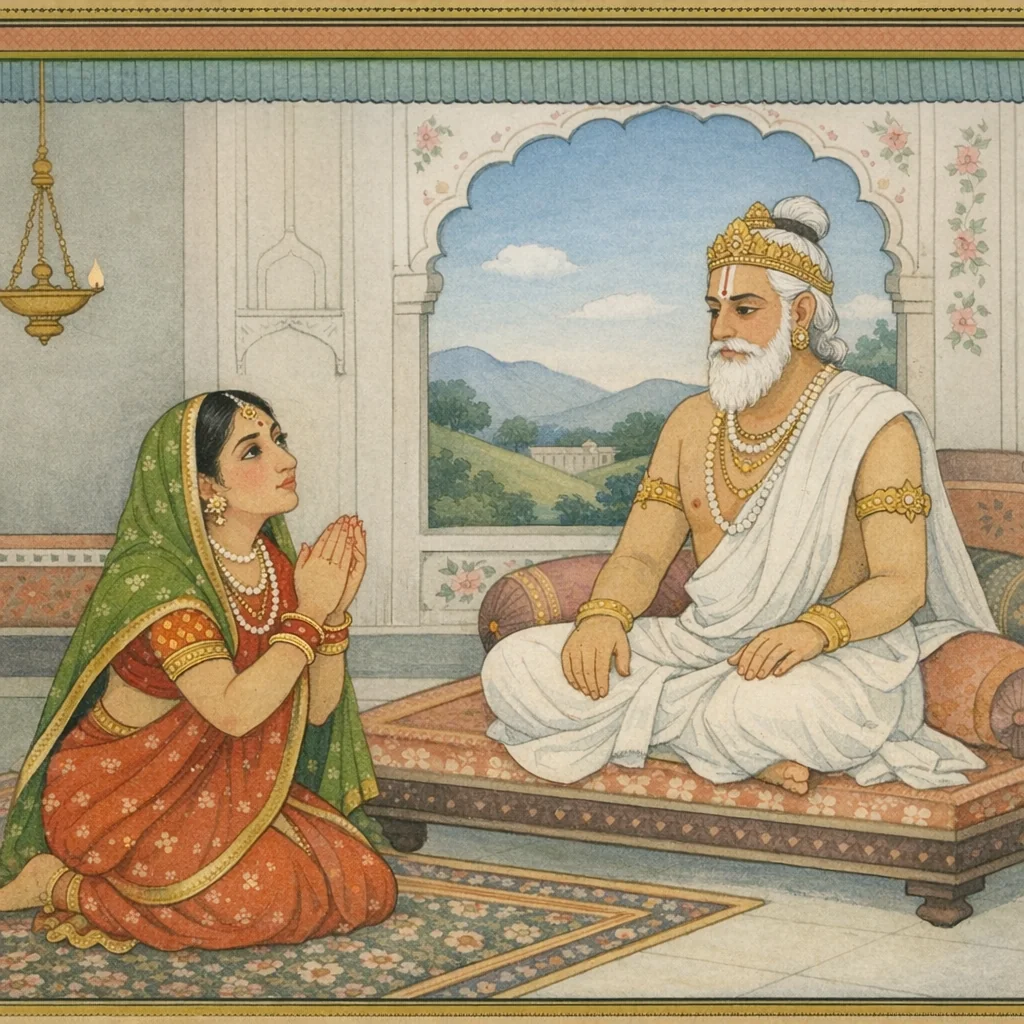
Vaiśampāyana said: Then Satyavatī—crushed by grief, wretched, and yearning for a son—having performed the funeral rites for her son together with her two daughters-in-law, O Bhārata, (turned her attention to the continuation of the royal line).
Verse 2
समाश्चास्य स्नुषे ते च भीष्मं शस्त्रभूतां वरम् धर्म च पितृवंशं च मातृवंशं च भाविनी । प्रसमीक्ष्य महाभागा गाड़्ेयं वाक्यमब्रवीत्,वैशम्पायनजी कहते हैं--जनमेजय! तदनन्तर पुत्रकी इच्छा रखनेवाली सत्यवती अपने पुत्रके वियोगसे अत्यन्त दीन और कृपण हो गयी। उसने पुत्रवधुओंके साथ पुत्रके प्रेतकार्य करके अपनी दोनों बहुओं तथा शबस्त्रधारियोंमें श्रेष्ठ भीष्मजीको धीरज बँधाया। फिर उस महाभागा मंगलमयी देवीने धर्म, पितृूकूुल तथा मातृकुलकी ओर देखकर गंगानन्दन भीष्मसे कहा--“बेटा! सदा धर्ममें तत्पर रहनेवाले परम यशस्वी कुरुनन्दन महाराज शान्तनुके पिण्ड, कीर्ति और वंश ये सब अब तुम्हींपर अवलम्बित हैं
Vaiśampāyana said: Then that noble lady, Satyavatī, looking closely to dharma and to both the paternal and maternal lineages, consoled Bhīṣma—foremost among those who bear weapons—and also her two daughters-in-law. Having reflected deeply, the illustrious queen spoke weighty words, directing attention to the responsibility of preserving righteous order and the continuity of the Kuru house.
Verse 3
शान्तनोर्धर्मनित्यस्य कौरव्यस्य यशस्विन: । त्वयि पिण्डश्न कीर्तिश्व संतानं च प्रतिष्ठितम्,वैशम्पायनजी कहते हैं--जनमेजय! तदनन्तर पुत्रकी इच्छा रखनेवाली सत्यवती अपने पुत्रके वियोगसे अत्यन्त दीन और कृपण हो गयी। उसने पुत्रवधुओंके साथ पुत्रके प्रेतकार्य करके अपनी दोनों बहुओं तथा शबस्त्रधारियोंमें श्रेष्ठ भीष्मजीको धीरज बँधाया। फिर उस महाभागा मंगलमयी देवीने धर्म, पितृूकूुल तथा मातृकुलकी ओर देखकर गंगानन्दन भीष्मसे कहा--“बेटा! सदा धर्ममें तत्पर रहनेवाले परम यशस्वी कुरुनन्दन महाराज शान्तनुके पिण्ड, कीर्ति और वंश ये सब अब तुम्हींपर अवलम्बित हैं
“For Śāntanu, the ever-dharma-abiding and illustrious Kaurava, the piṇḍa (ancestral offering), his fame, and the continuance of his line—all of this now rests upon you.”
Verse 4
यथा कर्म शुभं॑ कृत्वा स्वर्गोपगमन ध्रुवम् । यथा चायुर्धुवं सत्ये त्वयि धर्मस्तथा ध्रुव:,'जैसे शुभ कर्म करके स्वर्गलोकमें जाना निश्चित है, जैसे सत्य बोलनेसे आयुका बढ़ना अवश्यम्भावी है, वैसे ही तुममें धर्मका होना भी निश्चित है
Vaiśampāyana said: “Just as, by performing auspicious deeds, ascent to heaven is assured; and just as, through truthfulness, the increase of one’s lifespan is held to be certain—so too is the presence of dharma in you assured.”
Verse 5
वेत्थ धर्माक्ष धर्मज्ञ समासेनेतरेण च । विविधास्त्वं श्रुतीर्वेत्थ वेदाड़ानि च सर्वश:,“धर्मज्ञ! तुम सब धर्मोंको संक्षेप और विस्तारसे जानते हो। नाना प्रकारकी श्रुतियों और समस्त वेदांगोंका भी तुम्हें पूर्ण ज्ञान है
Vaiśampāyana said: “O Dharmākṣa, knower of dharma, you understand all duties and moral laws both in concise summary and in detailed exposition. You also possess complete knowledge of the many branches of revealed tradition (śruti) and of all the auxiliary disciplines of the Veda.”
Verse 6
व्यवस्थानं च ते धर्मे कुलाचारं च लक्षये । प्रतिपत्तिं च कृच्छेषु शुक्रा्धिरसयोरिव,“मैं तुम्हारी धर्मनिष्ठा और कुलोचित सदाचारको भी देखती हूँ। संकटके समय शुक्राचार्य और बृहस्पतिकी भाँति तुम्हारी बुद्धि उपयुक्त कर्तव्यका निर्णय करनेमें समर्थ है
“I see your steadfastness in dharma and the proper conduct befitting your lineage. In times of hardship, your intellect can determine the right course of duty, like Śukrācārya and Bṛhaspati.”
Verse 7
तस्मात् सुभृशमाश्चस्य त्वयि धर्मभूतां वर | कार्य त्वां विनियोक्ष्यामि तच्छुत्वा कर्तुमहसि,“अतः धर्मात्माओंमें श्रेष्ठ भीष्म! तुमपर अत्यन्त विश्वास रखकर ही मैं तुम्हें एक आवश्यक कार्यमें लगाना चाहती हूँ। तुम पहले उसे सुन लो; फिर उसका पालन करनेकी चेष्टा करो
Therefore, O Bhīṣma, foremost among the righteous! Trusting you utterly, I would appoint you to a necessary task. Hear it first, and then strive to carry it out.
Verse 8
मम पुत्रस्तव भ्राता वीर्यवान् सुप्रियश्च ते । बाल एव गत: स्वर्गमपुत्र: पुरुषर्षभ,“मेरा पुत्र और तुम्हारा भाई विचित्रवीर्य जो पराक्रमी होनेके साथ ही तुम्हें अत्यन्त प्रिय था, छोटी अवस्थामें ही स्वर्गवासी हो गया। नरश्रेष्ठ] उसके कोई पुत्र नहीं हुआ था। तुम्हारे भाईकी ये दोनों सुन्दरी रानियाँ, जो काशिराजकी कन्याएँ हैं, मनोहर रूप और युवावस्थासे सम्पन्न हैं। इनके ह्ृदयमें पुत्र पानेकी अभिलाषा है। भारत! तुम हमारे कुलकी संतानपरम्पराको सुरक्षित रखनेके लिये स्वयं ही इन दोनोंके गर्भसे पुत्र उत्पन्न करो। महाबाहो! मेरी आज्ञासे यह धर्मकार्य तुम अवश्य करो
My son—your brother—Vīcitravīrya, valiant and exceedingly dear to you, went to heaven while still young, O best of men. He died without leaving a son.
Verse 9
इमे महिष्यौ भ्रातुस्ते काशिराजसुते शुभे । रूपयौवनसम्पन्ने पुत्रकामे च भारत,“मेरा पुत्र और तुम्हारा भाई विचित्रवीर्य जो पराक्रमी होनेके साथ ही तुम्हें अत्यन्त प्रिय था, छोटी अवस्थामें ही स्वर्गवासी हो गया। नरश्रेष्ठ] उसके कोई पुत्र नहीं हुआ था। तुम्हारे भाईकी ये दोनों सुन्दरी रानियाँ, जो काशिराजकी कन्याएँ हैं, मनोहर रूप और युवावस्थासे सम्पन्न हैं। इनके ह्ृदयमें पुत्र पानेकी अभिलाषा है। भारत! तुम हमारे कुलकी संतानपरम्पराको सुरक्षित रखनेके लिये स्वयं ही इन दोनोंके गर्भसे पुत्र उत्पन्न करो। महाबाहो! मेरी आज्ञासे यह धर्मकार्य तुम अवश्य करो
O Bhārata, these two queens of your brother—auspicious daughters of the king of Kāśī—are endowed with beauty and youth, and they long for sons.
Verse 10
तयोरुत्पादयापत्यं संतानाय कुलस्यथ न: । मन्नियोगान्महाबाहो धर्म कर्तुमिहाहसि,“मेरा पुत्र और तुम्हारा भाई विचित्रवीर्य जो पराक्रमी होनेके साथ ही तुम्हें अत्यन्त प्रिय था, छोटी अवस्थामें ही स्वर्गवासी हो गया। नरश्रेष्ठ] उसके कोई पुत्र नहीं हुआ था। तुम्हारे भाईकी ये दोनों सुन्दरी रानियाँ, जो काशिराजकी कन्याएँ हैं, मनोहर रूप और युवावस्थासे सम्पन्न हैं। इनके ह्ृदयमें पुत्र पानेकी अभिलाषा है। भारत! तुम हमारे कुलकी संतानपरम्पराको सुरक्षित रखनेके लिये स्वयं ही इन दोनोंके गर्भसे पुत्र उत्पन्न करो। महाबाहो! मेरी आज्ञासे यह धर्मकार्य तुम अवश्य करो
Therefore, for the continuation of our lineage, beget offspring upon those two queens. O mighty-armed one, by my command you ought to perform this act of dharma here.
Verse 11
राज्ये चैवाभिषिच्यस्व भारताननुशाधि च । दारांश्ष॒ कुरु धर्मेण मा निमज्जी: पितामहान्,“राज्यपर अपना अभिषेक करो और भारतीय प्रजाका पालन करते रहो। धर्मके अनुसार विवाह कर लो; पितरोंकोी नरकमें न गिरने दो”
Be duly consecrated to the kingship and govern the Bhārata people. Take a wife in accordance with dharma, and do not let the forefathers fall into ruin (through the failure of lineage and rites).
Verse 12
वैशम्पायन उवाच तथोच्यमानो मात्रा स सुहृद्धिश्व॒ परंतप: । इत्युवाचाथ धर्मात्मा धर्म्यमेवोत्तरं वच:,वैशम्पायनजी कहते हैं-जनमेजय! माता और सुहृदोंके ऐसा कहनेपर शत्रुदमन धर्मात्मा भीष्मने यह धर्मानुकूल उत्तर दिया--
Vaiśampāyana said: Thus addressed by his mother and by his well-wishers, the foe-subduer (Bhīṣma), steadfast in righteousness, then spoke in reply—an answer wholly in accord with dharma.
Verse 13
असंशयं परो धर्मस्त्वया मातरुदाहृत: । राज्यार्थे नाभिषिज्चेयं नोपेयां जातु मैथुनम् त्वमपत्यं प्रति च मे प्रतिज्ञां वेत्थ वै पराम्,“माता! तुमने जो कुछ कहा है, वह धर्मयुक्त है, इसमें संशय नहीं; परंतु मैं राज्यके लोभसे न तो अपना अभिषेक कराऊँगा और न स्त्रीसहवास ही करूँगा। संतानोत्पादन और राज्य ग्रहण न करनेके विषयमें जो मेरी कठोर प्रतिज्ञा है, उसे तो तुम जानती ही हो। सत्यवती! तुम्हारे लिये शुल्क देनेके हेतु जो-जो बातें हुई थीं, वे सब तुम्हें ज्ञात हैं। उन प्रतिज्ञाओंको पुनः: सच्ची करनेके लिये मैं अपना दृढ़ निश्चय बताता हूँ
Vaiśaṃpāyana said: “Mother, what you have declared is indeed the highest dharma—of that there is no doubt. Yet for the sake of a kingdom I will neither have myself consecrated as king nor ever enter into sexual union. And you already know the stern vow I have made: that I will not seek offspring, and I will not accept the kingship.”
Verse 14
जानासि च यथावृत्तं शुल्कहेतोस्त्वदन्तरे । स सत्यवति सत्यं ते प्रतिजानाम्यहं पुन:,“माता! तुमने जो कुछ कहा है, वह धर्मयुक्त है, इसमें संशय नहीं; परंतु मैं राज्यके लोभसे न तो अपना अभिषेक कराऊँगा और न स्त्रीसहवास ही करूँगा। संतानोत्पादन और राज्य ग्रहण न करनेके विषयमें जो मेरी कठोर प्रतिज्ञा है, उसे तो तुम जानती ही हो। सत्यवती! तुम्हारे लिये शुल्क देनेके हेतु जो-जो बातें हुई थीं, वे सब तुम्हें ज्ञात हैं। उन प्रतिज्ञाओंको पुनः: सच्ची करनेके लिये मैं अपना दृढ़ निश्चय बताता हूँ
Vaiśampāyana said: “You already know, O Satyavatī, exactly what occurred in the matter of the bride-price, in connection with you. Therefore, to make my pledge to you fully true once again, I reaffirm it: I will stand by my vow.”
Verse 15
परित्यजेयं त्रैलोक्यं राज्यं देवेषु वा पुन: । यद् वाप्यधिकमेताभ्यां न तु सत्यं कथंचन,“मैं तीनों लोकोंका राज्य, देवताओंका साम्राज्य अथवा इन दोनोंसे भी अधिक महत्त्वकी वस्तुको भी एकदम त्याग सकता हूँ, परंतु सत्यको किसी प्रकार नहीं छोड़ सकता
Vaiśampāyana said: “I could renounce sovereignty over the three worlds, or even dominion among the gods—indeed, anything greater than both—but I would never, under any circumstance, abandon truth.”
Verse 16
त्यजेच्च पृथ्वी गन्धमापश्च रसमात्मन: । ज्योतिस्तथा त्यजेद् रूप॑ वायु: स्पर्शगुणं त्यजेत्,“पृथ्वी अपनी गंध छोड़ दे, जल अपने रसका परित्याग कर दे, तेज रूपका और वायु स्पर्श नामक स्वाभाविक गुणका त्याग कर दे
Vaiśampāyana said: “Even if the earth were to abandon its natural fragrance, the waters their inherent taste, fire its form, and the wind its quality of touch—”
Verse 17
प्रभां समुत्सृजेदर्को धूमकेतुस्तथोष्मताम् | त्यजेच्छब्दं तथा55काशं॑ सोम: शीतांशुतां त्यजेत्,'सूर्य प्रभा और अग्नि अपनी उष्णताको छोड़ दे, आकाश शब्दका और चन्द्रमा अपनी शीतलताका परित्याग कर दे
Vaiśampāyana said: “The sun might abandon its radiance; the comet its fiery heat; the sky its sound; and the moon its cool, soothing beams.”
Verse 18
विक्रमं वृत्रहा जह्ाद् धर्म जह्याच्च धर्मराट् । न त्वहं सत्यमुत्स्रष्ठं व्यवसेयं कथंचन,“इन्द्र पराक्रमको छोड़ दें और धर्मराज धर्मकी उपेक्षा कर दें; परंतु मैं किसी प्रकार सत्यको छोड़नेका विचार भी नहीं कर सकता
Vaiśampāyana said: “Let Indra, the slayer of Vṛtra, abandon his valor; let the king of Dharma even forsake dharma itself. Yet I cannot, in any circumstance, resolve to abandon truth.”
Verse 19
(तन्न जात्वन्यथा कुर्या लोकानामपि संक्षये । अमरत्वस्य वा हेतोस्त्रैलोक्यसदनस्य वा ।। एवमुक्ता तु पुत्रेण भूरिद्रविणतेजसा ।) माता सत्यवती भीष्ममुवाच तदनन्तरम्,“सारे संसारका नाश हो जाय, मुझे अमरत्व मिलता हो या त्रिलोकीका राज्य प्राप्त हो, तो भी मैं अपने किये हुए प्रणको नहीं तोड़ सकता।” महान् तेजोरूप धनसे सम्पन्न अपने पुत्र भीष्मके ऐसा कहनेपर माता सत्यवती इस प्रकार बोली--“बेटा! तुम सत्यपराक्रमी हो। मैं जानती हूँ, सत्यमें तुम्हारी दृढ़ निष्ठा है। तुम चाहो तो अपने ही तेजसे नयी त्रिलोकीकी रचना कर सकते हो। मैं उस सत्यको भी नहीं भूल सकी हूँ, जिसकी तुमने मेरे लिये घोषणा की थी। फिर भी मेरा आग्रह है कि तुम आपद्धर्मका विचार करके बाप-दादोंके दिये हुए इस राज्यभारको वहन करो
“I would never act otherwise—even if it meant the destruction of the worlds, even for the sake of immortality, or for gaining dominion over the three worlds.” When her son Bhīṣma, radiant with immense wealth and splendor, spoke thus, his mother Satyavatī addressed him thereafter.
Verse 20
जानामि ते स्थितिं सत्ये परां सत्यपराक्रम । इच्छन् सृजेथास्त्रीललोकानन्यांस्त्वं स्वेन तेजसा,“सारे संसारका नाश हो जाय, मुझे अमरत्व मिलता हो या त्रिलोकीका राज्य प्राप्त हो, तो भी मैं अपने किये हुए प्रणको नहीं तोड़ सकता।” महान् तेजोरूप धनसे सम्पन्न अपने पुत्र भीष्मके ऐसा कहनेपर माता सत्यवती इस प्रकार बोली--“बेटा! तुम सत्यपराक्रमी हो। मैं जानती हूँ, सत्यमें तुम्हारी दृढ़ निष्ठा है। तुम चाहो तो अपने ही तेजसे नयी त्रिलोकीकी रचना कर सकते हो। मैं उस सत्यको भी नहीं भूल सकी हूँ, जिसकी तुमने मेरे लिये घोषणा की थी। फिर भी मेरा आग्रह है कि तुम आपद्धर्मका विचार करके बाप-दादोंके दिये हुए इस राज्यभारको वहन करो
Satyavatī said: “I know your supreme steadfastness in truth, O hero whose valor is founded on truth. If you wished, by your own spiritual splendor you could create other worlds—indeed, even another triple universe. Yet I cannot forget the truth you once proclaimed for my sake. Still, I urge you: consider the dharma for times of distress and take up the burden of this kingdom handed down by your forefathers.”
Verse 21
जानामि चैवं सत्यं तन्मदर्थे यच्च भाषितम् । आपद्धर्म त्वमावेक्ष्य वह पैतामहीं धुरम्,“सारे संसारका नाश हो जाय, मुझे अमरत्व मिलता हो या त्रिलोकीका राज्य प्राप्त हो, तो भी मैं अपने किये हुए प्रणको नहीं तोड़ सकता।” महान् तेजोरूप धनसे सम्पन्न अपने पुत्र भीष्मके ऐसा कहनेपर माता सत्यवती इस प्रकार बोली--“बेटा! तुम सत्यपराक्रमी हो। मैं जानती हूँ, सत्यमें तुम्हारी दृढ़ निष्ठा है। तुम चाहो तो अपने ही तेजसे नयी त्रिलोकीकी रचना कर सकते हो। मैं उस सत्यको भी नहीं भूल सकी हूँ, जिसकी तुमने मेरे लिये घोषणा की थी। फिर भी मेरा आग्रह है कि तुम आपद्धर्मका विचार करके बाप-दादोंके दिये हुए इस राज्यभारको वहन करो
“I know that what you declared for my sake is indeed true. Yet, considering the dharma appropriate in times of crisis, bear the ancestral burden—this burden of kingship.”
Verse 22
यथा ते कुलतन्तुश्न धर्मश्व न पराभवेत् । सुहृदश्न प्रह्ृष्येरंस्तथा कुरु परंतप,“परंतप! जिस उपायसे तुम्हारे वंशकी परम्परा नष्ट न हो, धर्मकी भी अवहेलना न होने पावे और प्रेमी सुहृद् भी संतुष्ट हो जाये, वही करो”
Vaiśampāyana said: “Act in such a way, O scorcher of foes, that the continuity of your lineage is not broken, that dharma is not violated, and that your affectionate well-wishers may also rejoice. Do precisely what accomplishes all these.”
Verse 23
लालप्यमानां तामेवं कृपणां पुत्रगृद्धिनीम् धर्मादपेतं ब्रुवतीं भीष्मो भूयो5ब्रवीदिदम्,पुत्रकी कामनासे दीन वचन बोलनेवाली और मुखसे धर्मरहित बात कहनेवाली सत्यवतीसे भीष्मने फिर यह बात कही--
Vaiśaṃpāyana said: As Satyavatī, wailing piteously and consumed by longing for sons, spoke words that had strayed from the path of dharma, Bhīṣma addressed her once again, replying with a firmer reminder of what righteousness requires.
Verse 24
राज्ञि धर्मानवेक्षस्व मा नः सर्वान् व्यनीनश: । सत्याच्च्युति: क्षत्रियस्य न धर्मेषु प्रशस्यते,“राजमाता! धर्मकी ओर दृष्टि डालो, हम सबका नाश न करो। क्षत्रियका सत्यसे विचलित होना किसी भी धर्ममें अच्छा नहीं माना गया है
Vaiśampāyana said: “O queen, keep your gaze on dharma; do not bring ruin upon all of us. For a kṣatriya, falling away from truth is not praised in any code of righteousness.”
Verse 25
शान्तनोरपि संतान यथा स्यादक्षयं भुवि | तत् ते धर्म प्रवक्ष्यामि क्षात्रं राज्ञि सनातनम्,“राजमाता! महाराज शान्तनुकी संतानपरम्परा भी जिस उपायसे इस भूतलपर अक्षय बनी रहे, वह धर्मयुक्त उपाय मैं तुम्हें बतलाऊँगा। वह सनातन क्षत्रियधर्म है
Vaiśampāyana said: “O queen, I shall explain to you the dharma by which even the lineage of King Śāntanu may remain imperishable upon the earth. I will teach you that ancient, enduring kṣatriya code—royal duty grounded in righteousness—by which a dynasty is preserved.”
Verse 26
श्र॒त्वा तं प्रतिपद्यस्व प्राज्जै: सह पुरोहितै: । आपद्धर्मार्थकुशलैलोकतलन्त्रमवेक्ष्य च,उसे आपद्धर्मके निर्णयमें कुशल विद्वान् पुरोहितोंसे सुनकर और लोकतन््त्रकी ओर भी देखकर निश्चय करो
Having heard that counsel, decide and act accordingly—after consulting wise priests who are skilled in judging duty in times of crisis (āpaddharma), and also keeping in view the ways of the world and public order.
Verse 102
इस प्रकार श्रीमहाभारत आदिपरववके अन्तर्गत सम्भवपर्वमें विचित्रवीर्यका निधनविषयक एक सौ दोवाँ अध्याय पूरा हुआ
Thus ends the one-hundred-and-second chapter of the Sambhava section within the Ādi Parva of the sacred Śrī Mahābhārata, concerning the death of King Vicitravīrya. This closing colophon marks a turning in the lineage tale, where the break in royal succession becomes a pivotal ethical and dynastic hinge for all that follows.
Verse 103
इति श्रीमहा भारते आदिपर्वणि सम्भवपर्वणि भीष्मसत्यवतीसंवादे त्रयधिकशततमो<ध्याय:
Thus ends the one-hundred-and-third chapter of the Sambhava section within the Ādi Parva of the sacred Mahābhārata, in the dialogue between Bhīṣma and Satyavatī—bringing this episode to its close as transmitted by Vaiśampāyana.
Frequently Asked Questions
The central dharma-sankat is Kuntī’s conflict between accountability for invoking a deity while unmarried and the social repercussions for her family; the narrative shows secrecy and abandonment as ethically fraught strategies to manage honor and lineage.
The chapter treats power (mantra/boon) as requiring restraint and discernment, and it elevates dāna as a rigorous ethic: Karṇa’s identity is shaped as much by voluntary giving under pressure as by extraordinary birth.
No explicit phalaśruti is stated here; the meta-commentary is implicit in etiological naming—‘Vaikartana’—which frames the episode as an interpretive key for understanding Karṇa’s later reputation, obligations, and vulnerabilities.