Adhyaya 103
Ādi Parva, Adhyāya 103 — Dhṛtarāṣṭra–Gāndhārī Vivāha: Proposal, Consent, and the Vow
Upa-parva: Gāndhārī-Vivāha (Marriage Alliance Episode)
The chapter opens with Bhīṣma asserting the Kuru lineage’s established prestige and its protection by earlier dharma-informed rulers, emphasizing the obligation to sustain the family line. He discusses suitable brides reported to be appropriate in lineage and attributes, and recommends selecting a match for the dynasty’s continuity, inviting Vidura’s assessment. Vidura defers, affirming Bhīṣma as the family’s decisive guardian. Vaiśaṃpāyana then reports that Bhīṣma learns of Gāndhārī, Subala’s daughter, noted for devotion and a boon associated with bearing many sons, and sends emissaries to Gāndhāra. Subala deliberates on Dhṛtarāṣṭra’s blindness but, weighing kula, fame, and conduct, gives Gāndhārī in marriage. Upon learning of her husband’s blindness and the arranged match, Gāndhārī binds her own eyes as a voluntary vow of parity and conjugal discipline. Śakuni escorts her with appropriate gifts; Bhīṣma receives him with honor. Gāndhārī’s exemplary behavior and restraint are said to please the Kurus, reinforcing household order and dynastic stability.
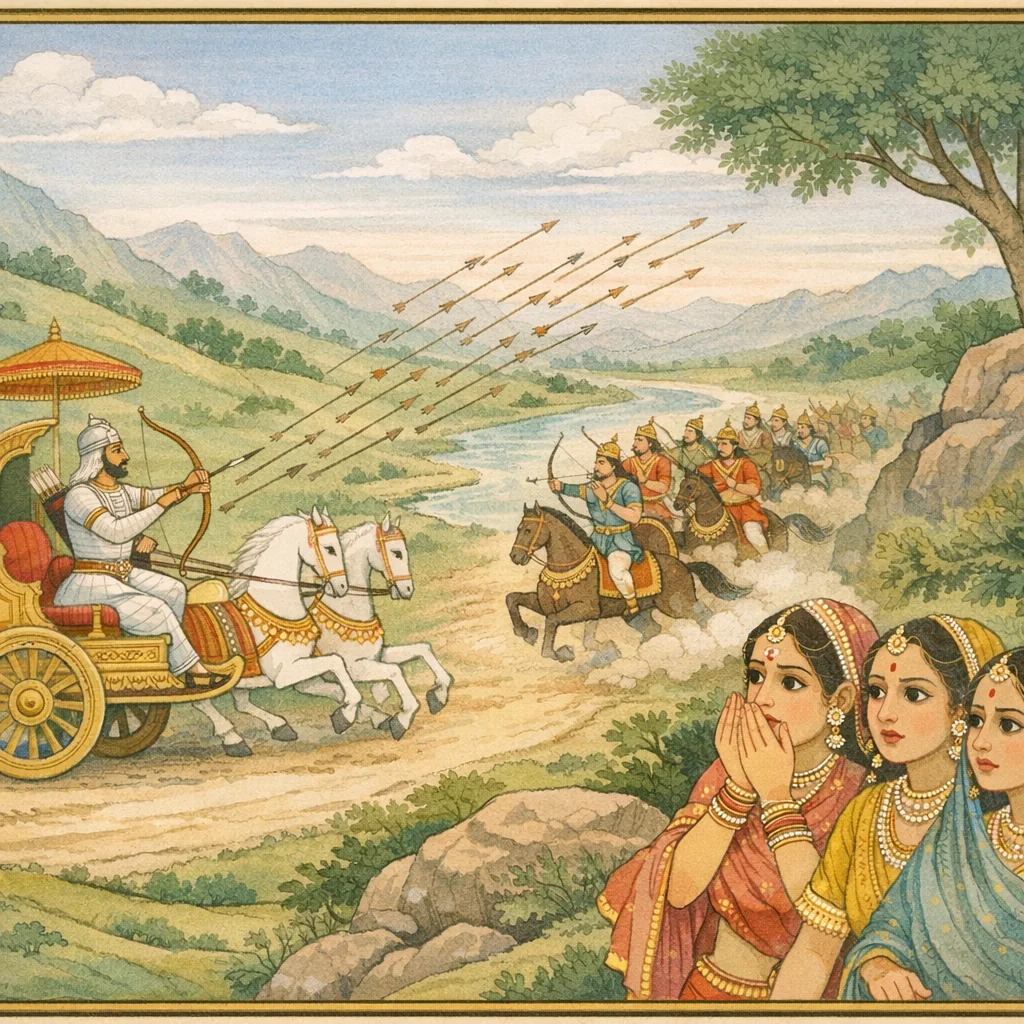
Chapter Arc: विचित्रवीर्य के यौवन में प्रवेश करते ही भीष्म के मन में हस्तिनापुर के वंश-रक्षण का संकल्प प्रज्वलित होता है—राजकुमार के लिए योग्य वधू खोजने का निश्चय। → भीष्म को काशिराज की तीन अप्सरा-सदृश कन्याओं के स्वयंवर का समाचार मिलता है। वे अकेले ही वहाँ पहुँचते हैं, पर स्वयंवर-मंडप में अनेक राजाओं की उपस्थिति और प्रतिस्पर्धा से वातावरण तना हुआ है। भीष्म, कौरव-प्रतिष्ठा और प्रतिज्ञा के बल पर, कन्याओं को रथ पर बैठाकर ले चलते हैं; पीछे-पीछे क्रुद्ध राजागण शस्त्र उठाकर पीछा करते हैं। → एक बनाम अनेक का लोमहर्षक संग्राम—राजाओं की ओर से एक साथ ‘दस हजार बाणों’ की वर्षा; भीष्म उन बाण-वर्षाओं को रोकते-छाँटते हुए प्रत्युत्तर देते हैं और युद्धभूमि में अपनी अद्वितीय धनुर्विद्या से सबको स्तब्ध कर देते हैं। → पराजित/विस्मित राजागण पीछे हटते हैं; भीष्म तीनों कन्याओं को हस्तिनापुर ले आते हैं ताकि विचित्रवीर्य का विवाह सम्पन्न हो और कुरुवंश की धारा आगे बढ़े। → विजय के बाद भी प्रश्न शेष है—क्या तीनों कन्याएँ इस ‘हरण’ को स्वीकार करेंगी, और क्या किसी का पूर्व-प्रेम/प्रतिज्ञा इस राजनैतिक विवाह को संकट में डालेगी?
Shlokas
Verse 1
(दाक्षिणात्य अधिक पाठके ३ श्लोक मिलाकर कुल १७ श्लोक हैं) प्यास बक। अफि्-"कऋा द्र्याधेकशततमो< ध्याय: भीष्मके द्वारा स्वयंवरसे काशिराजकी कन्याओंका हरण, युद्धमें सब राजाओं तथा शाल्वकी पराजय, अम्बिका और अम्बालिकाके साथ विचित्रवीर्यका विवाह तथा निधन वैशम्पायन उवाच हते चित्राड़दे भीष्मो बाले भ्रातरि कौरव । पालयामास तद् राज्यं सत्यवत्या मते स्थित:,वैशम्पायनजी कहते हैं--जनमेजय! चित्रांगदके मारे जानेपर दूसरे भाई विचित्रवीर्य अभी बहुत छोटे थे, अतः सत्यवतीकी रायसे भीष्मजीने ही उस राज्यका पालन किया
Vaiśampāyana said: “O descendant of Kuru, when Citrāṅgada had been slain and the younger brother Vicitravīrya was still a mere boy, Bhīṣma—acting in accordance with Satyavatī’s counsel—undertook the protection and governance of that kingdom.”
Verse 2
सम्प्राप्तयौवनं दृष्टवा भ्रातरं धीमतां वर: । भीष्मो विचित्रवीर्यस्य विवाहायाकरोन्मतिम्,जब विचित्रवीर्य धीरे-धीरे युवावस्थामें पहुँचे, तब बुद्धिमानोंमें श्रेष्ठ भीष्मजीने उनकी वह अवस्था देख विचित्रवीर्यके विवाहका विचार किया
Seeing that his younger brother Vicitravīrya had reached youth, Bhīṣma—foremost among the wise—turned his mind to arranging Vicitravīrya’s marriage.
Verse 3
अथ काशिपतेर्भीष्म: कन्यास्तिस््रो5प्सरोपमा: | शुश्राव सहिता राजन् वृण्वाना वै स्वयंवरम्,राजन! उन दिनों काशिराजकी तीन कन्याएँ थीं, जो अप्सराओंके समान सुन्दर थीं। भीष्मजीने सुना, वे तीनों कन्याएँ साथ ही स्वयंवर-सभामें पतिका वरण करनेवाली हैं
Vaiśaṃpāyana said: Then Bhīṣma heard, O King, that the lord of Kāśī had three daughters, lovely as apsarases, and that all three together were about to choose their husbands in a svayaṃvara.
Verse 4
ततः स रथियनां श्रेष्ठो रथेनैकेन शत्रुजित् । जगामानुमते मातु: पुरीं वाराणसीं प्रभु:,तब माता सत्यवतीकी आज्ञा ले रथियोंमें श्रेष्ठ शत्रुविजयी भीष्म एकमात्र रथके साथ वाराणसीपुरीको गये
Then Bhīṣma—foremost among chariot-warriors, conqueror of foes—set out with a single chariot. Having obtained his mother Satyavatī’s consent, the powerful one went to the city of Vārāṇasī.
Verse 5
तत्र राज्ञ: समुदितान् सर्वतः समुपागतान् | ददर्श कन्यास्ताश्नैव भीष्म: शान्तनुनन्दन:,वहाँ शान्तनुनन्दन भीष्मने देखा, सब ओरसे आये हुए राजाओंका समुदाय स्वयंवर- सभामें जुटा हुआ है और वे कन्याएँ भी स्वयंवरमें उपस्थित हैं
There, Bhīṣma—the son of Śāntanu—saw the assembled company of kings who had gathered from every direction, and he also beheld the maidens present in the svayaṃvara hall.
Verse 6
कीर्त्यमानेषु राज्ञां तु तदा नामसु सर्वश:ः । एकाकिन तदा भीष्म॑ वृद्ध शान्तनुनन्दनम्,उस समय सब ओर राजाओंके नाम ले-लेकर उन सबका परिचय दिया जा रहा था। इतनेमें ही शान्तनुनन्दन भीष्म, जो अब वृद्ध हो चले थे, वहाँ अकेले ही आ पहुँचे। उन्हें देखकर वे सब परम सुन्दरी कन्याएँ उद्विग्न-सी होकर, ये बूढ़े हैं, ऐसा सोचती हुई वहाँसे दूर भाग गयीं
Vaiśampāyana said: While the names of the kings were being proclaimed everywhere and each was being introduced, Bhīṣma—the son of Śāntanu, now advanced in age—arrived there alone. Seeing him, the exceedingly beautiful maidens grew uneasy; thinking, “He is old,” they withdrew from that place.
Verse 7
सोद्वेगा इव तं॑ दृष्टवा कन्या: परमशोभना: । अपाक्रामन्त ता: सर्वा वृद्ध इत्येव चिन्तया,उस समय सब ओर राजाओंके नाम ले-लेकर उन सबका परिचय दिया जा रहा था। इतनेमें ही शान्तनुनन्दन भीष्म, जो अब वृद्ध हो चले थे, वहाँ अकेले ही आ पहुँचे। उन्हें देखकर वे सब परम सुन्दरी कन्याएँ उद्विग्न-सी होकर, ये बूढ़े हैं, ऐसा सोचती हुई वहाँसे दूर भाग गयीं
Seeing him, those exceedingly beautiful maidens grew as if alarmed; thinking only, “He is old,” they all withdrew and moved away from him.
Verse 8
वृद्ध: परमधर्मात्मा वलीपलितधारण: । कि कारणमिहायातो निर्लज्जो भरतर्षभ:,इत्येवं प्रब्र॒ुवन्तस्ते हसन्ति सम नृपाधमा: । वहाँ जो नीच स्वभावके नरेश एकत्र थे, वे आपसमें ये बातें कहते हुए उनकी हँसी उड़ाने लगे--“भरतवंशियोंमें श्रेष्ठ भीष्म तो बड़े धर्मात्मा सुने जाते थे। ये बूढ़े हो गये हैं, शरीरमें झुर्रियाँ पड़ गयी हैं, सिरके बाल सफेद हो चुके हैं; फिर क्या कारण है कि यहाँ आये हैं? ये तो बड़े निर्लज्ज जान पड़ते हैं। अपनी प्रतिज्ञा झूठी करके ये लोगोंमें क्या कहेंगे-- कैसे मुँह दिखायेंगे? भूमण्डलमें व्यर्थ ही यह बात फैल गयी है कि भीष्मजी ब्रह्मचारी हैं!
Vaiśampāyana said: “Those base kings who were gathered there mocked him among themselves, saying: ‘Bhīṣma, famed as the most righteous among the Bharatas, has grown old—his body wrinkled and his hair turned white. For what reason has he come here? He seems shameless. Having made his vow false, what will he say before people—how will he show his face? In vain has this report spread across the earth that Bhīṣma is a lifelong celibate.’”
Verse 9
मिथ्याप्रतिज्ञो लोकेषु कि वदिष्यति भारत | ब्रह्मचारीति भीष्मो हि वृथैव प्रथितो भुवि
Vaiśampāyana said: “O Bhārata, what will a man known among the worlds as one who breaks his vow be able to say in his own defense? For then Bhīṣma’s fame on earth as a lifelong celibate would become empty and meaningless.”
Verse 10
वैशम्पायन उवाच क्षत्रियाणां वच: श्र॒त्वा हम भारत,वैशम्पायनजी कहते हैं-- ! क्षत्रियोंकी ये बातें सुनकर भीष्म अत्यन्त कुपित हो उठे
Vaiśampāyana said: “O Bhārata, having heard the words of the kṣatriyas, Bhīṣma became exceedingly enraged.”
Verse 11
भीष्मस्तदा स्वयं कन्या वरयामास ता: प्रभु: । उवाच च महीपालान् राजज्जलदनि:स्वन:,राजन! वे शक्तिशाली तो थे ही, उन्होंने उस समय स्वयं ही समस्त कनन््याओंका वरण किया। इतना ही नहीं, प्रहार करनेवालोंमें श्रेष्ठ वीरवर भीष्मने उन कन््याओंको उठाकर रथपर चढ़ा लिया और समस्त राजाओंको ललकारते हुए मेघके समान गम्भीर वाणीमें कहा --दिद्वानोंने कन्याको यथाशक्ति वस्त्राभूषणोंसे विभूषित करके गुणवान् वरको बुलाकर उसे कुछ धन देनेके साथ ही कन्यादान करना उत्तम (ब्राह्म विवाह) बताया है। कुछ लोग एक जोड़ा गाय और बैल लेकर कन्यादान करते हैं (यह आर्ष विवाह है)
Then Bhishma, the mighty lord, himself chose those maidens. And, with a voice deep as a thundercloud, he addressed the assembled kings—asserting his claim and challenging them in the midst of the contest. In this episode, the narrative frames Bhishma’s forceful act against the background of accepted marriage norms: the ‘best’ form is said to be giving a daughter to a worthy groom after adorning her and offering gifts (brāhma marriage), while another recognized form involves giving a pair of cow and bull (ārṣa marriage).
Verse 12
रथमारोप्य ता: कन्या भीष्म: प्रहरतां वर: । आहूय दान कन्यानां गुणवद्भ्य: स्मृतं बुध:,राजन! वे शक्तिशाली तो थे ही, उन्होंने उस समय स्वयं ही समस्त कनन््याओंका वरण किया। इतना ही नहीं, प्रहार करनेवालोंमें श्रेष्ठ वीरवर भीष्मने उन कन््याओंको उठाकर रथपर चढ़ा लिया और समस्त राजाओंको ललकारते हुए मेघके समान गम्भीर वाणीमें कहा --दिद्वानोंने कन्याको यथाशक्ति वस्त्राभूषणोंसे विभूषित करके गुणवान् वरको बुलाकर उसे कुछ धन देनेके साथ ही कन्यादान करना उत्तम (ब्राह्म विवाह) बताया है। कुछ लोग एक जोड़ा गाय और बैल लेकर कन्यादान करते हैं (यह आर्ष विवाह है)
Vaiśaṃpāyana said: Then Bhīṣma—foremost among warriors—lifted those maidens onto his chariot. Calling out to the assembled kings in a voice deep as thunder, he declared the rule remembered by the wise: a maiden should be given in marriage to a worthy man—after adorning her according to one’s means and offering the appropriate gifts. Thus he frames the act of giving a bride as a dharmic rite grounded in merit and propriety, even as he confronts rival claimants by force.
Verse 13
अलंकृत्य यथाशक्ति प्रदाय च धनान्यपि । प्रयच्छन्त्यपरे कन्या मिथुनेन गवामपि,राजन! वे शक्तिशाली तो थे ही, उन्होंने उस समय स्वयं ही समस्त कनन््याओंका वरण किया। इतना ही नहीं, प्रहार करनेवालोंमें श्रेष्ठ वीरवर भीष्मने उन कन््याओंको उठाकर रथपर चढ़ा लिया और समस्त राजाओंको ललकारते हुए मेघके समान गम्भीर वाणीमें कहा --दिद्वानोंने कन्याको यथाशक्ति वस्त्राभूषणोंसे विभूषित करके गुणवान् वरको बुलाकर उसे कुछ धन देनेके साथ ही कन्यादान करना उत्तम (ब्राह्म विवाह) बताया है। कुछ लोग एक जोड़ा गाय और बैल लेकर कन्यादान करते हैं (यह आर्ष विवाह है)
Vaiśampāyana said: “O king, some people, after adorning the maiden as best as they can and also giving gifts of wealth, give her away in marriage. Others give the maiden along with a pair of cattle as well.”
Verse 14
वित्तेन कथितेनान्ये बलेनान्येडनुमान्य च । प्रमत्तामुपयन्त्यन्ये स्वयमन्ये च विन्दते,“कितने ही मनुष्य नियत धन लेकर कन्यादान करते हैं (यह आसुर विवाह है)। कुछ लोग बलसे कन्याका हरण करते हैं (यह राक्षस विवाह है)। दूसरे लोग वर और कन्याकी परस्पर अनुमति होनेपर विवाह करते हैं (यह गान्धर्व विवाह है)। कुछ लोग अचेत अवस्थामें पड़ी हुई कनन््याको उठा ले जाते हैं (यह पैशाच विवाह है)। कुछ लोग वर और कन्याको एकत्र करके स्वयं ही उनसे प्रतिज्ञा कराते हैं कि हम दोनों गार्हस्थ्य धर्मका पालन करेंगे; फिर कन्यापिता दोनोंकी पूजा करके अलंकारयुक्त कन्याका वरके लिये दान करता है; इस प्रकार विवाहित होनेवाले (प्राजापत्य विवाहकी रीतिसे) पत्नीकी उपलब्धि करते हैं
Vaiśampāyana said: “Some obtain a bride by means of wealth that has been stipulated as payment, others by force, and others again by mutual consent. Some carry off a girl when she is heedless or unconscious, while others win a wife through a self-made compact—bringing the couple together, having them vow to uphold the duties of household life, and then receiving the maiden as a formal gift from her father after due honor and adornment.”
Verse 15
आर्ष विधि पुरस्कृत्य दारान् विन्दन्ति चापरे । अष्टमं तमथो वित्त विवाहं कविभिर्वृतम्,“कुछ लोग आर्ष विधि (यज्ञ) करके ऋत्विजको कन्या देते हैं। इस प्रकार विवाहित होनेवाले (दैव विवाहकी रीतिसे) पत्नी प्राप्त करते हैं। इस तरह विद्दवानोंने यह विवाहका आठवाँ प्रकार माना है। इन सबको तुमलोग समझो
Vaiśampāyana said: “Some, placing the Ṛṣi-sanctioned rite in the forefront, obtain a wife by giving the maiden to the officiating priest as the sacrificial fee. That form of marriage—recognized by the learned as the eighth—should be understood by you all.”
Verse 16
स्वयंवरं तु राजन्या: प्रशंसन्त्युपयान्ति च | प्रमथ्य तु हृतामाहुज्यायसीं धर्मवादिन:,"क्षत्रिय स्वयंवरकी प्रशंसा करते और उसमें जाते हैं; परंतु उसमें भी समस्त राजाओंको परास्त करके जिस कन्याका अपहरण किया जाता है, धर्मवादी दिद्वान क्षत्रियके लिये उसे सबसे श्रेष्ठ मानते हैं
Vaiśampāyana said: “Kṣatriyas praise the rite of svayaṃvara and go to it. Yet the exponents of dharma declare that, for a warrior, the higher course is to seize the maiden after overpowering all rival kings.”
Verse 17
ता इमा: पृथिवीपाला जिहीषामि बलादित: । ते यतथ्वं परं शक्त्या विजयायेतराय वा,“अतः भूमिपालो! मैं इन कन्याओंको यहाँसे बलपूर्वक हर ले जाना चाहता हूँ। तुमलोग अपनी सारी शक्ति लगाकर विजय अथवा पराजयके लिये मुझे रोकनेका प्रयत्न करो
Vaiśampāyana said: “O kings who guard the earth, I intend to carry these maidens away from here by force. Therefore, exert your utmost strength and try to stop me—whether it ends in your victory or in defeat.”
Verse 18
स्थितो<हं पृथिवीपाला युद्धाय कृतनिश्चय: । एवमुक्त्वा महीपालान् काशिराजं च वीर्यवान्,'“राजाओ! मैं युद्धके लिये दृढ़ निश्चय करके यहाँ डटा हुआ हूँ।” परम पराक्रमी कुरुकुलश्रेष्ठ भीष्मजी उन महीपालों तथा काशिराजसे उपर्युक्त बातें कहकर उन समस्त कन्याओंको, जिन्हें वे उठाकर अपने रथपर बिठा चुके थे, साथ लेकर सबको ललकारते हुए वहाँसे शीघ्रतापूर्वक चल दिये
Vaiśampāyana said: “O kings, I stand here, firmly resolved to fight.” Having spoken thus to the assembled rulers—and to the king of Kāśī in particular—the mighty Bhīṣma, foremost of the Kurus, kept the maidens he had seized and placed upon his chariot, challenged all opponents, and departed swiftly from that place.
Verse 19
सर्वा: कन्या: स कौरव्यो रथमारोप्य च स्वकम् | आमन्त्रय च स तान् प्रायाच्छीघ्रं कन्या: प्रगृह् ता:,'“राजाओ! मैं युद्धके लिये दृढ़ निश्चय करके यहाँ डटा हुआ हूँ।” परम पराक्रमी कुरुकुलश्रेष्ठ भीष्मजी उन महीपालों तथा काशिराजसे उपर्युक्त बातें कहकर उन समस्त कन्याओंको, जिन्हें वे उठाकर अपने रथपर बिठा चुके थे, साथ लेकर सबको ललकारते हुए वहाँसे शीघ्रतापूर्वक चल दिये
Vaiśampāyana said: The Kuru hero (Bhīṣma), having lifted all those maidens and placed them upon his own chariot, addressed and challenged those kings; then, with the maidens in his custody, he swiftly departed.
Verse 20
ततस्ते पार्थिवा: सर्वे समुत्पेतुरमर्षिता: । संस्पृशन्तः स्वकान् बाहून् दशन्तो दशनच्छदान्,फिर तो समस्त राजा इस अपमानको न सह सके; वे अपनी भुजाओंका स्पर्श करते (ताल ठोकते) और दाँतोंसे ओठ चबाते हुए अपनी जगहसे उछल पड़े
Then all those kings, unable to endure the insult, sprang up in anger. Striking their own arms in defiance and biting their lips, they rose from their seats—an outward display of wounded honor and the surge of wrath that precedes rash action.
Verse 21
तेषामाभरणान्याशु त्वरितानां विमुडज्चताम् । आमुज्चतां च वर्माणि सम्भ्रम: सुमहानभूत्,सब लोग जल्दी-जल्दी अपने आभूषण उतारकर कवच पहनने लगे। उस समय बड़ा भारी कोलाहल मच गया
Vaiśampāyana said: As they hurriedly cast off their ornaments and began to don their coats of mail, a great commotion arose—an outward sign of sudden alarm and the swift shift from adornment to readiness for conflict.
Verse 22
ताराणामिव सम्पातो बभूव जनमेजय । भूषणानां च सर्वेषां कवचानां च सर्वश:,जनमेजय! जल्दबाजीके कारण उन सबके आभूषण और कवच इधर-उधर गिर पड़ते थे। उस समय ऐसा जान पड़ता था, मानो आकाशमण्डलसे तारे टूट-टूटकर गिर रहे हों। कितने ही योद्धाओंके कवच और गहने इधर-उधर बिखर गये। क्रोध और अमर्षके कारण उनकी भौंहें टेढ़ी और आँखें लाल हो गयी थीं। सारथियोंने सुन्दर रथ सजाकर उनमें सुन्दर अश्व जोत दिये थे। उन रथोंपर बैठकर सब प्रकारके अस्त्र-शस्त्रोंसे सम्पन्न हो हथियार उठाये हुए उन वीरोंने जाते हुए कुरुनन्दन भीष्मजीका पीछा किया। जनमेजय! तदनन्तर उन राजाओं और भीष्मजीका घोर संग्राम हुआ। भीष्मजी अकेले थे और राजालोग बहुत। उनमें रोंगटे खड़े कर देनेवाला भयंकर संग्राम छिड़ गया
Vaiśampāyana said: O Janamejaya, there was a sudden scattering as if of stars falling from the sky—so did ornaments and armours, in every way and everywhere, tumble down. The scene conveys the haste and turmoil of warriors rushing into conflict, where even the signs of rank and protection are knocked loose amid rising fury.
Verse 23
सवर्मभिर्भूणैश्व प्रकीर्यद्धिरितस्तत: । सक्रोधामर्षजिद्य भ्रूकूषायीकृतलोचना:,जनमेजय! जल्दबाजीके कारण उन सबके आभूषण और कवच इधर-उधर गिर पड़ते थे। उस समय ऐसा जान पड़ता था, मानो आकाशमण्डलसे तारे टूट-टूटकर गिर रहे हों। कितने ही योद्धाओंके कवच और गहने इधर-उधर बिखर गये। क्रोध और अमर्षके कारण उनकी भौंहें टेढ़ी और आँखें लाल हो गयी थीं। सारथियोंने सुन्दर रथ सजाकर उनमें सुन्दर अश्व जोत दिये थे। उन रथोंपर बैठकर सब प्रकारके अस्त्र-शस्त्रोंसे सम्पन्न हो हथियार उठाये हुए उन वीरोंने जाते हुए कुरुनन्दन भीष्मजीका पीछा किया। जनमेजय! तदनन्तर उन राजाओं और भीष्मजीका घोर संग्राम हुआ। भीष्मजी अकेले थे और राजालोग बहुत। उनमें रोंगटे खड़े कर देनेवाला भयंकर संग्राम छिड़ गया
Vaiśampāyana said: In their haste, their armor and ornaments scattered here and there as they surged forward—so that it seemed as though stars were breaking loose and falling from the vault of heaven. Many warriors’ cuirasses and jewels were flung about. Driven by anger and wounded pride, their brows were knit and their eyes reddened. Charioteers swiftly readied splendid chariots and yoked fine horses; mounted upon them, armed with every kind of weapon and with weapons raised, those heroes pursued Bhīṣma, the delight of the Kurus. Then, O Janamejaya, a dreadful battle erupted between those kings and Bhīṣma—he alone against many—an awe-inspiring and terrifying clash.
Verse 24
सूतोपक्लृप्तान् रुचिरान् सदश्वैरुपकल्पितान् | रथानास्थाय ते वीरा: सर्वप्रहरणान्विता:,जनमेजय! जल्दबाजीके कारण उन सबके आभूषण और कवच इधर-उधर गिर पड़ते थे। उस समय ऐसा जान पड़ता था, मानो आकाशमण्डलसे तारे टूट-टूटकर गिर रहे हों। कितने ही योद्धाओंके कवच और गहने इधर-उधर बिखर गये। क्रोध और अमर्षके कारण उनकी भौंहें टेढ़ी और आँखें लाल हो गयी थीं। सारथियोंने सुन्दर रथ सजाकर उनमें सुन्दर अश्व जोत दिये थे। उन रथोंपर बैठकर सब प्रकारके अस्त्र-शस्त्रोंसे सम्पन्न हो हथियार उठाये हुए उन वीरोंने जाते हुए कुरुनन्दन भीष्मजीका पीछा किया। जनमेजय! तदनन्तर उन राजाओं और भीष्मजीका घोर संग्राम हुआ। भीष्मजी अकेले थे और राजालोग बहुत। उनमें रोंगटे खड़े कर देनेवाला भयंकर संग्राम छिड़ गया
Vaiśampāyana said: O Janamejaya, those heroes mounted splendid chariots—prepared by charioteers and properly equipped with fine horses—and, furnished with every kind of weapon, set out in pursuit. The scene conveys their haste and martial resolve, as personal wrath and the demands of kṣatriya duty drive events toward a fierce confrontation.
Verse 25
प्रयान््तमथ कौरव्यमनुसखुरुदायुधा: । ततः समभवद् युद्ध तेषां तस्य च भारत । एकस्य च बहूनां च तुमुलं लोमहर्षणम्,जनमेजय! जल्दबाजीके कारण उन सबके आभूषण और कवच इधर-उधर गिर पड़ते थे। उस समय ऐसा जान पड़ता था, मानो आकाशमण्डलसे तारे टूट-टूटकर गिर रहे हों। कितने ही योद्धाओंके कवच और गहने इधर-उधर बिखर गये। क्रोध और अमर्षके कारण उनकी भौंहें टेढ़ी और आँखें लाल हो गयी थीं। सारथियोंने सुन्दर रथ सजाकर उनमें सुन्दर अश्व जोत दिये थे। उन रथोंपर बैठकर सब प्रकारके अस्त्र-शस्त्रोंसे सम्पन्न हो हथियार उठाये हुए उन वीरोंने जाते हुए कुरुनन्दन भीष्मजीका पीछा किया। जनमेजय! तदनन्तर उन राजाओं और भीष्मजीका घोर संग्राम हुआ। भीष्मजी अकेले थे और राजालोग बहुत। उनमें रोंगटे खड़े कर देनेवाला भयंकर संग्राम छिड़ गया
Vaiśampāyana said: As that Kaurava prince was departing, those companions—armed and ready—followed after him. Then, O Bhārata (Janamejaya), a battle arose between them and him: a tumultuous, hair-raising clash of one against many.
Verse 26
ते त्विषून् साहस्रांस्तस्मिन् युगपदाक्षिपन् | अप्राप्तांश्नैव तानाशु भीष्म: सर्वास्तथान्तरा,राजन! उन नरेशोंने भीष्मजीपर एक ही साथ दस हजार बाण चलाये; परंतु भीष्मजीने उन सबको अपने ऊपर आनेसे पहले बीचमें ही विशाल पंखयुक्त बाणोंकी बौछार करके शीघ्रतापूर्वक काट गिराया। तब वे सब राजा उन्हें चारों ओरसे घेरकर उनके ऊपर उसी प्रकार बाणोंकी झड़ी लगाने लगे, जैसे बादल पर्वतपर पानीकी धारा बरसाते हैं। भीष्मजीने सब ओरसे उस बाण-वर्षाको रोककर उन सभी राजाओंको तीन-तीन बाणोंसे घायल कर दिया। तब उनमेंसे प्रत्येकने भीष्मजीको पाँच-पाँच बाण मारे
Vaiśampāyana said: Then, in that encounter, the kings loosed ten thousand arrows all at once at Bhīṣma. But before those shafts could even reach him, Bhīṣma swiftly intercepted them in mid-course, cutting them down with a dense shower of broad, feathered arrows. The scene underscores a warrior’s disciplined mastery: force is met not by rage, but by alertness, precision, and restraint that prevents harm before it lands.
Verse 27
अच्छिनच्छरवर्षेण महता लोमवाहिना । ततस्ते पार्थिवा: सर्वे सर्वतः परिवार्य तम्,राजन! उन नरेशोंने भीष्मजीपर एक ही साथ दस हजार बाण चलाये; परंतु भीष्मजीने उन सबको अपने ऊपर आनेसे पहले बीचमें ही विशाल पंखयुक्त बाणोंकी बौछार करके शीघ्रतापूर्वक काट गिराया। तब वे सब राजा उन्हें चारों ओरसे घेरकर उनके ऊपर उसी प्रकार बाणोंकी झड़ी लगाने लगे, जैसे बादल पर्वतपर पानीकी धारा बरसाते हैं। भीष्मजीने सब ओरसे उस बाण-वर्षाको रोककर उन सभी राजाओंको तीन-तीन बाणोंसे घायल कर दिया। तब उनमेंसे प्रत्येकने भीष्मजीको पाँच-पाँच बाण मारे
Vaiśampāyana said: With a great, hair-raising shower of arrows, he swiftly cut down the incoming missiles before they could reach him. Then all those kings, surrounding him on every side, rained arrows upon him like clouds pouring streams of water upon a mountain. Bhīṣma checked that arrow-storm from all directions and wounded each of those rulers with three arrows; in return, each of them struck Bhīṣma with five arrows. The scene underscores the warrior’s discipline and mastery: even amid collective assault, he responds with measured force rather than uncontrolled fury.
Verse 28
ववृषु: शरवर्षेण वर्षेणेवाद्रिमम्बुदा: । स तं बाणमयं वर्ष शरैरावार्य सर्वतः,राजन! उन नरेशोंने भीष्मजीपर एक ही साथ दस हजार बाण चलाये; परंतु भीष्मजीने उन सबको अपने ऊपर आनेसे पहले बीचमें ही विशाल पंखयुक्त बाणोंकी बौछार करके शीघ्रतापूर्वक काट गिराया। तब वे सब राजा उन्हें चारों ओरसे घेरकर उनके ऊपर उसी प्रकार बाणोंकी झड़ी लगाने लगे, जैसे बादल पर्वतपर पानीकी धारा बरसाते हैं। भीष्मजीने सब ओरसे उस बाण-वर्षाको रोककर उन सभी राजाओंको तीन-तीन बाणोंसे घायल कर दिया। तब उनमेंसे प्रत्येकने भीष्मजीको पाँच-पाँच बाण मारे
Vaiśaṃpāyana said: The kings rained down a storm of arrows, like clouds pouring rain upon a mountain. Bhīṣma, O King, checked that arrow-made downpour on every side with his own shafts, intercepting it before it could strike, and thus held back the assault even while surrounded—showing the disciplined mastery of arms expected of a foremost kṣatriya in battle.
Verse 29
ततः सर्वान् महीपालान् पर्यविध्यात् त्रिभिस्त्रिभि: । एकैकस्तु ततो भीष्म राजन् विव्याध पञ्चभि:,राजन! उन नरेशोंने भीष्मजीपर एक ही साथ दस हजार बाण चलाये; परंतु भीष्मजीने उन सबको अपने ऊपर आनेसे पहले बीचमें ही विशाल पंखयुक्त बाणोंकी बौछार करके शीघ्रतापूर्वक काट गिराया। तब वे सब राजा उन्हें चारों ओरसे घेरकर उनके ऊपर उसी प्रकार बाणोंकी झड़ी लगाने लगे, जैसे बादल पर्वतपर पानीकी धारा बरसाते हैं। भीष्मजीने सब ओरसे उस बाण-वर्षाको रोककर उन सभी राजाओंको तीन-तीन बाणोंसे घायल कर दिया। तब उनमेंसे प्रत्येकने भीष्मजीको पाँच-पाँच बाण मारे
Vaiśampāyana said: Then Bhīṣma struck all those kings, three arrows to each. Thereupon, O King, each of them in turn pierced Bhīṣma with five arrows. The scene underscores the warrior code of open combat—measured retaliation and steadfast endurance—where Bhīṣma’s composure and skill meet the collective challenge of many rulers without loss of discipline.
Verse 30
सच तान् प्रतिविव्याध द्वाभ्यां द्वाभ्यां पराक्रमन् | तद् युद्धमासीत् तुमुलं घोरं देवासुरोपमम्,फिर भीष्मजीने भी अपना पराक्रम प्रकट करते हुए प्रत्येक योद्धाको दो-दो बाणोंसे बींध डाला। बाणों और शक्तियोंसे व्याप्त उनका वह तुमुल युद्ध देवासुर-संग्रामके समान भयंकर जान पड़ता था। उस समरांगणमें भीष्मने लोकविख्यात वीरोंके देखते-देखते उनके धनुष, ध्वजाके अग्रभाग, कवच और मस्तक सैकड़ों और हजारोंकी संख्यामें काट गिराये। युद्धमें रथसे विचरनेवाले भीष्मजीकी दूसरे वीरोंसे बढ़कर हाथकी फुर्ती और आत्मरक्षा आदिकी शत्रुओंने भी सराहना की। सम्पूर्ण शस्त्रधारियोंमें श्रेष्ठ भरतकुलभूषण भीष्मजीने उन सब योद्धाओंको जीतकर कन्याओंको साथ ले भरतवंशियोंकी राजधानी हस्तिनापुरको प्रस्थान किया। राजन्! तब महारथी शाल्वराजने पीछेसे आकर युद्धके लिये शान्तनुनन्दन भीष्मपर आक्रमण किया। शाल्वके शारीरिक बलकी कोई सीमा नहीं थी। जैसे हथिनीके पीछे लगे हुए एक गजराजके पृष्ठभागमें उसीका पीछा करनेवाला दूसरा यूथपति दाँतोंसे प्रहार करके उसे विदीर्ण करना चाहता है, उसी प्रकार बलवानोंमें श्रेष्ठ महाबाहु शाल्वराज सत्रीको पानेकी इच्छासे ईर्ष्या और क्रोधके वशीभूत हो भीष्मका पीछा करते हुए उनसे बोला--“अरे ओ! खड़ा रह, खड़ा रह।” तब शत्रुसेनाका संहार करनेवाले पुरुषसिंह भीष्म उसके वचनोंको सुनकर क्रोधसे व्याकुल हो धूमरहित अग्निके समान जलने लगे और हाथमें धनुष-बाण लेकर खड़े हो गये। उनके ललाटमें सिकुड़न आ गयी
Vaiśampāyana said: Displaying his prowess, Bhīṣma pierced each of those warriors with two arrows apiece. The battle that then arose was tumultuous and dreadful, like the legendary clash between gods and demons—an encounter where martial skill, endurance, and the will to prevail eclipsed all other concerns.
Verse 31
पश्यतां लोकवीराणां शरशक्तिसमाकुलम् | स धनूषि ध्वजाग्राणि वर्माणि च शिरांसि च,फिर भीष्मजीने भी अपना पराक्रम प्रकट करते हुए प्रत्येक योद्धाको दो-दो बाणोंसे बींध डाला। बाणों और शक्तियोंसे व्याप्त उनका वह तुमुल युद्ध देवासुर-संग्रामके समान भयंकर जान पड़ता था। उस समरांगणमें भीष्मने लोकविख्यात वीरोंके देखते-देखते उनके धनुष, ध्वजाके अग्रभाग, कवच और मस्तक सैकड़ों और हजारोंकी संख्यामें काट गिराये। युद्धमें रथसे विचरनेवाले भीष्मजीकी दूसरे वीरोंसे बढ़कर हाथकी फुर्ती और आत्मरक्षा आदिकी शत्रुओंने भी सराहना की। सम्पूर्ण शस्त्रधारियोंमें श्रेष्ठ भरतकुलभूषण भीष्मजीने उन सब योद्धाओंको जीतकर कन्याओंको साथ ले भरतवंशियोंकी राजधानी हस्तिनापुरको प्रस्थान किया। राजन्! तब महारथी शाल्वराजने पीछेसे आकर युद्धके लिये शान्तनुनन्दन भीष्मपर आक्रमण किया। शाल्वके शारीरिक बलकी कोई सीमा नहीं थी। जैसे हथिनीके पीछे लगे हुए एक गजराजके पृष्ठभागमें उसीका पीछा करनेवाला दूसरा यूथपति दाँतोंसे प्रहार करके उसे विदीर्ण करना चाहता है, उसी प्रकार बलवानोंमें श्रेष्ठ महाबाहु शाल्वराज सत्रीको पानेकी इच्छासे ईर्ष्या और क्रोधके वशीभूत हो भीष्मका पीछा करते हुए उनसे बोला--“अरे ओ! खड़ा रह, खड़ा रह।” तब शत्रुसेनाका संहार करनेवाले पुरुषसिंह भीष्म उसके वचनोंको सुनकर क्रोधसे व्याकुल हो धूमरहित अग्निके समान जलने लगे और हाथमें धनुष-बाण लेकर खड़े हो गये। उनके ललाटमें सिकुड़न आ गयी
Vaiśampāyana said: Before the very eyes of the world-renowned heroes, the battlefield became choked with arrows and spears. In that tumult, Bhīṣma cut down bows, the tips of standards, armours, and even heads in the hundreds and thousands—displaying a prowess that made the fight seem as dreadful as the legendary wars of gods and demons. The scene underscores the epic’s recurring tension: extraordinary martial skill can be admired as kṣatriya-valor, yet it also multiplies destruction, turning public glory into a spectacle of severed weapons and bodies.
Verse 32
चिच्छेद समरे भीष्म: शतशो5थ सहस््रश: । तस्याति पुरुषानन्याँललाघवं रथचारिण:,फिर भीष्मजीने भी अपना पराक्रम प्रकट करते हुए प्रत्येक योद्धाको दो-दो बाणोंसे बींध डाला। बाणों और शक्तियोंसे व्याप्त उनका वह तुमुल युद्ध देवासुर-संग्रामके समान भयंकर जान पड़ता था। उस समरांगणमें भीष्मने लोकविख्यात वीरोंके देखते-देखते उनके धनुष, ध्वजाके अग्रभाग, कवच और मस्तक सैकड़ों और हजारोंकी संख्यामें काट गिराये। युद्धमें रथसे विचरनेवाले भीष्मजीकी दूसरे वीरोंसे बढ़कर हाथकी फुर्ती और आत्मरक्षा आदिकी शत्रुओंने भी सराहना की। सम्पूर्ण शस्त्रधारियोंमें श्रेष्ठ भरतकुलभूषण भीष्मजीने उन सब योद्धाओंको जीतकर कन्याओंको साथ ले भरतवंशियोंकी राजधानी हस्तिनापुरको प्रस्थान किया। राजन्! तब महारथी शाल्वराजने पीछेसे आकर युद्धके लिये शान्तनुनन्दन भीष्मपर आक्रमण किया। शाल्वके शारीरिक बलकी कोई सीमा नहीं थी। जैसे हथिनीके पीछे लगे हुए एक गजराजके पृष्ठभागमें उसीका पीछा करनेवाला दूसरा यूथपति दाँतोंसे प्रहार करके उसे विदीर्ण करना चाहता है, उसी प्रकार बलवानोंमें श्रेष्ठ महाबाहु शाल्वराज सत्रीको पानेकी इच्छासे ईर्ष्या और क्रोधके वशीभूत हो भीष्मका पीछा करते हुए उनसे बोला--“अरे ओ! खड़ा रह, खड़ा रह।” तब शत्रुसेनाका संहार करनेवाले पुरुषसिंह भीष्म उसके वचनोंको सुनकर क्रोधसे व्याकुल हो धूमरहित अग्निके समान जलने लगे और हाथमें धनुष-बाण लेकर खड़े हो गये। उनके ललाटमें सिकुड़न आ गयी
Vaiśampāyana said: In the thick of battle Bhīṣma cut down—by the hundreds and even by the thousands—(the weapons and martial emblems of his foes). The chariot-riding Bhīṣma displayed a swiftness and mastery surpassing other great warriors, making his prowess unmistakable to all who witnessed it. The scene underscores the epic’s recurring ethical tension: extraordinary martial skill, when yoked to a vowed purpose, can overwhelm opponents and decide the fate of those caught within the arena of kṣatriya duty.
Verse 33
रक्षणं चात्मन: संख्ये शत्रवो5प्यभ्यपूजयन् । तान् विनिर्जित्य तु रणे सर्वशस्त्रभूृतां वर:,फिर भीष्मजीने भी अपना पराक्रम प्रकट करते हुए प्रत्येक योद्धाको दो-दो बाणोंसे बींध डाला। बाणों और शक्तियोंसे व्याप्त उनका वह तुमुल युद्ध देवासुर-संग्रामके समान भयंकर जान पड़ता था। उस समरांगणमें भीष्मने लोकविख्यात वीरोंके देखते-देखते उनके धनुष, ध्वजाके अग्रभाग, कवच और मस्तक सैकड़ों और हजारोंकी संख्यामें काट गिराये। युद्धमें रथसे विचरनेवाले भीष्मजीकी दूसरे वीरोंसे बढ़कर हाथकी फुर्ती और आत्मरक्षा आदिकी शत्रुओंने भी सराहना की। सम्पूर्ण शस्त्रधारियोंमें श्रेष्ठ भरतकुलभूषण भीष्मजीने उन सब योद्धाओंको जीतकर कन्याओंको साथ ले भरतवंशियोंकी राजधानी हस्तिनापुरको प्रस्थान किया। राजन्! तब महारथी शाल्वराजने पीछेसे आकर युद्धके लिये शान्तनुनन्दन भीष्मपर आक्रमण किया। शाल्वके शारीरिक बलकी कोई सीमा नहीं थी। जैसे हथिनीके पीछे लगे हुए एक गजराजके पृष्ठभागमें उसीका पीछा करनेवाला दूसरा यूथपति दाँतोंसे प्रहार करके उसे विदीर्ण करना चाहता है, उसी प्रकार बलवानोंमें श्रेष्ठ महाबाहु शाल्वराज सत्रीको पानेकी इच्छासे ईर्ष्या और क्रोधके वशीभूत हो भीष्मका पीछा करते हुए उनसे बोला--“अरे ओ! खड़ा रह, खड़ा रह।” तब शत्रुसेनाका संहार करनेवाले पुरुषसिंह भीष्म उसके वचनोंको सुनकर क्रोधसे व्याकुल हो धूमरहित अग्निके समान जलने लगे और हाथमें धनुष-बाण लेकर खड़े हो गये। उनके ललाटमें सिकुड़न आ गयी
Vaiśaṃpāyana said: Even the enemies praised Bhīṣma’s skill in protecting himself amid the press of battle. Having then defeated those warriors in the fight, that foremost of all weapon-bearers proceeded on—victorious—taking the maidens with him toward Hastināpura. In this episode, martial excellence is framed not merely as aggression but as disciplined mastery: speed of hand, self-guarding, and controlled force, acknowledged even by opponents, become marks of a kṣatriya’s prowess and reputation.
Verse 34
कन्याभि: सहित: प्रायाद् भारतो भारतानू् प्रति । ततस्तं पृष्ठतो राजज्छाल्वराजो महारथ:,फिर भीष्मजीने भी अपना पराक्रम प्रकट करते हुए प्रत्येक योद्धाको दो-दो बाणोंसे बींध डाला। बाणों और शक्तियोंसे व्याप्त उनका वह तुमुल युद्ध देवासुर-संग्रामके समान भयंकर जान पड़ता था। उस समरांगणमें भीष्मने लोकविख्यात वीरोंके देखते-देखते उनके धनुष, ध्वजाके अग्रभाग, कवच और मस्तक सैकड़ों और हजारोंकी संख्यामें काट गिराये। युद्धमें रथसे विचरनेवाले भीष्मजीकी दूसरे वीरोंसे बढ़कर हाथकी फुर्ती और आत्मरक्षा आदिकी शत्रुओंने भी सराहना की। सम्पूर्ण शस्त्रधारियोंमें श्रेष्ठ भरतकुलभूषण भीष्मजीने उन सब योद्धाओंको जीतकर कन्याओंको साथ ले भरतवंशियोंकी राजधानी हस्तिनापुरको प्रस्थान किया। राजन्! तब महारथी शाल्वराजने पीछेसे आकर युद्धके लिये शान्तनुनन्दन भीष्मपर आक्रमण किया। शाल्वके शारीरिक बलकी कोई सीमा नहीं थी। जैसे हथिनीके पीछे लगे हुए एक गजराजके पृष्ठभागमें उसीका पीछा करनेवाला दूसरा यूथपति दाँतोंसे प्रहार करके उसे विदीर्ण करना चाहता है, उसी प्रकार बलवानोंमें श्रेष्ठ महाबाहु शाल्वराज सत्रीको पानेकी इच्छासे ईर्ष्या और क्रोधके वशीभूत हो भीष्मका पीछा करते हुए उनसे बोला--“अरे ओ! खड़ा रह, खड़ा रह।” तब शत्रुसेनाका संहार करनेवाले पुरुषसिंह भीष्म उसके वचनोंको सुनकर क्रोधसे व्याकुल हो धूमरहित अग्निके समान जलने लगे और हाथमें धनुष-बाण लेकर खड़े हो गये। उनके ललाटमें सिकुड़न आ गयी
Vaiśaṃpāyana said: Bhīṣma of the Bharata line set out, taking the maidens with him, toward the Bharatas. Then, O king, the great chariot-warrior, the king of Śālva, came up from behind in pursuit. (In context, this marks the moment when Śālva, driven by rivalry and anger over the maidens, challenges Bhīṣma—turning a victorious escort into a renewed test of kṣatriya honor and the ethics of force in marriage and war.)
Verse 35
अभ्यगच्छदमेयात्मा भीष्म शान्तनवं रणे | वारणं जघने भिन्दन् दन्ताभ्यामपरो यथा,फिर भीष्मजीने भी अपना पराक्रम प्रकट करते हुए प्रत्येक योद्धाको दो-दो बाणोंसे बींध डाला। बाणों और शक्तियोंसे व्याप्त उनका वह तुमुल युद्ध देवासुर-संग्रामके समान भयंकर जान पड़ता था। उस समरांगणमें भीष्मने लोकविख्यात वीरोंके देखते-देखते उनके धनुष, ध्वजाके अग्रभाग, कवच और मस्तक सैकड़ों और हजारोंकी संख्यामें काट गिराये। युद्धमें रथसे विचरनेवाले भीष्मजीकी दूसरे वीरोंसे बढ़कर हाथकी फुर्ती और आत्मरक्षा आदिकी शत्रुओंने भी सराहना की। सम्पूर्ण शस्त्रधारियोंमें श्रेष्ठ भरतकुलभूषण भीष्मजीने उन सब योद्धाओंको जीतकर कन्याओंको साथ ले भरतवंशियोंकी राजधानी हस्तिनापुरको प्रस्थान किया। राजन्! तब महारथी शाल्वराजने पीछेसे आकर युद्धके लिये शान्तनुनन्दन भीष्मपर आक्रमण किया। शाल्वके शारीरिक बलकी कोई सीमा नहीं थी। जैसे हथिनीके पीछे लगे हुए एक गजराजके पृष्ठभागमें उसीका पीछा करनेवाला दूसरा यूथपति दाँतोंसे प्रहार करके उसे विदीर्ण करना चाहता है, उसी प्रकार बलवानोंमें श्रेष्ठ महाबाहु शाल्वराज सत्रीको पानेकी इच्छासे ईर्ष्या और क्रोधके वशीभूत हो भीष्मका पीछा करते हुए उनसे बोला--“अरे ओ! खड़ा रह, खड़ा रह।” तब शत्रुसेनाका संहार करनेवाले पुरुषसिंह भीष्म उसके वचनोंको सुनकर क्रोधसे व्याकुल हो धूमरहित अग्निके समान जलने लगे और हाथमें धनुष-बाण लेकर खड़े हो गये। उनके ललाटमें सिकुड़न आ गयी
Vaiśampāyana said: In the midst of battle, Bhīṣma—of immeasurable spirit, the son of Śāntanu—advanced. He struck his opponent from behind with decisive force, like one elephant rending another’s hindquarters with its tusks. The verse underscores the ferocity of the encounter and the relentless momentum of Bhīṣma’s martial duty, where prowess and pursuit override hesitation in the harsh ethics of war.
Verse 36
वासितामनुसम्प्राप्तो यूथपो बलिनां वर: । स्त्रीकामस्तिष्ठ तिछेति भीष्ममाह स पार्थिव:,फिर भीष्मजीने भी अपना पराक्रम प्रकट करते हुए प्रत्येक योद्धाको दो-दो बाणोंसे बींध डाला। बाणों और शक्तियोंसे व्याप्त उनका वह तुमुल युद्ध देवासुर-संग्रामके समान भयंकर जान पड़ता था। उस समरांगणमें भीष्मने लोकविख्यात वीरोंके देखते-देखते उनके धनुष, ध्वजाके अग्रभाग, कवच और मस्तक सैकड़ों और हजारोंकी संख्यामें काट गिराये। युद्धमें रथसे विचरनेवाले भीष्मजीकी दूसरे वीरोंसे बढ़कर हाथकी फुर्ती और आत्मरक्षा आदिकी शत्रुओंने भी सराहना की। सम्पूर्ण शस्त्रधारियोंमें श्रेष्ठ भरतकुलभूषण भीष्मजीने उन सब योद्धाओंको जीतकर कन्याओंको साथ ले भरतवंशियोंकी राजधानी हस्तिनापुरको प्रस्थान किया। राजन्! तब महारथी शाल्वराजने पीछेसे आकर युद्धके लिये शान्तनुनन्दन भीष्मपर आक्रमण किया। शाल्वके शारीरिक बलकी कोई सीमा नहीं थी। जैसे हथिनीके पीछे लगे हुए एक गजराजके पृष्ठभागमें उसीका पीछा करनेवाला दूसरा यूथपति दाँतोंसे प्रहार करके उसे विदीर्ण करना चाहता है, उसी प्रकार बलवानोंमें श्रेष्ठ महाबाहु शाल्वराज सत्रीको पानेकी इच्छासे ईर्ष्या और क्रोधके वशीभूत हो भीष्मका पीछा करते हुए उनसे बोला--“अरे ओ! खड़ा रह, खड़ा रह।” तब शत्रुसेनाका संहार करनेवाले पुरुषसिंह भीष्म उसके वचनोंको सुनकर क्रोधसे व्याकुल हो धूमरहित अग्निके समान जलने लगे और हाथमें धनुष-बाण लेकर खड़े हो गये। उनके ललाटमें सिकुड़न आ गयी
Vaiśampāyana said: The king—like a leader of a mighty herd, foremost among the strong—having come up close, driven by desire for the woman, called out to Bhīṣma, “Stand! Stand!” In context, this is Śālva’s jealous, wrathful challenge as Bhīṣma departs with the abducted princesses; it frames the ensuing combat as a test of kṣatriya prowess and resolve, where passion and rivalry collide with the codes of war and royal duty.
Verse 37
शाल्वराजो महाबाहुरमर्षेण प्रचोदित: । ततः सः पुरुषव्याप्रो भीष्म: परबलार्दन:,फिर भीष्मजीने भी अपना पराक्रम प्रकट करते हुए प्रत्येक योद्धाको दो-दो बाणोंसे बींध डाला। बाणों और शक्तियोंसे व्याप्त उनका वह तुमुल युद्ध देवासुर-संग्रामके समान भयंकर जान पड़ता था। उस समरांगणमें भीष्मने लोकविख्यात वीरोंके देखते-देखते उनके धनुष, ध्वजाके अग्रभाग, कवच और मस्तक सैकड़ों और हजारोंकी संख्यामें काट गिराये। युद्धमें रथसे विचरनेवाले भीष्मजीकी दूसरे वीरोंसे बढ़कर हाथकी फुर्ती और आत्मरक्षा आदिकी शत्रुओंने भी सराहना की। सम्पूर्ण शस्त्रधारियोंमें श्रेष्ठ भरतकुलभूषण भीष्मजीने उन सब योद्धाओंको जीतकर कन्याओंको साथ ले भरतवंशियोंकी राजधानी हस्तिनापुरको प्रस्थान किया। राजन्! तब महारथी शाल्वराजने पीछेसे आकर युद्धके लिये शान्तनुनन्दन भीष्मपर आक्रमण किया। शाल्वके शारीरिक बलकी कोई सीमा नहीं थी। जैसे हथिनीके पीछे लगे हुए एक गजराजके पृष्ठभागमें उसीका पीछा करनेवाला दूसरा यूथपति दाँतोंसे प्रहार करके उसे विदीर्ण करना चाहता है, उसी प्रकार बलवानोंमें श्रेष्ठ महाबाहु शाल्वराज सत्रीको पानेकी इच्छासे ईर्ष्या और क्रोधके वशीभूत हो भीष्मका पीछा करते हुए उनसे बोला--“अरे ओ! खड़ा रह, खड़ा रह।” तब शत्रुसेनाका संहार करनेवाले पुरुषसिंह भीष्म उसके वचनोंको सुनकर क्रोधसे व्याकुल हो धूमरहित अग्निके समान जलने लगे और हाथमें धनुष-बाण लेकर खड़े हो गये। उनके ललाटमें सिकुड़न आ गयी
Vaiśampāyana said: The mighty-armed king of Śālva, driven on by intolerant anger, advanced. Then Bhīṣma—the tiger among men, the crusher of the enemy’s strength—took his stand, ready to meet him. The passage frames the clash as more than personal rivalry: wrath and envy propel pursuit, while Bhīṣma’s steadfast martial duty (kṣatriya-dharma) answers the challenge, turning private desire into public violence.
Verse 38
तद्वाक्याकुलित: क्रोधाद् विधूमो5ग्निरिव ज्वलन् । विततेषुधनुष्याणिविकुज्चितललाटभृत्,फिर भीष्मजीने भी अपना पराक्रम प्रकट करते हुए प्रत्येक योद्धाको दो-दो बाणोंसे बींध डाला। बाणों और शक्तियोंसे व्याप्त उनका वह तुमुल युद्ध देवासुर-संग्रामके समान भयंकर जान पड़ता था। उस समरांगणमें भीष्मने लोकविख्यात वीरोंके देखते-देखते उनके धनुष, ध्वजाके अग्रभाग, कवच और मस्तक सैकड़ों और हजारोंकी संख्यामें काट गिराये। युद्धमें रथसे विचरनेवाले भीष्मजीकी दूसरे वीरोंसे बढ़कर हाथकी फुर्ती और आत्मरक्षा आदिकी शत्रुओंने भी सराहना की। सम्पूर्ण शस्त्रधारियोंमें श्रेष्ठ भरतकुलभूषण भीष्मजीने उन सब योद्धाओंको जीतकर कन्याओंको साथ ले भरतवंशियोंकी राजधानी हस्तिनापुरको प्रस्थान किया। राजन्! तब महारथी शाल्वराजने पीछेसे आकर युद्धके लिये शान्तनुनन्दन भीष्मपर आक्रमण किया। शाल्वके शारीरिक बलकी कोई सीमा नहीं थी। जैसे हथिनीके पीछे लगे हुए एक गजराजके पृष्ठभागमें उसीका पीछा करनेवाला दूसरा यूथपति दाँतोंसे प्रहार करके उसे विदीर्ण करना चाहता है, उसी प्रकार बलवानोंमें श्रेष्ठ महाबाहु शाल्वराज सत्रीको पानेकी इच्छासे ईर्ष्या और क्रोधके वशीभूत हो भीष्मका पीछा करते हुए उनसे बोला--“अरे ओ! खड़ा रह, खड़ा रह।” तब शत्रुसेनाका संहार करनेवाले पुरुषसिंह भीष्म उसके वचनोंको सुनकर क्रोधसे व्याकुल हो धूमरहित अग्निके समान जलने लगे और हाथमें धनुष-बाण लेकर खड़े हो गये। उनके ललाटमें सिकुड़न आ गयी
Vaisampayana said: Agitated by those words and inflamed with anger, Bhishma blazed like a smokeless fire. With bow and arrows readied, he stood firm, his brow drawn into a fierce frown—signaling that the warrior’s restraint had given way to righteous wrath in the face of a challenge.
Verse 39
क्षत्रधर्म समास्थाय व्यपेतभयसम्भ्रम: । निवर्तयामास रथं शाल्वं प्रति महारथ:,महारथी भीष्मने क्षत्रिय-धर्मका आश्रय ले भय और घबराहट छोड़कर शाल्वकी ओर अपना रथ लौटाया
Taking his stand upon the warrior’s code, free from fear and confusion, the great chariot-warrior turned his chariot back toward Śālva—choosing steadfast duty over hesitation in the face of battle.
Verse 40
निवर्तमान त॑ दृष्टवा राजान: सर्व एव ते । प्रेक्षका: समपद्यन्त भीष्मशाल्वसमागमे,उन्हें लौटते देख सब राजा भीष्म और शाल्वके युद्धमें कुछ भाग न लेकर केवल दर्शक बन गये
Vaiśampāyana said: Seeing them withdraw, all those kings refrained from taking any part in the combat and became mere spectators at the encounter between Bhīṣma and Śālva. The scene underscores a moment of restraint: rather than inflaming a conflict by joining in, the assembled rulers choose to watch, allowing the duel to proceed without collective escalation.
Verse 41
तौ वृषाविव नर्दन्तौ बलिनौ वासितान्तरे । अन्योन्यमभ्यवर्तेतां बलविक्रमशालिनौ,ये दोनों बलवान् वीर मैथुनकी इच्छावाली गौके लिये आपसमें लड़नेवाले दो साँड़ोंकी तरह हुंकार करते हुए एक-दूसरेसे भिड़ गये। दोनों ही बल और पराक्रमसे सुशोभित थे
Vaiśampāyana said: The two mighty ones, bellowing like rival bulls in the midst of their herd, rushed at one another. Each was adorned with strength and prowess, and their clash was like that of bulls contending for a mate—an image that underscores how raw desire and rivalry can drive even powerful men into violent confrontation.
Verse 42
ततो भीष्म शान्तनवं शरै: शतसहस््रश: । शाल्वराजो नरश्रेष्ठ; समवाकिरदाशुगै:,तदनन्तर मनुष्योंमें श्रेष्ठ राजा शाल्व शान्तनुनन्दन भीष्मपर सैकड़ों और हजारों शीघ्रगामी बाणोंकी बौछार करने लगा
Then King Śālva, foremost among men, showered Bhīṣma—the son of Śāntanu—with hundreds and thousands of swift arrows, covering him in a relentless volley as the battle pressed on.
Verse 43
पूर्वमभ्यर्दितं दृष्टवा भीष्मं शाल्वेन ते नृपा: । विस्मिता: समपद्यन्त साधु साध्विति चाब्रुवन्,शाल्वने पहले ही भीष्मको पीड़ित कर दिया। यह देखकर सभी राजा आश्चर्यचकित हो गये और “वाह-वाह' करने लगे
Vaiśampāyana said: Seeing that Bhīṣma had already been hard-pressed by Śālva, those kings were struck with amazement; they gathered in excitement and cried out, “Well done! Well done!”
Verse 44
लाघवं तस््य ते दृष्टवा समरे सर्वपार्थिवा: । अपूजयन्त संद्वष्टा वाग्भि: शाल्वं नराधिपम्,युद्धमें उसकी फुर्ती देख सब राजा बड़े प्रसन्न हुए और अपनी वाणीद्वारा शाल्वनरेशकी प्रशंसा करने लगे
Vaiśampāyana said: Seeing his agility in the battle, all the kings were delighted; and, having witnessed it, they honored Śālva, the lord of men, praising him with words.
Verse 45
क्षत्रियाणां ततो वाच: ध्रुत्वा परपुरंजय: । क्रुद्ध: शान्तनवो भीष्मस्तिष्ठ तिछेत्यभाषत,शत्रुओंकी राजधानीको जीतनेवाले शान्तनुनन्दन भीष्मने क्षत्रियोंकी वे बातें सुनकर कुपित हो शाल्वसे कहा--'खड़ा रह, खड़ा रह”
Then Bhīṣma, the son of Śantanu—renowned as a conqueror of enemy strongholds—hearing the kṣatriyas’ words, became angered and addressed Śālva: “Stand! Stand your ground!”
Verse 46
सारथिं चाब्रवीत् क्रुद्धों याहि यत्रैष पार्थिव: । यावदेनं निहन्म्यद्य भुजड़मिव पक्षिराट्,फिर सारथिसे कहा--“जहाँ यह राजा शाल्व है, उधर ही रथ ले चलो। जैसे पशक्षिराज गरुड सर्पको दबोच लेते हैं, उसी प्रकार मैं इसे अभी मार डालता हूँ
Vaiśampāyana said: Enraged, he addressed his charioteer, “Drive to where that king is. Today I will strike him down—just as the lord of birds seizes a serpent.”
Verse 47
ततोअस्त्रं वारुणं सम्यग् योजयामास कौरव: । तेनाश्चांश्वतुरो5मृद्नाच्छाल्वराजस्य भूपते,जनमेजय! तदनन्तर कुरुनन्दन भीष्मने धनुषपर उचित रीतिसे वारुणास्त्रका संधान किया और उसके द्वारा शाल्वराजके चारों घोड़ोंको रौंद डाला
Vaiśampāyana said: Then the Kaurava hero properly set in motion the Varuṇa-weapon. With it he crushed the four horses of King Śālva’s chariot—O King Janamejaya—thereby turning disciplined mastery of celestial arms into decisive advantage on the battlefield.
Verse 48
अस्त्रैरस्त्राणि संवार्य शाल्वराजस्य कौरव: । भीष्मो नृपतिशार्दूल न्न्यवधीत् तस्य सारथिम्,नृपश्रेष्ठ फिर अपने अस्त्रोंसे राजा शाल्वके अस्त्रोंका निवारण करके कुरुवंशी भीष्मने उसके सारथिको भी मार डाला
Vaiśaṃpāyana said: Countering King Śālva’s weapons with his own, Bhīṣma of the Kuru line—lion among kings—then struck down Śālva’s charioteer as well.
Verse 49
अस्त्रेण चास्याथैन्द्रेण न््यवधीत् तुरगोत्तमान् | कन्याहेतोर्नरश्रेष्ठ भीष्म: शान्तनवस्तदा,तत्पश्चात् ऐन्द्रास्त्रद्वारा उसके उत्तम अश्वोंको यमलोक पहुँचा दिया। नरश्रेष्ठ] उस समय शान्तनुनन्दन भीष्मने कनन््याओंके लिये युद्ध करके शाल्वको जीत लिया और नुृपश्रेष्ठ शाल्वका भी केवल प्राणमात्र छोड़ दिया। जनमेजय! उस समय शाल्व अपनी राजधानीको लौट गया और धर्मपूर्वक राज्यका पालन करने लगा। इसी प्रकार शत्रुनगरीपर विजय पानेवाले जो-जो राजा वहाँ स्वयंवर देखनेकी इच्छासे आये थे, वे भी अपने-अपने देशको चले गये। प्रहार करनेवाले योद्धाओंमें श्रेष्ठ भीष्म उन कन्याओंको जीतकर हस्तिनापुरको चल दिये; जहाँ रहकर धर्मात्मा कुरुवंशी राजा विचित्रवीर्य इस पृथ्वीका शासन करते थे
Vaiśampāyana said: Then, using Indra’s weapon, Bhīṣma struck down Śālva’s finest horses. Fighting for the sake of the maidens, that best of men—Bhīṣma, son of Śāntanu—defeated Śālva in battle, sparing only his life. Śālva then returned to his capital and ruled in accordance with dharma. Likewise, the other kings who had come to witness the svayaṃvara departed for their own realms. Victorious over the enemy city, Bhīṣma set out for Hastināpura with the maidens, where the righteous Kuru king Vicitravīrya ruled the earth.
Verse 50
जित्वा विसर्जयामास जीवन्तं नृपसत्तमम् | ततः शाल्व: स्वनगरं प्रययौं भरतर्षभ,तत्पश्चात् ऐन्द्रास्त्रद्वारा उसके उत्तम अश्वोंको यमलोक पहुँचा दिया। नरश्रेष्ठ] उस समय शान्तनुनन्दन भीष्मने कनन््याओंके लिये युद्ध करके शाल्वको जीत लिया और नुृपश्रेष्ठ शाल्वका भी केवल प्राणमात्र छोड़ दिया। जनमेजय! उस समय शाल्व अपनी राजधानीको लौट गया और धर्मपूर्वक राज्यका पालन करने लगा। इसी प्रकार शत्रुनगरीपर विजय पानेवाले जो-जो राजा वहाँ स्वयंवर देखनेकी इच्छासे आये थे, वे भी अपने-अपने देशको चले गये। प्रहार करनेवाले योद्धाओंमें श्रेष्ठ भीष्म उन कन्याओंको जीतकर हस्तिनापुरको चल दिये; जहाँ रहकर धर्मात्मा कुरुवंशी राजा विचित्रवीर्य इस पृथ्वीका शासन करते थे
Vaiśampāyana said: Having conquered him, Bhīṣma released that foremost of kings alive. Then Śālva returned to his own city, O bull among the Bharatas.
Verse 51
स्वराज्यमन्वशाच्चैव धर्मेण नृपतिस्तदा । राजानो ये च तत्रासन् स्वयंवरदिदृक्षव:,तत्पश्चात् ऐन्द्रास्त्रद्वारा उसके उत्तम अश्वोंको यमलोक पहुँचा दिया। नरश्रेष्ठ] उस समय शान्तनुनन्दन भीष्मने कनन््याओंके लिये युद्ध करके शाल्वको जीत लिया और नुृपश्रेष्ठ शाल्वका भी केवल प्राणमात्र छोड़ दिया। जनमेजय! उस समय शाल्व अपनी राजधानीको लौट गया और धर्मपूर्वक राज्यका पालन करने लगा। इसी प्रकार शत्रुनगरीपर विजय पानेवाले जो-जो राजा वहाँ स्वयंवर देखनेकी इच्छासे आये थे, वे भी अपने-अपने देशको चले गये। प्रहार करनेवाले योद्धाओंमें श्रेष्ठ भीष्म उन कन्याओंको जीतकर हस्तिनापुरको चल दिये; जहाँ रहकर धर्मात्मा कुरुवंशी राजा विचित्रवीर्य इस पृथ्वीका शासन करते थे
Vaiśaṃpāyana said: Then that king ruled his own realm in accordance with dharma. And the kings who had gathered there, wishing to witness the svayaṃvara, thereafter departed to their respective countries.
Verse 52
स्वान्येव ते5पि राष्ट्राणि जग्मु: परपुरंजया: । एवं विजित्य ता: कन्या भीष्म: प्रहरतां वर:,तत्पश्चात् ऐन्द्रास्त्रद्वारा उसके उत्तम अश्वोंको यमलोक पहुँचा दिया। नरश्रेष्ठ] उस समय शान्तनुनन्दन भीष्मने कनन््याओंके लिये युद्ध करके शाल्वको जीत लिया और नुृपश्रेष्ठ शाल्वका भी केवल प्राणमात्र छोड़ दिया। जनमेजय! उस समय शाल्व अपनी राजधानीको लौट गया और धर्मपूर्वक राज्यका पालन करने लगा। इसी प्रकार शत्रुनगरीपर विजय पानेवाले जो-जो राजा वहाँ स्वयंवर देखनेकी इच्छासे आये थे, वे भी अपने-अपने देशको चले गये। प्रहार करनेवाले योद्धाओंमें श्रेष्ठ भीष्म उन कन्याओंको जीतकर हस्तिनापुरको चल दिये; जहाँ रहकर धर्मात्मा कुरुवंशी राजा विचित्रवीर्य इस पृथ्वीका शासन करते थे
Vaiśampāyana said: Thus, those kings too—conquerors of enemy cities—returned to their own realms. Having won the maidens in this manner, Bhīṣma, foremost among warriors, set out for Hastināpura with them, where the righteous Kuru king Vicitravīrya ruled the earth.
Verse 53
प्रययौ हास्तिनपुरं यत्र राजा स कौरव: । विचित्रवीर्यों धर्मात्मा प्रशास्ति वसुधामिमाम्,तत्पश्चात् ऐन्द्रास्त्रद्वारा उसके उत्तम अश्वोंको यमलोक पहुँचा दिया। नरश्रेष्ठ] उस समय शान्तनुनन्दन भीष्मने कनन््याओंके लिये युद्ध करके शाल्वको जीत लिया और नुृपश्रेष्ठ शाल्वका भी केवल प्राणमात्र छोड़ दिया। जनमेजय! उस समय शाल्व अपनी राजधानीको लौट गया और धर्मपूर्वक राज्यका पालन करने लगा। इसी प्रकार शत्रुनगरीपर विजय पानेवाले जो-जो राजा वहाँ स्वयंवर देखनेकी इच्छासे आये थे, वे भी अपने-अपने देशको चले गये। प्रहार करनेवाले योद्धाओंमें श्रेष्ठ भीष्म उन कन्याओंको जीतकर हस्तिनापुरको चल दिये; जहाँ रहकर धर्मात्मा कुरुवंशी राजा विचित्रवीर्य इस पृथ्वीका शासन करते थे
Vaiśampāyana said: Bhīṣma set out for Hāstinapura, where the Kaurava king Vicitravīrya—righteous in conduct—was governing this earth. The verse teaches that victory in war finds its true meaning only when it ends in the restoration and steady maintenance of dharma through lawful, orderly kingship.
Verse 54
यथा पितास्य कौरव्य: शान्तनुर्न॒पसत्तम: । सो<चिरेणैव कालेन अत्यक्रामन्नराधिप,उनके पिता कुरुश्रेष्ठ नृपशिरोमणि शान्तनु जिस प्रकार राज्य करते थे, वैसा ही वे भी करते थे। जनमेजय! भीष्मजी थोड़े ही समयमें वन, नदी, पर्वतोंको लाँघते और नाना प्रकारके वृक्षोंको लाँचघते और पीछे छोड़ते हुए आगे बढ़ गये। युद्धमें उनका पराक्रम अवर्णनीय था। उन्होंने स्वयं अक्षत रहकर शत्रुओंको ही क्षति पहुँचायी थी
Vaiśampāyana said: “O Kauravya, just as his father Śāntanu—the foremost among kings—ruled, so too did he rule in the same manner. And in a short time, O king, he surpassed the others.”
Verse 55
वनानि सरितश्रैव शैलांश्व विविधान् द्रुमान् । अक्षत: क्षपयित्वारीन् संख्येडसंख्येयविक्रम:,उनके पिता कुरुश्रेष्ठ नृपशिरोमणि शान्तनु जिस प्रकार राज्य करते थे, वैसा ही वे भी करते थे। जनमेजय! भीष्मजी थोड़े ही समयमें वन, नदी, पर्वतोंको लाँघते और नाना प्रकारके वृक्षोंको लाँचघते और पीछे छोड़ते हुए आगे बढ़ गये। युद्धमें उनका पराक्रम अवर्णनीय था। उन्होंने स्वयं अक्षत रहकर शत्रुओंको ही क्षति पहुँचायी थी
Vaiśampāyana said: He swiftly passed beyond forests, rivers, mountains, and many kinds of trees, leaving them behind as he advanced. Unwounded himself, he wore down and destroyed his enemies; his prowess in battle was beyond measure, too vast to be fully reckoned.
Verse 56
आनयामास काश्यस्य सुता: सागरगासुत: । सस््नुषा इव स धर्मात्मा भगिनीरिव चानुजा:,धर्मात्मा गंगानन्दन भीष्म काशिराजकी कन्याओंको पुत्रवधू, छोटी बहिन एवं पुत्रीकी भाँति साथ रखकर कुरुदेशमें ले आये। वे महाबाहु अपने भाई विचित्रवीर्यका प्रिय करनेकी इच्छासे उन सबको लाये थे
Vaiśampāyana said: The son of the river Gaṅgā brought the daughters of the king of Kāśī. That righteous-souled Bhīṣma brought them to the land of the Kurus, keeping them as though they were daughters-in-law and as though they were his own younger sisters, guarding their dignity and welfare. He did this to fulfill what was dear to his brother Vicitravīrya.
Verse 57
यथा दुहितरश्वैव परिगृह ययौ कुरून् । आनिन््ये स महाबाहुर्भ्रातु: प्रियचिकीर्षया,धर्मात्मा गंगानन्दन भीष्म काशिराजकी कन्याओंको पुत्रवधू, छोटी बहिन एवं पुत्रीकी भाँति साथ रखकर कुरुदेशमें ले आये। वे महाबाहु अपने भाई विचित्रवीर्यका प्रिय करनेकी इच्छासे उन सबको लाये थे
Vaiśaṃpāyana said: Having taken the princesses with him as though they were his own daughters, he set out for the land of the Kurus. That mighty-armed Bhīṣma—righteous-souled and the pride of the Gaṅgā—brought the daughters of the king of Kāśī to Kurudeśa, keeping them with the care due to a daughter-in-law, a younger sister, and a daughter. He did this to accomplish what was dear to his brother Vicitravīrya: a lawful royal marriage alliance and the continuity of the Kuru line.
Verse 58
ता: सर्वगुणसम्पन्ना भ्राता भ्रात्रे यवीयसे । भीष्मो विचित्रवीर्याय प्रददौ विक्रमाहता:,भाई भीष्मने अपने पराक्रमद्वारा हरकर लायी हुई उन सर्वसदगुणसम्पन्न कन््याओंको अपने छोटे भाई विचित्रवीर्यके हाथमें दे दिया
Vaiśampāyana said: Those maidens, endowed with every noble quality—whom Bhīṣma had won by his own prowess—he, the elder brother, bestowed upon his younger brother Vicitravīrya, placing them in his care as brides.
Verse 59
एवं धर्मेण धर्मज्ञ: कृत्वा कर्मातिमानुषम् | भ्रातुर्विचित्रवीर्यस्य विवाहायोपचक्रमे,धर्मज्ञ एवं जितात्मा भीष्मजी इस प्रकार धर्मपूर्वक अलौकिक पराक्रम करके माता सत्यवतीसे सलाह ले एक निश्चयपर पहुँचकर भाई विचित्रवीर्यके विवाहकी तैयारी करने लगे। काशिराजकी उन कन्याओंमें जो सबसे बड़ी थी, वह बड़ी सती-साध्वी थी। उसने जब सुना कि भीष्मजी मेरा विवाह अपने छोटे भाईके साथ करेंगे, तब वह उनसे हँसती हुई इस प्रकार बोली--
Vaiśampāyana said: Thus Bhīṣma—knower of dharma—having, in accordance with dharma, accomplished a deed beyond ordinary human measure, then set about arranging the marriage of his brother Vicitravīrya.
Verse 60
सत्यवत्या सह मिथ: कृत्वा निश्चयमात्मवान् | विवाहं कारयिष्यन्तं भीष्म॑ं काशिपते: सुता | ज्येष्ठा तासामिदं वाक्यमब्रवीद्धसलती तदा,धर्मज्ञ एवं जितात्मा भीष्मजी इस प्रकार धर्मपूर्वक अलौकिक पराक्रम करके माता सत्यवतीसे सलाह ले एक निश्चयपर पहुँचकर भाई विचित्रवीर्यके विवाहकी तैयारी करने लगे। काशिराजकी उन कन्याओंमें जो सबसे बड़ी थी, वह बड़ी सती-साध्वी थी। उसने जब सुना कि भीष्मजी मेरा विवाह अपने छोटे भाईके साथ करेंगे, तब वह उनसे हँसती हुई इस प्रकार बोली--
Vaiśampāyana said: Having consulted with Satyavatī and, being self-controlled, reached a firm decision together, Bhīṣma set about arranging the marriage. Then the eldest daughter of the king of Kāśī spoke these words to Bhīṣma—smiling—upon hearing that he intended to give her in marriage to his younger brother.
Verse 61
मया सौभपति): पूर्व मनसा हि वृत: पति: । तेन चास्मि वृता पूर्वमेष कामश्न मे पितु:,“धर्मात्मन! मैंने पहलेसे ही मन-ही-मन सौभ नामक विमानके अधिपति राजा शाल्वको पतिरूपमें वरण कर लिया था। उन्होंने भी पूर्वकालमें मेरा वरण किया था। मेरे पिताजीकी भी यही इच्छा थी कि मेरा विवाह शाल्वके साथ हो
She said: “O righteous one, I had already, in my heart, chosen Śālva—the lord of the Saubha aerial city—as my husband. He too had formerly chosen me. This was also my father’s wish: that my marriage should be with Śālva.”
Verse 62
मया वरयितव्यो<भूच्छाल्वस्तस्मिन् स्वयंवरे । एतदू विज्ञाय धर्मज्ञ धर्मतत्त्वं समाचर,“उस स्वयंवरमें मुझे राजा शाल्वका ही वरण करना था। धर्मज्ञ! इन सब बातोंको सोच- समझकर जो धर्मका सार प्रतीत हो, वही कार्य कीजिये!
She said: “In that svayaṃvara, I was meant to choose King Śālva as my husband. Knowing this, O knower of dharma, reflect well on these matters and act according to what you discern to be the very essence of dharma.”
Verse 63
एवमुक्तस्तया भीष्म: कन्यया विप्रसंसदि । चिन्तामभ्यगमद् वीरो युक्तां तस्यैव कर्मण:,जब उस कन्याने ब्राह्मणमण्डलीके बीच वीरवर भीष्मजीसे इस प्रकार कहा, तब वे उस वैवाहिक कर्मके विषयमें युक्तियुक्त विचार करने लगे
Thus addressed by the maiden in the assembly of brāhmaṇas, the heroic Bhīṣma entered into careful reflection, seeking a sound and fitting course regarding that very act of marriage, mindful of what would be right to do.
Verse 64
विनिश्ित्य स धर्मज्ञो ब्राह्मणैवेंदपारगै: । अनुजने तदा ज्येष्ठामम्बां काशिपते: सुताम्,वे स्वयं भी धर्मके ज्ञाता थे, फिर भी वेदोंके पारंगत विद्वान ब्राह्मणोंक साथ भलीभाँति विचार करके उन्होंने काशिराजकी ज्येष्ठ पुत्री अम्बाको उस समय शाल्वके यहाँ जानेकी अनुमति दे दी
Vaiśampāyana said: Though he himself was a knower of dharma, after careful deliberation with learned brāhmaṇas who had mastered the Vedas, he then granted permission for Ambā—the eldest daughter of the lord of Kāśī—to go to Śālva.
Verse 65
अम्बिकाम्बालिके भारयें प्रादाद् भ्रात्रे यवीयसे । भीष्मो विचित्रवीर्याय विधिदृष्टेन कर्मणा,शेष दो कन्याओंका नाम अम्बिका और अम्बालिका था। उन्हें भीष्मजीने शास्त्रोक्त विधिके अनुसार छोटे भाई विचित्रवीर्यको पत्नीरूपमें प्रदान किया
Vaiśampāyana said: Bhīṣma, following the rite sanctioned by the scriptures, gave Ambikā and Ambālikā as wives to his younger brother Vicitravīrya.
Verse 66
तयो: पाणी गृहीत्वा तु रूपयौवनदर्पित: । विचित्रवीर्यो धर्मात्मा कामात्मा समपद्यत,उन दोनोंका पाणिग्रहण करके रूप और यौवनके अभिमानसे भरे हुए धर्मात्मा विचित्रवीर्य कामात्मा बन गये
Vaiśampāyana said: Having taken the hands of those two maidens in marriage, Vicitravīrya—though righteous by nature—became overtaken by desire, intoxicated with pride in his beauty and youth.
Verse 67
ते चापि बृहती श्यामे नीलकुज्चितमूर्थजे । रक्ततुज्ननखोपेते पीनश्रोणिपयोधरे,उनकी वे दोनों पत्नियाँ सयानी थीं। उनकी अवस्था सोलह वर्षकी हो चुकी थी। उनके केश नीले और घुँघराले थे; हाथ-पैरोंके नख लाल और ऊँचे थे; नितम्ब और उरोज स्थूल और उभरे हुए थे
Vaiśampāyana said: Those two wives, too, were full-grown and dark-complexioned. Their hair was blue-black and curly; their nails were reddish and prominent; and their hips and breasts were full and well-developed—marking them as women who had reached maturity.
Verse 68
आत्मन: प्रतिरूपो5सौ लब्ध: पतिरिति स्थिते । विचित्रवीर्य कल्याण्यौ पूजयामासतु: शुभे,वे यह जानकर संतुष्ट थीं कि हम दोनोंको अपने अनुरूप पति मिले हैं; अतः वे दोनों कल्याणमयी देवियाँ विचित्रवीर्यकी बड़ी सेवा-पूजा करने लगीं
Vaiśampāyana said: Content in the conviction that they had obtained a husband suited to their own nature, the two auspicious and virtuous ladies devoted themselves to serving and honoring Vicitravīrya with reverent care—an act reflecting marital duty and grateful acceptance of the order established for them.
Verse 69
सचाश्रचिरूपसदृशो देवतुल्यपराक्रम: । सर्वासामेव नारीणां चित्तप्रमथनो रह:,विचित्रवीर्यका रूप अश्विनीकुमारोंक समान था। वे देवताओंके समान पराक्रमी थे। एकान्तमें वे सभी नारियोंके मनको मोह लेनेकी शक्ति रखते थे
Vaiśampāyana said: He was of a strikingly beautiful appearance and possessed valor equal to that of the gods. In private, he had the power to unsettle and captivate the minds of all women—an allure that worked most strongly in secrecy, where desire can more easily override restraint and propriety.
Verse 70
ताभ्यां सह समा: सप्त विहरन् पृथिवीपति: । विचित्रवीर्यस्तरुणो यक्ष्मणा समगृहत,राजा विचित्रवीर्यने उन दोनों पत्नियोंके साथ सात वर्षोतक निरन्तर विहार किया; अतः उस असंयमके परिणामस्वरूप वे युवावस्थामें ही राजयक्ष्माके शिकार हो गये
Vaiśampāyana said: The king, enjoying himself with those two wives, spent seven years in continual pleasure. As a consequence of that indulgent, undisciplined life, the young Vicitravīrya was seized by consumption (yakṣmā) while still in his youth.
Verse 71
सुहृदां यतमानानामाप्तै: सह चिकित्सकै: । जगामास्तमिवादित्य: कौरव्यो यमसादनम्,उनके हितैषी सगे-सम्बन्धियोंने नामी और विश्वसनीय चिकित्सकोंके साथ उनके रोग- निवारणकी पूरी चेष्टा की, तो भी जैसे सूर्य अस्ताचलको चले जाते हैं, उसी प्रकार वे कौरवनरेश यमलोकको चले गये
Vaiśampāyana said: Though his well-wishers strove earnestly, together with trusted physicians, to cure him, the Kaurava king nevertheless departed for Yama’s abode—just as the sun goes down to its setting. The verse underscores the limits of human effort before the certainty of death, even when care is sincere and competent.
Verse 72
धर्मात्मा स तु गाड़ेयश्चिन्ताशोकपरायण: । प्रेतकार्याणि सर्वाणि तस्य सम्यगकारयत्,धर्मात्मा गंगानन्दन भीष्मजी भाईकी मृत्युसे चिन्ता और शोकमें डूब गये। फिर माता सत्यवतीकी आज्ञाके अनुसार चलनेवाले उन भीष्मजीने ऋत्विजों तथा कुरुकुलके समस्त श्रेष्ठ पुरुषोंके साथ राजा विचित्रवीर्यके सभी प्रेतकार्य अच्छी तरह कराये
Vaiśampāyana said: That righteous Bhīṣma, overwhelmed by deep anxiety and grief, duly had all the funerary rites performed for him (King Vicitravīrya). Acting in accordance with Satyavatī’s command, he ensured that every post-death obligation was carried out properly, together with the officiating priests and the foremost elders of the Kuru lineage—upholding dharma even amid personal sorrow.
Verse 73
राज्ञो विचित्रवीर्यस्य सत्यवत्या मते स्थित: । ऋषच्विग्भि: सहितो भीष्म: सर्वैश्व कुरुपुड़वै:,धर्मात्मा गंगानन्दन भीष्मजी भाईकी मृत्युसे चिन्ता और शोकमें डूब गये। फिर माता सत्यवतीकी आज्ञाके अनुसार चलनेवाले उन भीष्मजीने ऋत्विजों तथा कुरुकुलके समस्त श्रेष्ठ पुरुषोंके साथ राजा विचित्रवीर्यके सभी प्रेतकार्य अच्छी तरह कराये
Vaiśampāyana said: Bhīṣma, the righteous son of the Gaṅgā, though overwhelmed with anxiety and grief at his brother’s death, remained steadfast in Satyavatī’s counsel. Accompanied by the officiating priests and by all the foremost men of the Kuru line, he duly had all the funerary rites for King Vicitravīrya performed in full accordance with dharma.
Verse 93
इत्येवं प्रब्र॒ुवन्तस्ते हसन्ति सम नृपाधमा: । वहाँ जो नीच स्वभावके नरेश एकत्र थे, वे आपसमें ये बातें कहते हुए उनकी हँसी उड़ाने लगे--“भरतवंशियोंमें श्रेष्ठ भीष्म तो बड़े धर्मात्मा सुने जाते थे। ये बूढ़े हो गये हैं, शरीरमें झुर्रियाँ पड़ गयी हैं, सिरके बाल सफेद हो चुके हैं; फिर क्या कारण है कि यहाँ आये हैं? ये तो बड़े निर्लज्ज जान पड़ते हैं। अपनी प्रतिज्ञा झूठी करके ये लोगोंमें क्या कहेंगे-- कैसे मुँह दिखायेंगे? भूमण्डलमें व्यर्थ ही यह बात फैल गयी है कि भीष्मजी ब्रह्मचारी हैं!
Vaiśampāyana said: Thus speaking among themselves, those base kings, gathered together, began to laugh and mock him. They derided Bhīṣma—renowned among the Bharatas as a man of dharma—saying that he had grown old, wrinkled, and grey, and yet had come here shamelessly. They insinuated that by breaking his vow he would lose face before the world, and that the fame of his lifelong celibacy had spread across the earth in vain.
Verse 102
इति श्रीमहाभारते आदिपर्वणि सम्भवपर्वणि विचित्रवीर्योपरमे दयथधिकशततमो<्ध्याय:
Thus ends the one-hundred-and-second chapter (with two added beyond a hundred) in the Sambhava section of the Ādi Parva of the sacred Mahābhārata, concluding the episode concerning Vicitravīrya.
Verse 109
इस प्रकार श्रीमहाभारत आदिपवके अन्तर्गत सम्भवपर्वमनें चित्रांगदोीपाख्यानविषयक एक सौ एकवाँ अध्याय पूरा हुआ
Thus ends the one-hundred-and-first chapter of the Sambhava Parva, within the Ādi Parva of the Śrī Mahābhārata, dealing with the episode of Citrāṅgada. This closing colophon marks the completion of a narrative unit, formally concluding the section and signaling a transition to what follows.
Frequently Asked Questions
The chapter stages a governance dilemma: how to secure dynastic succession and alliance integrity while acknowledging a ruler’s disability, requiring a decision that balances social perception, ethical duty, and political continuity.
Stewardship is portrayed as intergenerational: leaders must preserve institutions (family, polity) through prudent alliances, while individuals may adopt disciplined vows to align personal conduct with relational duty.
No explicit phalaśruti appears in these verses; the chapter’s meta-significance is implicit, presenting exemplary conduct (vṛtta) and vow-based discipline as stabilizing forces within the epic’s broader moral economy.