Adhyaya 66
अध्याय 66: इक्ष्वाकुवंश-ऐलवंशप्रवाहः (त्रिशङ्कु-राम-ययात्यादि-प्रकरणम्)
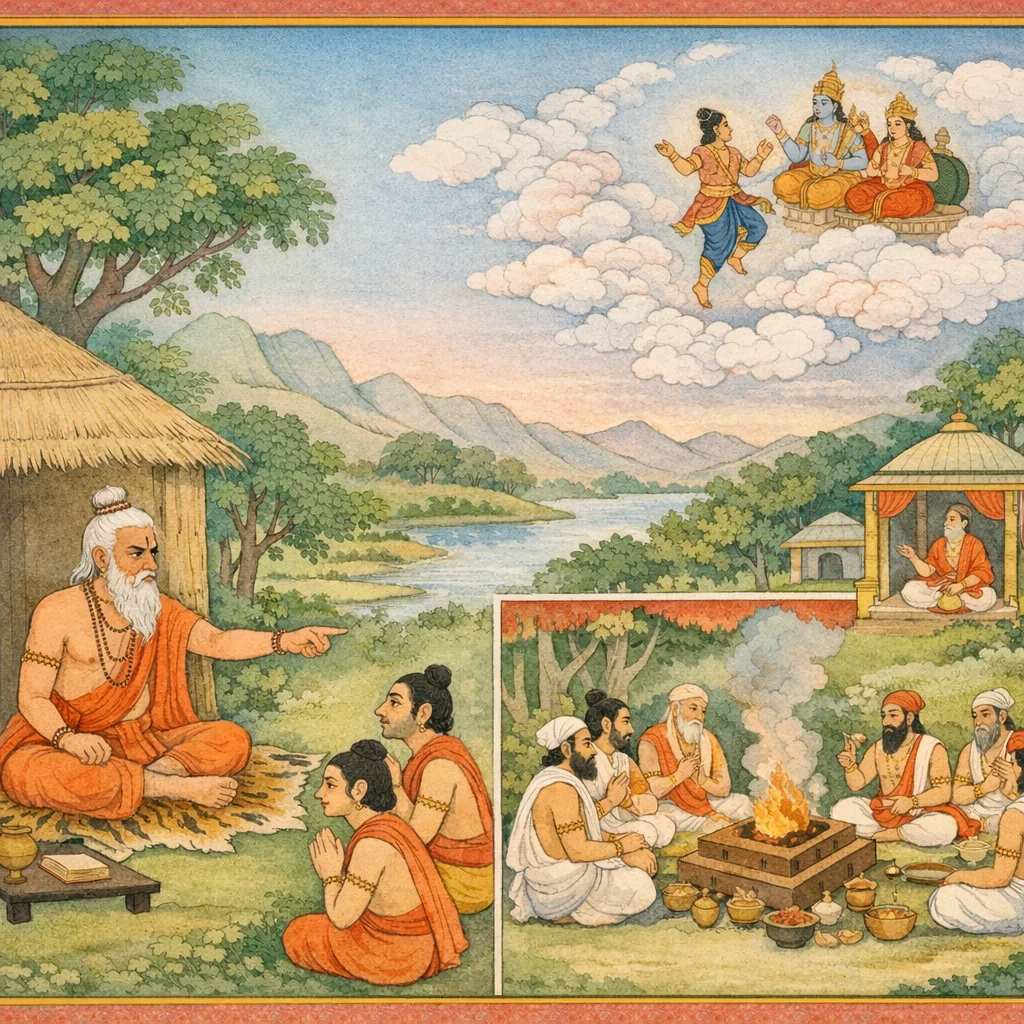
Sūta begins with the episode of Tridhanvā and recounts the fall and restoration of Satyavrata (Triśaṅku): his rejection of his father, Vasiṣṭha’s wrath, Viśvāmitra’s royal consecration, and his ascent to heaven with his body. He then briefly traces the long Ikṣvāku line (Hariścandra, Sagara, Bhagiratha, Daśaratha, Rāma, Kuśa and Lava, etc.), linking it to the fruit of Śaiva dharma: through study of Pāśupata knowledge, worship of Śiva, and duly performed yajñas, they attained the heavenly realm. Next comes the Aila dynasty—Purūravas, Nahuṣa, Yayāti, the division of the offspring of Devayānī and Śarmiṣṭhā—and the account of Janamejaya, whose chariot was ruined by Garga’s curse and who then undertook expiation and purification through the Aśvamedha. The latter half closes with a dharma-based debate on Puru’s consecration, laying the ground for subsequent discussions of rājadharma and judicial discernment.
Shlokas
Verse 1
इति श्रीलिङ्गमहापुराणे पूर्वभागे रुद्रसहस्रनामकथनं नाम पञ्चषष्टितमो ऽध्यायः सूत उवाच त्रिधन्वा देवदेवस्य प्रसादात्तण्डिनस् तथा अश्वमेधसहस्रस्य फलं प्राप्य प्रयत्नतः
Thus, in the Śrī Liṅga Mahāpurāṇa, in the Pūrva-bhāga, ends the sixty-fifth chapter entitled “The Narration of Rudra’s Thousand Names.” Sūta said: By the grace (prasāda) of the God of gods, Tridhanvā—and likewise Taṇḍin—attained, through earnest striving, the merit equal to a thousand Aśvamedha sacrifices.
Verse 2
गाणपत्यं दृढं प्राप्तः सर्वदेवनमस्कृतः आसीत्त्रिधन्वनश्चापि विद्वांस्त्रय्यारुणो नृपः
That king, learned in the Vedic triad, became firmly established in the Gaṇapatya discipline. All the gods revered him with salutations, and he was also known as Tridhanvanā and as Trayyāruṇa, the wise ruler.
Verse 3
तस्य सत्यव्रतो नाम कुमारो ऽभून्महाबलः तेन भार्या विदर्भस्य हृता हत्वामितौजसम्
From him was born a mighty prince named Satyavrata. Having slain the man of immeasurable prowess, he abducted the wife of the king of Vidarbha; by that adharma he tightened the pāśa, the bond that binds the paśu (the embodied soul) away from the Lord, the Pati.
Verse 4
पाणिग्रहणमन्त्रेषु निष्ठाम् अप्रापितेष्विह तेनाधर्मेण संयुक्तं राजा त्रय्यारुणो ऽत्यजत्
Because he had not attained firm steadiness in the mantras of pāṇigrahaṇa—the Vedic rite of taking the bride’s hand—King Trayyāruṇa became entangled in that very adharma; and, bound to that unrighteousness, he abandoned this life.
Verse 5
पितरं सो ऽब्रवीत् त्यक्तः क्व गच्छामीति वै द्विजाः पिता त्वेनमथोवाच श्वपाकैः सह वर्तय
Abandoned, he said to his father, “O twice-born ones, where shall I go?” Then his father replied, “Live in association with the śvapākas, the outcaste dog-cookers.”
Verse 6
इत्युक्तः स विचक्राम नगराद्वचनात् पितुः स तु सत्यव्रतो धीमाञ् छ्वपाकावसथान्तिके
Thus addressed, he departed from the city at his father’s command. Satyavrata, wise and steadfast in truth, went near the dwelling of the śvapākas—holding fast to dharma even when it carried him beyond social boundaries.
Verse 7
पित्रा त्यक्तो ऽवसद्वीरः पिता चास्य वनं ययौ सर्वलोकेषु विख्यातस् त्रिशङ्कुरिति वीर्यवान्
Cast off by his father, the valiant prince lived on in disgrace; and his father too departed for the forest. Yet that mighty one became renowned in all the worlds by the name Triśaṅku—his fate revealing how worldly kingship, bound by pāśa (bondage), turns unstable without alignment to Pati, Lord Śiva, the inner ruler of dharma.
Verse 8
वसिष्ठकोपात्पुण्यात्मा राजा सत्यव्रतः पुरा विश्वामित्रो महातेजा वरं दत्त्वा त्रिशङ्कवे
Once, because of Vasiṣṭha’s anger, the righteous king Satyavrata—who became known as Triśaṅku—was granted a boon by the greatly radiant Viśvāmitra.
Verse 9
राज्ये ऽभिषिच्य तं पित्र्ये याजयामास तं मुनिः मिषतां देवतानां च वसिष्ठस्य च कौशिकः
Having consecrated him to the kingship, the sage Kauśika (Viśvāmitra) then made him perform the ancestral rite—while the Devas looked on, and while Vasiṣṭha too witnessed it.
Verse 10
सशरीरं तदा तं वै दिवमारोपयद्विभुः तस्य सत्यव्रता नाम भार्या कैकयवंशजा
Then the all-pervading Lord lifted him—together with his very body—up to heaven. His wife was named Satyavratā, born in the lineage of Kaikaya.
Verse 11
कुमारं जनयामास हरिश्चन्द्रमकल्मषम् हरिश्चन्द्रस्य च सुतो रोहितो नाम वीर्यवान्
From Kumāra was born Hariścandra, the stainless one; and Hariścandra’s son was the mighty and valorous Rohita by name.
Verse 12
हरितो रोहितस्याथ धुन्धुर्हारित उच्यते विजयश् च सुतेजाश् च धुन्धुपुत्रौ बभूवतुः
Then Harita was born of Rohita; and Dhundhu too is spoken of as Hārita. Vijaya and Sutejas became the two sons of Dhundhu.
Verse 13
जेता क्षत्रस्य सर्वत्र विजयस्तेन स स्मृतः रुचकस्तस्य तनयो राजा परमधार्मिकः
He conquered the Kṣatriya order everywhere; therefore he was remembered as “Vijaya,” the Victorious. His son was Rucaka, a king supremely devoted to dharma.
Verse 14
रुचकस्य वृकः पुत्रस् तस्माद्बाहुश् च जज्ञिवान् सगरस्तस्य पुत्रो ऽभूद् राजा परमधार्मिकः
Rucaka had a son named Vṛka; from him was born Bāhu. And Sagara, Bāhu’s son, became a king of supreme righteousness, upholding dharma in devotion to the Lord (Pati).
Verse 15
द्वे भार्ये सगरस्यापि प्रभा भानुमती तथा ताभ्यामाराधितः पूर्वम् और्वो ऽग्निः पुत्रकाम्यया
King Sagara too had two wives—Prabhā and Bhānumatī. Formerly, desiring offspring, the two of them worshipped Aurva, the fiery sage (Aurva-agni), to obtain sons.
Verse 16
और्वस्तुष्टस्तयोः प्रादाद् यथेष्टं वरमुत्तमम् एका षष्टिसहस्राणि सुतमेकं परा तथा
Pleased with the two of them, Sage Aurva granted the supreme boon exactly as desired: one obtained sixty thousand sons, while the other likewise obtained a single son.
Verse 17
अगृह्णाद् वंशकर्तारं प्रभागृह्णात्सुतान्बहून् एकं भानुमतिः पुत्रम् अगृह्णाद् असमञ्जसम्
He begot the progenitor who would uphold the lineage; and Prabhā, in her turn, bore many sons. From Bhānumatī was born a single son—Asamañjasa.
Verse 18
ततः षष्टिसहस्राणि सुषुवे सा तु वै प्रभा खनन्तः पृथिवीं दग्धा विष्णुहुङ्कारमार्गणैः
Then Prabhā indeed gave birth to sixty thousand sons. As they dug into the earth, they were burnt—struck down by the missile-like force of Viṣṇu’s thunderous huṅkāra, the sacred roar, a power no bound soul (paśu) can withstand.
Verse 19
असमञ्जस्य तनयः सो ऽंशुमान्नाम विश्रुतः तस्य पुत्रो दिलीपस्तु दिलीपात्तु भगीरथः
Asamañjasa’s son was the renowned Aṃśumān. His son was Dilīpa; and from Dilīpa was born Bhagiratha.
Verse 20
येन भागीरथी गङ्गा तपः कृत्वावतारिता भगीरथसुतश्चापि श्रुतो नाम बभूव ह
By his austere tapas the Bhāgīrathī Gaṅgā was brought down into the world; and Bhagiratha’s son, too, became renowned by the name Śruta.
Verse 21
नाभागस्तस्य दायादो भवभक्तः प्रतापवान् अंबरीषः सुतस्तस्य सिन्धुद्वीपस् ततो ऽभवत्
From him arose Nābhāga as the heir. His son was the mighty Ambārīṣa, a devoted bhakta of Bhava (Śiva); and from Ambārīṣa was born Sindhudvīpa.
Verse 22
नाभागेनांबरीषेण भुजाभ्यां परिपालिता बभूव वसुधात्यर्थं तापत्रयविवर्जिता
Protected by Nābhāga and Ambarīṣa with their mighty arms, the earth became supremely well-guarded, remaining free from the threefold afflictions—those arising from oneself, from other beings, and from the forces of the cosmos.
Verse 23
अयुतायुः सुतस्तस्य सिन्धुद्वीपस्य वीर्यवान् पुत्रो ऽयुतायुषो धीमान् ऋतुपर्णो महायशाः
From Sindhudvīpa was born the valiant Ayutāyu. And to Ayutāyu was born the wise and greatly renowned Ṛtuparṇa.
Verse 24
दिव्याक्षहृदयज्ञो वै राजा नलसखो बली नलौ द्वावेव विख्यातौ पुराणेषु दृढव्रतौ
Indeed, the mighty king—Nala’s companion—was a knower of the inner intent of the Divine-Eyed (Śiva). Thus the two Nalas alone are celebrated in the Purāṇas as steadfast observers of firm vows.
Verse 25
वीरसेनसुतश्चान्यो यश्चेक्ष्वाकुकुलोद्भवः ऋतुपर्णस्य पुत्रो ऽभूत् सार्वभौमः प्रजेश्वरः
From Vīrasena there arose another descendant, born in the Ikṣvāku dynasty. He became the son of Ṛtuparṇa—Sārvabhauma, a sovereign lord among rulers.
Verse 26
सुदासस्तस्य तनयो राजा त्विन्द्रसमो ऽभवत् सुदासस्य सुतः प्रोक्तः सौदासो नाम पार्थिवः
His son was Sudāsa, a king said to be equal to Indra in prowess. It is declared that Sudāsa’s son was the sovereign named Saudāsa.
Verse 27
ख्यातः कल्माषपादो वै नाम्ना मित्रसहश् च सः वसिष्ठस्तु महातेजाः क्षेत्रे कल्माषपादके
He became renowned as Kalmāṣapāda, also known by the name Mitrasaha. And the great-lustrous sage Vasiṣṭha was present in the sacred region called Kalmāṣapādaka.
Verse 28
अश्मकं जनयामास इक्ष्वाकुकुलवर्धनम् अश्मकस्योत्तरायां तु मूलकस्तु सुतो ऽभवत्
He begot Aśmaka, the increaser of the Ikṣvāku dynasty; and from Aśmaka’s later wife, a son named Mūlaka was born.
Verse 29
स हि रामभयाद्राजा स्त्रीभिः परिवृतो वने बिभर्ति त्राणमिच्छन्वै नारीकवचमुत्तमम्
Indeed, that king—terrified of Rāma—dwelt in the forest surrounded by women, and, desiring protection, he wore the excellent ‘armor of women’ as his shield.
Verse 30
मूलकस्यापि धर्मात्मा राजा शतरथः सुतः तस्माच्छतरथाज्जज्ञे राजा त्विलविलो बली
From Mūlaka was born the righteous king Śataratha. From Śataratha, in turn, was born the mighty king Ilavila.
Verse 31
आसीत् त्वैलविलिः श्रीमान् वृद्धशर्मा प्रतापवान् पुत्रो विश्वसहस्तस्य पितृकन्या व्यजीजनत्
There was a glorious and valorous man named Vṛddhaśarman, the son of Viśvasahasra; and the daughter of the Pitṛs gave birth to him, and he was known as Tvailavili.
Verse 32
दिलीपस्तस्य पुत्रो ऽभूत् खट्वाङ्ग इति विश्रुतः येन स्वर्गाद् इहागत्य मुहूर्तं प्राप्य जीवितम्
His son was Dilīpa; and Dilīpa’s son became renowned as Khaṭvāṅga—he who, returning here from heaven, obtained only a single moment of life remaining.
Verse 33
त्रयो ऽग्नयस्त्रयो लोका बुद्ध्या सत्येन वै जिताः दीर्घबाहुः सुतस्तस्य रघुस्तस्मादजायत
By discerning intellect and unwavering truth, the three sacred fires and the three worlds were mastered. From him was born the son Dīrghabāhu, and from Dīrghabāhu was born Raghu.
Verse 34
अजः पुत्रो रघोश्चापि तस्माज्जज्ञे च वीर्यवान् राजा दशरथस्तस्माच् छ्रीमानिक्ष्वाकुवंशकृत्
Aja too was the son of Raghu. From him was born the valiant King Daśaratha; and through that illustrious one, the Ikṣvāku lineage was further established and made renowned.
Verse 35
रामो दशरथाद्वीरो धर्मज्ञो लोकविश्रुतः भरतो लक्ष्मणश्चैव शत्रुघ्नश् च महाबलः
Rāma, the heroic son of Daśaratha—knower of dharma and renowned in the worlds—together with Bharata, Lakṣmaṇa, and the mighty Śatrughna, is remembered as an illustrious exemplar.
Verse 36
तेषां श्रेष्ठो महातेजा रामः परमवीर्यवान् रावणं समरे हत्वा यज्ञैरिष्ट्वा च धर्मवित्
Foremost among them was the greatly radiant Rāma, of unsurpassed valor. Having slain Rāvaṇa in battle, he performed Vedic sacrifices; and, as a knower of dharma, he upheld the righteous order—thus showing how the paśu (embodied soul) purifies pāśa (bondage) through disciplined action offered to the Supreme Lord (Pati), Śiva.
Verse 37
दशवर्षसहस्राणि रामो राज्यं चकार सः रामस्य तनयो जज्ञे कुश इत्यभिविश्रुतः
For ten thousand years, Rama ruled the kingdom. To Rama a son was born, renowned by the name Kuśa.
Verse 38
लवश् च सुमहाभागः सत्यवान् अभवत् सुधीः अतिथिस्तु कुशाज्जज्ञे निषधस्तस्य चात्मजः
Lava too was greatly fortunate—truthful and wise. From Kuśa was born Atithi, and Niṣadha was his son.
Verse 39
नलस्तु निषधाज्जातो नभस्तस्मादजायत नभसः पुण्डरीकाख्यः क्षेमधन्वा ततः स्मृतः
From Niṣadha was born Nala; from him was born Nabhas. From Nabhas arose Puṇḍarīka by name, and thereafter came Kṣemadhanvan, as remembered in the lineage.
Verse 40
तस्य पुत्रो ऽभवद् वीरो देवानीकः प्रतापवान् अहीनरः सुतस् तस्य सहस्राश्वस्ततः परः
From him was born a valiant son, the mighty Devānīka. His son was Ahīnara, and after him came Sahasrāśva.
Verse 41
शुभश्चन्द्रावलोकश् च तारापीडस्ततो ऽभवत् तस्यात्मजश्चन्द्रगिरिर् भानुचन्द्रस् ततो ऽभवत्
From him were born Śubha and Candrāvaloka; thereafter arose Tārāpīḍa. His son was Candragiri, and from him was born Bhānucandra.
Verse 42
श्रुतायुरभवत्तस्माद् बृहद्बल इति स्मृतः भारते यो महातेजाः सौभद्रेण निपातितः
From him was born Śrutāyu; therefore he is remembered as Bṛhadbala. In the Bharata war, that great-splendoured one was struck down by Saubhadra (Abhimanyu).
Verse 43
एते इक्ष्वाकुदायादा राजानः प्रायशः स्मृताः वंशे प्रधाना एतस्मिन् प्राधान्येन प्रकीर्तिताः
These are the kings descended from Ikṣvāku who are generally remembered; in this lineage they are the foremost, and thus they are proclaimed here according to their preeminence.
Verse 44
सर्वे पाशुपते ज्ञानम् अधीत्य परमेश्वरम् समभ्यर्च्य यथाज्ञानम् इष्ट्वा यज्ञैर्यथाविधि
Having all studied the Pāśupata wisdom, they worshipped Parameśvara (Śiva) in accordance with their understanding; and, following the prescribed rule, they duly performed sacrifices, offering them as acts oriented to Pati—the Lord who frees the paśu (souls) from the bonds of pāśa.
Verse 45
दिवं गता महात्मानः केचिन्मुक्तात्मयोगिनः नृगो ब्राह्मणशापेन कृकलासत्वम् आगतः
Some great-souled ones—yogins whose inner self is freed—attain the heavenly state. But King Nṛga, due to a brāhmaṇa’s curse, fell into the condition of a lizard, showing how pāśa (bondage) arises when dharma toward the sacred is violated.
Verse 46
धृष्टश् च धृष्टकेतुश् च यमबालश् च वीर्यवान् रणधृष्टश् च ते पुत्रास् त्रयः परमधार्मिकाः
And there were Dhṛṣṭa, Dhṛṣṭaketu, and the valiant Yama-bāla; and also Raṇadhṛṣṭa. These were his three sons, supremely devoted to dharma, moving within the ordained order upheld by Pati (Lord Śiva).
Verse 47
आनर्तो नाम शर्यातेः सुकन्या नाम दारिका आनर्तस्याभवत् पुत्रो रोचमानः प्रतापवान्
From Śaryāti were born a son named Ānarta and a maiden named Sukanyā. To Ānarta was born a son—Rocamāna—renowned for radiant splendor and heroic might.
Verse 48
रोचमानस्य रेवो ऽभूद् रेवाद् रैवत एव च ककुद्मी चापरो ज्येष्ठपुत्रः पुत्रशतस्य तु
From Rocamāna was born Reva; from Reva came Raivata. Of that progenitor of a hundred sons, Kakudmī was the eldest—thus the lineage is remembered.
Verse 49
रेवती यस्य सा कन्या पत्नी रामस्य विश्रुता नरिष्यन्तस्य पुत्रो ऽभूज् जितात्मा तु महाबली
From him was born a daughter named Revatī, renowned as the wife of Rāma. And to Nariṣyanta there was born a son—self-controlled and exceedingly mighty.
Verse 50
नाभागादंबरीषस्तु विष्णुभक्तः प्रतापवान् ऋतस्तस्य सुतः श्रीमान् सर्वधर्मविदांवरः
From Nābhāga was born Ambarīṣa, mighty and illustrious, a renowned devotee of Viṣṇu. His son was Ṛta, blessed with fortune and foremost among those who know the full scope of dharma—upholding the righteous order that, in the end, leads the pashu (soul) toward the Lord, the Pati, through disciplined devotion.
Verse 51
कृतस्तस्य सुधर्माभूत् पृषितो नाम विश्रुतः करूषस्य तु कारूषाः सर्वे प्रख्यातकीर्तयः
From him was born Sudharmā; and (from Sudharmā) the renowned Pṛṣita became celebrated. From Karūṣa arose the Kārūṣas—all of them famed for their widely known repute.
Verse 52
पृषितो हिंसयित्वा गां गुरोः प्राप सुकल्मषम् शापाच्छूद्रत्वम् आपन्नश् च्यवनस्येति विश्रुतः
Having harmed a cow belonging to his guru, Pṛṣita incurred a grievous sin. By the force of the curse he fell into the state of a Śūdra, and thus became widely known as “Cyavana’s (one),” marked by that downfall.
Verse 53
दिष्टपुत्रस्तु नाभागस् तस्मादपि भलन्दनः भलन्दनस्य विक्रान्तो राजासीद् अजवाहनः
Nābhāga was the son of Diṣṭa; from him was born Bhalandana. From Bhalandana arose the valiant king Ajavāhana. This royal line is remembered as part of the ordered unfolding of creation under the Lord (Pati), while embodied beings (paśu) move through karmic succession.
Verse 54
एते समासतः प्रोक्ता मनुपुत्रा महाभुजाः इक्ष्वाकोः पुत्रपौत्राद्या एलस्याथ वदामि वः
Thus, in brief, the mighty-armed sons of Manu have been described. Now I shall tell you of Ikṣvāku’s sons and grandsons, beginning with Ela.
Verse 55
सूत उवाच ऐलः पुरूरवा नाम रुद्रभक्तः प्रतापवान् चक्रे त्वकण्टकं राज्यं देशे पुण्यतमे द्विजाः
Sūta said: O twice-born sages, Aila—named Purūravas—was a devoted worshipper of Rudra and mighty in splendor. In that most sacred land he established a kingdom free from thorns, where oppression and obstacles were removed.
Verse 56
उत्तरे यमुनातीरे प्रयागे मुनिसेविते प्रतिष्ठानाधिपः श्रीमान् प्रतिष्ठाने प्रतिष्ठितः
On the northern bank of the Yamunā, at Prayāga revered and served by sages, the illustrious lord of Pratiṣṭhāna abides firmly established in Pratiṣṭhāna.
Verse 57
तस्य पुत्राः सप्त भवन् सर्वे वितततेजसः गन्धर्वलोकविदिता भवभक्ता महाबलाः
He had seven sons, all radiant with far‑spreading splendor. Renowned in the realm of the Gandharvas, they were mighty in strength and devoted in bhakti to Bhava (Lord Śiva), the Pati who frees the paśu (bound soul) from pāśa (bondage).
Verse 58
आयुर् मायुर् अमायुश् च विश्वायुश्चैव वीर्यवान् श्रुतायुश् च शतायुश् च दिव्याश्चैवोर्वशीसुताः
Āyu, Māyu, Amāyu, and Viśvāyu—along with the mighty Vīryavān; also Śrutāyu, Śatāyu, and Divya—these are the sons born of Urvaśī.
Verse 59
आयुषस्तनया वीराः पञ्चैवासन्महौजसः स्वर्भानुतनयायां ते प्रभायां जज्ञिरे नृपाः
From Āyuṣa were born five heroic sons, mighty in splendor. Those kings were born of Prabhā, the daughter of Svarbhānu.
Verse 60
नहुषः प्रथमस्तेषां धर्मज्ञो लोकविश्रुतः नहुषस्य तु दायादाः षडिन्द्रोपमतेजसः
Among them, Nahuṣa was the foremost—knower of dharma and renowned in the worlds. And the heirs of Nahuṣa were six, radiant with splendor comparable to Indra, fit to uphold righteous rule as a support for the cosmic order under Pati (Śiva).
Verse 61
उत्पन्नाः पितृकन्यायां विरजायां महौजसः यतिर्ययातिः संयातिर् आयातिः पञ्चमो ऽन्धकः
From Virajā, the daughter of the Pitṛs, were born the mighty sons: Yati, Yayāti, Saṃyāti, Āyāti, and as the fifth, Andhaka.
Verse 62
विजातिश्चेति षडिमे सर्वे प्रख्यातकीर्तयः यतिर्ज्येष्ठश् च तेषां वै ययातिस्तु ततो ऽवरः
“Vijāti” and the others—these six were all renowned for their celebrated deeds. Among them, Yati was indeed the eldest; and Yayāti was younger than he.
Verse 63
ज्येष्ठस्तु यतिर्मोक्षार्थो ब्रह्मभूतो ऽभवत्प्रभुः तेषां ययातिः पञ्चानां महाबलपराक्रमः
Of them, the eldest—Yati—seeking liberation, became established in Brahman, attaining spiritual sovereignty. Among the remaining five, Yayāti was famed for great strength and heroic prowess.
Verse 64
ययाति देवयानीमुशनसः सुतां भार्यामवाप सः शर्मिष्ठामासुरीं चैव तनयां वृषपर्वणः
King Yayāti took as his wife Devayānī, the daughter of Uśanas (Śukra); and he also took Śarmiṣṭhā, the Asura maiden, daughter of Vṛṣaparvan.
Verse 65
यदुं च तुर्वसुं चैव देवयानी व्यजायत तावुभौ शुभकर्माणौ स्तुतौ विद्याविशारदौ
Devayānī gave birth to Yadu and Turvasu; both were of auspicious conduct, praised by all, and skilled in sacred knowledge.
Verse 66
द्रुह्यं चानुं च पूरुं च शर्मिष्ठा वार्षपर्वणी ययातये रथं तस्मै ददौ शुक्रः प्रतापवान्
Śarmiṣṭhā, the daughter of Vṛṣaparvan, bore to Yayāti the sons Druhyu, Anu, and Pūru; and the mighty, radiant Śukra bestowed upon him a chariot. In this royal line, the Lord (Pati) silently steers the course of karma—loosening the bonds (pāśa) for the soul (paśu) when dharma is upheld.
Verse 67
तोषितस्तेन विप्रेन्द्रः प्रीतः परमभास्वरम् सुसंगं काञ्चनं दिव्यम् अक्षये च महेषुधी
Thus gratified by him, the foremost of Brahmins—radiant with joy—bestowed a supremely resplendent, well-adorned, divine gift of gold, together with an inexhaustible provision; for such is the great potency of sacred giving when it is offered in reverence to the vipra and dedicated to Pati, Lord Mahādeva.
Verse 68
युक्तं मनोजवैर् अश्वैर् येन कन्यां समुद्वहन् स तेन रथमुख्येन षण्मासेनाजयन्महीम्
Harnessing mind-swift horses to that foremost chariot by which he had carried away the maiden, he—by that very chariot—subdued the earth within six months.
Verse 69
ययातिर्युधि दुर्धर्षो देवदानवमानुषैः भवभक्तस्तु पुण्यात्मा धर्मनिष्ठः समञ्जसः
Yayāti was unconquerable in battle even by devas, dānavas, and men; yet he was a devotee of Bhava (Śiva)—pure-souled, steadfast in dharma, and balanced in conduct.
Verse 70
यज्ञयाजी जितक्रोधः सर्वभूतानुकम्पनः कौरवाणां च सर्वेषां स भवद्रथ उत्तमः
Bhavadratha was a performer of Vedic sacrifices, a conqueror of anger, and compassionate toward all beings; among all the Kauravas, he was the most excellent.
Verse 71
यावन्नरेन्द्रप्रवरः कौरवो जनमेजयः पूरोर्वंशस्य राज्ञस्तु राज्ञः पारिक्षितस्य तु
So long as the foremost of kings—Janamejaya of the Kuru line, son of King Parīkṣit and ruler within the Pūru dynasty—endures in fame and sovereignty, the royal lineage is remembered as upheld and preserved.
Verse 72
जगाम स रथो नाशं शापाद्गर्गस्य धीमतः गर्गस्य हि सुतं बालं स राजा जनमेजयः
By the curse of the wise Ṛṣi Garga, that chariot was brought to ruin. Truly, King Janamejaya had harmed—or offended—Garga’s young son, still but a child, and therefore destruction befell him.
Verse 73
अक्रूरं हिंसयामास ब्रह्महत्यामवाप सः स लोहगन्धी राजर्षिः परिधावन्नितस्ततः
Having harmed Akrūra, he incurred the sin of brahmahatyā. That royal seer, reeking like iron, then ran about here and there, driven and bound by the pāśa born of grievous wrongdoing, until purification could be attained through Śiva’s grace.
Verse 74
पौरजानपदैस्त्यक्तो न लेभे शर्म कर्हिचित् ततः स दुःखसंतप्तो न लेभे संविदं क्वचित्
Abandoned by the townsfolk and the people of the countryside, he found no peace at any time. Then, scorched by sorrow, he could not obtain understanding or right counsel anywhere.
Verse 75
जगाम शौनकमृषिं शरण्यं व्यथितस्तदा इन्द्रेतिर् नाम विख्यातो यो ऽसौ मुनिरुदारधीः
Then, distressed, that noble-minded sage—renowned by the name Indreti—went to the refuge-worthy Ṛṣi Śaunaka, seeking shelter.
Verse 76
याजयामास चेन्द्रेतिस् तं नृपं जनमेजयम् अश्वमेधेन राजानं पावनार्थं द्विजोत्तमाः
Then Indreti, together with the foremost twice-born sages, caused King Janamejaya to perform the Aśvamedha sacrifice for purification. By that yajña the king was ritually cleansed and established in dharma under the unseen lordship of Pati (Śiva).
Verse 77
स लोहगन्धान्निर्मुक्त एनसा च महायशाः यज्ञस्यावभृथे मध्ये यातो दिव्यो रथः शुभः
Freed from the metallic stench and released from sin, that greatly renowned one—at the very midst of the yajña’s avabhṛtha, the concluding purificatory bath—departed in a radiant, auspicious celestial chariot.
Verse 78
तस्माद्वंशात्परिभ्रष्टो वसोश्चेदिपतेः पुनः दत्तः शक्रेण तुष्टेन लेभे तस्माद् बृहद्रथः
Having fallen away from that lineage, Vasu, king of Cedi, was restored once more—bestowed back by Śakra (Indra), pleased with him; and from him arose Bṛhadratha.
Verse 79
ततो हत्वा जरासंधं भीमस्तं रथमुत्तमम् प्रददौ वासुदेवाय प्रीत्या कौरवनन्दनः
Then, having slain Jarāsandha, Bhīma—the delight of the Kuru line—joyfully presented that excellent chariot to Vāsudeva. In the Śaiva understanding, such righteous giving (dāna) after the conquest of adharma becomes a purifying act: it loosens pāśa (bondage) for the paśu (the bound soul) and aligns one’s action with the will of Pati (the Lord).
Verse 80
सूत उवाच अभ्यषिञ्चत्पुरुं पुत्रं ययातिर्नाहुषः प्रभुः कृतोपकारस्तेनैव पुरुणा द्विजसत्तमाः
Sūta said: O best of the twice-born, King Yayāti, the mighty son of Nahuṣa, anointed his son Puru as heir by abhiṣeka—being indebted to that very Puru for the great service he had rendered.
Verse 81
अभिषेक्तुकामं च नृपं पुरुं पुत्रं कनीयसम् ब्राह्मणप्रमुखा वर्णा इदं वचनमब्रुवन्
Wishing to consecrate as king Puru, the younger son, the leading varṇas—headed by the brāhmaṇas—spoke these words of counsel.
Verse 82
कथं शुक्रस्य नप्तारं देवयान्याः सुतं प्रभो ज्येष्ठं यदुमतिक्रम्य कनीयान्राज्यमर्हति
O Lord, how can the younger be deemed fit for kingship, passing over Yadu—the eldest, the grandson of Śukra and the son of Devayānī?
Verse 83
एते संबोधयामस्त्वां धर्मं च अनुपालय
Therefore we admonish you: awaken to your duty and steadfastly uphold dharma, so that the bound soul (paśu) may remain aligned with the Lord (Pati) through right conduct.
Frequently Asked Questions
As a dharma-tension narrative: despite paternal rejection and Vasistha’s displeasure, Vishvamitra’s tapas and resolve secure an extraordinary result (sasharira svargarohana), illustrating the potency of ascetic power and the complex interplay of rishi-authority, royal conduct, and destiny.
That exemplary kingship is inseparable from Shiva-oriented discipline—Pashupata-jnana, proper worship (samarchana), and yajna performed with dharmic intent—culminating in higher worlds and, for some, yogic liberation.
To foreground karma, shapa (curse), and prayashchitta: wrongdoing leads to social and inner collapse, while Vedic expiation (Ashvamedha under a competent rishi) restores purity—supporting the Purana’s ethical-ritual framework around dharma.