Adhyaya 38
ब्रह्मणो वरप्रदानम् — शिवस्य परत्वप्रतिपादनम् तथा वराहेण भूमेः पुनःस्थापनम्
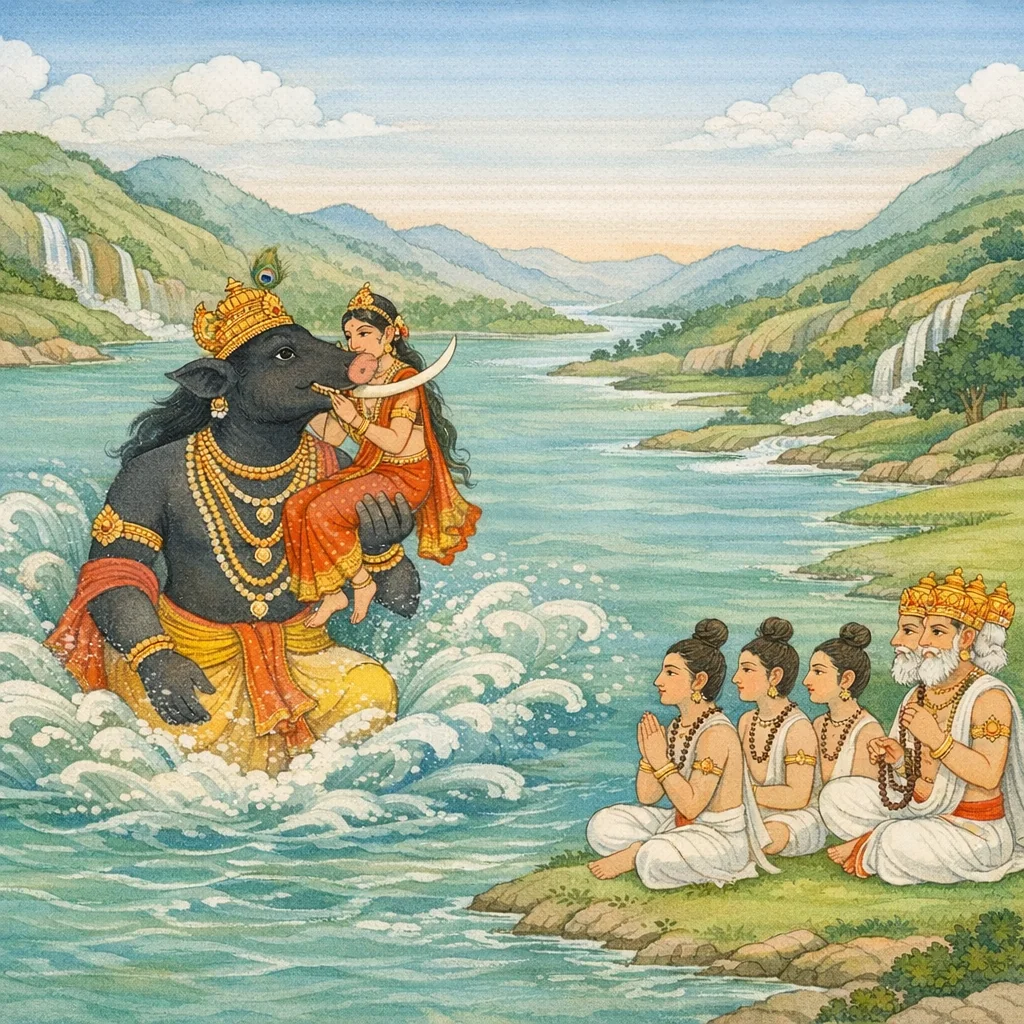
After Maheshvara departs, Janardana (Vishnu) offers praise proclaiming Shiva’s supremacy, declaring Mahadeva the universal Lord and refuge of all, even of Brahma and Vishnu. Vishnu explains a theological correspondence: he is Shiva’s left aspect and Brahma Shiva’s right; sages relate prakriti/avyakta to Vishnu and purusha to Brahma, yet both remain subordinate to Mahadeva as the common cause. Obeying the divine command, Brahma venerates Rudra as the giver of boons. The narrative then turns to cosmic restoration: Vishnu becomes Varaha, raises and steadies the flooded earth, reshapes rivers, oceans, and the land, and rebuilds the worlds. Brahma begins creation by bringing forth the four Kumaras (Sanaka, Sanandana, Sanatana, Sanatkumara) and the chief rishis through yogic power, along with dharma and adharma, establishing the ethical and cosmic order that frames the ensuing Shaiva teachings on worship and liberation.
Shlokas
Verse 1
इति श्रीलिङ्गमहापुराणे पूर्वभागे ब्रह्मणो वरप्रदानं नाम सप्तत्रिंशो ऽध्यायः शैलादिरुवाच गते महेश्वरे देवे तमुद्दिश्य जनार्दनः प्रणम्य भगवान्प्राह पद्मयोनिमजोद्भवः
Thus, in the Śrī Liṅga Mahāpurāṇa, in the Pūrva-bhāga, begins the thirty-seventh chapter entitled “Brahmā’s Granting of Boons.” Śailādi said: when Lord Maheśvara had departed, Janārdana, fixing his mind upon Him, bowed in reverence and then addressed the Unborn Brahmā, the Lotus-born.
Verse 2
श्रीविष्णुरुवाच परमेशो जगन्नाथः शङ्करस्त्वेष सर्वगः आवयोरखिलस्येशः शरणं च महेश्वरः
Śrī Viṣṇu said: “This Śaṅkara is the Supreme Lord, the Master of the universe, all-pervading. He is the Lord of us both and of all that exists; Mahādeva alone is our refuge.”
Verse 3
अहं वामाङ्गजो ब्रह्मन् शङ्करस्य महात्मनः भवान् भवस्य देवस्य दक्षिणाङ्गभवः स्वयम्
“O Brahman, I am born from the left side of the great-souled Śaṅkara; and you, indeed, are yourself born from the right side of that Deva Bhava (Lord Śiva).”
Verse 4
मामाहुर् ऋषयः प्रेक्ष्य प्रधानं प्रकृतिं तथा अव्यक्तमजमित्येवं भवन्तं पुरुषस्त्विति
Having rightly discerned the truth, the seers declared of me: “He is Pradhāna; He is Prakṛti; He is the Unmanifest (Avyakta); He is the Unborn (Aja).” Thus they also know you as the Puruṣa—the indwelling Lord (Pati) beyond all bonds.
Verse 5
एवमाहुर्महादेवम् आवयोरपि कारणम् ईशं सर्वस्य जगतः प्रभुमव्ययमीश्वरम्
Thus they declare Mahādeva to be the cause even of us two—He, the Lord of the entire universe, the sovereign master, the imperishable, unchanging Īśvara.
Verse 6
सो ऽपि तस्यामरेशस्य वचनाद्वारिजोद्भवः वरेण्यं वरदं रुद्रम् अस्तुवत्प्रणनाम च
Then the Lotus-born (Brahmā), at the command of the Lord of the gods, praised Rudra—most worthy of worship and bestower of boons—and bowed down to Him.
Verse 7
अथाम्भसा प्लुतां भूमीं समाधाय जनार्दनः पूर्ववत्स्थापयामास वाराहं रूपमास्थितः
Then Janārdana, gathering up the Earth submerged by the waters, assumed the form of the Boar (Varāha) and restored her to her former place. In the Śaiva vision, such cosmic re-stabilization proceeds under the supreme governance of Pati (Śiva), who empowers the devas to re-order the worlds.
Verse 8
नदीनदसमुद्रांश् च पूर्ववच्चाकरोत्प्रभुः कृत्वा चोर्वीं प्रयत्नेन निम्नोन्नतविवर्जिताम्
The Lord (Pati), as before, fashioned the rivers, streams, and oceans; and with deliberate effort He shaped the earth, free from excessive depressions and elevations, bringing the world into ordered balance.
Verse 9
धरायां सो ऽचिनोत्सर्वान् भूधरान् भूधराकृतिः भूराद्यांश्चतुरो लोकान् कल्पयामास पूर्ववत्
Assuming a mountain-like form, He piled up all the mountains upon the earth and, as before, reconstituted the four worlds beginning with Bhūḥ, restoring the cosmic order in accord with the prior kalpa.
Verse 10
स्रष्टुं च भगवांश्चक्रे मतिं मतिमतां वरः मुख्यं च तैर्यग्योन्यं च दैविकं मानुषं तथा
Wishing to manifest creation, the Blessed Lord—best among the wise—brought forth the creative intent and divided beings into the principal order, the animal-born order (tairyag-yoni), the divine order, and the human order as well.
Verse 11
विभुश्चानुग्रहं तत्र कौमारकम् अदीनधीः पुरस्तादसृजद्देवः सनन्दं सनकं तथा
There, the all-pervading Lord (Vibhu), of undiminished intelligence, out of grace first brought forth the Kumāra order—Sananda and Sanaka.
Verse 12
सनातनं सतां श्रेष्ठं नैष्कर्म्येण गताः परम् मरीचिभृग्वङ्गिरसं पुलस्त्यं पुलहं क्रतुम्
They attained the Supreme through naiṣkarmya—actionless, desireless realization—having contemplated the Eternal One (Sanātana), the श्रेष्ठ among the holy: Marīci, Bhṛgu, Aṅgiras, Pulastya, Pulaha, and Kratu.
Verse 13
दक्षमत्रिं वसिष्ठं च सो ऽसृजद् योगविद्यया संकल्पं चैव धर्मं च ह्य् अधर्मं भगवान्प्रभुः
That Bhagavān, the sovereign Lord (Pati), brought forth Dakṣa, Atri, and Vasiṣṭha through the power of yogic knowledge; and He also manifested saṅkalpa, Dharma, and even Adharma, showing His mastery over the ordered cosmos and its contrasting forces.
Verse 14
द्वादशैव प्रजास्त्वेता ब्रह्मणो ऽव्यक्तजन्मनः ऋभुं सनत्कुमारं च ससर्जादौ सनातनः
From Brahmā—whose birth is from the Unmanifest (Avyakta)—these twelve orders of beings indeed arose. In the beginning, the Eternal One (Sanātana) also brought forth Ṛbhu and Sanatkumāra.
Verse 15
तौ चोर्ध्वरेतसौ दिव्यौ चाग्रजौ ब्रह्मवादिनौ कुमारौ ब्रह्मणस्तुल्यौ सर्वज्ञौ सर्वभाविनौ
Those two divine Kumāras, established in upward-moving celibate potency (ūrdhvareta), were the elder-born proclaimers of Brahman. Equal to Brahmā in splendour, they were all-knowing and able to assume every state of being, yet inwardly poised in pure knowledge.
Verse 16
एवं मुख्यादिकान् सृष्ट्वा पद्मयोनिः शिलाशन युगधर्मानशेषांश् च कल्पयामास विश्वसृक्
Thus, after creating the Pradhānas and other primary beings, the Lotus-born Creator—seated upon his firm seat—ordained without remainder the laws of the Yugas, establishing the cosmic order for the worlds.
Frequently Asked Questions
It asserts a Shaiva-centered ontology: preservation (Vishnu) and creation (Brahma) are functional manifestations (aṃśa) grounded in Shiva, who remains the singular, all-pervading cause (kāraṇa) beyond these roles.
The episode illustrates that even major cosmic acts attributed to Vishnu occur within Shiva’s overarching sovereignty; cosmic stability and re-creation are shown as coordinated within the Shaiva metaphysical order where Maheshvara is the ultimate refuge and cause.