Adhyaya 9
Ajāna Lineages, Divine Classes, Ṛṣi Catalogues, and the Merit of Śravaṇa-Smaraṇa
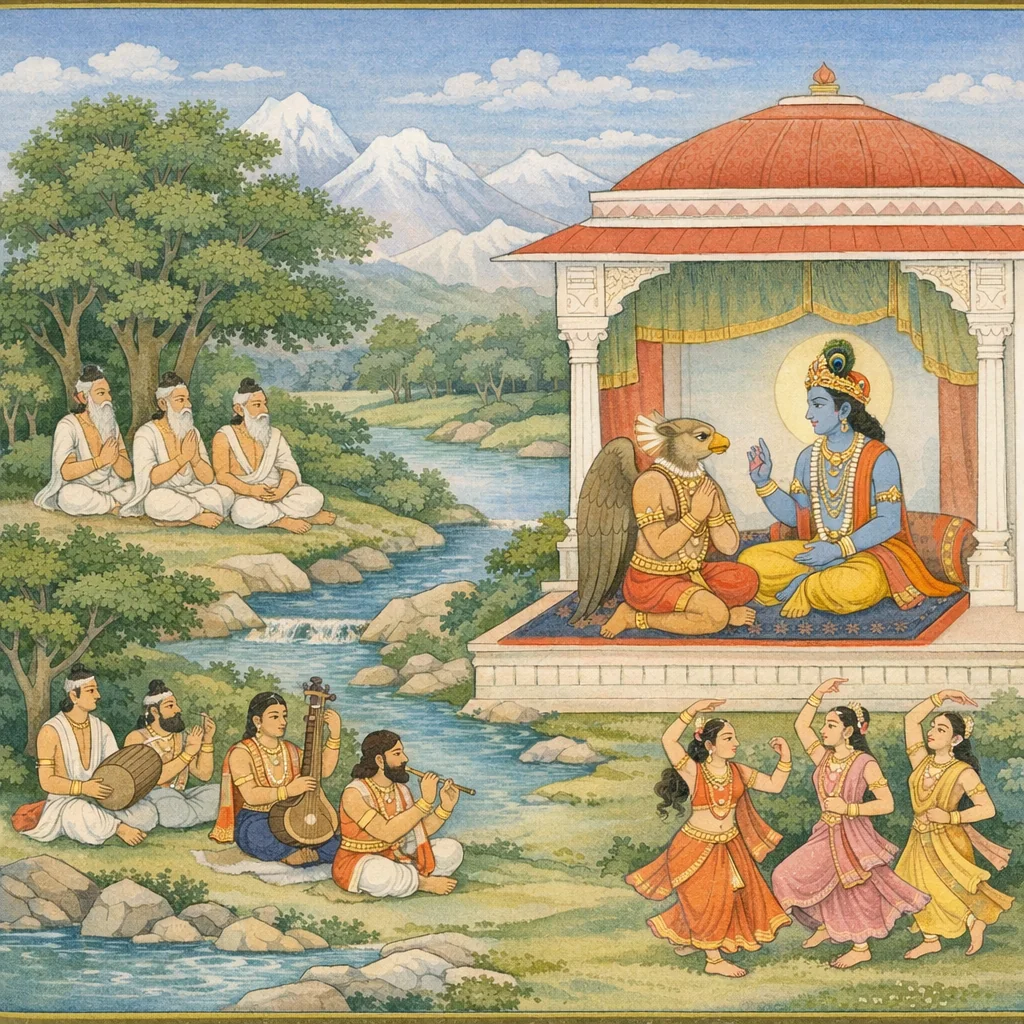
In response to Garuḍa’s request to explain the “Unborn” and related categories, Śrī Kṛṣṇa describes the Ajāna/Ajanaja deities as lineage-bound presiders over action, and then names representative Gandharvas and kindred beings. He expands the teaching into a graded comparison—Gandharvas, Apsarases (said to be vastly numerous through ignorance), Yakṣas, and above all the ṛṣis, who are praised as equal to the Unborn and superior to beings born merely of karma. Kṛṣṇa provides extended catalogues of sages, stressing that hearing their names delights Hari. He then speaks of his wives as daughters of Agni, highlights Kaśerū’s distinction, and traces the Pitṛs’ origin from the Ajānas while noting their immense numbers. The chapter closes by ranking divine emissaries and Deva-Gandharvas above earthly kings and humans, and turns to practice: recitation and listening (śravaṇa-smaraṇa) purify and win Hari’s grace, while neglect is māyā-born delusion. A final warning links spiritual remembrance with daily conduct, forming a moral bridge into the next teachings on right living and its consequences.
Shlokas
Verse 1
अजानजस्वरूपं च ब्रूहि कृष्ण महामते / तदन्यांश्च क्रमेणेव वक्तुं कृष्ण त्वमर्हसि
O Kṛṣṇa, O greatly wise one—please explain the nature of Ajāna, the Unborn; and then, in proper sequence, you should also describe the other aspects as well, O Kṛṣṇa.
Verse 2
श्रीकृष्ण उवाच / अजानाख्या देवतास्तु तत्तद्देवकुले भवाः / अजानदेवतास्ता हि तेभ्योग्याः कर्मदेवताः
Śrī Kṛṣṇa said: Those deities known as Ajāna arise within their respective divine lineages. Indeed, these Ajāna-deities are the presiding powers of actions (karma-deities), suited to and corresponding with those lineages.
Verse 3
विराधश्चारुदेष्णश्च तथा चित्ररथस्तथा / धृतराष्ट्रः किशोरश्च हूहूर्हाहास्तथैव च
Virādha, Ārudeṣṇa, and also Citraratha; Dhṛtarāṣṭra and Kiśora; and likewise Hūhū and Hāhā as well—these are named among them.
Verse 4
विद्याधरश्चोग्रसेनो विश्वावसुपरावसू / चित्रसेनश्च गोपालो बलः पञ्चदश स्मृताः
Vidyādhara, Ugrasena, Viśvāvasu and Parāvasu, as well as Citrasena, Gopāla, and Bala—these are remembered as (part of) the fifteen (named beings).
Verse 5
एवमाद्यश्च गन्धर्वाः शतसंख्याः खगेश्वर / अजानजसमा ज्ञेया मुक्तौ संसार एव च
Thus, O Lord of Birds (Garuda), the primordial Gandharvas are to be understood as numbering in the hundreds; and they are known to be comparable to the Ajanajas—both in the state of liberation and within worldly existence in saṃsāra as well.
Verse 6
अज्ञानजास्तु मे देवाः कर्मजेभ्यः शतावराः / घृताची मेनका रंभा उर्वशी च तिलोत्तमा
But the gods who arise from my ignorance are a hundred times more numerous than those born of (right) action—such as Ghṛtācī, Menakā, Rambhā, Urvaśī, and Tilottamā.
Verse 7
सुकेतुः शबरी चैव मञ्जुघोषा च पिङ्गला / इत्यादिकं यक्षरत्नं सह संपरिकीर्तितम्
Suketu, Śabarī, Mañjughoṣā, and Piṅgalā—along with others—are collectively celebrated here as the jewel-like Yakṣas.
Verse 8
अजानजसमा ह्येते कर्मजेभ्यः शतावराः / विश्वामित्रो वसिष्ठश्च नारदश्च्यवनस्तथा
Indeed, these sages are equal to the Unborn (Brahmā); and they are a hundred times superior to those who are merely born of actions (karma). They include Viśvāmitra, Vasiṣṭha, Nārada, and likewise Cyavana.
Verse 9
उतथ्यश्च मुनिश्चैतान्द्राजपित्वा खगेश्वर / ऋषयश्च महात्मानो ह्यजानजसमाः स्मृताः
O lord of birds, the sage Utathya, having duly set forth these matters and lineages, is remembered among the great-souled seers as equal to the Ajanajas, the primordial progenitors.
Verse 10
शतर्चिः कश्यपो ज्ञेयो मध्यमश्च पराशरः / पावमान्यः प्रगाथश्च क्षुद्रसूक्तश्च देवलः
Know that Śatarci is also called Kaśyapa; the one known as “the Middle” is Parāśara; Pāvamānya is Pragātha; and Kṣudrasūkta is Devala.
Verse 11
गृत्समदो ह्यासुरिश्च भरद्वाजोथ मुद्गलः / उद्दालको ह्यृ शृङ्गः शङ्खः सत्यव्रतस्तथा
Gṛtsamāda, Āsuri, Bharadvāja, and Mudgala; likewise Uddālaka, Ṛśṛṅga, Śaṅkha, and Satyavrata—these too are among the revered sages spoken of in this context.
Verse 12
सुयज्ञश्चैव बाभ्रव्यो माण्डूकश्चैव बाष्कलः / धर्माचार्यस्तथागस्त्यो दाल्भ्यो दार्ढ्यच्युतस्तथा
Also there were Suyajña, Bābhravya, Māṇḍūka, and Bāṣkala; likewise Dharmācārya, as well as Agastya, Dālbhyā, and Dārḍhyacyuta.
Verse 13
कवषो हरितः कण्वो विरूपो मुसलस्तथा / विष्णुवृद्धश्च आत्रेयः श्रीवत्सो वत्सलेत्यपि
Also (there are) Kavaṣa, Harita, Kaṇva, Virūpa, and Musala; likewise Viṣṇuvṛddha and Ātreya, and also Śrīvatsa and Vatsala.
Verse 14
भार्गवश्चाप्नवानश्च माण्डूकेयस्तथैव / मण्ड्कश्चैव जाबचलिः वीतिहव्यस्तथैव च
Bhārgava, Āpnavāna, and Māṇḍūkeya likewise; and also Maṇḍaka, Jābacali, and Vītihavya as well.
Verse 15
गृत्समदः शौनकश्च इत्याद्या ऋषयः स्मृताः / एतेषां श्रवणादेव हरिः प्रीणाति सर्वदा
Gṛtsamada, Śaunaka, and other such sages are remembered in the sacred tradition. By merely hearing their names, Hari (Viṣṇu) is ever pleased.
Verse 16
ब्रुवे द्व्यष्टसहस्रं च शृणु तार्क्ष्य मम स्त्रियः / अग्निपुत्रास्तु यद्द्व्यष्टसहस्रञ्च मम स्त्रियः / अजानजसमा ह्येता (ते) नात्र कार्या विचारणा
I shall declare it—listen, O Tārkṣya: my wives are two thousand and twenty-eight in number. Those two thousand and twenty-eight wives of mine are indeed daughters of Agni. They are pure and faultless, as though “unborn yet born”; therefore no further doubt or inquiry is needed here.
Verse 17
त्वष्टुः पुत्री कशेरूश्च तासां मध्ये गुणाधिका / तदनन्तरजान्वक्ष्ये शृणु सम्यक् खगेश्वर
Kaśerū is the daughter of Tvaṣṭṛ, and among those women she is foremost in virtue. Now I shall describe those born after them—listen well, O lord of birds, Garuḍa.
Verse 18
आजानेभ्यस्तु पितरः सप्तभ्योन्ये शतावराः / तथाधिका हि पितर इति वेदविदां मतम्
From the Ājānas arise the Pitṛs, the ancestral Fathers. From the seven groups there are other Pitṛs numbering in the hundreds. Indeed, the Pitṛs are even more numerous than this—such is the considered view of those who know the Veda.
Verse 19
तदनन्तराजान्वक्ष्ये शृणु त्वं द्विजसत्तम / अष्टाभ्यो देवगन्धर्वा अष्टोत्तरशतं विना
Now I shall describe the succeeding kings—listen, O best of the twice-born. The divine Gandharvas are one hundred and eight in number, excluding the eight principal ones.
Verse 20
तेभ्यः शतगुणानन्दा देवप्रेष्यास्तु मुख्यतः / स्वमुकेनेव देवैश्च आज्ञाप्याः सर्वदा गणाः
Compared to them, the divine emissaries (devapreṣya) possess happiness a hundredfold greater, being foremost among such classes; and their hosts are ever commanded by the gods, as though by the gods’ own mouths.
Verse 21
आख्याता देवगन्धर्वास्तेभ्यस्ते च शतावराः / तेभ्यस्तु क्षितिपा ज्ञेया अवराश्च शतैर्गुणैः
The Deva-Gandharvas are declared to be of a higher order. Below them are those called Śatāvaras; and below them, the kings of the earth are to be understood as inferior—by hundreds of degrees in qualities.
Verse 22
तेभ्यः शतगुणाज्ञेया मानुषेषूत्तमा गणाः / एवं प्रासंगिकानुक्त्वा प्रकृतं ह्यनुसराम्यहम् / एवं ब्रह्मादयो देवा लक्ष्म्याद्या अपि सर्वशः
Compared to them, the best among human groups should be understood to be a hundredfold (superior). Having thus mentioned what was incidental, I now proceed with the main subject. In this manner are to be understood the gods beginning with Brahmā, and likewise all the divine ones beginning with Lakṣmī as well.
Verse 23
स्तुत्वा तूष्णीं स्थिताः सर्वे प्राञ्जलीकृत्य भो द्विज
Having offered praise, they all stood silently with folded hands—O twice-born one.
Verse 24
तेषामायतनं दातुं मनसा समचिन्तयत्
He contemplated in his mind how to provide a proper abode for them.
Verse 25
इदं पवित्रमारोग्यं पुण्यं पापप्रणाशनम् / हरिप्रसादजनकं स्वरूपसुखसाधनम्
This observance is purifying and health-giving; it is meritorious and destroys sin. It brings forth Hari’s (Viṣṇu’s) grace and becomes a means to the bliss of one’s true nature.
Verse 26
इदं तु स्तवनं विप्रा न पठन्तीह मानवाः / न शृण्वन्ति च ये नित्यं ते सर्वे चैव मायिनः
But, O Brahmins, those people in this world who neither recite this hymn nor listen to it regularly—know that all of them are indeed deluded by māyā.
Verse 27
नस्मरन्तोन्तरं नित्यं ये भुञ्जन्ति नराधमाः / तैर्भुक्ता सततं विष्ठा सदा क्रिमिशतैर्युता
Those basest of men who habitually eat without remembering the Divine within—hereafter they continually eat excrement, ever swarming with hundreds of worms.
Frequently Asked Questions
They are described as arising within their respective divine lineages and serving as presiding powers connected to actions (karma), implying a governance of activity and its fruits through lineage-specific divine agency.
It uses repeated “hundredfold” comparisons to express relative excellence and happiness: divine emissaries are said to enjoy happiness far exceeding Gandharvas; Deva-Gandharvas are placed higher than other Gandharva classes; earthly kings are ranked below these, with the best humans described as superior to lower human groupings.