Adhyaya 27
Umā–Caṇḍī–Raudrī–Māheśvarī Rakṣā-Mantra for Poison-Removal and Enemy-Subjugation
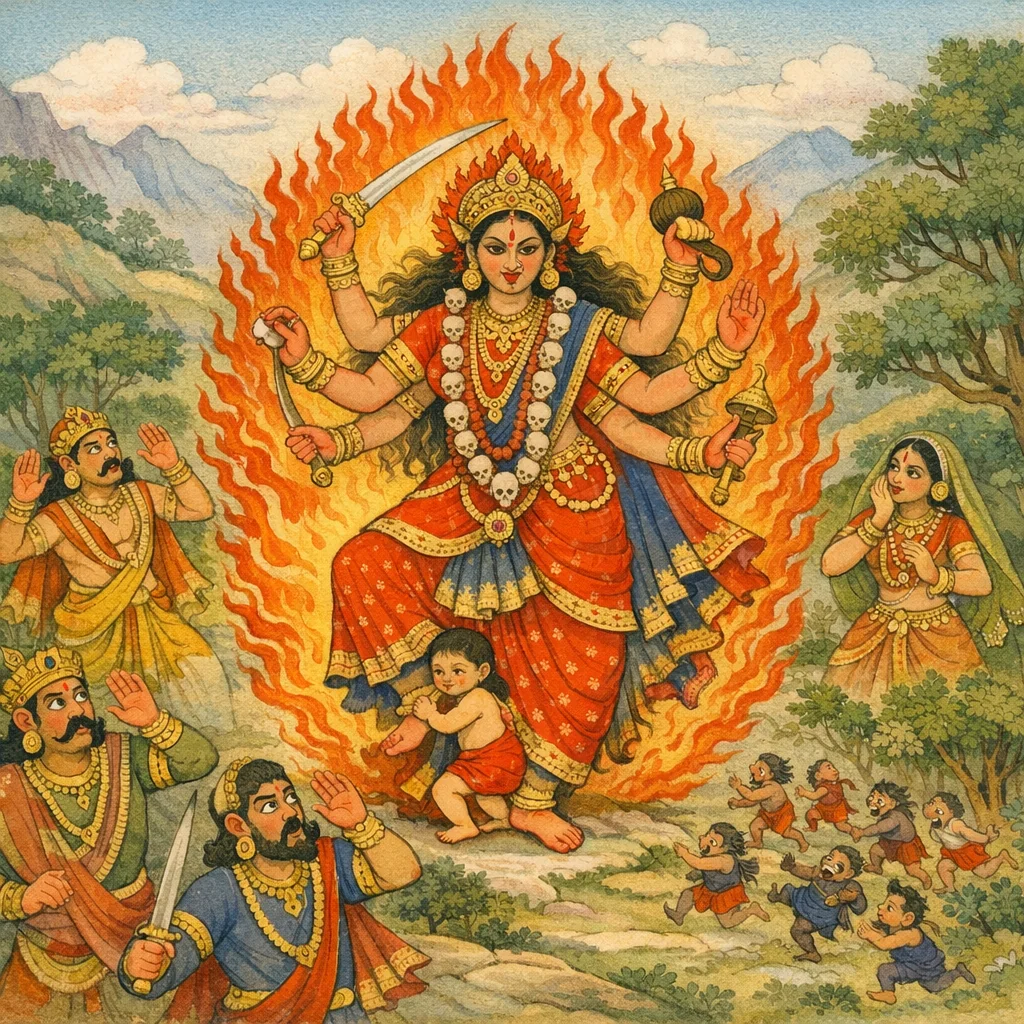
Sūta conveys a compact protective invocation to the Devī in her fierce forms—Umā, Caṇḍī, Raudrī, Māheśvarī—praising her terrifying iconography and commanding her to strike enemies, cast them into confusion, and guard the supplicant while Rudra abides in a dreadful manifestation. The hymn moves from praise into an operative mantra, using bīja-like syllables and forceful sounds to heighten its exorcistic power. Promised results include removing serpent-poison, breaking toxic influences, and warding off child-afflicting spirits (grahas). In the narrative, the chapter serves as a practical ritual insert, giving a ready-to-recite protection formula before the text proceeds to other dharmic, ritual, or doctrinal topics in the adjoining adhyāyas.
Shlokas
Frequently Asked Questions
Umā, Caṇḍī, Raudrī, and Māheśvarī are invoked to emphasize the Devī’s comprehensive power—from auspicious identity (Umā) to fierce protective and destructive capacities (Caṇḍī/Raudrī/Māheśvarī). Multiple names broaden the mantra’s protective scope and intensify devotional focus.
Protection is framed as the Devī’s active intervention: striking the enemy, inducing mohana (bewilderment), and breaking viṣa (poison). The mantra also implies visualization (“behold that with your mind”) alongside sound-power, typical of rakṣā prayogas.