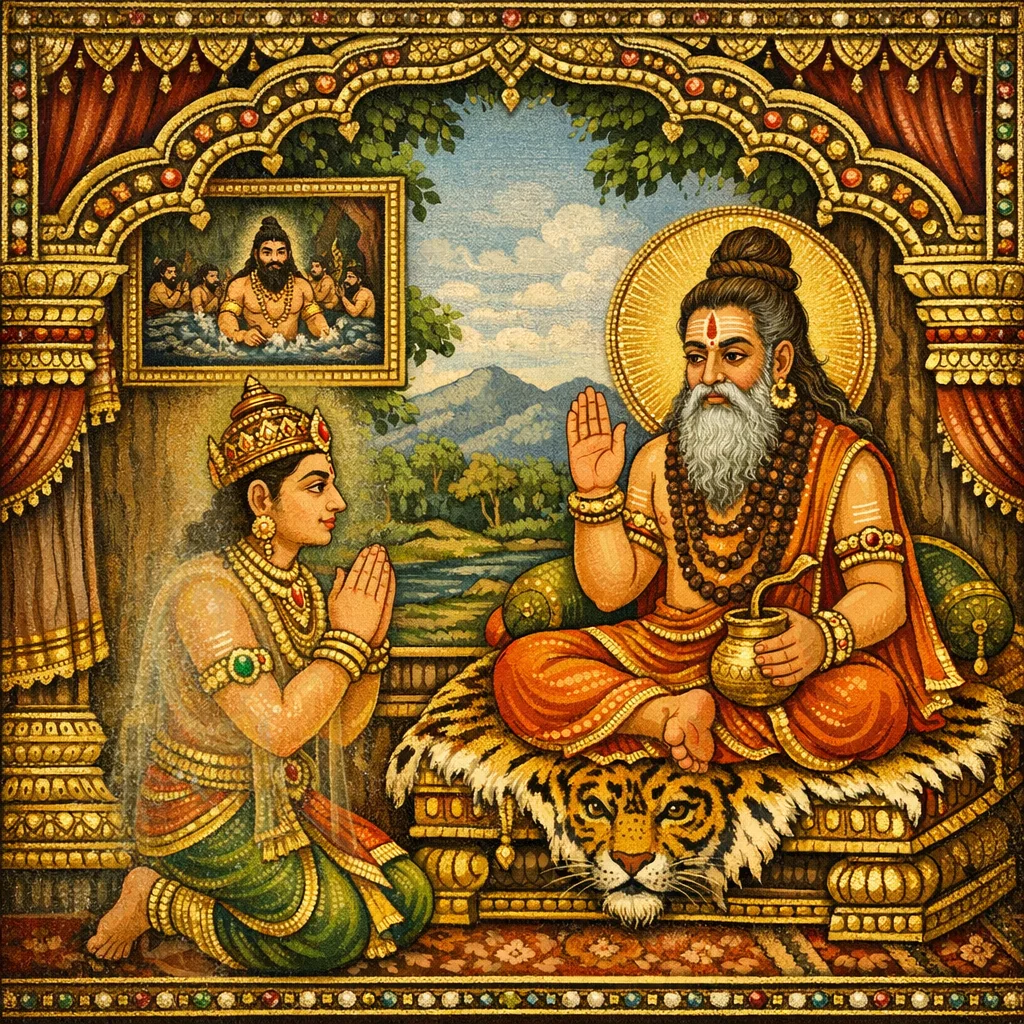
Adhyaya 64
इक्ष्वाकुवंशकीर्त्तनम् (Ikṣvāku Lineage Proclamation; Nimi–Mithilā/Videha Genealogy)
This adhyāya is framed as Sūta’s recitation, giving a concise vaṃśa catalogue linked to the Ikṣvāku stream through Nimi. It opens with a formal title line, “Ikṣvākuvaṃśakīrtana,” and then sets out the genealogy in order. Nimi is praised as righteous and revered; then a key etiological turn is told—by Vasiṣṭha’s curse Nimi becomes “Videha,” joining a moral-spiritual event to a dynastic/ethnic name. From Nimi arises Mithi, whose birth is described with a forest “churning/producing” motif; Mithi’s name becomes the place-name Mithilā, and the title Janaka is attached to this line (with Sīraddhvaja as the well-known link toward the Sītā episode). The chapter then enumerates the succession as an index for later Purāṇic and Itihāsa cross-references: Udāvasu → Nandivardhana → Suketu → Devarāta → Bṛhaduktha → Mahāvīrya → Sudhṛti → Dhṛṣṭaketu → Haryaśva → Maru → Pratiṃbaka → Kīrtiratha → Devamīḍha → Vibudha → Mahādhṛti → Kīrtirāta → Mahāroma → Svarṇaromā → Hrasvaromā → Sariddhvaja.
Shlokas
Verse 1
इति श्रीब्रह्माण्डे महापुराणे वायुप्रोक्ते मध्यमभागे तृतीय उपोद्धात पादे भार्गवचरिते इक्ष्वाकुवंशकीर्त्तनं नाम त्रिषष्टितमो ऽध्यायः // ६३// सूत उवाच अनुजस्य विकुक्षेस्तु निमेर्वंशं निबोघत / यो ऽसौ निवेशयामास पुरं देवपुरोपमम्
Thus, in the Śrī Brahmāṇḍa Mahāpurāṇa, in the middle section spoken by Vāyu, within the Bhārgava narrative’s third introductory pāda, is the sixty-third chapter called “The Glorification of the Ikṣvāku Lineage.” Sūta said: Hear now the lineage of Nimi, the younger brother of Vikukṣi—he who founded a city like unto the city of the gods.
Verse 2
जयन्तमिति विख्यातं गौतमस्याश्रमान्तिकम् / यस्यान्ववाये जज्ञे वै जनको नृपसत्तमः
Near Gautama’s āśrama lies the place famed as Jayanta; in that lineage was born indeed Janaka, the foremost of kings.
Verse 3
निमिर्नाम सुधर्मात्मा सर्वसत्त्वनमस्कृतः / आसीत्पुत्रो महाराज चैक्ष्वाकोर्भूरितेजसः
O great king, there was one named Nimi—steadfast in noble dharma and revered by all beings—who was the son of the greatly radiant Ikṣvāku.
Verse 4
स शापेन वसिष्ठस्यविदेहः समपद्यत / तस्य पुत्रो मिथिर्नाम जनितः पर्वभिस्त्रिभिः
By Vasiṣṭha’s curse he became Videha; and his son named Mithi was born, said to have been brought forth through three parvas (three sacred stages).
Verse 5
अरण्यां मथ्यमानाया प्रादुर्भूतो महायशाः / नाम्ना मिथिरिति ख्यातो जननाज्जनको ऽभवत्
From the earth being churned in the forest, a man of great renown manifested; he was famed by the name Mithi, and by reason of his birth he came to be called Janaka.
Verse 6
मिथिर्नाम महावीर्यो येनासौ मिथिलाभवत् / राजासौ नाम जनको जनकाच्चा प्युदावसुः
Mithi, mighty in valor, by whom that land became Mithilā; that king was named Janaka, and from Janaka was born Udavasu.
Verse 7
उदावसोस्तु धर्मात्मा जातो ऽसौ नन्दिवर्द्धनः / नन्दिवर्धनतः शूरः सुकेतुर्नाम धार्मिकः
From Udavasu was born Nandivardhana, righteous in spirit; and from Nandivardhana came Suketu, a valiant hero devoted to dharma.
Verse 8
सुकेतोरपि धर्मात्मा देवरातो महाबलः / देवरातस्य धर्मात्मा बृहदुक्थ इति श्रुतः
From Suketu too was born Devarata, righteous and of great strength; and Devarata’s dharmic son was renowned as Brihaduktha.
Verse 9
बृहदुक्थस्य तनयो महावीर्यः प्रतापवान् / महावीर्यस्य धृतिमान् सुधृति स्तस्य चात्मजः
Brihaduktha’s son was Mahavirya, mighty in valor and radiant in power; and Mahavirya’s steadfast son was his heir, Sudhriti.
Verse 10
सुधृतेरपि धर्मात्मा धृष्टकेतुः परन्तपः / धृष्टकेतुसुतश्चापि हर्यश्वो नाम विश्रुतः
From Sudhṛti too was born Dhṛṣṭaketu, righteous-souled, a scorcher of foes; and Dhṛṣṭaketu’s son was famed by the name Haryaśva.
Verse 11
हर्यश्वस्य मरुः पुत्रो मरोः पुत्रः प्रतिंबकः / प्रतिंबकस्य धर्मात्मा राजा कीर्त्तिरथः स्मृतः
Haryaśva’s son was Maru; Maru’s son was Pratiṃbaka. And Pratiṃbaka’s righteous-souled son is remembered as King Kīrttiratha.
Verse 12
पुत्रः कीर्त्तिरथस्यापि देवमीढ इति श्रुतः / देवमीढस्य विबुधो विबुधस्य महाधृतिः
Kīrttiratha’s son was famed as Devamīḍha. Devamīḍha’s son was Vibudha, and Vibudha’s son was Mahādhṛti.
Verse 13
महाधृतिसुतो राजा कीर्त्तिरातः प्रतापवान् / कीर्तिरातात्मजो विद्वान् महारोमेति विश्रुतः
Mahādhṛti’s son was the mighty King Kīrttirāta. Kīrttirāta’s learned son was famed as Mahāroma.
Verse 14
महारोम्णस्तु विख्यातः स्वर्णरोमा व्यजायत / स्वर्णरोमात्मजश्चापि ह्रस्वरोमाभवन्नृपः
From Mahāroma was born the renowned Svarṇaromā; and Svarṇaromā’s son too became a king, known as Hrasvaromā.
Verse 15
ह्रस्वरोमान्मजो विद्वान् सरिद्ध्वज इति श्रुतः / उद्भिन्ना कर्षता येन सीता राज्ञा यशस्विनी
Hrasvaromān, the learned son of Janaka, was famed by the name Sariddhvaja. As that glorious king ploughed, the earth split open and Sītā arose.
Verse 16
रामस्य महिधी साध्वी सुव्रता नियतव्रता / वैशंपायन उवाच कथं सीता समुत्पन्न कृष्यमाण यशस्विनी
Mahidhī, Rama’s holy consort, was virtuous, of noble vows, steadfast in discipline. Vaiśampāyana asked: how did the renowned Sītā arise while the field was being ploughed?
Verse 17
किमर्थं वाकृषद्राजा क्षेत्रं यस्मिन् बभूव ह / सूत उवाच अग्निक्षेत्रे कृष्यमाणे अश्वमेधे महात्मनः
Why did the king plough the field in which she (Sītā) appeared? Sūta replied: during the great-souled one’s Aśvamedha, the Agnikṣetra—the sacred field of Fire—was being tilled.
Verse 18
विधिना सुप्रयत्नेन तस्मात्सा तु समुत्थिता / सीरध्वजानुजातस्तु भानुमान्नाम मैथिलः
By due rite and earnest effort, from that very place she (Sītā) arose. And after Sīradhvaja, in Mithilā there was born a king named Bhānumān.
Verse 19
भ्राता कुशध्वजस्तस्य स काश्यधिपतिर्नृपः / तस्य भानुमतः पुत्रः प्रद्युम्नश्च पतापवान्
His brother was Kuśadhvaja, the king who ruled Kāśī. And Bhānumān’s son, radiant in prowess, was Pradyumna.
Verse 20
मुनिस्तस्य सुतश्चापि तस्मादूर्जवहः स्मृतः / ऊर्जवहात्सनद्वाजः शकुनिस्तस्य चात्मजः
His son was Muni, and from him is remembered Urjavaha. From Urjavaha came Sanadvaja, and his son was Sakuni.
Verse 21
स्वागतः शकुनेः पुत्रः सुवर्चास्तत्सुतः स्मृतः / सुतोपस्तस्य दायादः सुश्रुतस्तस्य चात्मजः
Svagata was the son of Sakuni, and his son is remembered as Suvarca. Suvarca’s heir was Sutopa, and his son was Susruta.
Verse 22
सुश्रुतस्य जयः पुत्रो जयस्य विजयः सुतः / विजयस्य क्रतुः पुत्र- क्रतोश्च सुनयः स्मतः
Jaya was the son of Susruta; Vijaya was the son of Jaya. Kratu was the son of Vijaya; and Kratu’s son is remembered as Sunaya.
Verse 23
सुनयाद्वीतहव्यस्तु वीतहव्यात्मजो धृतिः / धृतेस्तु बहुलाश्वो ऽभूद्बहुलाश्वसुतः कृतिः
From Sunaya came Vitahavya, and Vitahavya’s son was Dhrti. From Dhrti arose Bahulasva, and Bahulasva’s son was Krti.
Verse 24
तस्मिन्संतिष्ठते वंशो चनकानां महात्मनाम् / इत्येते मैथिलाः प्रोक्ताः सोमस्यापि निबोधत
In this lineage endures the dynasty of the great-souled Janakas. These are declared to be the Maithilas; now understand also about Soma.
Frequently Asked Questions
A Nimi-centered branch associated with the Ikṣvāku stream is listed: Nimi (becoming Videha) → Mithi (eponym of Mithilā) → Janaka-line continuity, followed by a sequential chain of Mithilā kings culminating (in the sampled verses) with Sariddhvaja/Sīraddhvaja.
The text attributes the epithet to Vasiṣṭha’s curse: Nimi becomes “Videha,” and the dynastic/territorial identity of Videha is thereby grounded in a narrative of ascetic authority and karmic consequence.
By naming Sariddhvaja/Sīraddhvaja and referencing Sītā’s emergence while ploughing, the chapter provides a genealogical anchor for the Mithilā–Janaka tradition that later Itihāsa narratives (notably the Rāmāyaṇa) elaborate.