Adhyaya 6
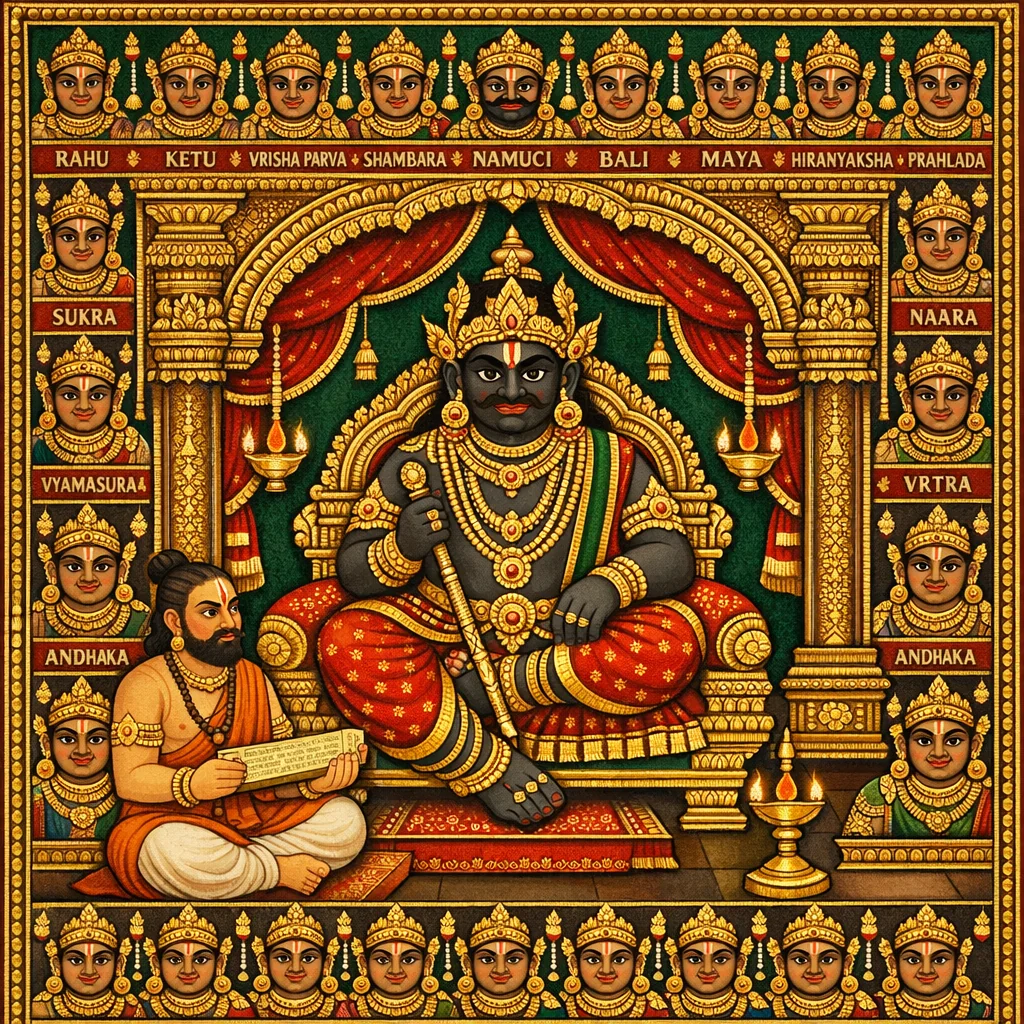
Dānavavaṃśa-pradhāna-nāmāvalī (Catalogue of Prominent Sons of Danu)
This adhyāya is a Sūta-style genealogical register: Sūta (as signaled by the colophon-like opening) enumerates the famed Dānavas/Asuras born in Danu’s line. The verses present a prioritized catalogue (prādhānyena) of leading figures—highlighting their boons, ascetic power, prowess, cruelty, and māyā (illusion/strategem)—with Vipracitti prominent among them, then unfolding into a dense sequence of asuric names. It concludes by noting the innumerable descendants (sons and grandsons) and by distinguishing Daityas from Dānavas through lineage markers, preserving a usable schema for later Purāṇic cross-references to wars, manvantaras, and dynastic interactions.
Shlokas
Verse 1
इति श्रीब्रह्माण्डे महापुराणे वायुप्रोक्ते मध्यमभागे तृतीय उपोद्धातपादे सूत उवाच अभवन्दनुपुत्रास्तु वंशे ख्याता महासुराः / विप्रचित्तिप्रधा नास्ते ऽचिन्तनीयपराक्रमाः
Thus, in the Śrī Brahmāṇḍa Mahāpurāṇa, in the middle section spoken by Vāyu, in the third introductory chapter, Sūta said: In the lineage of Danu’s sons arose renowned great Asuras; foremost among them was Vipracitti, of inconceivable might.
Verse 2
सर्वे लब्धवराश्चैव ते तप्ततपसस्तथा / सत्यसंधाः पराक्रान्ताः क्रूरा मायाविनश्च ते
All of them had gained boons and were hardened by blazing tapas; bound to vows of truth, mighty in valor, fierce, and skilled in māyā.
Verse 3
महाबलास्ते जवना ब्रह्मिष्ठा ये च साग्नयः / कीर्त्यमानान्मया सर्वान्प्राधान्येन निबोधत
Those Yavanas were of great might, steadfast in Brahman and attended by the sacred fire; hear, in due order, all whom I now extol.
Verse 4
द्विमूर्द्धा शंबरश्चैव तथा शङ्कुरथो विभुः / शङ्कुकर्णो विपादश्च गविष्ठो दुन्दुभिस्तथा
Dvimūrdhā and Śambara, and the mighty Śaṅkuratha; Śaṅkukarṇa, Vipāda, Gaviṣṭha, and likewise Dundubhi.
Verse 5
अयोमुखस्तु मघवान्कपिलो वामनो मयः / मरीचिरसिपाश्चैव महा मायो ऽशिरा भृशी
Ayomukha, Maghavān, Kapila, Vāmana, and Maya; and also Marīci, Rasipa, Mahā-māya, Aśirā, and Bhṛśī.
Verse 6
विक्षोभश्च सुकेतुश्च केतुवीर्यशताह्वयौ / इन्द्रजिद्विविदश्चैव तथा भद्रश्च देवजित्
Vikṣobha and Suketu, Ketuvīrya and Śatāhvaya; Indrajit and Vivida, and also Bhadra and Devajit.
Verse 7
एकचक्रो महा बाहुस्तारकश्च महाबलः / वैश्वानरः पुलोमा च प्रापणो ऽथ महाशिराः
Ekacakra, Mahābāhu, Tāraka the mighty, Vaiśvānara, Pulomā, Prāpaṇa, and Mahāśirā—these were the asuras.
Verse 8
स्वर्भानुर्वृषपर्वा च पुरुण्डश्च महासुरः / धृतराष्ट्रश्च सूर्यश्चचन्द्रमा इन्द्रतापनः
Svarbhānu, Vṛṣaparvā, Puruṇḍa the great asura, Dhṛtarāṣṭra, Sūrya, Candramā, and Indratāpana—these were the asuras.
Verse 9
सूक्ष्मश्चैव निचन्द्रश्च चूर्णनाभो महागिरिः / असिलोमा सुकेशश्च शठश्च मूलकोदरः
Sūkṣma, Nicandra, Cūrṇanābha, Mahāgiri, Asilomā, Sukeśa, Śaṭha, and Mūlakodara—these were the asuras.
Verse 10
जम्भो गगनमूर्द्धा चकुंभमानो महोदकः / प्रमदो ऽद्मश्च कुपथो ह्यश्वग्रीवश्च वीर्यवान्
Jambha, Gaganamūrdhā, Kumbhamāna, Mahodaka, Pramada, Adma, Kupatha, and the valiant Aśvagrīva—these were the asuras.
Verse 11
वैमृगः सविरूपाक्षः सुपथश्च हला हलौ / अक्षो हिरण्मयश्चैव शतग्रीवश्च शंबरः
Vaimṛga, Savirūpākṣa, Supatha, Halā and Hala, Akṣa, Hiraṇmaya, Śatagrīva, and Śambara—these were the asuras.
Verse 12
शरभः श्वलभश्चैव सूर्याचन्द्रमसावुभौ / असुराणां स्मृतावेतौ सुराणां च प्रभाविणौ
Śarabha and Śvalabha—these two are spoken of as the Sun and the Moon; remembered among the Asuras and mighty in influence among the Suras (Devas).
Verse 13
इति पुत्रा दनोर्वंशप्रधानाः परिकीर्त्तिताः / तेषामपरिसंख्येयं पुत्रपौत्रमनन्तकम्
Thus have the chief sons of Danu’s line been proclaimed; their sons and grandsons are beyond counting, endless in number.
Verse 14
इत्येत असुराः तक्रान्ता दैतेया दानवास्तथा / सुत्वानस्तु स्मृता दैत्या असुत्वानो दनोः सुताः
Thus these Asuras are spoken of as Daityas and Danavas; Sutvān is remembered as a Daitya, while Asutvān is counted among the sons of Danu.
Verse 15
इमे च वंशानुगता दनोः पुत्रान्वयाः स्मृताः / एकाक्षेश्वप्रभारिष्टः प्रलंबनरकावपि
These too are remembered as descendants in the line of Danu’s sons: Ekākṣa, Eṣvaprabhā, Ariṣṭa, and also Pralamba and Naraka.
Verse 16
इन्द्रबाधनकेशी च पुरुषः शेषवानुरुः / गरिष्ठश्च गवाक्षश्च तालकेतुश्च वीर्यवान्
Indrabādhana, Keśī, Puruṣa, Śeṣavān, Uru, Gariṣṭha, Gavākṣa, and the valiant Tālketu—these too are remembered (in that lineage).
Verse 17
एते मनुष्या वध्यास्तु दनुपुत्रान्वयाः स्मृताः / दैत्यदानवसंयोगे जाता भीमपराक्रमाः
These men are to be slain; they are remembered as the lineage of Danu's sons. Born from the union of Daityas and Danavas, they possess terrible prowess.
Verse 18
सिंहिकायामथोत्पन्ना विप्रचित्तेः सुता इमे / सैंहिकेयाः समाख्याताश्चतुर्दश महासुराः
Then, these sons were born to Vipracitti in Simhika. They are celebrated as the Sainhikeyas, the fourteen great Asuras.
Verse 19
शलश्च शलभश्चैव सव्यसिव्यस्तथैव च / इल्वलो नमुचिश्चैव वातापिस्तु सुपुञ्जिकः
Shala and Shalabha, Savya and Sivya, Ilvala and Namuci, Vatapi and Supunjika.
Verse 20
रहकल्पः कालनाभो भौमश्च कनकस्तथा / राहुर्ज्येष्ठस्तु तेषां वै सूर्यचन्द्रप्रमर्द्दनः
Rahakalpa, Kalanabha, Bhauma, and Kanaka. Rahu is indeed the eldest of them, the crusher of the Sun and Moon.
Verse 21
इत्योते सिंहिकापुत्रा देवैरपि दुरासदाः / दारुणाभिजनाः क्रूराः सर्वे ब्रह्महणश्च ते
Thus, these sons of Simhika are unassailable even by the gods. They are of terrible origin, cruel, and all of them are slayers of Brahmins.
Verse 22
दश तानि सहस्राणिसैंहिकेया गणाः स्मृताः / निहता जामदग्न्येन भार्गवेण बलीयसा
They are remembered as ten thousand bands of the Saiṃhikeyas, slain by the mighty Bhārgava Jāmadagnya (Paraśurāma).
Verse 23
स्वर्भानोस्तु प्रभा कन्या पुलोम्नस्तु शची सुता / उपदानवी सदस्याथ शर्मिष्ठा वृषपर्वणः
Prabhā was the daughter of Svarbhānu, and Śacī the daughter of Puloman; Upadānavī was a member of the assembly, and Śarmiṣṭhā the daughter of Vṛṣaparvan.
Verse 24
पुलोमा कालिका चैव वैश्वानरसुते उभे / प्रभायां नहुषः पुत्रो जयन्तस्तु शचीसुतः
Pulomā and Kālikā were both daughters of Vaiśvānara; from Prabhā was born Nahuṣa’s son, and from Śacī was born Jayanta.
Verse 25
पुरुं जज्ञे ऽथ शर्मिष्ठा दुष्यन्तसुपदानवी / वैश्वानरसुते एते पुलोमा कालका तथा
Then Śarmiṣṭhā bore Puru; she was the Upadānavī, the consort of Duṣyanta. These were daughters of Vaiśvānara—Pulomā and Kālakā as well.
Verse 26
बह्वपत्ये उभे कन्ये मारीचस्य परिग्रहः / तयोः पुत्रसहस्राणि षष्टिर्दानवपुङ्गवाः
Those two maidens, rich in offspring, became the wives of Marīci; from them were born sixty thousand sons, foremost among the Dānavas.
Verse 27
चतुर्दश तथान्यानि हिरण्यपुरवासिनाम् / पौलोमाः कालकेयाश्च दानवाः सुमरा बलाः
Among the Dānavas dwelling in Hiraṇyapura there were fourteen other clans as well—the Paulomas, the Kālkeyas, and the mighty Sumaras.
Verse 28
अवध्या देवतानां ते निहताः सव्यमाचिना / मयस्य जाता रंभायां पुत्राः षट् च महाबलाः
Though they were beyond the slaying of the gods, Savyamaci struck them down; and to Maya, by Rambhā, were born six sons of great might.
Verse 29
मायावी दुन्दुभिश्चैव पुत्रश्च महिषस्तथा / कालिकश्चाजकर्णश्चकन्या मन्दोदरी तथा
Māyāvī and Dundubhi, and the son named Mahiṣa; also Kālika and Ajakarṇa; and the daughter, Mandodarī.
Verse 30
दैत्यानां दानवानां च सर्ग एष प्रकीर्त्तितः / अनायुषायाः पुत्रास्ते स्मृताः पञ्च महाबलाः
Thus has this creation-line of the Daityas and Dānavas been proclaimed; and the five sons of Anāyuṣā are remembered as men of great might.
Verse 31
अररुर्बलवृत्रौ च विज्वरश्च वृषस्तथा / अररोस्तनयः क्रूरो धुन्धुर्नाम महासुरः
Araru, Balavṛtra, Vijvara, and Vṛṣa; and Araro’s cruel son was the great Asura named Dhundhu.
Verse 32
निहतः कुवलाश्वेन उत्तङ्कवचनाद्बिले / बलपुत्रौ महावीर्यौं तेजसाप्रतिमावुभौ
At Uttanka’s word, within the cavern Kuvalāśva slew Bala’s two sons; both were of mighty valor, unmatched in tejas.
Verse 33
निकुंभश्चक्रवर्मा च स कर्णः पूर्वजन्मनि / विजरस्यापि पुत्रौ द्वौ कालकश्च खरश्च तौ
Nikumbha and Chakravarmā—he was that very Karṇa in a former birth; and Vijara too had two sons, Kālaka and Khara.
Verse 34
वृषस्य तु पुनः पुत्राश्चत्वारः क्रूरकर्मणः / श्राद्धादो यज्ञहा चैव ब्रह्महा पशुहा तथा
Vṛṣa had again four sons, cruel in their deeds: Śrāddhāda, Yajñahā, Brahmahā, and Paśuhā.
Verse 35
क्रान्ता ह्यनायुषः पुत्रा वृत्र स्यापि निबोधत / जज्ञिरे ऽसुमहाघोरा वृत्रस्येन्द्रेण युध्यता
The sons of Anāyuṣa were fierce in prowess; and know also of Vṛtra. As Vṛtra battled Indra, most dreadful asuras were born from him.
Verse 36
बका नाम समाख्याता राक्षसाः सुमहाबलाः / शतं तानि सहस्राणि महेन्द्रानुचराः स्मृताः
The rākṣasas known by the name “Bakā” were exceedingly mighty; they numbered in hundreds and thousands, and are remembered as attendants of Mahendra.
Verse 37
सर्वे ब्रह्मविदः सौम्या धार्मिकाः सूक्ष्ममूर्त्तयः / प्रजास्वन्तर्गताः सर्वे निवसंति क्रुधावृताः
All of them are knowers of Brahman—gentle, righteous, and of subtle form. Dwelling within all beings, they abide, veiled by wrath.
Verse 38
क्रोधा त्वप्रतिमान्पुत्रान् जज्ञे वै गायनोत्तमान् / सिद्धः पूर्णश्च वह्वीच पूर्णाशश्चैव वीर्यवान्
Krodhā bore incomparable sons, foremost among singers: Siddha, Pūrṇa, Vahvī, and the mighty Pūrṇāśa.
Verse 39
ब्रह्मचारी शतगुणः सुपर्णश्चैव मप्तमः / विश्वावसुश्च भानुश्च सुचन्द्रो दशमस्तथा / इत्येते देवगन्धर्वाः क्रोधायाः परिरीर्त्तिताः
Brahmacārī, Śataguṇa, and Suparṇa as the seventh; then Viśvāvasu, Bhānu, and Sucandra as the tenth—these are proclaimed as the deva-gandharvas of Krodhā.
Frequently Asked Questions
It catalogs the Dānavavaṃśa—prominent sons and descendants in the line of Danu—presented as a prioritized name-list of major Asuras/Dānavas, with Vipracitti indicated as a leading figure in that register.
The chapter preserves a classificatory convention used in Purāṇic genealogy: Daityas are typically marked as descendants associated with Diti (or a Daitya-identifying descent label), while Dānavas are descendants of Danu; the text signals this as a lineage-based taxonomy rather than a purely behavioral one.
No—this adhyāya is primarily onomastic and genealogical, focusing on naming and lineage-scoping (including the claim of innumerable descendants), rather than bhuvana-kośa geography or astronomical distances.