Adhyaya 27
The City Equal to Amarāvatī: Creation of Households, Women, and Civic Splendor (Arjunopākhyāna Context)
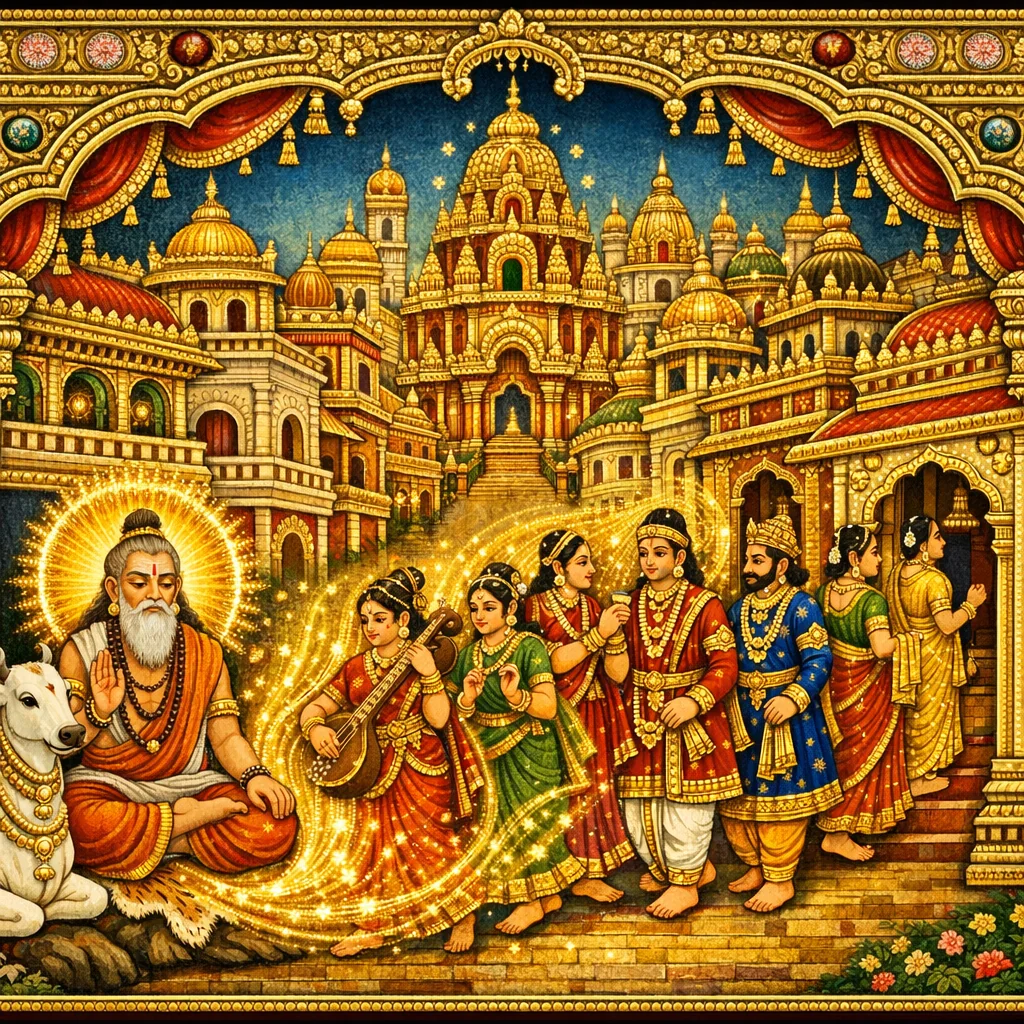
The chapter begins with a colophon-like notice placing the narration in the Brahmāṇḍa Mahāpurāṇa as Vāyu’s discourse, within the Madhyabhāga and the Arjunopākhyāna thread of the Upodghāta-pāda. Vasiṣṭha then describes a city whose splendor rivals Indra’s Amarāvatī. A wondrous “muni-vara dhenu,” a sage-associated cow, is said to generate fitting inhabitants for each house—men and women suited to their dwellings—so the city becomes a complete social organism. The verses praise the women’s refined beauty and arts: ornaments, perfumes, garments, expressive glances, and musical skill, especially vīṇā-playing and sweet singing likened to resonant strings and gandharva song. The civic scene is equally rich: royal roads, markets, mansions, stairways, temples, squares, countless gem-bright palaces, and residences for many roles—kings, feudatories, soldiers, charioteers, and bards. In this way the chapter offers a “cultural cosmography,” a microcosm of ordered prosperity that supports the genealogical narrative by depicting the habitat of power and lineage.
Shlokas
Verse 1
इति श्रीब्रह्माण्डे महापुराणे वायुप्रोक्ते मध्यभागे तृतीय उपोद्धातपादेर्ऽजुनोपाख्याने षड्विंशतितमो ऽध्यायः // २६// वसिष्ठ उवाच तस्मिन्पुरे सन्तुलितामरेद्रपुरीप्रभावे मुनिवर्यधेनुः / विनिर्ममे तेषु गृहेषु पश्चात्तद्योग्यनारीनरवृन्दजातम्
Thus in the holy Brahmāṇḍa Mahāpurāṇa, in the middle section spoken by Vāyu, within the third introductory division of the Arjuna narrative, is the twenty-sixth chapter. Vasiṣṭha said: In that city whose splendor rivaled Indra’s own, the wondrous cow of the foremost sage later fashioned, within those houses, multitudes of fitting men and women.
Verse 2
विचित्रवेषाभरणप्रसूनगन्धांशुकालङ्कृतविग्रहाभिः / सहावभावाभिरुदारचेष्टाश्रीकान्तिसौन्दर्यगुणान्विताभिः
They were adorned in varied attire and ornaments, perfumed with flowers and clothed in splendid garments; gentle by nature, noble in conduct, endowed with śrī, radiance, beauty, and virtues.
Verse 3
मन्दस्फुरद्दन्तमरीचिजाल विद्योतिताननसरोजजितेन्दुभाभिः / प्रत्यग्रयौवनभरासवल्गुगीर्भिः स प्रेममन्थरकटाक्षनिरीक्षणाभिः
With gentle smiles, the shining web of their teeth lit up the lotus of their faces, outshining even the moon; in the fresh fullness of youth their speech was sweet, and their sidelong glances were slow and tender with love.
Verse 4
प्रीतिप्रसन्नहृदयाभिरतिप्रभाभिः शृङ्गारकल्पतरुपुष्पविभूषिताभिः / देवाङ्गनातुलितसौभगसौकुमार्यरूपाभिलाषमधुराकृतिरञ्जिताभिः
With hearts made glad by love, radiant with surpassing splendor, adorned with the blossoms of the wish-fulfilling kalpataru of beauty; equal to celestial maidens in fortune and tender grace, they delighted all with their sweet, enchanting forms.
Verse 5
उत्तप्तहेमकलशोपमचारुपीनवक्षोरुहद्वयभरानतमध्यमाभिः / श्रोणीभराक्रमणखेदपरिश्रितास्मृगारक्तपावकरसारुणिताङ्घ्रिभूभिः
Bowed at the waist beneath the weight of two lovely, full breasts like heated golden jars; and wearied by the burden of their hips as they stepped, their soles grew ruddy, as though tinged with the essence of fire.
Verse 6
केयूरहारमणिकङ्कणहेम कण्ठसूत्रामलश्रवणमण्डलमण्डिताभिः / स्रग्दामचुम्बितसकुन्तलकेशपाशकाञ्चीकलापपरिशिञ्जितनूपुराभिः
They were adorned with armlets, necklaces, jeweled bangles, golden neck-threads, and spotless ear-ornaments; their tresses were kissed by garlands, while girdles chimed and anklets (nūpuras) rang with gentle music.
Verse 7
आमृष्टरोषपरिसांत्वननर्महासकेलीप्रियालपनभर्त्सनरोषणेषु / भावेषु पार्थिवनिजप्रियधैर्यबन्धसर्वापहारचतुरेषु कृतान्तराभिः
Skilled in every mood—soothing anger with a touch, gentle jest and playful sport, sweet endearments, rebuke, and sudden wrath—they were also adept at breaking the bonds of a king’s beloved’s resolve and carrying off all that he possessed.
Verse 8
तन्त्रीस्वनोपमितमञ्जुलसौम्यगेयगन्धर्वतारमधुरारवभाषिणीभिः / वीणाप्रवीणतरपाणितलाङ्गुलीभिर्गंभीरचक्रचटुवादरतोत्सुकाभिः
They sang gentle, lovely songs like the resonance of strings, and spoke in a sweet tone akin to the gandharvas’ melody; supremely skilled on the vīṇā, their palms and fingers eagerly delighted in artful playing of the deep cycles of rhythm.
Verse 9
स्त्रीभिर्मदालस तराभिरतिप्रगल्भभावाभिराकुलितकामुकमानसाभिः / कामप्रयोगनिपुणाभिरहीनसंपदौदार्यरूपगुणशीलसमन्विताभिः
He was surrounded by women who were intoxicating and exceedingly bold in nature, stirring the minds of the lustful; skilled in the arts of love, and endowed with wealth, generosity, beauty, virtues, and noble conduct.
Verse 10
संख्यातिगाभिरनिशं गृहकृत्यकर्मव्यग्रात्मकाभिरपि तत्परिचारिकाभिः / पुंभिश्च तद्गुणगणोचितरूपशोभैरुद्भासितैर्गृहचरैः परितः परीतम्
He was encompassed by countless maidservants, ever busy with household duties yet devoted to attending him; and also by male servants of the house, radiant with a comeliness befitting the multitude of his virtues.
Verse 11
सराजमार्गापणसौधसद्मसोपानदेवालयचत्वरेषु / पौरैरशेषार्थगुणैः समन्तादध्यास्यमानं परिपूर्णकामैः
In the royal highways, markets, mansions, homes, stairways, temples, and squares, the city was filled on every side by citizens whose desires were fulfilled, abounding in every kind of wealth and virtue.
Verse 12
अनेक रत्नोज्ज्वलितैर्विचित्रैः प्रासादसंघैरतुलैरसंख्यैः / रथाश्वमातङ्गखरोष्ट्रगोजायोग्यैरनेकैरपि मन्दिरैश्च
The city was adorned with countless, wondrous clusters of palaces, incomparable and radiant with many jewels; and with many halls and shelters fit for chariots, horses, elephants, donkeys, camels, cattle, and goats.
Verse 13
नरेद्रसामन्तनिषादिसादिपदातिसेनपतिनायकानाम् / विप्रादिकानां रथिसारथीनां गृहैस्तथा मागधबन्दिनां च
The city contained the houses of kings, feudatory lords, Niṣādas and others, of foot-soldiers, generals, and commanders; as well as the dwellings of brahmins and the rest, of chariot-warriors and charioteers, and of Māgadhas and court bards who sing praises.
Verse 14
विविक्तरथ्यापणचित्रचत्वरैरनेकवस्तुक्रयविक्रयैश्च / महाधनोपस्करसाधुनिर्मितैर्गृहैश्च शुभ्रैर्गणिकाजनानाम्
There were quiet lanes, bustling shops, and painted squares, with the buying and selling of many kinds of goods; and the courtesans’ white houses, finely built with great wealth and splendid furnishings.
Verse 15
महार्हरत्नोज्ज्वलतुङ्गगोपुरैः सह श्वगृध्रव्रजनर्तनालयैः / चित्रैर्ध्वचैश्चापि पताकिकाभिः शुभ्रैः पटैर्मण्डपिकाभिरुन्नतैः
There rose lofty gopuras blazing with precious gems; and there were dance-halls where packs of dogs and flocks of vultures gathered; with variegated banners and pennants, white hangings, and elevated mandapas adorning the scene.
Verse 16
कह्लारकञ्जकुमुदोत्पलरेणुवासितैश्चकाह्वहंसकुररीबकसारसानाम् / नानारवाढ्यरमणीयतटाकवापीसरोवरैश्चापि जलोपपन्नैः
Fragrant with the pollen of kahlāra, kañja, kumuda, and utpala, and filled with cakravāka and swans, kurarī-birds, herons, and cranes; it was adorned with lovely ponds, stepwells, and lakes, rich in many calls and abundant in water.
Verse 17
चूतप्रियालपनसाम्रमधूकजंबूप्लक्षैर्नवैश्च तरुभिश्च कृतालवालैः / पर्यन्तरोपितमनोरमनागकेतकीपुन्नागचंपकवनैश्च पतत्रिजुष्टैः
Young trees—cūta (mango), priyāla, panasa (jackfruit), āmra, madhūka, jambu, and plakṣa—each with watering basins at their roots, encircled the land; and along the borders were delightful groves of nāga, ketakī, punnāga, and campaka, frequented by birds.
Verse 18
मन्दारकुन्दकरवीरमनोज्ञयूथिकाजात्यादिकैर्विविधपुष्पफलैश्च वृक्षैः / संलक्ष्यमाणपरितोपवनालिभिश्च संशोभितं जगति विस्मयनीयरूपैः
With mandāra, kunda, karavīra, the lovely yūthikā, jātī and other trees bearing diverse flowers and fruits, and with rows of gardens seen all around—of wondrous forms—it shone as an adornment of the world.
Verse 19
सर्वर्त्तुकप्रवरसौरभवायुमन्दमन्दप्रचारिभर्त्सितधर्मकालम् / इत्थ सुरासुरमनोरमभोगसंपद्विस्पष्टमानविभवं नगरं नरेद्र
In that city, the finest fragrant breeze of every season moved softly, as though even the age of dharma were rebuked there. O narenḍra, its majesty shone plainly through pleasures and riches that delight both devas and asuras.
Verse 20
सौभाग्यभोगममितं मुनिहोमधेनुः सद्यो विधाय विनिवेदयदाशु तस्मै / ज्ञात्वा ततो मुनिवरो द्विजहोमधेन्वा संपादितं नरपते रुचिरातिथेयम्
The sage’s homa-dhenu at once brought forth immeasurable fortune and enjoyment, and quickly presented it to him. Then the foremost muni understood that, by the dvijas’ homa-dhenu, a splendid hospitality had been prepared for the king.
Verse 21
आहूय कञ्चन तदन्तिक मात्मशिष्यं प्रास्थापयत्सगुणशालिनमाशु राजन् / गत्वा विशामधिपतेस्तरसा समीपं संप्रश्रयं मुनिसुतस्तमिदं बभाषे
O king, he summoned a worthy disciple nearby and sent him at once. The sage’s son hastened to the lord of the city, offered respectful obeisance, and spoke these words with humility.
Verse 22
आतिथ्यमस्मदुपपादितमाशु राज्ञा संभावनीयमिति नः कुलदेशिकाज्ञा / राजा ततो मुनिवरेण कृताभ्यनुज्ञः संप्राविशत्पुरवरं स्वकृते कृतं तत्
The hospitality the king has swiftly arranged for us is to be honored—such is the command of our lineage-teacher. Then, having received the muni’s permission, the king entered that finest city, prepared for his own sake.
Verse 23
सर्वोपभोग्यनिलयं मुनिहोमधेनुसामर्थ्यसूचकमशोषबलैः समेतः / अन्तः प्रविश्य नगरर्द्धिमशेषलोकसंमोहिनीम् भिसमीक्ष्य स राजवर्यः
That city was an abode of every enjoyment, a clear token of the sage’s homa-dhenu power, and it was endowed with unfailing strength. The foremost king entered within and beheld distinctly the city’s splendor that enchants all worlds.
Verse 24
प्रीतिप्रसन्नवदनः सबलस्तु दानी धीरो ऽपि विस्मयमवाप भृशं तदानीम् / गच्छन्सुरस्त्रीनयना लियूथपानैकपात्रोचितचारुमूर्त्तिः
Then the king—generous and strong, his face bright with affection—was nonetheless seized by profound wonder. As he walked, his lovely form seemed as though the eyes of the celestial maidens clung to him, like the single cup worthy of the honeyed madhu-drink.
Verse 25
रेमे स हैहयपतिः पुरराजमार्गे शक्रः कुबेरवसताविव सामरौघः / तं प्रस्थितं राजपथात्समन्तात्पौराङ्गनाश्चन्दनवारिसिक्तैः
The lord of the Haihayas sported along the city’s royal avenue, like Indra amid the hosts of gods in Kubera’s abode. And when he set forth from the king’s road, the women of the city on every side sprinkled him with sandal-scented water.
Verse 26
प्रसूनलाजाप्रकरैरजस्रमवीपृषन्सौधगताः सुत्दृद्यैः / अभ्यागतार्हणसमुत्सुकपौरकान्ता हस्तारविन्दगलितामललाजवर्षैः
From the palace-terraces the fair women ceaselessly showered heaps of flowers and lāja (parched grain). The city’s lovely ladies, eager to offer due welcome, let fall a rain of spotless lāja slipping from their lotus-like hands.
Verse 27
कालेयपङ्कसुरभीकृतनन्दनोत्थशुभ्रप्रसूननिकरैरलिवृन्दगीतैः / तत्रत्यपौरवनिताञ्जनरत्नसारमुक्ताभिरप्यनुपदं प्रविकीर्यमामः
With clusters of white blossoms brought from Nandana—fragrant with kāleya sandal paste—and with the humming song of swarms of bees, the place was adorned. The city’s women there also scattered, at every step, anjana (collyrium), powdered gems, and pearls.
Verse 28
व्यभ्राजतावनिपतिर्विशदैः समन्ताच्छीतांशुरश्मिनिकरैरिव मन्दराद्रिः / ब्राह्मीं तपःश्रिय मुदारगणमचिन्त्यां लोकेषु दुर्लभतरां स्पृहणीयशोभाम्
The king shone on every side with stainless radiance, like Mount Mandara bathed in clusters of moonbeams. He had attained brāhmī tapaḥ-śrī—the brahmic splendor of austerity, noble and inconceivable, exceedingly rare among the worlds and beautiful beyond longing.
Verse 29
पश्यन्विशामधिपतिः पुरसंपदं तामुच्चैः शशंस मनसा वचसेव राजन् / मेने च हैहयपतिर्भुवि दुर्लभेयं क्षात्री मनोहरतरा महिता हि संपत्
Beholding that splendor of the city, the king, lord of the people, praised it aloud in mind and in speech. The Haihaya ruler too deemed that on earth such exalted, most enchanting kshatriya prosperity is rare indeed.
Verse 30
अस्याः शतांशतुलनामपि नोपगन्तुं विप्रशियः प्रभवतीति सुरार्चितायाः / मध्येपुरं पुरजनोपचितां विभूतिमालोकयन्सह पुरोहितमन्त्रिसार्थैः
It is said that even brahminical splendor cannot attain comparison with a hundredth part of this glory, worshiped by the gods. The king, with his purohita and the company of ministers, beheld in the city’s heart the magnificence amassed by its people.
Verse 31
गच्छत्स्वपार्श्वचर दर्शितवर्णसौधो लेभे मुदं पुरजनैः परिपूज्यमानः / राजा ततो मुनिवरोपचितां सपर्यामात्मानुरूपमिह सानुचरो लभस्व
As he moved on amid the many-hued palaces shown by his attendants, and was honored everywhere by the citizens, he felt great joy. Then it was said: “O King, here receive—together with your followers—the worship and service prepared by the best of sages, befitting you.”
Verse 32
इत्यश्रमेण नृपतिर्विनिवर्त्तयित्वा स्वार्थं प्राल्पितगृहाभिमुखो जगाम / पौरेः समेत्य विविधार्हणपाणिभिश्च मार्गे मुदा विरचिताजलिभिः समन्तात्
Thus, having fulfilled his purpose at the hermitage and sent the king back, he set out toward his home. The townspeople too gathered with various offerings in their hands, and along the road on every side, joyfully stood with palms joined in reverence.
Verse 33
संभावितोभ्यनुपदं जयशब्दघोषैस्तूर्यारवैश्च बधिरीकृतदिग्विभागैः / कक्षान्तराणि नृपतिः शनकैरतीत्य त्रीणि क्रमेण च ससंभ्रमकञ्चुकीनि
At every step, cries of “Jaya!” and the blare of ceremonial instruments seemed to deafen the very quarters of space. The king moved on slowly, passing through the inner divisions, and in due order crossed three courtyards, where the palace attendants (kañcukīs) bustled in eager excitement.
Verse 34
दूरप्रसारितपृथग्जनसंकुलानि सद्माविवेश सचिवादरदत्तहृस्तः / तत्र प्रदीपदधिदर्पणगन्धपुष्पदूर्वाक्षतादिभिरलं पुरकामिनीभिः
He entered the mansions spread far and filled with people of many kinds, his heart gladdened by the minister’s respectful welcome. There the women of the city offered auspicious reception with lamps, curds, mirrors, fragrances, flowers, dūrvā grass, sacred unbroken rice (akṣata), and more.
Verse 35
निर्याय राजभवनान्तरतः सलीलमानन्दितो नरपतिर्बहुमान पूर्वकम् / ताभिः समाभिविनिवेशितमाशु नानारत्नप्रवेकरुचिजालविराजमानम्
The king came forth gracefully from the inner palace, joyful and receiving honor with due reverence. Those women quickly seated him upon a throne radiant with a web of splendor from many kinds of jewels.
Verse 36
सूक्ष्मोत्तरच्छदमुदारयशा मनोज्ञमध्या रुरोह कनकोत्तरविष्टरं तम् / तस्मिन्गृहे नृप तदीयपुरन्ध्रिवर्गः स्वासीनमाशु नृपतिर्विविधार्हणाभिः
Clad in a fine upper cloth, renowned and graceful in form, the king mounted that throne adorned with gold. In that hall, once he was seated, the women of his inner palace swiftly honored him with varied rites of worship and arghya offerings.
Verse 37
वाद्यादिभिस्तदनुभूषणगन्धपुष्पवस्त्राद्यलङ्कृतिभिरग्र्यमुदं ततान / तस्मिन्नशेषदिवसोचितकर्म सर्वं निर्वर्त्य हैहयपतिः स्वमतानुसारम्
With music and the like, and with adornments of jewels, fragrances, flowers, garments, and more, he spread a most excellent joy. There the lord of the Haihayas, following his own observance, completed all duties proper to the day.
Verse 38
नाना विधालयननर्मविचित्रकेलीसंप्रेक्षितैर्दिनमशेषमलं निनाय / कृत्वा दिनान्तसमयोचितकर्म चैव राजा स्वमन्त्रिसचिवानुगतः समन्तात्
Watching many kinds of household festivities, playful amusements, and wondrous games, he spent the entire day in contentment. Then, having performed the duties fitting for day’s end, the king set forth, surrounded on all sides by his ministers and attendants.
Verse 39
आसन्नभृत्यकरसंस्थितदीपकौधसंशान्तसंतमसमाशु सदः प्रपेदे / तत्रासने समुपविश्य पुरोधमन्त्रिसामन्तनायकशतैः समुपास्यमानः
With clusters of lamps held by attendants nearby, the darkness was swiftly dispelled, and he at once entered the royal hall. There he sat upon his seat, reverently attended by priests, ministers, feudatory lords, and hundreds of commanders.
Verse 40
अन्वास्त राजसमितौ विविधैर्विनोदैर्हृष्टः सुरेद्र इव देवगणैरुपेतः / ततश्चिरं विविधवाद्यविनोदनृत्तप्रेक्षाप्रवृत्तहसनादिकथाप्रसंगः
In the royal assembly he sat delighted amid many amusements, like Indra attended by the hosts of gods. Then for a long while there followed music of varied instruments, dances and spectacles, with laughter and the flow of many tales in conversation.
Verse 41
आसांचकार गणिकाजन्नर्महासक्रीडाविलासपरितोषितचित्तवृत्तिः / इत्थं विशामधिपतिर्भृशमानिशार्द्धं नानाविहारविभवानुभवैरनेकैः
His mind was gratified by jesting with the courtesans and others, by revels of drink, games, and pleasures, and he lingered there. Thus the lord of the people, until deep into the night, immersed himself in many experiences of diversion and splendor.
Verse 42
स्थित्वानुगान्नरपतीनपि तन्निवासं प्रस्थाप्य वासभवनं स्वयमप्ययासीत् / तद्राजसैन्यमखिलं निजवीर्यशौर्यसंपत्प्रभावमहिमानुगुणं गृहेषु
After staying awhile, he dismissed the attendant kings to their lodgings, and he himself went to his own residence. The king’s entire army likewise took quarters in homes befitting their valor, prowess, wealth, influence, and renown.
Verse 43
आत्मानुरुपविभवेषु महार्हवस्त्रस्रग्भूषणादिभिरलं मुदितं बभूव / सैन्यानि तानि नृपतेर्विविधान्नपानसद्भक्ष्यभोज्यमधुमांसपयोघृताद्यैः
According to their station, they rejoiced, richly adorned with precious garments, flower garlands, and ornaments. The king’s troops were satisfied with many kinds of food and drink—fine dishes, honey, meat, milk, ghee, and more.
Verse 44
तृप्तान्यवात्सुरखिलानि सुखोपभौगैस्तस्यां नरेद्रपुरि देवगणा दिवीव / एवं तदा नरपतेरनुयायिनस्ते नानाविधोचितसुखानुभवप्रतीताः
In that royal city the hosts of gods, as though in heaven itself, were wholly satisfied by the enjoyment of delights. So too, at that time, the king’s attendants—having tasted many fitting pleasures—felt complete contentment.
Verse 45
अन्योन्यमूचुरिति गेहधनादिभिर्वा किं साध्यते वयमिहैव वसाम सर्वे / राजापि शार्वरविधानमथो विधाय निर्वर्त्य वासभवने शयनीयमग्र्यम् / अध्यास्य रत्ननिकरैरति शैभि भद्रं निद्रामसेवत नरेद्र चिरं प्रतीतः
They said to one another, “What more is to be gained by houses, wealth, and the like? Let us all dwell here.” Then the king arranged the rites of the night, had the finest bed prepared in his palace; and, seated upon an auspicious throne dazzling with heaps of gems, he—well content—gave himself to long sleep.
Frequently Asked Questions
A hyper-detailed portrayal of an Amarāvatī-like city: its populated households, refined women skilled in arts and music, and a fully articulated civic layout of roads, markets, temples, palaces, and role-specific residences.
Vasiṣṭha is the on-stage speaker in the sampled verses, while the colophon signals the broader Brahmāṇḍa Purāṇa framework attributed to Vāyu and places the material within an Arjunopākhyāna-linked narrative sequence.
It contributes indirectly to both: to Sṛṣṭi by presenting ordered prosperity as a created, structured world; and to Vaṃśa by furnishing the social and urban stage on which dynastic continuity, courtly roles, and lineage memory operate.