Adhyaya 142: Devasthana Tirtha: Origin, Naming, and the Eighteen Sacred Fords
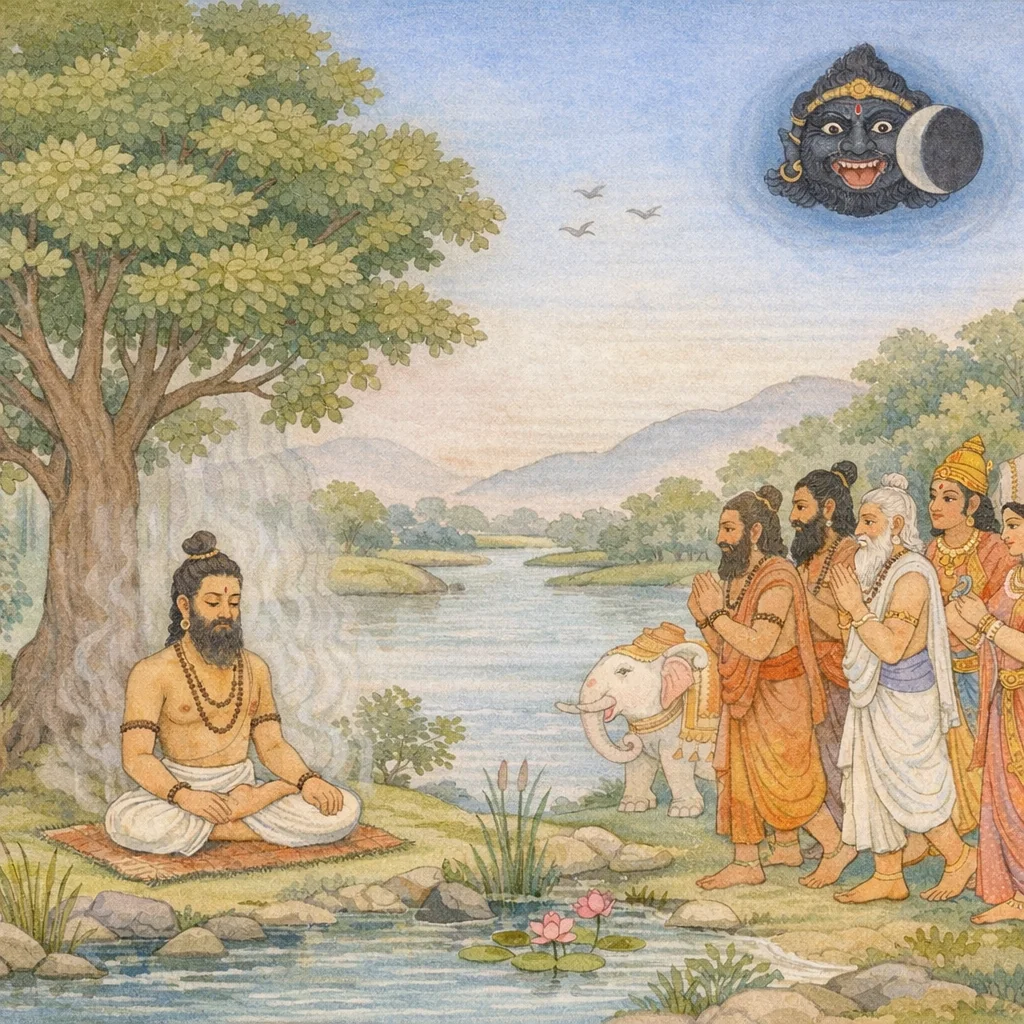
Adhyaya 142, framed as Brahmā’s dialogue with Nārada, gives an etiological sacred-topography account of the fame and ritual power of Devasthāna Tīrtha. Set in early Kṛtayuga amid war between devas and dānavas, it centers on Siṃhikā’s line—Rāhu and Rāhu’s son Meghahāsa. Grieving his father’s fate, Meghahāsa performs fierce tapas on the banks of the Gautamī (Godāvarī), alarming devas and ṛṣis, who appease him by invoking the grace of Śiva–Gaṅgā and offering to fulfill his aim. Meghahāsa agrees to abandon hostility if Rāhu’s honor is restored and his own renown established. The devas grant boons: Rāhu receives a cosmic office among the grahas, and Meghahāsa is raised as a mighty lord of the Naiṛtas, bound to the tīrtha’s glory. Thus the place is named “Devasthāna,” a rare divine sanctuary containing eighteen tīrthas where bathing and gifting are proclaimed to destroy major sins.
Chapter Arc
{"opening_hook":"ब्रह्मा नारदं प्रति त्रैलोक्यविश्रुतं ‘देवस्थान-तीर्थ’ इति नामधेयं तीर्थं प्रशंसन् तस्य प्राभवकथां प्रतिजानाति—‘कथं नामैतत्, किमस्य मूलम्, किमत्र फलम्’ इति जिज्ञासा स्वयमेव जागरयति।","rising_action":"कृतयुगादौ देव–दानवसंघर्षभूमौ सिम्हिकावंशस्य (राहु–मेघहास) वृत्तान्तः स्थाप्यते। पितुः गतिं शोकयन् मेघहासः गौतमीतीरे घोरं तपः करोति; तस्य तपोबलात् देवा ऋषयश्च सन्त्रस्ताः, शान्त्युपायं चिन्तयन्ति।","climax_moment":"देवर्षयः ‘शिवगङ्गाप्रसादेन सर्वकामसिद्धिः’ इति तीर्थ-देवता-आश्रयां कृपातत्त्वं प्रतिपाद्य मेघहासं प्रसादयन्ति। मेघहासः वैरत्यागं प्रतिजानीते, किन्तु पितुः मानप्रतिष्ठां स्वकीयं यशश्च याचते; तदा राहोः ग्रहतत्त्वे नियोजनं, मेघहासस्य नैऋताधिपत्य-प्रतिष्ठा, तथा तीर्थस्य ‘देवस्थान’ इति नामनिर्णयः—एष एव अध्यायस्य शिखरः।","resolution":"समाधानानन्तरं तीर्थस्य विधिवत् ‘चार्टर’ इव विधानं दत्तम्—अत्र अष्टादश तीर्थानि सन्ति; स्नानं दानं च महापातकनाशनम्; देवदुर्लभं स्थानमिदं त्रैलोक्यपूज्यमिति निष्कर्षेण अध्यायः उपसंहरति।","key_verse":null}
Thematic Essence
{"primary_theme":"गौतमी-तीरे देवस्थान-तीर्थस्य नामोत्पत्ति-प्राभव-प्रतिष्ठा (Tīrtha-māhātmya with etiological myth)","secondary_themes":["कृतयुगादौ देव–दानवसंघर्षस्य स्मृति-आख्यानम्","तपः बनाम प्रसादः—शिवगङ्गा-कृपातत्त्वेन सिद्धिः","राहोः ग्रहतत्त्व-नियोजनं तथा दैवी-राजनीतिक-समाधानम्","अष्टादश-तीर्थ-समुच्चयः—स्नान-दानयोः महापातकनाशकत्वम्"],"brahma_purana_doctrine":"तीर्थफलस्य ‘स्थान-देवता-प्रसाद’ (विशेषतः शिवगङ्गा) इत्यत्र अधिष्ठानं—तपसा उद्भूतं वैरं अपि धर्मसमाधानेन, वरदानैः, तीर्थ-प्रतिष्ठया च शम्यते; तथा पापक्षयः स्नान-दान-युग्मेन निर्णीयते।","adi_purana_significance":"‘आदि’ पुराणत्वेन ब्रह्मपुराणं लोकव्यवस्था-स्थापनं (ग्रह-नियमनं, नैऋताधिकारः) तथा पवित्रभूगोलस्य (गौतमी-माहात्म्य) प्राचीन-प्रमाणकथाभिः आधारयति—देवस्थान-तीर्थस्य एतिओलॉजी (नाम-कारण) इह आद्यरूपेण निबद्धा।"}
Emotional Journey
{"opening_rasa":"अद्भुत","climax_rasa":"शान्त","closing_rasa":"शान्त","rasa_transitions":["अद्भुत → रौद्र/भयानक (तपः-त्रास) → करुण (पितृशोक) → शान्त (समाधान-वरदान)"],"devotional_peaks":["देवर्षिभिः ‘शिवगङ्गाप्रसाद’ इति कृपातत्त्वस्य उद्घोषः","देवस्थान-तीर्थे स्नान-दानयोः महापातकनाशकत्व-श्रुति (फलश्रुति-उत्कर्षः)"]}
Tirtha Focus
{"tirthas_covered":["देवस्थान-तीर्थ","गौतमीतीर (गोदावरी-तट)","अष्टादश-तीर्थानि (समुच्चय-रूपेण)"],"jagannath_content":null,"surya_content":null,"cosmology_content":"राहोः ग्रहतत्त्वे नियोजनं—दैवी-व्यवस्थायां ‘ग्रह’ रूपेण असुरवंशीयस्य स्थाननिर्धारणम्; तथा कृतयुगादि-कालसन्दर्भः।"}
Shlokas in Adhyaya 142
Verse 1
ब्रह्मोवाच देवस्थानम् इति ख्यातं तीर्थं त्रैलोक्यविश्रुतम् तस्य प्रभावं वक्ष्यामि शृणु यत्नेन नारद //
This verse (1) opens a new chapter, reverently setting forth sacred themes within the Purana.
Verse 2
पुरा कृतयुगस्यादौ देवदानवसंगरे प्रवृत्ते वा सिंहिकेति विख्याता दैत्यसुन्दरी //
This verse (2) continues the orderly account, so that the listener may understand history, cosmology, and Dharma in the puranic tradition.
Verse 3
तस्याः पुत्रो महादैत्यो राहुर् नाम महाबलः अमृते तु समुत्पन्ने सैंहिकेये च भेदिते //
This verse (3) sets forth a profound teaching, worthy of reverence and remembrance, for both the student and the devoted practitioner.
Verse 4
तस्य पुत्रो महादैत्यो मेघहास इति श्रुतः पितरं घातितं श्रुत्वा तपस् तेपे ऽतिदुःखितः //
This verse (142.4) is preserved in the Sanskrit source as item number 4.
Verse 5
तपस्यन्तं राहुसुतं गौतमीतीरम् आश्रितम् देवाश् च ऋषयः सर्वे तम् ऊचुर् अतिभीतवत् //
This verse (142.5) is recorded in the Sanskrit text as item number 5.
Verse 6
देवर्षय ऊचुः तपो जहि महाबाहो यत् ते मनसि संस्थितम् सर्वं भवतु नामेदं शिवगङ्गाप्रसादतः शिवगङ्गाप्रसादेन किं नामास्त्य् अत्र दुर्लभम् //
This verse (142.6) appears in the Sanskrit source, marked as item number 6.
Verse 7
मेघहास उवाच परिभूतः पिता पूज्यो युष्माभिर् मम दैवतम् तस्यापि मम चात्यन्तं प्रीतिश् च क्रियते यदि //
This verse (142.7) is set down in the Sanskrit text as item number 7.
Verse 8
भवद्भिस् तपसो ऽस्माच् च अहं वैरान् निवर्तये वैरनिर्यातनं कार्यं पुत्रेण पितुर् आदरात् प्रार्थयन्ते भवन्तश् चेत् पूर्णास् तन् मे मनोरथाः //
This verse (142.8) is preserved in the Sanskrit source as item number 8.
Verse 9
ब्रह्मोवाच ततः सुरगणाः सर्वे राहुं चक्रुर् ग्रहानुगम् तं चापि मेघहासं ते चक्रू राक्षसपुंगवम् //
This entry provides only the numeral “9” as a verse marker; no Sanskrit text is supplied here for a full translation.
Verse 10
ततो ऽभवद् राहुसुतो नैरृताधिपतिः प्रभुः पुनश् चाह सुरान् दैत्यो मम ख्यातिर् यथा भवेत् //
This entry contains only the numeral “10” as the verse number; the Sanskrit original is not provided for full translation.
Verse 11
तीर्थस्यास्य प्रभावश् च दातव्य इति मे मतिः तथेत्य् उक्त्वा ददुर् देवाः सर्वम् एव मनोगतम् //
This section lists only the numeral “11” as the verse identifier; without the Sanskrit text, a complete translation cannot be provided.
Verse 12
दैत्येश्वरस्य देवर्षे तन्नाम्ना तीर्थम् उच्यते देवा यतो ऽभवन् सर्वे तत्र स्थाने महामते //
This entry gives only the numeral “12” as an identifier; the Sanskrit passage is not included, so the content cannot be translated.
Verse 13
देवस्थानं तु तत् तीर्थं देवानाम् अपि दुर्लभम् यत्र देवेश्वरो देवो देवतीर्थं ततः स्मृतम् //
This passage supplies only the numeral “13” as a verse marker; without the Sanskrit original, a sacred-style translation cannot be produced.
Verse 14
तत्राष्टादश तीर्थानि दैत्यपूज्यानि नारद तेषु स्नानं च दानं च महापातकनाशनम् //
This passage marks “14” as the ordinal number of the śloka within the sacred Purāṇa.
Frequently Asked Questions
The chapter foregrounds tīrtha-prabhāva as a mechanism of reconciliation and purification: destructive vengeance is redirected through negotiated dharma, while ritual acts (snāna and dāna) at an authorized sacred site are presented as capable of removing mahāpātakas.
Meghahāsa’s tapas is explicitly located on the Gautamī-tīra, making the Godāvarī corridor the narrative anchor for Devasthāna’s sanctity; the riverbank functions as the liminal setting where divine fear, boon-bestowal, and the tīrtha’s institutional naming converge.
The Adhyaya validates pilgrimage to Devasthāna and its eighteen subsidiary tīrthas, prescribing snāna (ritual bathing) and dāna (charitable gifting) as the principal practices, explicitly characterized as mahāpātaka-nāśana within this tīrtha complex.
Read Brahma Purana in the Vedapath app
Scan the QR code to open this directly in the app, with audio, word-by-word meanings, and more.