Adhyaya 3
Yamarāja Instructs the Yamadūtas: Supreme Authority, Mahājanas, and the Glory of the Holy Name
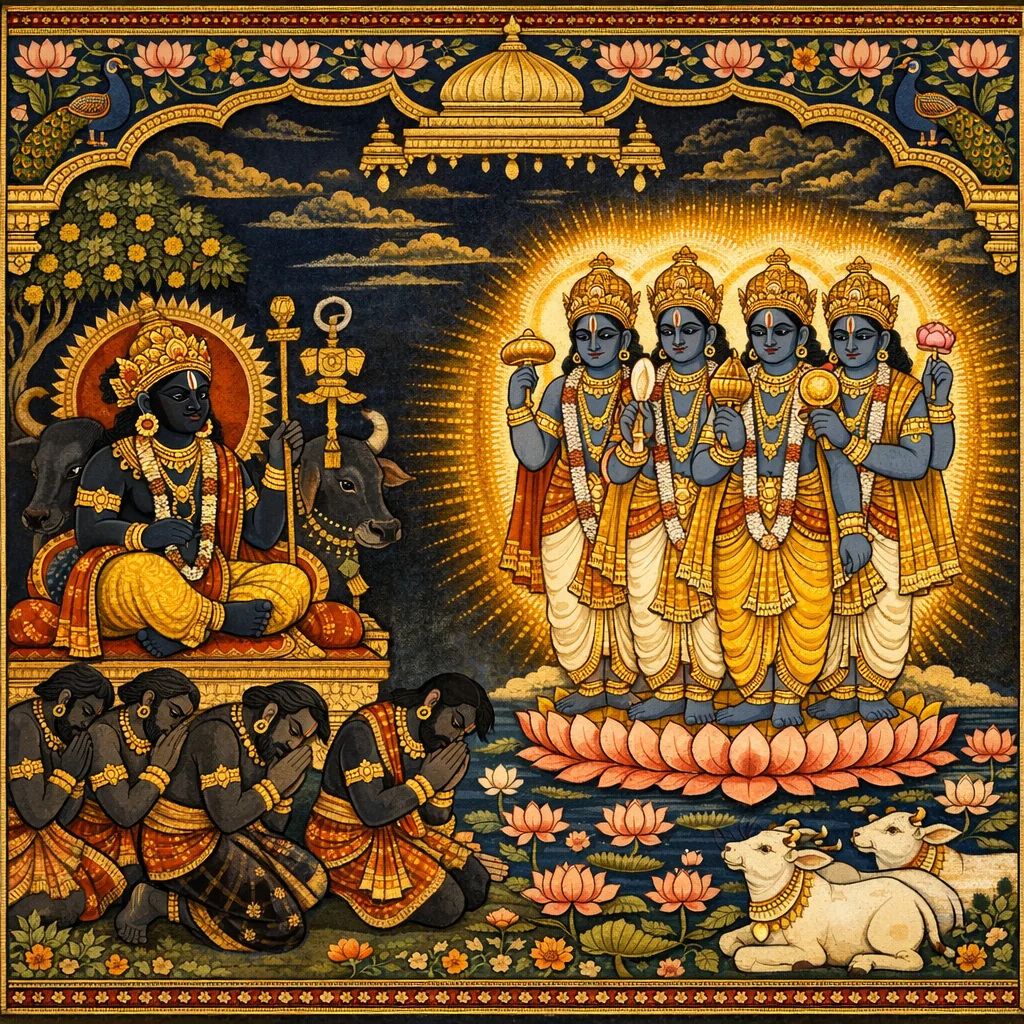
After the Viṣṇudūtas stop Ajāmila’s arrest, Parīkṣit asks Śukadeva how Yamarāja’s order could ever be thwarted. The astonished Yamadūtas question their master about the true hierarchy of cosmic rule and the identity of the four radiant protectors. Yamarāja replies that supreme authority belongs to the Supreme Personality of Godhead (Bhagavān), above all devas and administrators, and that the Lord’s Vedic injunctions bind beings like ropes. He identifies the Viṣṇudūtas as rare, Viṣṇu-like guardians who protect devotees even from his jurisdiction. He defines real dharma as Bhagavān’s ordinance, known through the twelve mahājanas, and proclaims bhāgavata-dharma—devotion beginning with chanting the Holy Name—as the highest principle. Ajāmila’s accidental cry of “Nārāyaṇa” becomes the model: the nāma can uproot sin and grant liberation when free from offense (aparādha). Yamarāja orders his servants to avoid surrendered Vaiṣṇavas and to bring only those averse to Kṛṣṇa’s name and service. The chapter ends with the Yamadūtas’ new awe of devotees and a hint of further confidential teaching (Agastya’s instruction) on nāma, aparādha, and devotional eligibility.
Shlokas
Verse 1
श्रीराजोवाच निशम्य देव: स्वभटोपवर्णितं प्रत्याह किं तानपि धर्मराज: । एवं हताज्ञो विहतान्मुरारे- र्नैदेशिकैर्यस्य वशे जनोऽयम् ॥ १ ॥
King Parīkṣit said: O my lord, O Śukadeva Gosvāmī, Yamarāja governs all beings according to dharma and adharma, yet his order was thwarted. When the Yamadūtas reported that the Viṣṇudūtas defeated them and stopped Ajāmila’s arrest, what did Dharmarāja reply?
Verse 2
यमस्य देवस्य न दण्डभङ्ग: कुतश्चनर्षे श्रुतपूर्व आसीत् । एतन्मुने वृश्चति लोकसंशयं न हि त्वदन्य इति मे विनिश्चितम् ॥ २ ॥
O sage, it has never been heard anywhere that Yamarāja’s punitive order was thwarted. Therefore, O muni, this incident will raise doubt among people, and I am convinced that none but you can dispel it. Kindly explain the reasons behind these events.
Verse 3
श्रीशुक उवाच भगवत्पुरुषै राजन् याम्या: प्रतिहतोद्यमा: । पतिं विज्ञापयामासुर्यमं संयमनीपतिम् ॥ ३ ॥
Śrī Śukadeva Gosvāmī replied: O King, the servants of Yamarāja had their endeavor checked and were defeated by the servants of Viṣṇu. Then they approached their master Yama—the lord of Saṁyamanī-purī and controller of sinners—to report this incident.
Verse 4
यमदूता ऊचु: कति सन्तीह शास्तारो जीवलोकस्य वै प्रभो । त्रैविध्यं कुर्वत: कर्म फलाभिव्यक्तिहेतव: ॥ ४ ॥
The Yamadūtas said: “O lord, how many rulers and judges are there in this world of living beings? And how many causes bring forth the various results of actions performed under the three guṇas—sattva, rajas, and tamas?”
Verse 5
यदि स्युर्बहवो लोके शास्तारो दण्डधारिण: । कस्य स्यातां न वा कस्य मृत्युश्चामृतमेव वा ॥ ५ ॥
If in this universe there were many rulers and judges who wield punishment, then who would be punished and who not? For whom would there be death, and for whom would there be immortality?
Verse 6
किन्तु शास्तृबहुत्वे स्याद्बहूनामिह कर्मिणाम् । शास्तृत्वमुपचारो हि यथा मण्डलवर्तिनाम् ॥ ६ ॥
Yet, because there are many workers bound to karma, there may appear to be many judges; still, as regional rulers serve under one central emperor, there must be one supreme controller who directs all judges.
Verse 7
अतस्त्वमेको भूतानां सेश्वराणामधीश्वर: । शास्ता दण्डधरो नृणां शुभाशुभविवेचन: ॥ ७ ॥
Therefore the supreme judge must be one, not many. We understood that you are that supreme judge, with authority even over the devas. You are the lord of all beings, who discerns the pious and impious deeds of humans and wields the rod of punishment.
Verse 8
तस्य ते विहितो दण्डो न लोके वर्ततेऽधुना । चतुर्भिरद्भुतै: सिद्धैराज्ञा ते विप्रलम्भिता ॥ ८ ॥
But now we see that the punishment ordained under your authority is no longer effective in this world, for your order has been transgressed by four wonderful and perfected persons.
Verse 9
नीयमानं तवादेशादस्माभिर्यातनागृहान् । व्यामोचयन्पातकिनं छित्त्वा पाशान प्रसह्य ते ॥ ९ ॥
By your order we were taking the most sinful Ajāmila to the hellish realms, when those beautiful persons from Siddhaloka forcibly cut the knots of the ropes with which we had bound him and set him free.
Verse 10
तांस्ते वेदितुमिच्छामो यदि नो मन्यसे क्षमम् । नारायणेत्यभिहिते मा भैरित्याययुर्द्रुतम् ॥ १० ॥
If you deem us fit to understand, we wish to know who they are. The moment Ajāmila uttered the name “Nārāyaṇa,” those four immediately arrived and reassured him, saying, “Do not fear, do not fear.” Kindly describe them to us.
Verse 11
श्रीबादरायणिरुवाच इति देव: स आपृष्ट: प्रजासंयमनो यम: । प्रीत: स्वदूतान्प्रत्याह स्मरन् पादाम्बुजं हरे: ॥ ११ ॥
Śrī Śukadeva Gosvāmī said: Thus questioned, Lord Yamarāja, the controller of living beings, was pleased with his messengers, for from them he heard the holy name of Nārāyaṇa. Remembering Hari’s lotus feet, he began to reply.
Verse 12
यम उवाच परो मदन्यो जगतस्तस्थुषश्च ओतं प्रोतं पटवद्यत्र विश्वम् । यदंशतोऽस्य स्थितिजन्मनाशा नस्योतवद्यस्य वशे च लोक: ॥ १२ ॥
Yamarāja said: My dear servants, you have accepted me as the Supreme, but in truth I am not. Above me, and above all the demigods such as Indra and Candra, stands the one supreme master and controller. His partial manifestations are Brahmā, Viṣṇu, and Śiva, who oversee the creation, maintenance, and dissolution of this universe. Like the two threads of warp and weft in a woven cloth, the whole world is interwoven in Him; and all worlds are under His rule, as a bull is controlled by a rope through its nose.
Verse 13
यो नामभिर्वाचि जनं निजायां बध्नाति तन्त्र्यामिव दामभिर्गा: । यस्मै बलिं त इमे नामकर्म- निबन्धबद्धाश्चकिता वहन्ति ॥ १३ ॥
Just as a driver controls his bulls by ropes passed through their nostrils, the Supreme Personality of Godhead binds all people by the ropes of His Vedic words, which prescribe the names and duties of the social orders. In reverent fear, brāhmaṇas, kṣatriyas, vaiśyas, and śūdras worship that Lord by offering presentations according to their respective works.
Verse 14
अहं महेन्द्रो निऋर्ति: प्रचेता: सोमोऽग्निरीश: पवनो विरिञ्चि: । आदित्यविश्वे वसवोऽथ साध्या मरुद्गणा रुद्रगणा: ससिद्धा: ॥ १४ ॥ अन्ये च ये विश्वसृजोऽमरेशा भृग्वादयोऽस्पृष्टरजस्तमस्का: । यस्येहितं न विदु: स्पृष्टमाया: सत्त्वप्रधाना अपि किं ततोऽन्ये ॥ १५ ॥
I, Yamarāja; Indra, king of heaven; Nirṛti; Varuṇa; Candra the moon-god; Agni; Lord Śiva; Pavana; Lord Brahmā; Sūrya the sun-god; the Viśve-devas; the eight Vasus; the Sādhyas; the Maruts; the Rudras; the Siddhas; and Marīci and the other great ṛṣis—together with the foremost demigods headed by Bṛhaspati and the great sages headed by Bhṛgu—are indeed untouched by the base modes of rajas and tamas. Yet even though goodness predominates in us, we cannot fathom the deeds of the Supreme Personality of Godhead; what then can be said of others, touched by māyā, who merely speculate about God?
Verse 15
अहं महेन्द्रो निऋर्ति: प्रचेता: सोमोऽग्निरीश: पवनो विरिञ्चि: । आदित्यविश्वे वसवोऽथ साध्या मरुद्गणा रुद्रगणा: ससिद्धा: ॥ १४ ॥ अन्ये च ये विश्वसृजोऽमरेशा भृग्वादयोऽस्पृष्टरजस्तमस्का: । यस्येहितं न विदु: स्पृष्टमाया: सत्त्वप्रधाना अपि किं ततोऽन्ये ॥ १५ ॥
Even other cosmic administrators and lords, and great sages such as Bhṛgu—untouched by rajas and tamas—do not know His divine pastimes, though goodness predominates in them; what then can be known by others who are touched by māyā?
Verse 16
यं वै न गोभिर्मनसासुभिर्वा हृदा गिरा वासुभृतो विचक्षते । आत्मानमन्तर्हृदि सन्तमात्मनां चक्षुर्यथैवाकृतयस्तत: परम् ॥ १६ ॥
The living beings cannot ascertain the Supreme Lord by the senses, by the mind, by the life air, by the heart’s inner thoughts, or by the vibration of words. He abides as the Paramātmā within everyone’s heart; just as the limbs of the body cannot see the eyes, so the jīva cannot see the Supreme.
Verse 17
तस्यात्मतन्त्रस्य हरेरधीशितु: परस्य मायाधिपतेर्महात्मन: । प्रायेण दूता इह वै मनोहरा- श्चरन्ति तद्रूपगुणस्वभावा: ॥ १७ ॥
Hari, the Supreme Personality of Godhead, is self-sufficient and wholly independent; He is the Lord of all and the master of the illusory energy. He possesses His own form, qualities, and nature; and likewise His order carriers—the Vaiṣṇavas—are exceedingly beautiful, bearing bodily features, transcendental qualities, and a transcendental disposition almost like His. They roam this world with full freedom.
Verse 18
भूतानि विष्णो: सुरपूजितानि दुर्दर्शलिङ्गानि महाद्भुतानि । रक्षन्ति तद्भक्तिमत: परेभ्यो मत्तश्च मर्त्यानथ सर्वतश्च ॥ १८ ॥
The Viṣṇudūtas, the order carriers of Lord Viṣṇu—worshiped even by the demigods—bear wondrous bodily features exactly like Viṣṇu’s and are very rarely seen. They protect the Lord’s devotees from enemies and the envious, even from my own jurisdiction, and also from natural calamities, from every side.
Verse 19
धर्मं तु साक्षाद्भगवत्प्रणीतं न वै विदुऋर्षयो नापि देवा: । न सिद्धमुख्या असुरा मनुष्या: कुतो नु विद्याधरचारणादय: ॥ १९ ॥
Real dharma is enacted directly by Bhagavān Himself. Even the great ṛṣis cannot fully ascertain it, nor can the devas; what then of the leaders of Siddhaloka, the asuras, ordinary humans, the Vidyādharas and the Cāraṇas?
Verse 20
स्वयम्भूर्नारद: शम्भु: कुमार: कपिलो मनु: । प्रह्लादो जनको भीष्मो बलिर्वैयासकिर्वयम् ॥ २० ॥ द्वादशैते विजानीमो धर्मं भागवतं भटा: । गुह्यं विशुद्धं दुर्बोधं यं ज्ञात्वामृतमश्नुते ॥ २१ ॥
Svayambhū Brahmā, Nārada, Śambhu (Śiva), the four Kumāras, Kapila the son of Devahūti, Svāyambhuva Manu, Prahlāda, Janaka, Grandfather Bhīṣma, Bali Mahārāja, Śukadeva Gosvāmī, and I—these twelve know bhāgavata-dharma. O servants, this dharma is most confidential, pure, and hard for the ordinary to grasp; knowing it, one tastes the nectar of liberation.
Verse 21
स्वयम्भूर्नारद: शम्भु: कुमार: कपिलो मनु: । प्रह्लादो जनको भीष्मो बलिर्वैयासकिर्वयम् ॥ २० ॥ द्वादशैते विजानीमो धर्मं भागवतं भटा: । गुह्यं विशुद्धं दुर्बोधं यं ज्ञात्वामृतमश्नुते ॥ २१ ॥
Svayambhū Brahmā, Nārada, Śambhu (Śiva), the four Kumāras, Kapila, Svāyambhuva Manu, Prahlāda, Janaka, Bhīṣma, Bali, Śukadeva, and I—these twelve know bhāgavata-dharma. O servants, it is secret, pure, and difficult to grasp; knowing it, the soul attains nectar-like liberation.
Verse 22
एतावानेव लोकेऽस्मिन् पुंसां धर्म: पर: स्मृत: । भक्तियोगो भगवति तन्नामग्रहणादिभि: ॥ २२ ॥
In this world, the supreme dharma for human beings is remembered to be bhakti-yoga to Bhagavān, beginning with taking up and chanting His holy name and related practices.
Verse 23
नामोच्चारणमाहात्म्यं हरे: पश्यत पुत्रका: । अजामिलोऽपि येनैव मृत्युपाशादमुच्यत ॥ २३ ॥
O servants, like my own sons, behold the glory of uttering Hari’s holy name. By that very name, even Ajāmila—though greatly sinful—was freed from the ropes of death.
Verse 24
एतावतालमघनिर्हरणाय पुंसां सङ्कीर्तनं भगवतो गुणकर्मनाम्नाम् । विक्रुश्य पुत्रमघवान् यदजामिलोऽपि नारायणेति म्रियमाण इयाय मुक्तिम् ॥ २४ ॥
Therefore, for removing the sins of all people, the saṅkīrtana of the Lord’s holy name—together with His qualities and deeds—is sufficient. Even Ajāmila, though greatly sinful, at death cried “Nārāyaṇa” and attained full liberation.
Verse 25
प्रायेण वेद तदिदं न महाजनोऽयं देव्या विमोहितमतिर्बत माययालम् । त्रय्यां जडीकृतमतिर्मधुपुष्पितायां वैतानिके महति कर्मणि युज्यमान: ॥ २५ ॥
Generally, such learned authorities do not know this confidential truth, for their minds are bewildered by the Bhagavān’s māyā. Absorbed in the flowery, honeyed words of the three Vedas and their great ritual works, their intelligence becomes dulled.
Verse 26
एवं विमृश्य सुधियो भगवत्यनन्ते सर्वात्मना विदधते खलु भावयोगम् । ते मे न दण्डमर्हन्त्यथ यद्यमीषां स्यात् पातकं तदपि हन्त्युरुगायवाद: ॥ २६ ॥
Thus, after careful reflection, the wise take up bhāva-yoga—devotional service—unto the infinite Bhagavān, the indwelling Lord of all. Such persons are not subject to my punishment; even if some sin occurs by mistake, the glorification of Urugāya destroys it.
Verse 27
ते देवसिद्धपरिगीतपवित्रगाथा ये साधव: समदृशो भगवत्प्रपन्ना: । तान्नोपसीदत हरेर्गदयाभिगुप्तान् नैषां वयं न च वय: प्रभवाम दण्डे ॥ २७ ॥
My dear servants, do not approach such devotees. They are sādhus, equal to all, fully surrendered to the lotus feet of the Bhagavān, and their pure narrations are sung by devas and siddhas. Protected by Hari’s club, neither Brahmā, nor I, nor even time can punish them.
Verse 28
तानानयध्वमसतो विमुखान् मुकुन्द- पादारविन्दमकरन्दरसादजस्रम् । निष्किञ्चनै: परमहंसकुलैरसङ्गै- र्जुष्टाद्गृहे निरयवर्त्मनि बद्धतृष्णान् ॥ २८ ॥
My servants, bring to me for punishment only those who turn away from the ever-sweet honey of Mukunda’s lotus feet, who do not associate with the unattached, possessionless paramahaṁsas, and who—bound by craving—cling to household life and worldly enjoyment, the road to hell.
Verse 29
जिह्वा न वक्ति भगवद्गुणनामधेयं चेतश्च न स्मरति तच्चरणारविन्दम् । कृष्णाय नो नमति यच्छिर एकदापि तानानयध्वमसतोऽकृतविष्णुकृत्यान् ॥ २९ ॥
My servants, bring to me only those sinners whose tongues do not chant the holy name and glories of Śrī Kṛṣṇa, whose hearts do not remember His lotus feet even once, and whose heads do not bow even once before Lord Kṛṣṇa. Bring those who do not perform their true duty of service to Viṣṇu.
Verse 30
तत् क्षम्यतां स भगवान् पुरुष: पुराणो नारायण: स्वपुरुषैर्यदसत्कृतं न: । स्वानामहो न विदुषां रचिताञ्जलीनां क्षान्तिर्गरीयसि नम: पुरुषाय भूम्ने ॥ ३० ॥
O Nārāyaṇa, the primeval and supreme Person, please forgive the offense committed by our servants. Out of ignorance we failed to recognize Your devotee and thus became guilty. With folded hands we beg pardon; unto You, the Lord of boundless glory, we offer our respectful obeisances.
Verse 31
तस्मात् सङ्कीर्तनं विष्णोर्जगन्मङ्गलमंहसाम् । महतामपि कौरव्य विद्ध्यैकान्तिकनिष्कृतम् ॥ ३१ ॥
Therefore, O King of the Kuru line, the saṅkīrtana of Viṣṇu’s holy name is the most auspicious act in the entire universe, for it uproots even the reactions of the greatest sins. Know this as the sure and final atonement.
Verse 32
शृण्वतां गृणतां वीर्याण्युद्दामानि हरेर्मुहु: । यथा सुजातया भक्त्या शुद्ध्येन्नात्मा व्रतादिभि: ॥ ३२ ॥
One who repeatedly hears and chants of Hari’s mighty deeds and līlās easily attains pure bhakti, which cleanses the heart’s impurity. Such purification cannot be achieved merely by vows or by Vedic ritual ceremonies.
Verse 33
कृष्णाङ्घ्रिपद्ममधुलिण् न पुनर्विसृष्ट- मायागुणेषु रमते वृजिनावहेषु । अन्यस्तु कामहत आत्मरज: प्रमार्ष्टु- मीहेत कर्म यत एव रज: पुन: स्यात् ॥ ३३ ॥
Devotees who ever taste the honey of Śrī Kṛṣṇa’s lotus feet take no delight in material activities born of māyā’s three modes, which bring only misery; they never abandon Kṛṣṇa’s feet to return to worldly karma. Others, struck by lust and neglecting service to His lotus feet, sometimes perform ritual atonements, yet—being not fully purified—they fall back into sin again and again.
Verse 34
इत्थं स्वभर्तृगदितं भगवन्महित्वं संस्मृत्य विस्मितधियो यमकिङ्करास्ते । नैवाच्युताश्रयजनं प्रतिशङ्कमाना द्रष्टुं च बिभ्यति तत: प्रभृति स्म राजन् ॥ ३४ ॥
Thus, remembering the Lord’s greatness as spoken by their master, the servants of Yama were struck with wonder. From that time on, whenever they see a devotee who has taken shelter of Acyuta, they become afraid and do not dare look upon him again, O King.
Verse 35
इतिहासमिमं गुह्यं भगवान् कुम्भसम्भव: । कथयामास मलय आसीनो हरिमर्चयन् ॥ ३५ ॥
This confidential history was spoken to me by the venerable Agastya, born of the Kumbha, while he sat in the Malaya Hills worshiping Hari.
Frequently Asked Questions
Yamarāja clarifies that he is a delegated administrator (dharmarāja) within the Lord’s universal order. Supreme control belongs to Bhagavān, from whom Brahmā, Viṣṇu, and Śiva function as empowered expansions for creation, maintenance, and dissolution. Therefore Yamarāja’s jurisdiction is real but subordinate, and it cannot override the Lord’s direct protection of surrendered devotees.
They are the authoritative knowers of bhāgavata-dharma: Brahmā, Nārada, Śiva, the four Kumāras, Kapila, Svāyambhuva Manu, Prahlāda, Janaka, Bhīṣma, Bali, Śukadeva, and Yamarāja. Their importance is epistemic and practical: dharma is subtle and cannot be derived merely by speculation or ritualism; it is learned through realized authorities who embody surrender and devotion.
The chapter teaches that the holy name is intrinsically potent (svatantra-śakti) and can awaken remembrance of the Lord, thereby severing karmic bondage. Ajāmila’s case demonstrates nāma’s extraordinary mercy: though he called his son, the sound “Nārāyaṇa” invoked the Lord’s protective agency. The text simultaneously emphasizes the importance of chanting without offenses for full spiritual fruition.
Yamarāja explains that surrendered devotees are under the Lord’s direct shelter; their ongoing chanting and remembrance acts as continual purification and protection. If a devotee commits a mistake due to bewilderment, the Lord’s corrective grace and the purifying force of nāma prevent the devotee from being dragged into the standard punitive cycle meant for those averse to Viṣṇu.