Adhyaya 2
Ajāmila Delivered: Viṣṇudūtas Establish the Supremacy of the Holy Name
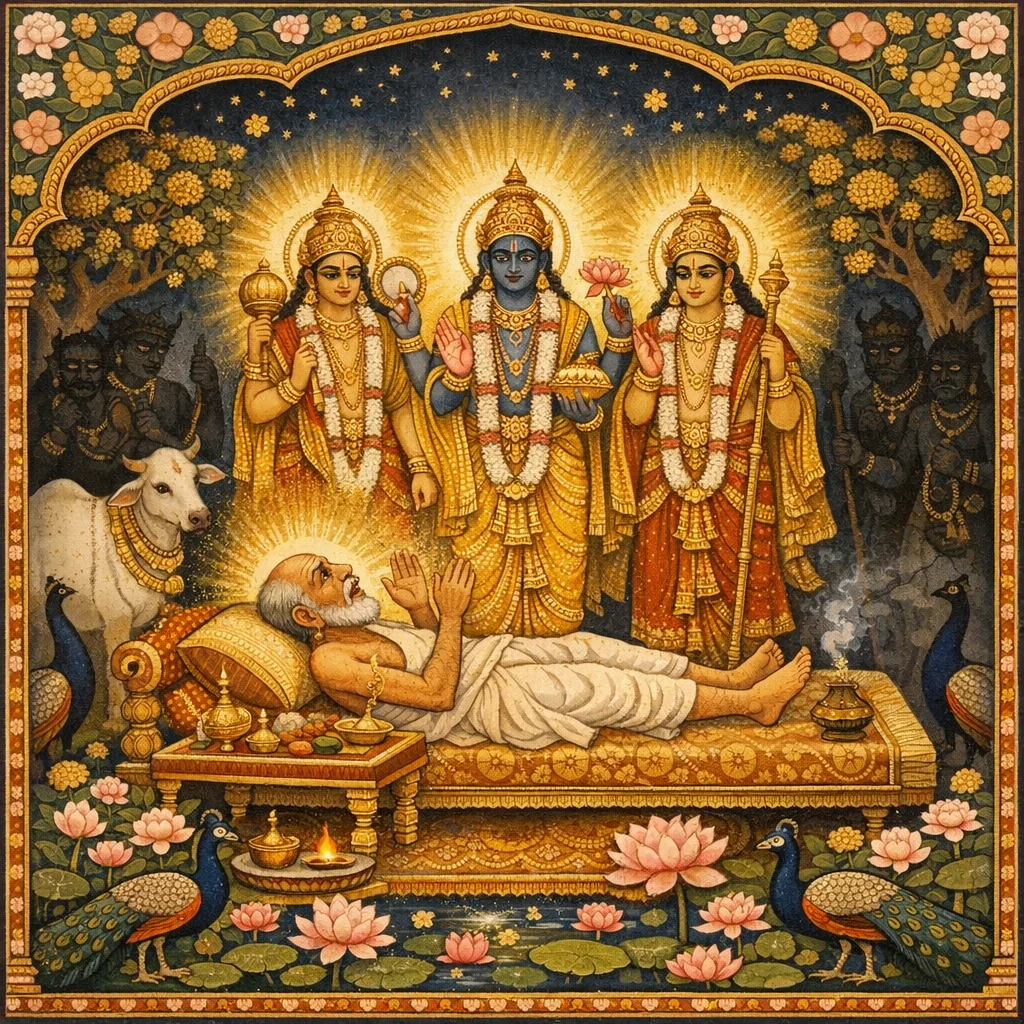
After Ajāmila’s near-arrest at death, Śukadeva introduces the Viṣṇudūtas as masters of śāstric reasoning. They challenge the Yamadūtas for trying to punish one made “unpunishable” by contact with Hari-nāma, warning that corrupted justice destabilizes society because people imitate rulers. The Viṣṇudūtas then teach a graded purification: ritual prāyaścitta may lessen karmic reactions but cannot uproot desire, whereas chanting Viṣṇu’s name—even indirectly, in jest, or unknowingly—burns sins like fire and awakens bhakti through remembrance of the Lord’s fame, qualities, and līlā. They cite Ajāmila’s repeated utterance of “Nārāyaṇa” (calling his son) and his final helpless cry at death as sufficient atonement across countless lives. Convinced, the Yamadūtas withdraw and report to Yamarāja. Freed, Ajāmila repents, renounces lust and bodily identification, goes to Haridwar, practices bhakti-yoga, attains a spiritual body, and is escorted to Vaikuṇṭha—setting the stage for the next discussion of nāma and dharma under Yamarāja’s governance.
Shlokas
Verse 1
श्रीबादरायणिरुवाच एवं ते भगवद्दूता यमदूताभिभाषितम् । उपधार्याथ तान् राजन् प्र्रत्याहुर्नयकोविदा: ॥ १ ॥
Śukadeva Gosvāmī said: O King, the messengers of Lord Viṣṇu, ever skilled in logic and sacred argument, heard the Yamadūtas’ words, considered them well, and then replied as follows.
Verse 2
श्रीविष्णुदूता ऊचु: अहो कष्टं धर्मदृशामधर्म: स्पृशते सभाम् । यत्रादण्ड्येष्वपापेषु दण्डो यैर्ध्रियते वृथा ॥ २ ॥
The Viṣṇudūtas said: Alas, how grievous that irreligion has entered an assembly meant to uphold dharma. Those appointed to protect religious law are uselessly punishing one who is sinless and not fit to be punished.
Verse 3
प्रजानां पितरो ये च शास्तार: साधव: समा: । यदि स्यात्तेषु वैषम्यं कं यान्ति शरणं प्रजा: ॥ ३ ॥
Rulers should be like fathers to the people—maintainers and protectors—giving counsel according to the śāstras and remaining equal to all. If such guardians become partial, where will the citizens go for shelter and safety?
Verse 4
यद्यदाचरति श्रेयानितरस्तत्तदीहते । स यत्प्रमाणं कुरुते लोकस्तदनुवर्तते ॥ ४ ॥
Whatever the noble leader practices, others imitate; whatever he establishes as authority (pramāṇa), the world follows.
Verse 5
यस्याङ्के शिर आधाय लोक: स्वपिति निर्वृत: । स्वयं धर्ममधर्मं वा न हि वेद यथा पशु: ॥ ५ ॥ स कथं न्यर्पितात्मानं कृतमैत्रमचेतनम् । विस्रम्भणीयो भूतानां सघृणो दोग्धुमर्हति ॥ ६ ॥
Ordinary people rest with their heads upon a leader’s lap, unaware of the difference between dharma and adharma, like innocent animals. If a ruler is truly compassionate and worthy of trust, how could he punish—or even kill—one who has surrendered in good faith and friendship?
Verse 6
यस्याङ्के शिर आधाय लोक: स्वपिति निर्वृत: । स्वयं धर्ममधर्मं वा न हि वेद यथा पशु: ॥ ५ ॥ स कथं न्यर्पितात्मानं कृतमैत्रमचेतनम् । विस्रम्भणीयो भूतानां सघृणो दोग्धुमर्हति ॥ ६ ॥
Ordinary people rest with their heads upon a leader’s lap, unaware of the difference between dharma and adharma, like innocent animals. If a ruler is truly compassionate and worthy of trust, how could he punish—or even kill—one who has surrendered in good faith and friendship?
Verse 7
अयं हि कृतनिर्वेशो जन्मकोट्यंहसामपि । यद्व्याजहार विवशो नाम स्वस्त्ययनं हरे: ॥ ७ ॥
Ajāmila has already atoned for his sins—not only of one life, but even of millions of births—because, in utter helplessness, he uttered the auspicious holy name of Hari, the giver of true safety.
Verse 8
एतेनैव ह्यघोनोऽस्य कृतं स्यादघनिष्कृतम् । यदा नारायणायेति जगाद चतुरक्षरम् ॥ ८ ॥
By this alone the sinner’s atonement was accomplished: when he uttered the four syllables “Nā-rā-ya-ṇa,” the mere chanting of Nārāyaṇa’s holy name destroyed his sins.
Verse 9
स्तेन: सुरापो मित्रध्रुग् ब्रह्महा गुरुतल्पग: । स्त्रीराजपितृगोहन्ता ये च पातकिनोऽपरे ॥ ९ ॥ सर्वेषामप्यघवतामिदमेव सुनिष्कृतम् । नामव्याहरणं विष्णोर्यतस्तद्विषया मति: ॥ १० ॥
For the thief of gold and goods, the drunkard, the betrayer of a friend, the slayer of a brāhmaṇa, the violator of the guru’s wife, the killer of women, of the king or of one’s father, the slaughterer of cows, and all other sinners as well—the supreme atonement is the utterance of Viṣṇu’s holy name, for by that Name the mind is drawn to the Lord.
Verse 10
स्तेन: सुरापो मित्रध्रुग् ब्रह्महा गुरुतल्पग: । स्त्रीराजपितृगोहन्ता ये च पातकिनोऽपरे ॥ ९ ॥ सर्वेषामप्यघवतामिदमेव सुनिष्कृतम् । नामव्याहरणं विष्णोर्यतस्तद्विषया मति: ॥ १० ॥
For all sinners—thieves, drunkards, betrayers of friends, slayers of brāhmaṇas, violators of the guru’s wife, killers of women, the king or one’s father, slaughterers of cows, and the rest—the highest atonement is to utter Viṣṇu’s name, for by that Name the mind becomes fixed upon the Lord.
Verse 11
न निष्कृतैरुदितैर्ब्रह्मवादिभि- स्तथा विशुद्ध्यत्यघवान् व्रतादिभि: । यथा हरेर्नामपदैरुदाहृतै- स्तदुत्तमश्लोकगुणोपलम्भकम् ॥ ११ ॥
Sinful men are not purified by the atonements and vows taught by Vedic scholars as they are by uttering even once the names of Hari, for that chanting awakens remembrance of the glories and qualities of the Lord, the Uttamaśloka.
Verse 12
नैकान्तिकं तद्धि कृतेऽपि निष्कृते मन: पुनर्धावति चेदसत्पथे । तत्कर्मनिर्हारमभीप्सतां हरे- र्गुणानुवाद: खलु सत्त्वभावन: ॥ १२ ॥
Even when performed, ritual atonement is not absolute, for the mind again runs upon the impure path. Therefore, for one who seeks release from karmic reactions, the glorification of Hari—singing His name, fame, and līlās—is the most perfect atonement, for it uproots the heart’s impurity completely.
Verse 13
अथैनं मापनयत कृताशेषाघनिष्कृतम् । यदसौ भगवन्नाम म्रियमाण: समग्रहीत् ॥ १३ ॥
At the moment of death, Ajāmila, helpless, loudly uttered the Lord’s holy name, “Nārāyaṇa.” By that single chanting he has already been freed from the reactions of all sins; therefore, O servants of Yamarāja, do not take him for hellish punishment.
Verse 14
साङ्केत्यं पारिहास्यं वा स्तोभं हेलनमेव वा । वैकुण्ठनामग्रहणमशेषाघहरं विदु: ॥ १४ ॥
Even if one takes the Name of Vaikuṇṭha indirectly, in jest, as a musical refrain, or even with neglect, that utterance is known to destroy the reactions of limitless sins—so accept the learned knowers of the scriptures.
Verse 15
पतित: स्खलितो भग्न: सन्दष्टस्तप्त आहत: । हरिरित्यवशेनाह पुमान्नार्हति यातना: ॥ १५ ॥
If, struck by sudden misfortune—falling, slipping and breaking bones, snakebite, burning fever and pain, or a weapon’s wound—a person involuntarily cries “Hari” and dies, then even if sinful he does not deserve hellish torment.
Verse 16
गुरूणां च लघूनां च गुरूणि च लघूनि च । प्रायश्चित्तानि पापानां ज्ञात्वोक्तानि महर्षिभि: ॥ १६ ॥
The great sages have ascertained that heavy sins require heavy atonement and lighter sins lighter atonement. Yet the japa of the Hari-Kṛṣṇa (Hare Kṛṣṇa) mantra destroys the effects of all sinful acts, whether heavy or light.
Verse 17
तैस्तान्यघानि पूयन्ते तपोदानव्रतादिभि: । नाधर्मजं तद्धृदयं तदपीशाङ्घ्रिसेवया ॥ १७ ॥
Austerity, charity, vows, and the like may neutralize sinful reactions, yet they cannot uproot the material desires born of irreligion within the heart. But by serving the lotus feet of the Supreme Personality of Godhead, one is at once freed from all such contamination.
Verse 18
अज्ञानादथवा ज्ञानादुत्तमश्लोकनाम यत् । सङ्कीर्तितमघं पुंसो दहेदेधो यथानल: ॥ १८ ॥
As fire turns dry grass to ashes, so the holy Name of the Lord, Uttamaśloka—chanted knowingly or unknowingly—certainly burns away all the reactions of one’s sinful deeds.
Verse 19
यथागदं वीर्यतममुपयुक्तं यदृच्छया । अजानतोऽप्यात्मगुणं कुर्यान्मन्त्रोऽप्युदाहृत: ॥ १९ ॥
Just as a most potent medicine works even when taken unknowingly or under compulsion—its power not depending on the patient’s understanding—so the mantra of the Lord’s holy Name, even when chanted without knowing its worth, is profoundly effective, whether done knowingly or unknowingly.
Verse 20
श्रीशुक उवाच त एवं सुविनिर्णीय धर्मं भागवतं नृप । तं याम्यपाशान्निर्मुच्य विप्रं मृत्योरमूमुचन् ॥ २० ॥
Śrī Śukadeva Gosvāmī continued: O King, having thus decisively established the principles of bhāgavata-dharma through sound reasoning, the Viṣṇudūtas freed the brāhmaṇa Ajāmila from the Yamadūtas’ nooses and saved him from imminent death.
Verse 21
इति प्रत्युदिता याम्या दूता यात्वा यमान्तिकम् । यमराज्ञे यथा सर्वमाचचक्षुररिन्दम ॥ २१ ॥
O Mahārāja Parīkṣit, subduer of enemies, after being answered by the Viṣṇudūtas, Yamarāja’s servants went to Yamarāja and told him everything that had occurred.
Verse 22
द्विज: पाशाद्विनिर्मुक्तो गतभी: प्रकृतिं गत: । ववन्दे शिरसा विष्णो: किङ्करान् दर्शनोत्सव: ॥ २२ ॥
Freed from the Yamadūtas’ nooses, the brāhmaṇa Ajāmila became fearless and regained his composure. Taking the darśana of Viṣṇu’s servants as a sacred festival, he bowed his head and offered them reverent obeisances.
Verse 23
तं विवक्षुमभिप्रेत्य महापुरुषकिङ्करा: । सहसा पश्यतस्तस्य तत्रान्तर्दधिरेऽनघ ॥ २३ ॥
O sinless Mahārāja Parīkṣit, the Viṣṇudūtas, servants of the Supreme Lord, saw Ajāmila about to speak, and thus they suddenly vanished from before his eyes.
Verse 24
अजामिलोऽप्यथाकर्ण्य दूतानां यमकृष्णयो: । धर्मं भागवतं शुद्धं त्रैवेद्यं च गुणाश्रयम् ॥ २४ ॥ भक्तिमान् भगवत्याशु माहात्म्यश्रवणाद्धरे: । अनुतापो महानासीत्स्मरतोऽशुभमात्मन: ॥ २५ ॥
After hearing the dialogue between the Yamadūtas and the Viṣṇudūtas, Ajāmila understood both the Vedic religious duties governed by the three guṇas and the pure Bhāgavata-dharma that transcends them, revealing the soul’s relationship with the Supreme Lord. Hearing the glory of Śrī Hari’s name, fame, qualities, and līlās, he quickly became a purified devotee, and remembering his former sins, he felt profound remorse.
Verse 25
अजामिलोऽप्यथाकर्ण्य दूतानां यमकृष्णयो: । धर्मं भागवतं शुद्धं त्रैवेद्यं च गुणाश्रयम् ॥ २४ ॥ भक्तिमान् भगवत्याशु माहात्म्यश्रवणाद्धरे: । अनुतापो महानासीत्स्मरतोऽशुभमात्मन: ॥ २५ ॥
After hearing the dialogue between the Yamadūtas and the Viṣṇudūtas, Ajāmila understood both the Vedic duties under the three guṇas and the pure Bhāgavata-dharma beyond them. Hearing the glory of Śrī Hari’s name, fame, qualities, and līlās, he became a purified devotee and deeply repented his former sins.
Verse 26
अहो मे परमं कष्टमभूदविजितात्मन: । येन विप्लावितं ब्रह्म वृषल्यां जायतात्मना ॥ २६ ॥
Alas! Unable to conquer myself, I became a slave of the senses and fell into utter degradation; I drowned the dignity of my brāhmaṇa life and begot children in the womb of a prostitute.
Verse 27
धिङ्मां विगर्हितं सद्भिर्दुष्कृतं कुलकज्जलम् । हित्वा बालां सतीं योऽहं सुरापीमसतीमगाम् ॥ २७ ॥
Shame upon me! I committed a sin condemned by the saintly, blackening the honor of my lineage. I abandoned my young, beautiful, chaste wife and went to a fallen prostitute addicted to wine—shame upon me!
Verse 28
वृद्धावनाथौ पितरौ नान्यबन्धू तपस्विनौ । अहो मयाधुना त्यक्तावकृतज्ञेन नीचवत् ॥ २८ ॥
My father and mother were aged and without shelter; they had no other son or friend to care for them. I did not serve them—like a low, ungrateful man I abandoned them in hardship. Alas!
Verse 29
सोऽहं व्यक्तं पतिष्यामि नरके भृशदारुणे । धर्मघ्ना: कामिनो यत्र विन्दन्ति यमयातना: ॥ २९ ॥
It is now plain that a sinner like me must fall into a most dreadful hell, where the destroyers of dharma and the lust-driven endure Yama’s severe torments.
Verse 30
किमिदं स्वप्न आहो स्वित् साक्षाद् दृष्टमिहाद्भुतम् । क्व याता अद्य ते ये मां व्यकर्षन् पाशपाणय: ॥ ३० ॥
Was it a dream, or an astonishing reality I saw here? Fearsome men with ropes in their hands came to seize and drag me away—where have they gone now?
Verse 31
अथ ते क्व गता: सिद्धाश्चत्वारश्चारुदर्शना: । व्यामोचयन्नीयमानं बद्ध्वा पाशैरधो भुव: ॥ ३१ ॥
And where have those four siddhas, so beautiful to behold, gone—those who freed me when I was bound with ropes and being dragged down to the infernal regions?
Verse 32
अथापि मे दुर्भगस्य विबुधोत्तमदर्शने । भवितव्यं मङ्गलेन येनात्मा मे प्रसीदति ॥ ३२ ॥
I am surely most wretched, sunk in an ocean of sinful deeds; yet by some past merit I was granted the vision of those four exalted beings, the best among the celestial, who came to rescue me. By their auspicious visit my heart is soothed, and I feel boundless joy.
Verse 33
अन्यथा म्रियमाणस्य नाशुचेर्वृषलीपते: । वैकुण्ठनामग्रहणं जिह्वा वक्तुमिहार्हति ॥ ३३ ॥
Had there not been the merit of my former devotional service, how could I—impure, the keeper of a prostitute—at the very point of death have gained the chance to utter the holy name of Vaikuṇṭhapati? Surely it would have been impossible.
Verse 34
क्व चाहं कितव: पापो ब्रह्मघ्नो निरपत्रप: । क्व च नारायणेत्येतद्भगवन्नाम मङ्गलम् ॥ ३४ ॥
Where am I—a shameless cheat who has slain my brahminical culture, sin embodied—and where is the all-auspicious divine Name, “Nārāyaṇa”?
Verse 35
सोऽहं तथा यतिष्यामि यतचित्तेन्द्रियानिल: । यथा न भूय आत्मानमन्धे तमसि मज्जये ॥ ३५ ॥
Now that I have gained this opportunity, I must strive fully—controlling mind, life-breath, and senses—and remain always in devotional service, so that I may not again sink into the deep darkness of material ignorance.
Verse 36
विमुच्य तमिमं बन्धमविद्याकामकर्मजम् । सर्वभूतसुहृच्छान्तो मैत्र: करुण आत्मवान् ॥ ३६ ॥ मोचये ग्रस्तमात्मानं योषिन्मय्यात्ममायया । विक्रीडितो ययैवाहं क्रीडामृग इवाधम: ॥ ३७ ॥
From identifying the self with the body arise ignorance, desire, and then pious and impious acts—this is material bondage. Now I shall cast off this bondage born of avidyā, kāma, and karma; I shall become peaceful, self-controlled, compassionate and friendly to all beings, and I shall free myself, who was seized by ātma-māyā in the form of a woman.
Verse 37
विमुच्य तमिमं बन्धमविद्याकामकर्मजम् । सर्वभूतसुहृच्छान्तो मैत्र: करुण आत्मवान् ॥ ३६ ॥ मोचये ग्रस्तमात्मानं योषिन्मय्यात्ममायया । विक्रीडितो ययैवाहं क्रीडामृग इवाधम: ॥ ३७ ॥
Ātma-māyā in the form of a woman toyed with me like an animal for sport; I, most fallen, became like a kṛīḍā-mṛga. Now I shall renounce those lustful desires and free myself from this illusion; I shall become a peaceful, compassionate friend of all beings and remain always absorbed in Kṛṣṇa consciousness.
Verse 38
ममाहमिति देहादौ हित्वामिथ्यार्थधीर्मतिम् । धास्ये मनो भगवति शुद्धं तत्कीर्तनादिभि: ॥ ३८ ॥
By chanting the Lord’s holy name in the company of devotees, my heart is being purified. Therefore I shall no longer be ensnared by the false allure of sense enjoyment. Abandoning the delusion of “I” and “mine” in relation to the body, I will fix my mind upon the lotus feet of Śrī Kṛṣṇa.
Verse 39
इति जातसुनिर्वेद: क्षणसङ्गेन साधुषु । गङ्गाद्वारमुपेयाय मुक्तसर्वानुबन्धन: ॥ ३९ ॥
By a moment’s association with the saints (the Viṣṇudūtas), Ajāmila awakened firm detachment from material life. Freed from every bond of worldly attraction, he at once set out for Gaṅgādvāra (Hardwar).
Verse 40
स तस्मिन् देवसदन आसीनो योगमास्थित: । प्रत्याहृतेन्द्रियग्रामो युयोज मन आत्मनि ॥ ४० ॥
In Hardwar he took shelter in a temple of Viṣṇu and practiced bhakti-yoga. He restrained his senses and fully engaged his mind in the Lord’s service.
Verse 41
ततो गुणेभ्य आत्मानं वियुज्यात्मसमाधिना । युयुजे भगवद्धाम्नि ब्रह्मण्यनुभवात्मनि ॥ ४१ ॥
Then, by inner samādhi, he separated himself from the guṇas, withdrew his mind from the current of sense enjoyment, and joined it to the Lord’s abode—the reality realized as Brahman. Thus he became wholly absorbed in remembrance of the Lord’s form.
Verse 42
यर्ह्युपारतधीस्तस्मिन्नद्राक्षीत्पुरुषान् पुर: । उपलभ्योपलब्धान् प्राग्ववन्दे शिरसा द्विज: ॥ ४२ ॥
When his intelligence and mind became fixed upon the Lord’s form, the brāhmaṇa Ajāmila again saw before him four celestial persons. Recognizing them as those he had seen earlier, he bowed his head and offered them reverent obeisances.
Verse 43
हित्वा कलेवरं तीर्थे गङ्गायां दर्शनादनु । सद्य: स्वरूपं जगृहे भगवत्पार्श्ववर्तिनाम् ॥ ४३ ॥
At Hardwar on the bank of the Ganges, upon beholding the Viṣṇudūtas, Ajāmila at once gave up his material body. He immediately regained his original spiritual form, fit to be an associate of the Lord.
Verse 44
साकं विहायसा विप्रो महापुरुषकिङ्करै: । हैमं विमानमारुह्य ययौ यत्र श्रिय: पति: ॥ ४४ ॥
Accompanied by the servants of Lord Viṣṇu, the brāhmaṇa traveled through the sky, ascended a golden vimāna, and went to the abode of Śrīpati, the husband of Lakṣmī.
Verse 45
एवं स विप्लावितसर्वधर्मा दास्या: पति: पतितो गर्ह्यकर्मणा । निपात्यमानो निरये हतव्रत: सद्यो विमुक्तो भगवन्नाम गृह्णन् ॥ ४५ ॥
By bad association, the brāhmaṇa Ajāmila abandoned all brahminical culture and religious principles. Becoming the husband of a prostitute, he fell into theft, drinking, and other abominable acts; though the messengers of Yamarāja were dragging him to hell, he was instantly delivered simply by taking hold of the holy name “Nārāyaṇa”.
Verse 46
नात: परं कर्मनिबन्धकृन्तनं मुमुक्षतां तीर्थपदानुकीर्तनात् । न यत्पुन: कर्मसु सज्जते मनो रजस्तमोभ्यां कलिलं ततोऽन्यथा ॥ ४६ ॥
Therefore, one who longs to be freed from material bondage should take up the chanting and glorification of the Supreme Lord’s name, fame, form, and pastimes—He at whose lotus feet all holy places reside. Other means, such as pious atonement, speculative knowledge, or yogic meditation, do not yield the full result, for the mind, tainted by passion and ignorance, again becomes attached to fruitive work.
Verse 47
य एतं परमं गुह्यमितिहासमघापहम् । शृणुयाच्छ्रद्धया युक्तो यश्च भक्त्यानुकीर्तयेत् ॥ ४७ ॥ न वै स नरकं याति नेक्षितो यमकिङ्करै: । यद्यप्यमङ्गलो मर्त्यो विष्णुलोके महीयते ॥ ४८ ॥
This most confidential sacred history destroys all sinful reactions. One who hears it with faith and recounts it with devotion does not go to hell; the Yamadūtas do not even approach to look upon him. After leaving the body, he returns to Viṣṇuloka, where he is respectfully received and worshiped.
Verse 48
य एतं परमं गुह्यमितिहासमघापहम् । शृणुयाच्छ्रद्धया युक्तो यश्च भक्त्यानुकीर्तयेत् ॥ ४७ ॥ न वै स नरकं याति नेक्षितो यमकिङ्करै: । यद्यप्यमङ्गलो मर्त्यो विष्णुलोके महीयते ॥ ४८ ॥
One who hears this supremely confidential, sin-destroying sacred history with faith, and who recites it with devotion, never goes to hell. The Yamadūtas do not even approach him to look upon him. Though embodied and formerly sinful, upon leaving the body he is honored and worshiped in Viṣṇu’s abode.
Verse 49
म्रियमाणो हरेर्नाम गृणन् पुत्रोपचारितम् । अजामिलोऽप्यगाद्धाम किमुत श्रद्धया गृणन् ॥ ४९ ॥
Even while dying in agony, Ajāmila uttered Hari’s holy name—though he meant to call his son—and still attained the Lord’s abode. What doubt, then, that one who chants the holy name with faith and without offense will return to Godhead?
Frequently Asked Questions
Their argument is not that Ajāmila’s actions were moral, but that his karmic liability has been nullified by contact with Hari-nāma uttered without offense. In Bhāgavata theology, nāma invokes Bhagavān’s poṣaṇa and purifies at the root, placing the chanter under Viṣṇu’s protection rather than Yama’s punitive jurisdiction.
The chapter teaches the intrinsic potency (svabhāva-śakti) of the name: like medicine that acts regardless of the patient’s understanding, the name purifies even when uttered unknowingly, jokingly, or indirectly—provided it is without offense. Ajāmila’s repeated utterance and final helpless cry constitute nāmābhāsa that destroys sins and turns him toward bhakti.
Ritual prāyaścitta may reduce or counteract reactions, but it often leaves the seed of desire intact, so one returns to sin. Chanting and glorifying Hari, however, cleanses the heart and awakens devotion—thereby addressing the cause (material desire and forgetfulness of Bhagavān), not merely the symptom (sinful reaction).
They establish a dharmic principle: when protectors of law become partial or punish the innocent, societal trust collapses because citizens imitate leaders. By framing the debate as a question of righteous governance, they show that true dharma must align with śāstra and with the higher principle of divine protection for one connected to the Lord.
Rescue by nāma is not presented as a license to continue sin; it becomes the turning point for repentance, renunciation, and sustained bhakti-sādhana. Ajāmila’s move to Haridwar, temple shelter, sense control, and absorption in the Lord demonstrate that lasting purification culminates in transformed life and remembrance at death.