Adhyaya 14
Parīkṣit’s Inquiry into Vṛtrāsura’s Bhakti and the Beginning of Citraketu’s Trial
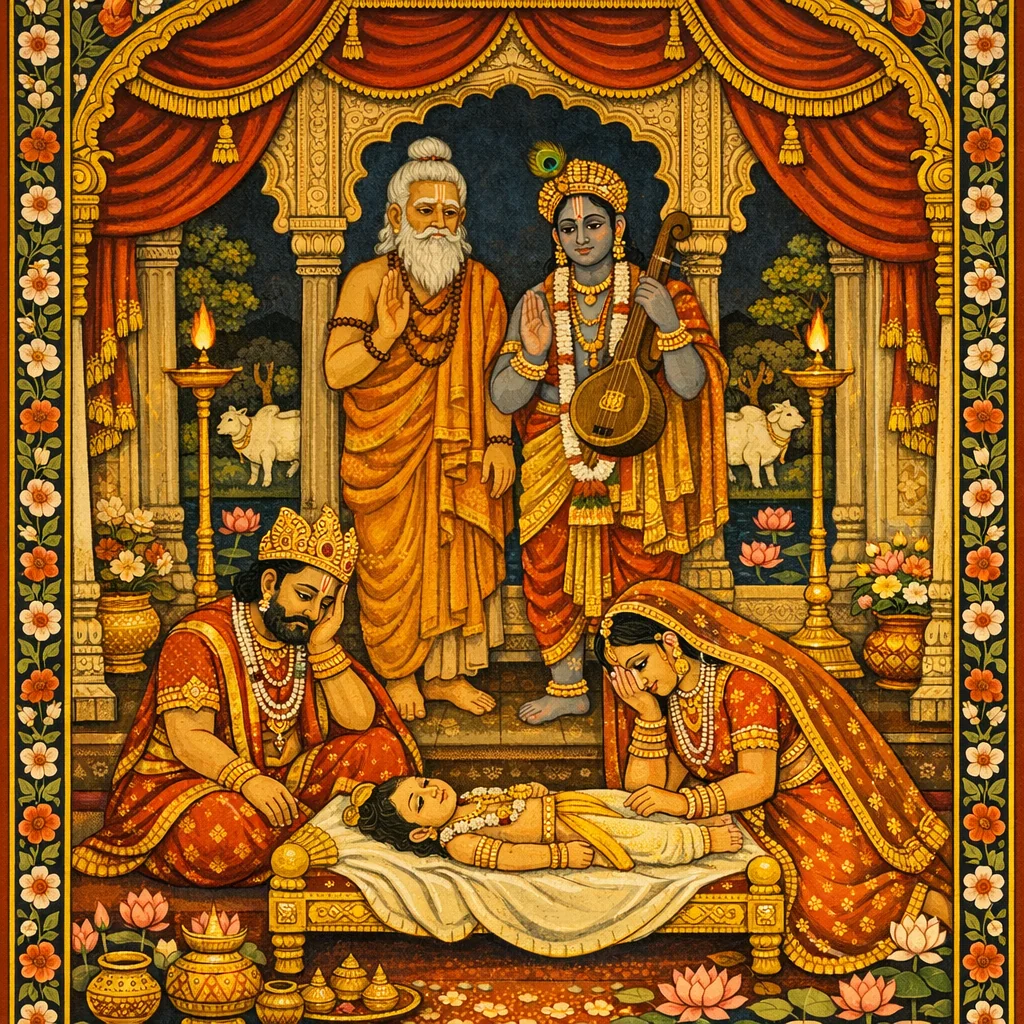
Following the discourse on Vṛtrāsura, King Parīkṣit presses a theological paradox: if asuras are ruled by rajas and tamas, how could Vṛtrāsura display such supreme prema-bhakti, rarer even among devas and liberated sages? Śukadeva replies by opening an inherited history in the Vyāsa–Nārada–Devala paramparā and shifts the scene to King Citraketu of Śūrasena. Though endowed with immense wealth and millions of queens, Citraketu’s childlessness brings deep duḥkha, showing that material completeness cannot satisfy when the heart clings to a single desire (putra-kāma). Sage Aṅgirā arrives, is duly honored, speaks on royal order and governance, diagnoses the king’s distress, and grants a son through yajña remnants given to Queen Kṛtadyuti—forewarning that the child will bring both joy and lamentation. The boy’s birth sparks favoritism and envy among the co-wives, culminating in the child’s poisoning and a palace-wide grief. At the height of mourning, Aṅgirā returns with Nārada, setting the stage for the next chapter’s decisive teaching on death, karma, and attachment—bridging to how devotion can arise in unexpected souls like Vṛtrāsura.
Shlokas
Verse 1
श्रीपरीक्षिदुवाच रजस्तम:स्वभावस्य ब्रह्मन् वृत्रस्य पाप्मन: । नारायणे भगवति कथमासीद् दृढा मति: ॥ १ ॥
King Parīkṣit asked: “O learned brāhmaṇa, Vṛtrāsura was by nature steeped in rajas and tamas and burdened with sin; how, then, did he attain such firm devotion to Bhagavān Nārāyaṇa?”
Verse 2
देवानां शुद्धसत्त्वानामृषीणां चामलात्मनाम् । भक्तिर्मुकुन्दचरणे न प्रायेणोपजायते ॥ २ ॥
Even among the demigods established in pure goodness and the great sages of spotless heart, pure bhakti at the lotus feet of Mukunda is rarely awakened.
Verse 3
रजोभि: समसङ्ख्याता: पार्थिवैरिह जन्तव: । तेषां ये केचनेहन्ते श्रेयो वै मनुजादय: ॥ ३ ॥
In this material world living beings are as countless as the atoms of the earth. Among them only a few are human, and among humans only a few are inclined to pursue the good by following the principles of dharma.
Verse 4
प्रायो मुमुक्षवस्तेषां केचनैव द्विजोत्तम । मुमुक्षूणां सहस्रेषु कश्चिन्मुच्येत सिध्यति ॥ ४ ॥
O best of brāhmaṇas, even among those who follow dharma only a few desire liberation. Among thousands who seek liberation, perhaps one truly attains it. And among thousands of the liberated, one who understands the real meaning of liberation is exceedingly rare.
Verse 5
मुक्तानामपि सिद्धानां नारायणपरायण: । सुदुर्लभ: प्रशान्तात्मा कोटिष्वपि महामुने ॥ ५ ॥
O great sage, even among millions of liberated and perfected souls, a devotee wholly devoted to Lord Nārāyaṇa, serene in heart, is exceedingly rare.
Verse 6
वृत्रस्तु स कथं पाप: सर्वलोकोपतापन: । इत्थं दृढमति: कृष्ण आसीत्सङ्ग्राम उल्बणे ॥ ६ ॥
Vṛtrāsura was a notorious sinner who tormented all beings; how, in the fierce blaze of battle, could his mind become so firmly fixed in Kṛṣṇa consciousness?
Verse 7
अत्र न: संशयो भूयाञ्छ्रोतुं कौतूहलं प्रभो । य: पौरुषेण समरे सहस्राक्षमतोषयत् ॥ ७ ॥
My lord, our doubt has grown and our eagerness to hear is great: he who, by his prowess in battle, satisfied Indra of a thousand eyes—how could such a demon be a great devotee of Lord Kṛṣṇa?
Verse 8
श्रीसूत उवाच परीक्षितोऽथ सम्प्रश्नं भगवान् बादरायणि: । निशम्य श्रद्दधानस्य प्रतिनन्द्य वचोऽब्रवीत् ॥ ८ ॥
Śrī Sūta said: Hearing Mahārāja Parīkṣit’s thoughtful question, Bhagavān Bādarāyaṇi Śukadeva praised his faithful disciple’s words and began to reply with affection.
Verse 9
श्रीशुक उवाच शृणुष्वावहितो राजन्नितिहासमिमं यथा । श्रुतं द्वैपायनमुखान्नारदाद्देवलादपि ॥ ९ ॥
Śrī Śukadeva said: O King, listen attentively; I shall speak this very history as I heard it from the lips of Dvaipāyana Vyāsa, Nārada, and Devala.
Verse 10
आसीद्राजा सार्वभौम: शूरसेनेषु वै नृप । चित्रकेतुरिति ख्यातो यस्यासीत्कामधुङ्मही ॥ १० ॥
O King Parīkṣit, in the land of Śūrasena there was a sovereign ruler famed as Citraketu, who governed the whole earth. In his reign the earth, like Kāmadhenu, yielded all necessities of life.
Verse 11
तस्य भार्यासहस्राणां सहस्राणि दशाभवन् । सान्तानिकश्चापि नृपो न लेभे तासु सन्ततिम् ॥ ११ ॥
He had ten thousand times ten thousand wives. Yet though the king was capable of begetting children, he received no offspring from any of them, as if all were barren.
Verse 12
रूपौदार्यवयोजन्मविद्यैश्वर्यश्रियादिभि: । सम्पन्नस्य गुणै: सर्वैश्चिन्ता बन्ध्यापतेरभूत् ॥ १२ ॥
Though endowed with beauty, magnanimity, youth, noble birth, learning, wealth, and splendor, Citraketu was still consumed by anxiety, for he had no son.
Verse 13
न तस्य सम्पद: सर्वा महिष्यो वामलोचना: । सार्वभौमस्य भूश्चेयमभवन्प्रीतिहेतव: ॥ १३ ॥
His queens had lovely faces and enchanting eyes, yet neither his riches, nor his hundreds and thousands of wives, nor the lands he owned as supreme ruler brought him happiness.
Verse 14
तस्यैकदा तु भवनमङ्गिरा भगवानृषि: । लोकाननुचरन्नेतानुपागच्छद्यदृच्छया ॥ १४ ॥
Once, the powerful sage Aṅgirā, wandering through the worlds without any fixed engagement, came by his own gracious will—by providence—to the palace of King Citraketu.
Verse 15
तं पूजयित्वा विधिवत्प्रत्युत्थानार्हणादिभि: । कृतातिथ्यमुपासीदत्सुखासीनं समाहित: ॥ १५ ॥
Rising at once, the king worshiped the sage according to sacred rite—offering arghya, water for washing the feet, and suitable refreshments—thus fulfilling the duty of a host. When the ṛṣi sat in comfort, the king, restraining mind and senses, sat on the ground beside his feet.
Verse 16
महर्षिस्तमुपासीनं प्रश्रयावनतं क्षितौ । प्रतिपूज्य महाराज समाभाष्येदमब्रवीत् ॥ १६ ॥
Seeing Citraketu seated on the ground in humble reverence at his lotus feet, the great sage honored him and, addressing him as “O great King,” spoke these words.
Verse 17
अङ्गिरा उवाच अपि तेऽनामयं स्वस्ति प्रकृतीनां तथात्मन: । यथा प्रकृतिभिर्गुप्त: पुमान् राजा च सप्तभि: ॥ १७ ॥
The great sage Aṅgirā said: “O King, are your body and mind well, and are your royal associates and resources in good order? When the seven principles of material nature—mahat, false ego, and the five sense objects—are properly arranged, the embodied soul is at ease. In the same way, a king is protected by seven supports: his guru, his ministers, his realm, his fort, his treasury, his power of law and punishment, and his friends.”
Verse 18
आत्मानं प्रकृतिष्वद्धा निधाय श्रेय आप्नुयात् । राज्ञा तथा प्रकृतयो नरदेवाहिताधय: ॥ १८ ॥
O King, lord of men, when a ruler directly relies upon his associates and follows their wholesome counsel, he becomes happy. Likewise, when those associates offer their gifts and labors to the king and obey his command, they too become happy.
Verse 19
अपि दारा: प्रजामात्या भृत्या: श्रेण्योऽथ मन्त्रिण: । पौरा जानपदा भूपा आत्मजा वशवर्तिन: ॥ १९ ॥
O King, are your wives, citizens, secretaries and servants—and the guilds of merchants who trade in oils and spices—under your control? Are your ministers, palace attendants, provincial governors, your sons, and all other dependents also fully obedient to your rule?
Verse 20
यस्यात्मानुवशश्चेत्स्यात्सर्वे तद्वशगा इमे । लोका: सपाला यच्छन्ति सर्वे बलिमतन्द्रिता: ॥ २० ॥
If the king’s mind is fully self-controlled, then his family and officers all remain under his rule. Even the provincial governors, without resistance, offer the due taxes as tribute in proper time—what then to speak of lesser servants?
Verse 21
आत्मन: प्रीयते नात्मा परत: स्वत एव वा । लक्षयेऽलब्धकामं त्वां चिन्तया शबलं मुखम् ॥ २१ ॥
O King Citraketu, I can see that your mind is not at ease. It appears you have not attained your cherished aim. Is this due to yourself, or caused by others? Your pale face reveals deep anxiety.
Verse 22
एवं विकल्पितो राजन् विदुषा मुनिनापि स: । प्रश्रयावनतोऽभ्याह प्रजाकामस्ततो मुनिम् ॥ २२ ॥
Śukadeva Gosvāmī said: O King Parīkṣit, though the great sage Aṅgirā knew everything, he questioned the king in this manner. Then King Citraketu, longing for a son, bowed down in deep humility and spoke to the sage as follows.
Verse 23
चित्रकेतुरुवाच भगवन् किं न विदितं तपोज्ञानसमाधिभि: । योगिनां ध्वस्तपापानां बहिरन्त: शरीरिषु ॥ २३ ॥
King Citraketu said: O venerable lord Aṅgirā, by austerity, knowledge, and transcendental samādhi you are freed from all sinful reactions. Therefore, as a perfect yogī, you can understand everything—externally and internally—about embodied souls like us.
Verse 24
तथापि पृच्छतो ब्रूयां ब्रह्मन्नात्मनि चिन्तितम् । भवतो विदुषश्चापि चोदितस्त्वदनुज्ञया ॥ २४ ॥
O venerable brāhmaṇa, though you know everything, you ask why I am filled with anxiety. Therefore, by your command and with your permission, I shall disclose the cause that weighs upon my heart.
Verse 25
लोकपालैरपि प्रार्थ्या: साम्राज्यैश्वर्यसम्पद: । न नन्दयन्त्यप्रजं मां क्षुत्तृट्काममिवापरे ॥ २५ ॥
As one tormented by hunger and thirst is not satisfied by outward pleasures like flower garlands or sandalwood paste, so I am not pleased by my empire, opulence, and possessions—desired even by the great demigods—because I have no son.
Verse 26
तत: पाहि महाभाग पूर्वै: सह गतं तम: । यथा तरेम दुष्पारं प्रजया तद्विधेहि न: ॥ २६ ॥
Therefore, O greatly fortunate sage, please save me and my forefathers, who are sinking into the darkness of hell for want of progeny. Kindly arrange that I may obtain a son, so we may cross that difficult darkness.
Verse 27
श्रीशुक उवाच इत्यर्थित: स भगवान् कृपालुर्ब्रह्मण: सुत: । श्रपयित्वा चरुं त्वाष्ट्रं त्वष्टारमयजद्विभु: ॥ २७ ॥
Śrī Śuka said: Thus entreated, the merciful sage Aṅgirā, born from Lord Brahmā’s mind, being a person of great power, had the Tvaṣṭā caru (sweet rice offering) cooked and performed a sacrifice, offering oblations to Tvaṣṭā.
Verse 28
ज्येष्ठा श्रेष्ठा च या राज्ञो महिषीणां च भारत । नाम्ना कृतद्युतिस्तस्यै यज्ञोच्छिष्टमदाद् द्विज: ॥ २८ ॥
O Parīkṣit, best of the Bhāratas, the great brāhmaṇa Aṅgirā gave the remnants of the yajña offering as sacred prasāda to Citraketu’s eldest and most excellent queen, named Kṛtadyuti.
Verse 29
अथाह नृपतिं राजन् भवितैकस्तवात्मज: । हर्षशोकप्रदस्तुभ्यमिति ब्रह्मसुतो ययौ ॥ २९ ॥
Thereafter Aṅgirā, the son of Brahmā, told the King, “O great King, you will now have a son, and he will be the cause of both joy and sorrow for you.” Saying this, the sage departed without waiting for Citraketu’s reply.
Verse 30
सापि तत्प्राशनादेव चित्रकेतोरधारयत् । गर्भं कृतद्युतिर्देवी कृत्तिकाग्नेरिवात्मजम् ॥ ३० ॥
Just as the goddess Kṛttikā, receiving Lord Śiva’s seed through Agni, conceived Skanda, so did the goddess Kṛtadyuti—upon eating the sanctified remnants of the yajña performed by Aṅgirā—conceive by the seed of Citraketu.
Verse 31
तस्या अनुदिनं गर्भ: शुक्लपक्ष इवोडुप: । ववृधे शूरसेनेशतेजसा शनकैर्नृप ॥ ३१ ॥
O King, by the splendor of Citraketu, lord of Śūrasena, her pregnancy grew day by day, slowly—like the moon waxing during the bright fortnight.
Verse 32
अथ काल उपावृत्ते कुमार: समजायत । जनयन् शूरसेनानां शृण्वतां परमां मुदम् ॥ ३२ ॥
Thereafter, when the proper time had come, a son was born to the King. Hearing the news, all the people of Śūrasena rejoiced exceedingly.
Verse 33
हृष्टो राजा कुमारस्य स्नात: शुचिरलङ्कृत: । वाचयित्वाशिषो विप्रै: कारयामास जातकम् ॥ ३३ ॥
King Citraketu was greatly delighted. After bathing for purification and adorning himself, he engaged learned brāhmaṇas to recite blessings for the child and to perform the birth rite (jātakarma).
Verse 34
तेभ्यो हिरण्यं रजतं वासांस्याभरणानि च । ग्रामान् हयान् गजान् प्रादाद् धेनूनामर्बुदानि षट् ॥ ३४ ॥
To the brāhmaṇas who took part in the ceremony, the King gave charity of gold and silver, garments and ornaments, villages, horses and elephants, and also six arbuda of cows—sixty krores, that is, six hundred million cows.
Verse 35
ववर्ष कामानन्येषां पर्जन्य इव देहिनाम् । धन्यं यशस्यमायुष्यं कुमारस्य महामना: ॥ ३५ ॥
As a cloud pours rain upon the earth without discrimination, the magnanimous King Citraketu, to increase his son’s fame, opulence, and longevity, showered all people with every desirable gift like rainfall.
Verse 36
कृच्छ्रलब्धेऽथ राजर्षेस्तनयेऽनुदिनं पितु: । यथा नि:स्वस्य कृच्छ्राप्ते धने स्नेहोऽन्ववर्धत ॥ ३६ ॥
After the royal sage obtained a son with great difficulty, the father’s affection increased day by day—just as a poor man, having gained wealth with hardship, grows more attached to it each day.
Verse 37
मातुस्त्वतितरां पुत्रे स्नेहो मोहसमुद्भव: । कृतद्युते: सपत्नीनां प्रजाकामज्वरोऽभवत् ॥ ३७ ॥
The mother’s attachment to her son, born of deluding affection, also increased exceedingly. Seeing Kṛtadyuti’s son, the other wives were shaken by a burning desire for children, as if seized by a high fever.
Verse 38
चित्रकेतोरतिप्रीतिर्यथा दारे प्रजावति । न तथान्येषु सञ्जज्ञे बालं लालयतोऽन्वहम् ॥ ३८ ॥
As King Citraketu carefully nurtured his son day after day, his deep affection for Queen Kṛtadyuti, the mother of the child, increased; but for the other wives who had no sons, such affection did not arise and gradually waned.
Verse 39
ता: पर्यतप्यन्नात्मानं गर्हयन्त्योऽभ्यसूयया । आनपत्येन दु:खेन राज्ञश्चानादरेण च ॥ ३९ ॥
The other queens were deeply distressed by the sorrow of being childless and by the king’s neglect. In envy they tormented themselves, condemned their own fate, and lamented aloud.
Verse 40
धिगप्रजां स्त्रियं पापां पत्युश्चागृहसम्मताम् । सुप्रजाभि: सपत्नीभिर्दासीमिव तिरस्कृताम् ॥ ४० ॥
Alas for the sinful wife without a son: her husband does not honor her at home, and her co-wives blessed with sons scorn her like a maidservant.
Verse 41
दासीनां को नु सन्ताप: स्वामिन: परिचर्यया । अभीक्ष्णं लब्धमानानां दास्या दासीव दुर्भगा: ॥ ४१ ॥
Even maidservants, by serving their master, are honored and thus have nothing to lament. But we are maidservants of a maidservant; therefore we are most unfortunate.
Verse 42
एवं सन्दह्यमानानां सपत्न्या: पुत्रसम्पदा । राज्ञोऽसम्मतवृत्तीनां विद्वेषो बलवानभूत् ॥ ४२ ॥
Śrī Śukadeva Gosvāmī continued: Neglected by the king and beholding Kṛtadyuti’s splendor in having a son, her co-wives burned in envy, and their malice grew exceedingly strong.
Verse 43
विद्वेषनष्टमतय: स्त्रियो दारुणचेतस: । गरं ददु: कुमाराय दुर्मर्षा नृपतिं प्रति ॥ ४३ ॥
As their envy swelled, their intelligence was ruined. Hardhearted and unable to bear the king’s neglect, they at last administered poison to the young prince.
Verse 44
कृतद्युतिरजानन्ती सपत्नीनामघं महत् । सुप्त एवेति सञ्चिन्त्य निरीक्ष्य व्यचरद्गृहे ॥ ४४ ॥
Unaware of the grave sin of her co-wives, Queen Kṛtadyuti thought, “My son is sleeping deeply.” She looked upon him and moved about the house, not realizing that he was already dead.
Verse 45
शयानं सुचिरं बालमुपधार्य मनीषिणी । पुत्रमानय मे भद्रे इति धात्रीमचोदयत् ॥ ४५ ॥
Thinking her child had been sleeping for a long time, the wise Queen Kṛtadyuti instructed the nurse, “Dear friend, please bring my son here.”
Verse 46
सा शयानमुपव्रज्य दृष्ट्वा चोत्तारलोचनम् । प्राणेन्द्रियात्मभिस्त्यक्तं हतास्मीत्यपतद्भुवि ॥ ४६ ॥
Approaching the child as he lay, the maidservant saw his eyes turned upward. With life and senses gone, she understood he was dead; crying, “I am ruined!” she fell to the ground.
Verse 47
तस्यास्तदाकर्ण्य भृशातुरं स्वरं घ्नन्त्या: कराभ्यामुर उच्चकैरपि । प्रविश्य राज्ञी त्वरयात्मजान्तिकं ददर्श बालं सहसा मृतं सुतम् ॥ ४७ ॥
In great distress the maidservant struck her breast with both hands and cried out loudly. Hearing her wail, the Queen rushed to her son and saw that the child had suddenly died.
Verse 48
पपात भूमौ परिवृद्धया शुचा मुमोह विभ्रष्टशिरोरुहाम्बरा ॥ ४८ ॥
Overwhelmed by grief, her hair and garments in disarray, the Queen fell to the ground and fainted.
Verse 49
ततो नृपान्त: पुरवर्तिनो जना नराश्च नार्यश्च निशम्य रोदनम् । आगत्य तुल्यव्यसना: सुदु:खिता- स्ताश्च व्यलीकं रुरुदु: कृतागस: ॥ ४९ ॥
O King Parīkṣit, hearing the loud wailing, all the palace residents—men and women—came running. Stricken with the same grief, they too began to weep. Even the queens who had given the poison cried deceitfully, fully aware of their offense.
Verse 50
श्रुत्वा मृतं पुत्रमलक्षितान्तकं विनष्टदृष्टि: प्रपतन् स्खलन् पथि । स्नेहानुबन्धैधितया शुचा भृशं विमूर्च्छितोऽनुप्रकृतिर्द्विजैर्वृत: ॥ ५० ॥ पपात बालस्य स पादमूले मृतस्य विस्रस्तशिरोरुहाम्बर: । दीर्घं श्वसन् बाष्पकलोपरोधतो निरुद्धकण्ठो न शशाक भाषितुम् ॥ ५१ ॥
When King Citraketu heard of his son’s death from unknown causes, he became almost blind. Because of his great affection for his son, his lamentation grew like a blazing fire, and as he went to see the dead child, he kept slipping and falling on the ground.
Verse 51
श्रुत्वा मृतं पुत्रमलक्षितान्तकं विनष्टदृष्टि: प्रपतन् स्खलन् पथि । स्नेहानुबन्धैधितया शुचा भृशं विमूर्च्छितोऽनुप्रकृतिर्द्विजैर्वृत: ॥ ५० ॥ पपात बालस्य स पादमूले मृतस्य विस्रस्तशिरोरुहाम्बर: । दीर्घं श्वसन् बाष्पकलोपरोधतो निरुद्धकण्ठो न शशाक भाषितुम् ॥ ५१ ॥
Surrounded by his ministers and other officers and the learned brāhmaṇas present, the King approached and fell unconscious at the child’s feet, his hair and dress scattered. When the King, breathing heavily, regained consciousness, his eyes were tearful, and he could not speak.
Verse 52
पतिं निरीक्ष्योरुशुचार्पितं तदा मृतं च बालं सुतमेकसन्ततिम् । जनस्य राज्ञी प्रकृतेश्च हृद्रुजं सती दधाना विललाप चित्रधा ॥ ५२ ॥
When the Queen saw her husband, King Citraketu, merged in great lamentation and saw the dead child, who was the only son in the family, she lamented in various ways. This increased the pain in the cores of the hearts of all the inhabitants of the palace, the ministers and all the brāhmaṇas.
Verse 53
स्तनद्वयं कुङ्कुमपङ्कमण्डितं निषिञ्चती साञ्जनबाष्पबिन्दुभि: । विकीर्य केशान् विगलत्स्रज: सुतं शुशोच चित्रं कुररीव सुस्वरम् ॥ ५३ ॥
The garland of flowers decorating the Queen’s head fell, and her hair scattered. Falling tears melted the collyrium on her eyes and moistened her breasts, which were covered with kuṅkuma powder. As she lamented the loss of her son, her loud crying resembled the sweet sound of a kurarī bird.
Verse 54
अहो विधातस्त्वमतीव बालिशो यस्त्वात्मसृष्ट्यप्रतिरूपमीहसे । परे नु जीवत्यपरस्य या मृति- र्विपर्ययश्चेत्त्वमसि ध्रुव: पर: ॥ ५४ ॥
Alas, O Providence, O Creator, You are certainly inexperienced in creation, for during the lifetime of a father You have caused the death of his son, thus acting in opposition to Your creative laws. If You are determined to contradict these laws, You are certainly the enemy of living entities and are never merciful.
Verse 55
न हि क्रमश्चेदिह मृत्युजन्मनो: शरीरिणामस्तु तदात्मकर्मभि: । य: स्नेहपाशो निजसर्गवृद्धये स्वयं कृतस्ते तमिमं विवृश्चसि ॥ ५५ ॥
My Lord, if You say there is no fixed rule that a father must die while his son lives, or that a son must be born while his father lives—since embodied beings meet birth and death according to the fruits of their own karma—then what need is there for a supreme Controller, for God? And if You say a Controller is needed because material nature cannot act by itself, still You have cut, on the pretext of karma, the very bond of affection You created for the increase of progeny; then who would raise children with love? Thus You appear inexperienced and lacking in discernment.
Verse 56
त्वं तात नार्हसि च मां कृपणामनाथां त्यक्तुं विचक्ष्व पितरं तव शोकतप्तम् । अञ्जस्तरेम भवताप्रजदुस्तरं यद् ध्वान्तं न याह्यकरुणेन यमेन दूरम् ॥ ५६ ॥
My dear son, I am helpless and without shelter, scorched by grief; you should not abandon me. Just look upon your father, tormented by lamentation. Without a son we must suffer the misery of going to the darkest hellish regions; you alone are our hope to cross that darkness. Therefore I beg you: do not go any farther with the merciless Yama.
Verse 57
उत्तिष्ठ तात त इमे शिशवो वयस्या- स्त्वामाह्वयन्ति नृपनन्दन संविहर्तुम् । सुप्तश्चिरं ह्यशनया च भवान् परीतो भुङ्क्ष्व स्तनं पिब शुचो हर न: स्वकानाम् ॥ ५७ ॥
My dear son, arise! O prince, your little playmates, children of your own age, are calling you to play. You have slept so long, and hunger surely surrounds you; get up, drink from my breast, and take away the sorrow of your own people.
Verse 58
नाहं तनूज ददृशे हतमङ्गला ते मुग्धस्मितं मुदितवीक्षणमाननाब्जम् । किं वा गतोऽस्यपुनरन्वयमन्यलोकं नीतोऽघृणेन न शृणोमि कला गिरस्ते ॥ ५८ ॥
My dear son, I am truly most unfortunate, for I can no longer behold your gentle smile and your lotus face, once bright with joyful glances. Your eyes have closed forever. I therefore feel that the merciless one has carried you from this world to another, from which you will not return. My child, I can no longer hear your sweet voice.
Verse 59
श्रीशुक उवाच विलपन्त्या मृतं पुत्रमिति चित्रविलापनै: । चित्रकेतुर्भृशं तप्तो मुक्तकण्ठो रुरोद ह ॥ ५९ ॥
Śrī Śukadeva Gosvāmī said: As the queen thus lamented her dead son with many heartrending cries, King Citraketu, scorched by grief, wept aloud, his voice breaking forth without restraint.
Verse 60
तयोर्विलपतो: सर्वे दम्पत्योस्तदनुव्रता: । रुरुदु: स्म नरा नार्य: सर्वमासीदचेतनम् ॥ ६० ॥
As the King and Queen lamented, all their followers—men and women—also wept aloud. Struck by that sudden calamity, the whole city became as if nearly unconscious.
Verse 61
एवं कश्मलमापन्नं नष्टसंज्ञमनायकम् । ज्ञात्वाङ्गिरा नाम ऋषिराजगाम सनारद: ॥ ६१ ॥
Understanding that the King had fallen into the bewilderment of grief and was nearly senseless, the sage Aṅgirā came there, accompanied by Ṛṣi Nārada.
Frequently Asked Questions
Because sattva and tapas can purify behavior and grant clarity, yet one may still seek impersonal liberation or subtle enjoyment (mukti/siddhi). Parīkṣit’s point is that śuddha-bhakti is not merely ethical refinement; it is wholehearted surrender and loving service to the personal Lord. The Bhāgavatam uses this contrast to elevate bhakti as independent (svatantrā) and supremely auspicious, attained chiefly through the mercy of devotees and the Lord.
Citraketu is a king of Śūrasena whose intense desire for a son leads him through joy, tragedy, and eventual spiritual awakening. His narrative functions as the causal and theological background for later events connected to Vṛtrāsura, while also teaching that devotion can be cultivated through reversal of fortune, when sages redirect the heart from attachment to remembrance of Bhagavān.
It frames the episode as a deliberate karmic and pedagogical arrangement: the very object of attachment (the son) becomes the instrument of detachment (vairāgya). In Bhāgavata logic, such reversals are not meaningless cruelty but a means by which the Lord, through His sages, dismantles false shelter and prepares the devotee for higher realization.
The chapter shows that grief is proportionate to possessiveness: the King’s long frustration intensifies his later fixation, and favoritism fuels envy, culminating in tragedy. The lamentations also raise philosophical objections about providence and karma, which are poised to be answered by sage instruction. Thus the narrative demonstrates how material love (based on “mine”) binds the heart, whereas spiritual love ultimately depends on the Lord’s will and leads to liberation.