Adhyaya 4
Brahmā’s Boons, Hiraṇyakaśipu’s Cosmic Tyranny, and Prahlāda’s Transcendental Qualities
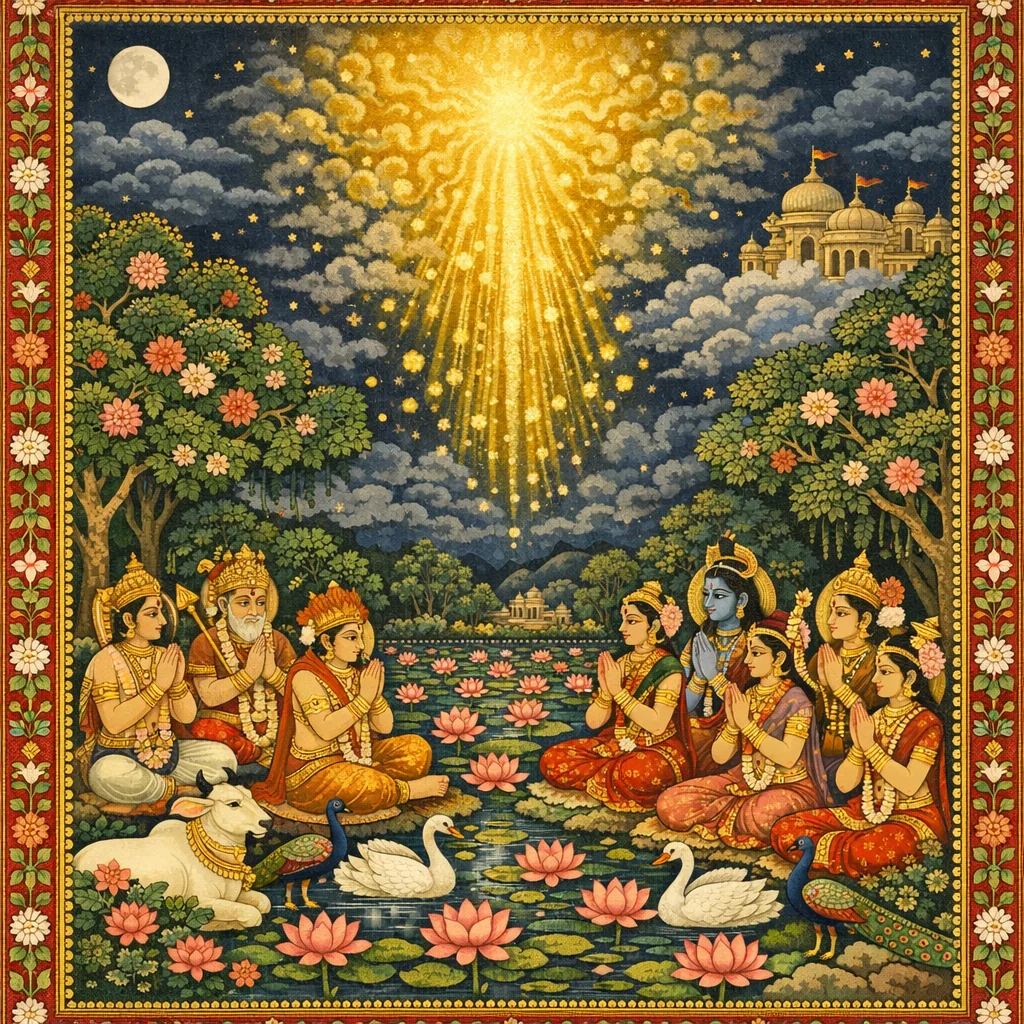
Continuing Nārada’s narration, Brahmā grants Hiraṇyakaśipu rare benedictions after severe austerities. The demon gains a radiant body but intensifies his envy toward Viṣṇu. Empowered, he conquers the three worlds, occupying Indra’s throne. Though nature serves him, his uncontrolled senses leave him dissatisfied. The distressed demigods seek refuge in Viṣṇu, who speaks from the sky, predicting the demon's fall when he torments his saintly son, Prahlāda. The chapter describes Prahlāda’s ecstatic absorption in Kṛṣṇa and concludes with Yudhiṣṭhira asking about the father’s cruelty.
Shlokas
Verse 1
श्रीनारद उवाच एवं वृत: शतधृतिर्हिरण्यकशिपोरथ । प्रादात्तत्तपसा प्रीतो वरांस्तस्य सुदुर्लभान् ॥ १ ॥
Śrī Nārada said: Thus entreated, Lord Brahmā, pleased by Hiraṇyakaśipu’s arduous austerities, granted him boons that are exceedingly rare to attain.
Verse 2
श्रीब्रह्मोवाच तातेमे दुर्लभा: पुंसां यान् वृणीषे वरान् मम । तथापि वितराम्यङ्ग वरान् यद्यपि दुर्लभान् ॥ २ ॥
Lord Brahmā said: O Hiraṇyakaśipu, the boons you have sought are difficult for most men to attain. Yet, my son, though they are generally unobtainable, I shall grant them to you.
Verse 3
ततो जगाम भगवानमोघानुग्रहो विभु: । पूजितोऽसुरवर्येण स्तूयमान: प्रजेश्वरै: ॥ ३ ॥
Then Lord Brahmā, the all-powerful bestower of unfailing boons, departed—worshiped by Hiraṇyakaśipu, foremost among the demons, and praised by the great sages and saintly rulers of beings.
Verse 4
एवं लब्धवरो दैत्यो बिभ्रद्धेममयं वपु: । भगवत्यकरोद् द्वेषं भ्रातुर्वधमनुस्मरन् ॥ ४ ॥
Thus blessed, and bearing a radiant body like gold, the demon Hiraṇyakaśipu kept remembering his brother’s death; therefore he nursed envy and hatred toward Lord Viṣṇu.
Verse 5
स विजित्य दिश: सर्वा लोकांश्च त्रीन् महासुर: । देवासुरमनुष्येन्द्रगन्धर्वगरुडोरगान् ॥ ५ ॥ सिद्धचारणविद्याध्रानृषीन् पितृपतीन्मनून् । यक्षरक्ष:पिशाचेशान् प्रेतभूतपतीनपि ॥ ६ ॥ सर्वसत्त्वपतीञ्जित्वा वशमानीय विश्वजित् । जहार लोकपालानां स्थानानि सह तेजसा ॥ ७ ॥
That great demon Hiraṇyakaśipu conquered all directions and brought the three worlds under his sway. He subdued the devas and asuras, the kings of men, the Gandharvas, Garuḍas, and mighty serpents; the Siddhas, Cāraṇas, and Vidyādharas; the ṛṣis, Yama the lord of the Pitṛs, and the Manus; the Yakṣas, Rākṣasas, the chiefs of the Piśācas, and the lords of pretas and bhūtas. Having defeated the rulers of all living beings and made them submit, the conqueror of the universe seized the posts of the lokapālas along with their splendor and power.
Verse 6
स विजित्य दिश: सर्वा लोकांश्च त्रीन् महासुर: । देवासुरमनुष्येन्द्रगन्धर्वगरुडोरगान् ॥ ५ ॥ सिद्धचारणविद्याध्रानृषीन् पितृपतीन्मनून् । यक्षरक्ष:पिशाचेशान् प्रेतभूतपतीनपि ॥ ६ ॥ सर्वसत्त्वपतीञ्जित्वा वशमानीय विश्वजित् । जहार लोकपालानां स्थानानि सह तेजसा ॥ ७ ॥
Hiraṇyakaśipu, that great demon, conquered all directions and brought the three worlds under his sway. He subdued the devas and asuras, the kings of men, the Gandharvas, Garuḍas, and mighty serpents; the Siddhas, Cāraṇas, and Vidyādharas; the ṛṣis, Yama the lord of the Pitṛs, and the Manus; the Yakṣas, Rākṣasas, the chiefs of the Piśācas, and the lords of pretas and bhūtas. Having defeated the rulers of all living beings and made them submit, the conqueror of the universe seized the posts of the lokapālas along with their splendor and power.
Verse 7
स विजित्य दिश: सर्वा लोकांश्च त्रीन् महासुर: । देवासुरमनुष्येन्द्रगन्धर्वगरुडोरगान् ॥ ५ ॥ सिद्धचारणविद्याध्रानृषीन् पितृपतीन्मनून् । यक्षरक्ष:पिशाचेशान् प्रेतभूतपतीनपि ॥ ६ ॥ सर्वसत्त्वपतीञ्जित्वा वशमानीय विश्वजित् । जहार लोकपालानां स्थानानि सह तेजसा ॥ ७ ॥
Hiraṇyakaśipu, that mighty asura, conquered every direction and subdued all the planets of the three worlds—higher, middle, and lower—overcoming the devas, asuras, kings among men, Gandharvas, Garuḍas, great serpents, the Siddhas, Cāraṇas and Vidyādharas, the ṛṣis, Yamarāja, the Manus, the Yakṣas, Rākṣasas and Piśācas with their lords, and the masters of the pretas and bhūtas. Bringing the rulers of all living beings under his sway, he seized the abodes of the lokapālas along with their splendor and authority.
Verse 8
देवोद्यानश्रिया जुष्टमध्यास्ते स्म त्रिपिष्टपम् । महेन्द्रभवनं साक्षान्निर्मितं विश्वकर्मणा । त्रैलोक्यलक्ष्म्यायतनमध्युवासाखिलर्द्धिमत् ॥ ८ ॥
Possessing every opulence, Hiraṇyakaśipu began to dwell in heaven (Tripiṣṭapa), adorned with the splendor of the devas’ gardens. Indeed, he resided in Indra’s most magnificent palace, built directly by Viśvakarmā, so exquisite that it seemed the very abode of Lakṣmī for the three worlds.
Verse 9
यत्र विद्रुमसोपाना महामारकता भुव: । यत्र स्फाटिककुड्यानि वैदूर्यस्तम्भपङ्क्तय: ॥ ९ ॥ यत्र चित्रवितानानि पद्मरागासनानि च । पय:फेननिभा: शय्या मुक्तादामपरिच्छदा: ॥ १० ॥ कूजद्भिर्नूपुरैर्देव्य: शब्दयन्त्य इतस्तत: । रत्नस्थलीषु पश्यन्ति सुदती: सुन्दरं मुखम् ॥ ११ ॥ तस्मिन्महेन्द्रभवने महाबलो महामना निर्जितलोक एकराट् । रेमेऽभिवन्द्याङ्घ्रियुग: सुरादिभि: प्रतापितैरूर्जितचण्डशासन: ॥ १२ ॥
In Indra’s palace the stairways were of coral, the floors inlaid with priceless emeralds, the walls of crystal, and the pillars set in rows of vaidūrya stone. Splendid canopies were adorned with artistry, the seats were studded with rubies, and the silken beds—white as foam—were draped with strings of pearls. The palace ladies, with lovely teeth and radiant faces, moved about as their anklets chimed, beholding their own reflections upon the jeweled ground. Yet the devas, sorely oppressed, were forced to bow at the feet of Hiraṇyakaśipu, who ruled with harsh and fierce decrees; thus he reveled in that palace and tyrannized all.
Verse 10
यत्र विद्रुमसोपाना महामारकता भुव: । यत्र स्फाटिककुड्यानि वैदूर्यस्तम्भपङ्क्तय: ॥ ९ ॥ यत्र चित्रवितानानि पद्मरागासनानि च । पय:फेननिभा: शय्या मुक्तादामपरिच्छदा: ॥ १० ॥ कूजद्भिर्नूपुरैर्देव्य: शब्दयन्त्य इतस्तत: । रत्नस्थलीषु पश्यन्ति सुदती: सुन्दरं मुखम् ॥ ११ ॥ तस्मिन्महेन्द्रभवने महाबलो महामना निर्जितलोक एकराट् । रेमेऽभिवन्द्याङ्घ्रियुग: सुरादिभि: प्रतापितैरूर्जितचण्डशासन: ॥ १२ ॥
In Indra’s palace the stairways were of coral, the floors inlaid with priceless emeralds, the walls of crystal, and the pillars set in rows of vaidūrya stone. Splendid canopies were adorned with artistry, the seats were studded with rubies, and the silken beds—white as foam—were draped with strings of pearls. The palace ladies moved about as their anklets chimed, seeing their reflections upon the jeweled ground. Yet the devas, oppressed, were forced to bow at Hiraṇyakaśipu’s feet, for he ruled with fierce and harsh decrees.
Verse 11
यत्र विद्रुमसोपाना महामारकता भुव: । यत्र स्फाटिककुड्यानि वैदूर्यस्तम्भपङ्क्तय: ॥ ९ ॥ यत्र चित्रवितानानि पद्मरागासनानि च । पय:फेननिभा: शय्या मुक्तादामपरिच्छदा: ॥ १० ॥ कूजद्भिर्नूपुरैर्देव्य: शब्दयन्त्य इतस्तत: । रत्नस्थलीषु पश्यन्ति सुदती: सुन्दरं मुखम् ॥ ११ ॥ तस्मिन्महेन्द्रभवने महाबलो महामना निर्जितलोक एकराट् । रेमेऽभिवन्द्याङ्घ्रियुग: सुरादिभि: प्रतापितैरूर्जितचण्डशासन: ॥ १२ ॥
In Indra’s palace were coral stairways, emerald-studded floors, crystal walls, and rows of pillars of vaidūrya stone; ruby seats and white silken beds adorned with pearls. The ladies, their anklets chiming, beheld their own reflections upon the jeweled ground. Yet the oppressed devas were compelled to bow at Hiraṇyakaśipu’s feet, for he ruled by cruel commands and subdued all.
Verse 12
यत्र विद्रुमसोपाना महामारकता भुव: । यत्र स्फाटिककुड्यानि वैदूर्यस्तम्भपङ्क्तय: ॥ ९ ॥ यत्र चित्रवितानानि पद्मरागासनानि च । पय:फेननिभा: शय्या मुक्तादामपरिच्छदा: ॥ १० ॥ कूजद्भिर्नूपुरैर्देव्य: शब्दयन्त्य इतस्तत: । रत्नस्थलीषु पश्यन्ति सुदती: सुन्दरं मुखम् ॥ ११ ॥ तस्मिन्महेन्द्रभवने महाबलो महामना निर्जितलोक एकराट् । रेमेऽभिवन्द्याङ्घ्रियुग: सुरादिभि: प्रतापितैरूर्जितचण्डशासन: ॥ १२ ॥
In Indra’s palace the stairways were of coral, the floors inlaid with priceless emeralds, the walls of crystal, and the pillars set in rows of vaidūrya stone. There were wondrous painted canopies, seats adorned with rubies, and silken beds white as foam, decked with strings of pearls. The palace ladies, fair-faced and bright-toothed, moved about with the sweet chiming of their anklets, beholding their own reflections in the gems. Yet the oppressed demigods were forced to bow at the feet of Hiraṇyakaśipu; dwelling in that very palace, he ruled all beings with harsh and pitiless command.
Verse 13
तमङ्ग मत्तं मधुनोरुगन्धिना विवृत्तताम्राक्षमशेषधिष्ण्यपा: । उपासतोपायनपाणिभिर्विना त्रिभिस्तपोयोगबलौजसां पदम् ॥ १३ ॥
O King, Hiraṇyakaśipu was ever intoxicated by pungent wines, and thus his coppery eyes rolled restlessly. Yet by the formidable power he had gained through austere yoga and tapas, though he was vile, all the rulers of the worlds—save the three supreme deities, Brahmā, Śiva, and Viṣṇu—personally worshiped him, bringing offerings in their own hands to win his favor.
Verse 14
जगुर्महेन्द्रासनमोजसा स्थितं विश्वावसुस्तुम्बुरुरस्मदादय: । गन्धर्वसिद्धा ऋषयोऽस्तुवन्मुहु- र्विद्याधराश्चाप्सरसश्च पाण्डव ॥ १४ ॥
O Mahārāja Yudhiṣṭhira, descendant of Pāṇḍu, by his own might Hiraṇyakaśipu sat upon Indra’s throne and brought the inhabitants of all other worlds under his control. Viśvāvasu and Tumburu among the Gandharvas, I myself, and the Vidyādharas, Apsarās, and sages again and again offered him praises, merely to magnify his glory.
Verse 15
स एव वर्णाश्रमिभि: क्रतुभिर्भूरिदक्षिणै: । इज्यमानो हविर्भागानग्रहीत् स्वेन तेजसा ॥ १५ ॥
When those who strictly followed the disciplines of varṇa and āśrama worshiped him through sacrifices rich with gifts, Hiraṇyakaśipu did not offer the demigods their shares of the oblations; by the force of his own splendor he claimed those portions for himself.
Verse 16
अकृष्टपच्या तस्यासीत् सप्तद्वीपवती मही । तथा कामदुघा गावो नानाश्चर्यपदं नभ: ॥ १६ ॥
As though in fear of Hiraṇyakaśipu, the earth of seven islands yielded grains without being plowed. Likewise the kāma-dughā cows, like Surabhi, poured forth abundant milk at will, and the sky itself was adorned with many wondrous and marvelous signs.
Verse 17
रत्नाकराश्च रत्नौघांस्तत्पत्न्यश्चोहुरूर्मिभि: । क्षारसीधुघृतक्षौद्रदधिक्षीरामृतोदका: ॥ १७ ॥
By the flow of their waves, the many oceans of the universe, together with their tributary rivers—like wives—supplied Hiraṇyakaśipu with heaps of gems and jewels. These were oceans of salt water, sugarcane juice, wine, clarified butter, milk, yogurt, honey, and sweet water.
Verse 18
शैला द्रोणीभिराक्रीडं सर्वर्तुषु गुणान् द्रुमा: । दधार लोकपालानामेक एव पृथग्गुणान् ॥ १८ ॥
The valleys between the mountains became Hiraṇyakaśipu’s pleasure grounds; by his influence, trees and plants bore flowers and fruits profusely in every season. The powers of raining, drying, and burning—belonging to Indra, Vāyu, and Agni—were directed by Hiraṇyakaśipu alone, without the demigods’ aid.
Verse 19
स इत्थं निर्जितककुबेकराड् विषयान् प्रियान् । यथोपजोषं भुञ्जानो नातृप्यदजितेन्द्रिय: ॥ १९ ॥
Though he had conquered all directions and enjoyed his cherished sense pleasures to the fullest, Hiraṇyakaśipu remained dissatisfied, for he did not master his senses—he became their servant.
Verse 20
एवमैश्वर्यमत्तस्य दृप्तस्योच्छास्त्रवर्तिन: । कालो महान् व्यतीयाय ब्रह्मशापमुपेयुष: ॥ २० ॥
Thus, intoxicated by opulence, arrogant, and transgressing the ordinances of the śāstras, Hiraṇyakaśipu passed a long time. Therefore he became subject to the curse of the four Kumāras, great brāhmaṇas.
Verse 21
तस्योग्रदण्डसंविग्ना: सर्वे लोका: सपालका: । अन्यत्रालब्धशरणा: शरणं ययुरच्युतम् ॥ २१ ॥
Tormented by Hiraṇyakaśipu’s fierce punishments, all the worlds—along with their rulers—were thrown into distress. Finding no other shelter, fearful and shaken, they finally surrendered to Acyuta, the Supreme Personality of Godhead, Viṣṇu.
Verse 22
तस्यै नमोऽस्तु काष्ठायै यत्रात्मा हरिरीश्वर: । यद्गत्वा न निवर्तन्ते शान्ता: संन्यासिनोऽमला: ॥ २२ ॥ इति ते संयतात्मान: समाहितधियोऽमला: । उपतस्थुर्हृषीकेशं विनिद्रा वायुभोजना: ॥ २३ ॥
Let us bow to that direction where the Supreme Lord Hari abides—whither the peaceful, stainless sannyāsīs go, and having gone, never return.
Verse 23
तस्यै नमोऽस्तु काष्ठायै यत्रात्मा हरिरीश्वर: । यद्गत्वा न निवर्तन्ते शान्ता: संन्यासिनोऽमला: ॥ २२ ॥ इति ते संयतात्मान: समाहितधियोऽमला: । उपतस्थुर्हृषीकेशं विनिद्रा वायुभोजना: ॥ २३ ॥
Thus, those pure beings—self-controlled and steady in mind—free from sleep and sustained only by the breath, began to worship Hṛṣīkeśa in that meditation.
Verse 24
तेषामाविरभूद्वाणी अरूपा मेघनि:स्वना । सन्नादयन्ती ककुभ: साधूनामभयङ्करी ॥ २४ ॥
Then a transcendental voice appeared before them, from one unseen to material eyes—deep as the rumble of clouds, resounding through the quarters and driving away the fear of the saintly.
Verse 25
मा भैष्ट विबुधश्रेष्ठा: सर्वेषां भद्रमस्तु व: । मद्दर्शनं हि भूतानां सर्वश्रेयोपपत्तये ॥ २५ ॥ ज्ञातमेतस्य दौरात्म्यं दैतेयापसदस्य यत् । तस्य शान्तिं करिष्यामि कालं तावत्प्रतीक्षत ॥ २६ ॥
O best among the wise, do not fear; may auspiciousness be upon you all. My manifestation is meant for the highest welfare of every living being.
Verse 26
मा भैष्ट विबुधश्रेष्ठा: सर्वेषां भद्रमस्तु व: । मद्दर्शनं हि भूतानां सर्वश्रेयोपपत्तये ॥ २५ ॥ ज्ञातमेतस्य दौरात्म्यं दैतेयापसदस्य यत् । तस्य शान्तिं करिष्यामि कालं तावत्प्रतीक्षत ॥ २६ ॥
I know the wickedness of that vile asura; I shall soon bring it to rest. Until then, wait with patience.
Verse 27
यदा देवेषु वेदेषु गोषु विप्रेषु साधुषु । धर्मे मयि च विद्वेष: स वा आशु विनश्यति ॥ २७ ॥
One who bears envy and hatred toward the demigods, the Vedas, the cows, the brāhmaṇas, the Vaiṣṇava saints, religious principles, and ultimately toward Me, the Supreme Personality of Godhead, he and his civilization are swiftly destroyed.
Verse 28
निर्वैराय प्रशान्ताय स्वसुताय महात्मने । प्रह्रादाय यदा द्रुह्येद्धनिष्येऽपि वरोर्जितम् ॥ २८ ॥
When Hiraṇyakaśipu harms Prahlāda—his own son, peaceful, free of enmity, and great-souled—I shall slay Hiraṇyakaśipu at once, even though he is empowered by Brahmā’s benedictions.
Verse 29
श्रीनारद उवाच इत्युक्ता लोकगुरुणा तं प्रणम्य दिवौकस: । न्यवर्तन्त गतोद्वेगा मेनिरे चासुरं हतम् ॥ २९ ॥
Śrī Nārada said: Thus reassured by the Supreme Lord, the spiritual master of all, the demigods of heaven bowed to Him and returned free from fear, considering the asura virtually slain.
Verse 30
तस्य दैत्यपते: पुत्राश्चत्वार: परमाद्भुता: । प्रह्रादोऽभून्महांस्तेषां गुणैर्महदुपासक: ॥ ३० ॥
Hiraṇyakaśipu, lord of the asuras, had four wondrous and well-qualified sons; among them Prahlāda was the greatest, for as a pure devotee of the Lord he was a treasury of all transcendental virtues.
Verse 31
ब्रह्मण्य: शीलसम्पन्न: सत्यसन्धो जितेन्द्रिय: । आत्मवत्सर्वभूतानामेकप्रियसुहृत्तम: । दासवत्सन्नतार्याङ्घ्रि: पितृवद्दीनवत्सल: ॥ ३१ ॥ भ्रातृवत्सदृशे स्निग्धो गुरुष्वीश्वरभावन: । विद्यार्थरूपजन्माढ्यो मानस्तम्भविवर्जित: ॥ ३२ ॥
Prahlāda was truly brahmanical—well-mannered, steadfast in truth, and master of his senses and mind. Like the Paramātmā, he was compassionate to every being and the dearest friend of all. To the respectable he bowed like a servant; to the poor he was tender like a father; to equals he was affectionate like a brother; and he regarded his teachers and spiritual guides as worthy as the Lord Himself. He was entirely free from pride born of learning, beauty, noble birth, wealth, and the like.
Verse 32
ब्रह्मण्य: शीलसम्पन्न: सत्यसन्धो जितेन्द्रिय: । आत्मवत्सर्वभूतानामेकप्रियसुहृत्तम: । दासवत्सन्नतार्याङ्घ्रि: पितृवद्दीनवत्सल: ॥ ३१ ॥ भ्रातृवत्सदृशे स्निग्धो गुरुष्वीश्वरभावन: । विद्यार्थरूपजन्माढ्यो मानस्तम्भविवर्जित: ॥ ३२ ॥
Prahlāda Mahārāja, the son of Hiraṇyakaśipu, was endowed with brāhmaṇical culture—noble character, firm commitment to truth, and mastery over mind and senses. Like the Paramātmā, he was compassionate to all beings and the dearest well-wisher of everyone. To the respectable he was humble like a servant, to the poor he was affectionate like a father, to his equals he was warm like a brother, and he regarded his teachers and spiritual elders as worthy as the Supreme Lord. He was wholly free from pride born of learning, wealth, beauty, or high birth.
Verse 33
नोद्विग्नचित्तो व्यसनेषु नि:स्पृह: श्रुतेषु दृष्टेषु गुणेष्ववस्तुदृक् । दान्तेन्द्रियप्राणशरीरधी: सदा प्रशान्तकामो रहितासुरोऽसुर: ॥ ३३ ॥
Even in calamity Prahlāda Mahārāja’s heart was not disturbed; he was desireless and unattached. He saw the material qualities—whether heard of in śruti or observed in the world—as worthless, and thus all worldly hankerings were pacified. He constantly controlled his senses, prāṇa, body, and intelligence, and subdued every lustful impulse. Though born in an asura dynasty, he was not an asura at all, but a great devotee of Lord Viṣṇu, never envious of Vaiṣṇavas.
Verse 34
यस्मिन्महद्गुणा राजन्गृह्यन्ते कविभिर्मुहु: । न तेऽधुना पिधीयन्ते यथा भगवतीश्वरे ॥ ३४ ॥
O King, the exalted virtues of Prahlāda Mahārāja are even now repeatedly glorified by learned saints and Vaiṣṇavas. As all good qualities eternally reside in Bhagavān, the Supreme Lord, so those same qualities also remain forever manifest in His devotee Prahlāda Mahārāja.
Verse 35
यं साधुगाथासदसि रिपवोऽपि सुरा नृप । प्रतिमानं प्रकुर्वन्ति किमुतान्ये भवादृशा: ॥ ३५ ॥
O King Yudhiṣṭhira, in any assembly where the glories of saints and devotees are discussed, even the devas—enemies of the asuras—cite Prahlāda Mahārāja as the standard example of a great devotee; what then to speak of persons like you.
Verse 36
गुणैरलमसङ्ख्येयैर्माहात्म्यं तस्य सूच्यते । वासुदेवे भगवति यस्य नैसर्गिकी रति: ॥ ३६ ॥
Who could possibly enumerate the innumerable transcendental qualities of Prahlāda Mahārāja? He possessed a natural, unwavering attachment to Bhagavān Vāsudeva—Śrī Kṛṣṇa—along with steadfast faith and pure, unalloyed bhakti. Though his virtues cannot be counted, they themselves reveal him to be a true mahātmā.
Verse 37
न्यस्तक्रीडनको बालो जडवत्तन्मनस्तया । कृष्णग्रहगृहीतात्मा न वेद जगदीदृशम् ॥ ३७ ॥
From early childhood, Prahlāda Mahārāja had no taste for childish playthings. He abandoned them entirely and sat silent like one dull, for his very self was seized by Kṛṣṇa consciousness; thus he could not fathom the world’s course, absorbed in sense gratification.
Verse 38
आसीन: पर्यटन्नश्नन् शयान: प्रपिबन् ब्रुवन् । नानुसन्धत्त एतानि गोविन्दपरिरम्भित: ॥ ३८ ॥
Prahlāda Mahārāja was ever absorbed in remembrance of Kṛṣṇa. Thus, as if continually embraced by Lord Govinda, he did not notice how the body’s needs—sitting, walking, eating, lying down, drinking, and speaking—were being carried out automatically.
Verse 39
क्वचिद्रुदति वैकुण्ठचिन्ताशबलचेतन: । क्वचिद्धसति तच्चिन्ताह्लाद उद्गायति क्वचित् ॥ ३९ ॥
As his Kṛṣṇa consciousness deepened, his heart was suffused with thoughts of Vaikuṇṭha. Sometimes he wept, sometimes he laughed; sometimes he burst forth in jubilation, and sometimes he sang aloud.
Verse 40
नदति क्वचिदुत्कण्ठो विलज्जो नृत्यति क्वचित् । क्वचित्तद्भावनायुक्तस्तन्मयोऽनुचकार ह ॥ ४० ॥
Sometimes, in intense longing, he cried out loudly; sometimes, in jubilation, he forgot all shyness and danced in ecstasy. And sometimes, wholly absorbed in meditation on Kṛṣṇa, he felt oneness and imitated the Lord’s divine pastimes.
Verse 41
क्वचिदुत्पुलकस्तूष्णीमास्ते संस्पर्शनिर्वृत: । अस्पन्दप्रणयानन्दसलिलामीलितेक्षण: ॥ ४१ ॥
Sometimes, feeling the touch of the Lord’s lotus hands, he became spiritually jubilant and sat in silence; his hairs stood on end, and tears of love flowed from his half-closed eyes as he remained motionless.
Verse 42
स उत्तमश्लोकपदारविन्दयो- र्निषेवयाकिञ्चनसङ्गलब्धया । तन्वन् परां निर्वृतिमात्मनो मुहु- र्दु:सङ्गदीनस्य मन: शमं व्यधात् ॥ ४२ ॥
By the association of pure, akincana devotees, Prahlāda Mahārāja constantly served the lotus feet of Śrī Hari, the Uttamaśloka. Seeing his supreme ecstasy, even those poor in spiritual understanding were purified, for he bestowed transcendental bliss upon them.
Verse 43
तस्मिन्महाभागवते महाभागे महात्मनि । हिरण्यकशिपू राजन्नकरोदघमात्मजे ॥ ४३ ॥
O King, Hiraṇyakaśipu tormented Prahlāda, that great mahā-bhāgavata—most fortunate and saintly—though Prahlāda was his own son.
Verse 44
श्रीयुधिष्ठिर उवाच देवर्ष एतदिच्छामो वेदितुं तव सुव्रत । यदात्मजाय शुद्धाय पितादात् साधवे ह्यघम् ॥ ४४ ॥
Mahārāja Yudhiṣṭhira said: O devarṣi of pure vows, I wish to know how and why Hiraṇyakaśipu gave such trouble to Prahlāda, his own son, who was pure and saintly. Please explain this to me.
Verse 45
पुत्रान् विप्रतिकूलान् स्वान् पितर: पुत्रवत्सला: । उपालभन्ते शिक्षार्थं नैवाघमपरो यथा ॥ ४५ ॥
A father and mother are always affectionate to their children. When children are disobedient, parents chastise them only for instruction and welfare, not out of enmity like strangers. How, then, did Hiraṇyakaśipu punish so noble a son as Prahlāda? This I long to know.
Verse 46
किमुतानुवशान् साधूंस्तादृशान् गुरुदेवतान् । एतत्कौतूहलं ब्रह्मन्नस्माकं विधम प्रभो । पितु: पुत्राय यद्द्वेषो मरणाय प्रयोजित: ॥ ४६ ॥
Yudhiṣṭhira inquired further: What to speak, then, of a son who was obedient, well-behaved, and who revered his father as guru and deity! O brāhmaṇa, O master, dispel our wonder—how could a father come to hate his son and punish him with the intent to kill?
Frequently Asked Questions
Within Purāṇic theology, Brahmā functions as a cosmic administrator who awards results of tapas according to the potency and procedure of austerity, not as the final moral arbiter. The narrative highlights a recurring Bhāgavata principle: boons obtained through tapas can expand material capacity, but they do not purify the heart. Therefore, the asura’s benedictions become the stage on which Bhagavān’s higher governance (īśvara-nīti) and protection of devotees (poṣaṇam) will later be revealed.
The chapter explicitly diagnoses his dissatisfaction: instead of controlling the senses, he remains their servant (indriya-dāsatā). Bhāgavata ethics treats external sovereignty as insufficient for sukha when the mind is driven by kāma and pride. Thus even after conquering the three worlds and enjoying Svarga’s opulence, his inner lack persists, illustrating that bhoga without self-mastery and devotion cannot yield lasting fulfillment.
The sound vibration is the Lord’s transcendental reassurance, described as coming from a personality not visible to material eyes. Its core instruction is bhakti-sādhana: become devotees through hearing and chanting about the Lord and offering prayers (śravaṇa, kīrtana, stuti). The voice also frames the moral trigger for divine intervention: when Hiraṇyakaśipu persecutes Prahlāda, the Lord will kill him despite Brahmā’s benedictions.
Prahlāda is presented as a reservoir of transcendental qualities because he is an unalloyed devotee of Viṣṇu. The text emphasizes humility despite aristocracy, universal friendliness, self-control, freedom from envy toward Vaiṣṇavas, and spontaneous absorption in Kṛṣṇa culminating in bhāva symptoms (tears, jubilation, singing, and ecstatic stillness). These traits mark him as sādhūnām agrya—an exemplar cited even by the devas.
The chapter ends by shifting from cosmic oppression to the intimate family conflict at its center: the asura-king torments his own saintly son. Yudhiṣṭhira’s pointed questions—how a father could seek to kill an obedient, virtuous child—create the narrative hinge that leads directly into the next chapter’s detailed account of Hiraṇyakaśipu’s punishments of Prahlāda and the theological meaning of the devotee’s endurance.