Adhyaya 2
Hiraṇyakaśipu’s Wrath, the Assault on Vedic Culture, and the Boy-Yamarāja’s Teaching on the Soul
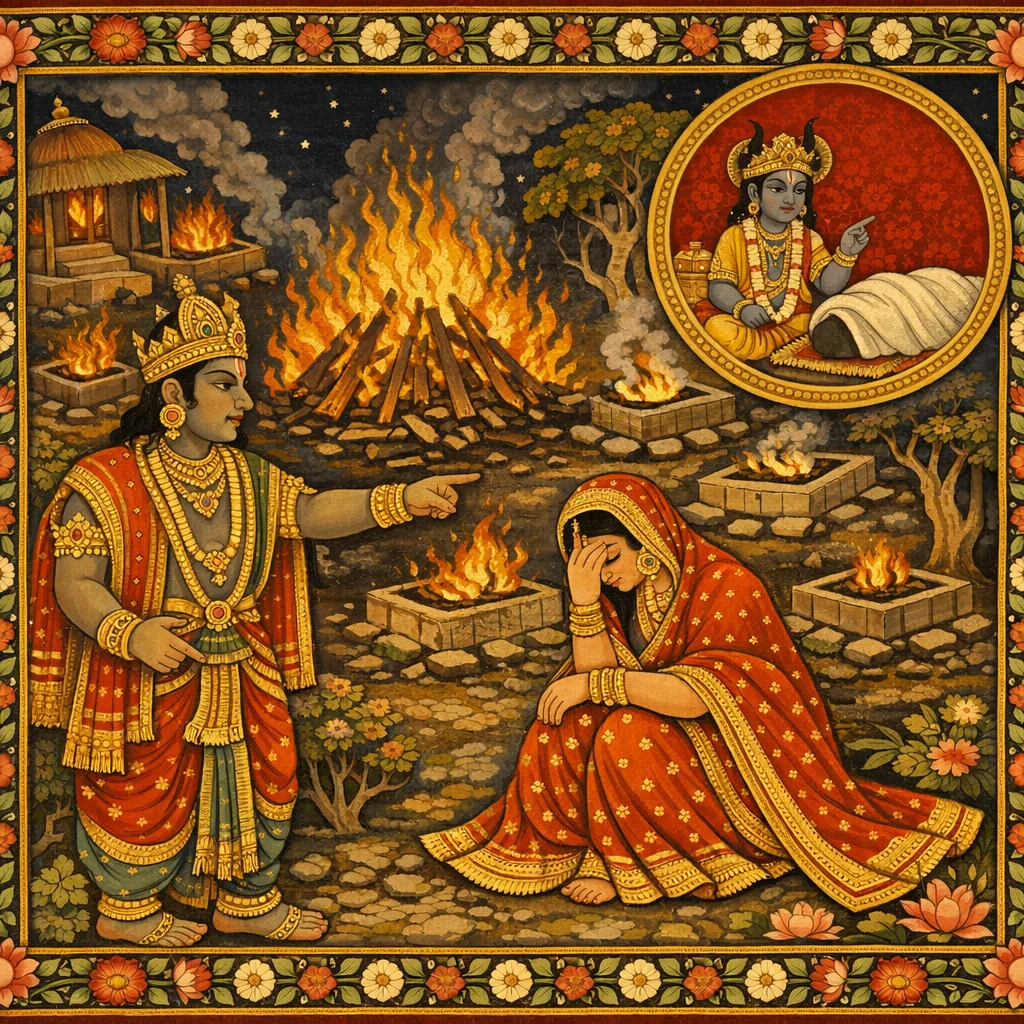
Nārada recounts Hiraṇyakaśipu's rage after Varāha kills Hiraṇyākṣa. Vowing to kill Viṣṇu, the demon orders the destruction of Vedic culture to starve the demigods. Yet, he consoles his mother Diti with profound philosophy on the eternal soul, citing the story of Yamarāja appearing as a boy to instruct mourners on the futility of grief for the temporary body.
Shlokas
Verse 1
श्रीनारद उवाच भ्रातर्येवं विनिहते हरिणा क्रोडमूर्तिना । हिरण्यकशिपू राजन् पर्यतप्यद्रुषा शुचा ॥ १ ॥
Śrī Nārada said: O King Yudhiṣṭhira, when Lord Viṣṇu, assuming the boar incarnation Varāha, slew Hiraṇyākṣa, his brother Hiraṇyakaśipu burned with wrath and grief and began to lament.
Verse 2
आह चेदं रुषा पूर्ण: सन्दष्टदशनच्छद: । कोपोज्ज्वलद्भ्यां चक्षुर्भ्यां निरीक्षन् धूम्रमम्बरम् ॥ २ ॥
Filled with rage, biting his lips, he stared at the sky with eyes blazing in anger, as though the whole firmament had turned smoky; then he began to speak.
Verse 3
करालदंष्ट्रोग्रदृष्टया दुष्प्रेक्ष्यभ्रुकुटीमुख: । शूलमुद्यम्य सदसि दानवानिदमब्रवीत् ॥ ३ ॥
Bararing terrible fangs, with a fierce glare and knitted brows, dreadful to behold, he raised his śūla (trident) and spoke thus to the assembled demons.
Verse 4
भो भो दानवदैतेया द्विमूर्धंस्त्र्यक्ष शम्बर । शतबाहो हयग्रीव नमुचे पाक इल्वल ॥ ४ ॥ विप्रचित्ते मम वच: पुलोमन् शकुनादय: । शृणुतानन्तरं सर्वे क्रियतामाशु मा चिरम् ॥ ५ ॥
O Dānavas and Daityas—Dvimūrdha, Tryakṣa, Śambara, Śatabāhu; Hayagrīva, Namuci, Pāka, Ilvala; Vipracitti, Puloman, Śakuna and the rest—hear my words with full attention, and then act at once, without delay.
Verse 5
भो भो दानवदैतेया द्विमूर्धंस्त्र्यक्ष शम्बर । शतबाहो हयग्रीव नमुचे पाक इल्वल ॥ ४ ॥ विप्रचित्ते मम वच: पुलोमन् शकुनादय: । शृणुतानन्तरं सर्वे क्रियतामाशु मा चिरम् ॥ ५ ॥
O Dānavas and Daityas—Dvimūrdha, Tryakṣa, Śambara, Śatabāhu; Hayagrīva, Namuci, Pāka, Ilvala; Vipracitti, Puloman, Śakuna and the rest—hear my words with full attention, and then act at once, without delay.
Verse 6
सपत्नैर्घातित: क्षुद्रैर्भ्राता मे दयित: सुहृत् । पार्ष्णिग्राहेण हरिणा समेनाप्युपधावनै: ॥ ६ ॥
My insignificant enemies the demigods have combined to kill my very dear and obedient well-wisher, my brother Hiraṇyākṣa. Although the Supreme Lord, Viṣṇu, is always equal to both of us — namely, the demigods and the demons — this time, being devoutly worshiped by the demigods, He has taken their side and helped them kill Hiraṇyākṣa.
Verse 7
तस्य त्यक्तस्वभावस्य घृणेर्मायावनौकस: । भजन्तं भजमानस्य बालस्येवास्थिरात्मन: ॥ ७ ॥ मच्छूलभिन्नग्रीवस्य भूरिणा रुधिरेण वै । असृक्प्रियं तर्पयिष्ये भ्रातरं मे गतव्यथ: ॥ ८ ॥
The Supreme Personality of Godhead has given up His natural tendency of equality toward the demons and demigods. Although He is the Supreme Person, now, influenced by māyā, He has assumed the form of a boar to please His devotees, the demigods, just as a restless child leans toward someone. I shall therefore sever Lord Viṣṇu’s head from His trunk by my trident, and with the profuse blood from His body I shall please my brother Hiraṇyākṣa, who was so fond of sucking blood. Thus shall I too be peaceful.
Verse 8
तस्य त्यक्तस्वभावस्य घृणेर्मायावनौकस: । भजन्तं भजमानस्य बालस्येवास्थिरात्मन: ॥ ७ ॥ मच्छूलभिन्नग्रीवस्य भूरिणा रुधिरेण वै । असृक्प्रियं तर्पयिष्ये भ्रातरं मे गतव्यथ: ॥ ८ ॥
The Supreme Personality of Godhead has given up His natural tendency of equality toward the demons and demigods. Although He is the Supreme Person, now, influenced by māyā, He has assumed the form of a boar to please His devotees, the demigods, just as a restless child leans toward someone. I shall therefore sever Lord Viṣṇu’s head from His trunk by my trident, and with the profuse blood from His body I shall please my brother Hiraṇyākṣa, who was so fond of sucking blood. Thus shall I too be peaceful.
Verse 9
तस्मिन् कूटेऽहिते नष्टे कृत्तमूले वनस्पतौ । विटपा इव शुष्यन्ति विष्णुप्राणा दिवौकस: ॥ ९ ॥
When the root of a tree is cut and the tree falls down, its branches and twigs automatically dry up. Similarly, when I have killed this diplomatic Viṣṇu, the demigods, for whom Lord Viṣṇu is the life and soul, will lose the source of their life and wither away.
Verse 10
तावद्यात भुवं यूयं ब्रह्मक्षत्रसमेधिताम् । सूदयध्वं तपोयज्ञस्वाध्यायव्रतदानिन: ॥ १० ॥
While I am engaged in the business of killing Lord Viṣṇu, go down to the planet earth, which is flourishing due to brahminical culture and a kṣatriya government. These people engage in austerity, sacrifice, Vedic study, regulative vows, and charity. Destroy all the people thus engaged!
Verse 11
विष्णुर्द्विजक्रियामूलो यज्ञो धर्ममय: पुमान् । देवर्षिपितृभूतानां धर्मस्य च परायणम् ॥ ११ ॥
Lord Vishnu is the root of all brahminical activities and the personification of sacrifice and dharma. He is the ultimate shelter for the demigods, sages, forefathers, and all living entities.
Verse 12
यत्र यत्र द्विजा गावो वेदा वर्णाश्रमक्रिया: । तं तं जनपदं यात सन्दीपयत वृश्चत ॥ १२ ॥
Go immediately to wherever cows and brahmanas are protected and where the Vedas are studied. Set fire to those places and cut down the trees at their very roots.
Verse 13
इति ते भर्तृनिर्देशमादाय शिरसादृता: । तथा प्रजानां कदनं विदधु: कदनप्रिया: ॥ १३ ॥
Thus the demons, who were fond of disastrous activities, accepted Hiranyakasipu's order with great respect on their heads and began to harass the citizens.
Verse 14
पुरग्रामव्रजोद्यानक्षेत्रारामाश्रमाकरान् । खेटखर्वटघोषांश्च ददहु: पत्तनानि च ॥ १४ ॥
The demons set fire to cities, villages, pastures, cowpens, gardens, agricultural fields, forests, hermitages, mines, and the settlements of the cowherds.
Verse 15
केचित्खनित्रैर्बिभिदु: सेतुप्राकारगोपुरान् । आजीव्यांश्चिच्छिदुर्वृक्षान् केचित्परशुपाणय: । प्रादहन् शरणान्येके प्रजानां ज्वलितोल्मुकै: ॥ १५ ॥
Some demons used picks to break down bridges, walls, and city gates. Others cut down fruit-bearing trees with axes, while some set fire to citizens' homes with burning torches.
Verse 16
एवं विप्रकृते लोके दैत्येन्द्रानुचरैर्मुहु: । दिवं देवा: परित्यज्य भुवि चेरुरलक्षिता: ॥ १६ ॥
Thus, again and again disturbed by the unnatural calamities wrought by the followers of Hiraṇyakaśipu, the world was thrown into turmoil and Vedic rites came to a halt. Deprived of the fruits of yajña, the devas too became agitated; leaving their heavenly abodes, they wandered upon the earth unseen by the daityas, to behold the disasters.
Verse 17
हिरण्यकशिपुर्भ्रातु: सम्परेतस्य दु:खित: । कृत्वा कटोदकादीनि भ्रातृपुत्रानसान्त्वयत् ॥ १७ ॥
Grieving intensely for his departed brother, Hiraṇyakaśipu performed the funeral observances such as kaṭodaka and the like, and then sought to pacify his nephews.
Verse 18
शकुनिं शम्बरं धृष्टिं भूतसन्तापनं वृकम् । कालनाभं महानाभं हरिश्मश्रुमथोत्कचम् ॥ १८ ॥ तन्मातरं रुषाभानुं दितिं च जननीं गिरा । श्लक्ष्णया देशकालज्ञ इदमाह जनेश्वर ॥ १९ ॥
O King, though Hiraṇyakaśipu burned with anger, he was a shrewd statesman who knew how to act according to time and circumstance. With gentle, sweet words he began to soothe his nephews—Śakuni, Śambara, Dhṛṣṭi, Bhūtasantāpana, Vṛka, Kālanābha, Mahānābha, Hariśmaśru, and Utkaca—and he consoled their mother Ruṣābhānu as well as his own mother Diti; then he spoke as follows.
Verse 19
शकुनिं शम्बरं धृष्टिं भूतसन्तापनं वृकम् । कालनाभं महानाभं हरिश्मश्रुमथोत्कचम् ॥ १८ ॥ तन्मातरं रुषाभानुं दितिं च जननीं गिरा । श्लक्ष्णया देशकालज्ञ इदमाह जनेश्वर ॥ १९ ॥
O King, though Hiraṇyakaśipu was filled with wrath, he understood time and circumstance. With sweet, soothing words he pacified his nephews—Śakuni, Śambara, Dhṛṣṭi, Bhūtasantāpana, Vṛka, Kālanābha, Mahānābha, Hariśmaśru, and Utkaca—and he consoled their mother Ruṣābhānu as well as his own mother Diti; then he spoke thus.
Verse 20
श्रीहिरण्यकशिपुरुवाच अम्बाम्ब हे वधू: पुत्रा वीरं मार्हथ शोचितुम् । रिपोरभिमुखे श्लाघ्य: शूराणां वध ईप्सित: ॥ २० ॥
Hiraṇyakaśipu said: My mother, my daughter-in-law, and my sons—do not lament that great hero. For the brave, death before the very face of the enemy is glorious, and even desired.
Verse 21
भूतानामिह संवास: प्रपायामिव सुव्रते । दैवेनैकत्र नीतानामुन्नीतानां स्वकर्मभि: ॥ २१ ॥
My mother of pure vows, as travelers are brought together by divine arrangement at a place of drinking water and, after drinking, go on to their own destinations, so living beings meet within a family and later, by their own karma, are led apart to their respective ends.
Verse 22
नित्य आत्माव्यय: शुद्ध: सर्वग: सर्ववित्पर: । धत्तेऽसावात्मनो लिङ्गं मायया विसृजन्गुणान् ॥ २२ ॥
The ātman is eternal, inexhaustible, and pure, able to move everywhere and standing apart from the material body. Yet, deluded by māyā and the guṇas, it accepts subtle and gross bodies and thus undergoes so-called material happiness and distress; therefore one should not lament when the soul departs the body.
Verse 23
यथाम्भसा प्रचलता तरवोऽपि चला इव । चक्षुषा भ्राम्यमाणेन दृश्यते चलतीव भू: ॥ २३ ॥
As moving water makes the riverside trees, reflected upon it, seem to move, so when the eyes whirl due to mental disturbance, the land itself appears to be moving.
Verse 24
एवं गुणैर्भ्राम्यमाणे मनस्यविकल: पुमान् । याति तत्साम्यतां भद्रे ह्यलिङ्गो लिङ्गवानिव ॥ २४ ॥
So too, my gentle mother, when the mind is whirled about by the movements of nature’s guṇas, the living being—though truly free of bodily designations—imagines itself embodied and thinks it has shifted from one condition to another.
Verse 25
एष आत्मविपर्यासो ह्यलिङ्गे लिङ्गभावना । एष प्रियाप्रियैर्योगो वियोग: कर्मसंसृति: ॥ २५ ॥ सम्भवश्च विनाशश्च शोकश्च विविध: स्मृत: । अविवेकश्च चिन्ता च विवेकास्मृतिरेव च ॥ २६ ॥
This is the soul’s inversion: within the ātman, which has no bodily mark, arises the notion of embodiment. From union and separation with the dear and the undear, the saṁsāra of karma proceeds. Hence come birth and destruction (death), lamentation, folly, and anxiety; sometimes true discernment is remembered, and sometimes one falls again into mistaken understanding.
Verse 26
एष आत्मविपर्यासो ह्यलिङ्गे लिङ्गभावना । एष प्रियाप्रियैर्योगो वियोग: कर्मसंसृति: ॥ २५ ॥ सम्भवश्च विनाशश्च शोकश्च विविध: स्मृत: । अविवेकश्च चिन्ता च विवेकास्मृतिरेव च ॥ २६ ॥
In delusion the living being mistakes body and mind for the self, calling some “mine” and others “strangers.” From this imagined dear and hateful arise union and separation, bondage to karma, and the ceaseless saṁsāra of birth and death; thus come creation and destruction, lamentation, folly, anxiety, and forgetfulness of true discernment—at times one understands rightly, and at times one falls again into error.
Verse 27
अत्राप्युदाहरन्तीममितिहासं पुरातनम् । यमस्य प्रेतबन्धूनां संवादं तं निबोधत ॥ २७ ॥
In this connection an ancient history is cited: a dialogue between Yamarāja and the companions of a dead man. Hear it with attentive mind.
Verse 28
उशीनरेष्वभूद्राजा सुयज्ञ इति विश्रुत: । सपत्नैर्निहतो युद्धे ज्ञातयस्तमुपासत ॥ २८ ॥
In the land of Uśīnara there was a celebrated king named Suyajña. When he was slain in battle by his enemies, his kinsmen sat around the dead body and began to lament their friend’s passing.
Verse 29
विशीर्णरत्नकवचं विभ्रष्टाभरणस्रजम् । शरनिर्भिन्नहृदयं शयानमसृगाविलम् ॥ २९ ॥ प्रकीर्णकेशं ध्वस्ताक्षं रभसा दष्टदच्छदम् । रज:कुण्ठमुखाम्भोजं छिन्नायुधभुजं मृधे ॥ ३० ॥ उशीनरेन्द्रं विधिना तथा कृतं पतिं महिष्य: प्रसमीक्ष्य दु:खिता: । हता: स्म नाथेति करैरुरो भृशं घ्नन्त्यो मुहुस्तत्पदयोरुपापतन् ॥ ३१ ॥
His jewel-studded golden armor was shattered, his ornaments and garlands displaced; his heart was pierced by the enemy’s arrows, and he lay on the battlefield smeared with blood. His hair was scattered and his eyes were dull; in the fierce urge to display valor he had bitten his lips, and his teeth remained so. Dust had darkened his lotuslike face, and his weapon-bearing arms were cut and broken. Seeing their husband thus, the queens of the king of Uśīnara cried in grief, “O lord, if you are slain, we too are slain!” Repeating this again and again, they beat their breasts and fell at the feet of the dead king.
Verse 30
विशीर्णरत्नकवचं विभ्रष्टाभरणस्रजम् । शरनिर्भिन्नहृदयं शयानमसृगाविलम् ॥ २९ ॥ प्रकीर्णकेशं ध्वस्ताक्षं रभसा दष्टदच्छदम् । रज:कुण्ठमुखाम्भोजं छिन्नायुधभुजं मृधे ॥ ३० ॥ उशीनरेन्द्रं विधिना तथा कृतं पतिं महिष्य: प्रसमीक्ष्य दु:खिता: । हता: स्म नाथेति करैरुरो भृशं घ्नन्त्यो मुहुस्तत्पदयोरुपापतन् ॥ ३१ ॥
His jewel-studded golden armor was shattered, his ornaments and garlands displaced; his heart was pierced by the enemy’s arrows, and he lay on the battlefield smeared with blood. His hair was scattered and his eyes were dull; in the fierce urge to display valor he had bitten his lips, and his teeth remained so. Dust had darkened his lotuslike face, and his weapon-bearing arms were cut and broken. Seeing their husband thus, the queens of the king of Uśīnara cried in grief, “O lord, if you are slain, we too are slain!” Repeating this again and again, they beat their breasts and fell at the feet of the dead king.
Verse 31
विशीर्णरत्नकवचं विभ्रष्टाभरणस्रजम् । शरनिर्भिन्नहृदयं शयानमसृगाविलम् ॥ २९ ॥ प्रकीर्णकेशं ध्वस्ताक्षं रभसा दष्टदच्छदम् । रज:कुण्ठमुखाम्भोजं छिन्नायुधभुजं मृधे ॥ ३० ॥ उशीनरेन्द्रं विधिना तथा कृतं पतिं महिष्य: प्रसमीक्ष्य दु:खिता: । हता: स्म नाथेति करैरुरो भृशं घ्नन्त्यो मुहुस्तत्पदयोरुपापतन् ॥ ३१ ॥
His jewel-studded golden armor lay shattered; ornaments and garlands had slipped away. With his heart pierced by the enemy’s arrows, his body smeared with blood, hair strewn and eyes dulled, the King lay upon the battlefield. Seeking to display valor, he had bitten his lips; dust had darkened his lotuslike face, and his weapon-bearing arms were cut and broken. Seeing the lord of Uśīnara thus, the queens, stricken with grief, cried again and again, “Our master is slain—so are we!” Beating their breasts, they fell at the feet of the dead King.
Verse 32
रुदत्य उच्चैर्दयिताङ्घ्रिपङ्कजं सिञ्चन्त्य अस्रै: कुचकुङ्कुमारुणै: । विस्रस्तकेशाभरणा: शुचं नृणां सृजन्त्य आक्रन्दनया विलेपिरे ॥ ३२ ॥
Crying aloud, the queens bathed their beloved’s lotus feet with tears, reddened by the kuṅkuma upon their breasts. Their hair came undone, their ornaments slipped away, and their piercing lament stirred compassion in all who heard; clasped in grief, they wept and wailed.
Verse 33
अहो विधात्राकरुणेन न: प्रभो भवान् प्रणीतो दृगगोचरां दशाम् । उशीनराणामसि वृत्तिद: पुरा कृतोऽधुना येन शुचां विवर्धन: ॥ ३३ ॥
Alas, by pitiless providence, O lord, you have been taken to a state beyond our sight. Formerly you sustained the livelihood of the people of Uśīnara, and thus they rejoiced; but now your condition only increases their sorrow.
Verse 34
त्वया कृतज्ञेन वयं महीपते कथं विना स्याम सुहृत्तमेन ते । तत्रानुयानं तव वीर पादयो: शुश्रूषतीनां दिश यत्र यास्यसि ॥ ३४ ॥
O King, O hero, you were a grateful husband and the truest friend to us all—how can we live without you? O valiant one, wherever you are going, show us that path, that we may follow in your footsteps and again render you service. Take us with you!
Verse 35
एवं विलपतीनां वै परिगृह्य मृतं पतिम् । अनिच्छतीनां निर्हारमर्कोऽस्तं सन्न्यवर्तत ॥ ३५ ॥
Thus the queens, still lamenting, kept their dead husband upon their laps and would not allow the body to be carried away. Though the proper time for cremation had come, meanwhile the sun completed its course and set in the west.
Verse 36
तत्र ह प्रेतबन्धूनामाश्रुत्य परिदेवितम् । आह तान् बालको भूत्वा यम: स्वयमुपागत: ॥ ३६ ॥
There the queens wailed over the king’s lifeless body, and their loud lamentation was heard even in the realm of Yamarāja. Then Yamarāja himself, assuming the form of a young boy, approached the dead man’s relatives and began to instruct them.
Verse 37
श्रीयम उवाच अहो अमीषां वयसाधिकानां विपश्यतां लोकविधिं विमोह: । यत्रागतस्तत्र गतं मनुष्यं स्वयं सधर्मा अपि शोचन्त्यपार्थम् ॥ ३७ ॥
Śrī Yamarāja said: “Alas, how astonishing! Though older than I and well acquainted with the ways of the world, they are still bewildered. A man comes from an unknown place and, after death, returns to that same unknown; in nature’s law there is no exception. Knowing this, why do they lament in vain?”
Verse 38
अहो वयं धन्यतमा यदत्र त्यक्ता: पितृभ्यां न विचिन्तयाम: । अभक्ष्यमाणा अबला वृकादिभि: स रक्षिता रक्षति यो हि गर्भे ॥ ३८ ॥
How blessed we are! Though we are mere children, left without father and mother, we do not despair. Weak as we are, we have not been overcome or devoured by wolves and other fierce beasts. Therefore we hold firm faith that the Supreme Lord, who protected us even in the womb, will protect us everywhere.
Verse 39
य इच्छयेश: सृजतीदमव्ययो य एव रक्षत्यवलुम्पते च य: । तस्याबला: क्रीडनमाहुरीशितु- श्चराचरं निग्रहसङ्ग्रहे प्रभु: ॥ ३९ ॥
The boy addressed them: “O weak women! By the will of the Supreme Lord, who never diminishes, this entire world is created, maintained, and again withdrawn—such is the verdict of the Vedas. All that moves and does not move is but His plaything; as the Supreme Master, He is fully able to protect and to destroy.”
Verse 40
पथि च्युतं तिष्ठति दिष्टरक्षितं गृहे स्थितं तद्विहतं विनश्यति । जीवत्यनाथोऽपि तदीक्षितो वने गृहेऽभिगुप्तोऽस्य हतो न जीवति ॥ ४० ॥
Sometimes money lost on the public road lies in plain sight, yet by destiny’s protection no one takes it, and the owner recovers it. But if the Lord withholds His shelter, even wealth carefully guarded at home is lost. When the Supreme Lord protects, even one without any protector survives in the forest; and when His grace is absent, a man may die even at home amid relatives—no one can save him.
Verse 41
भूतानि तैस्तैर्निजयोनिकर्मभि- र्भवन्ति काले न भवन्ति सर्वश: । न तत्र हात्मा प्रकृतावपि स्थित- स्तस्या गुणैरन्यतमो हि बध्यते ॥ ४१ ॥
The conditioned soul attains diverse bodies according to its own karma, and when that engagement is exhausted the body also comes to an end. Though situated within subtle and gross material coverings, the ātman is not bound by them, for it is always understood to be wholly distinct from the manifested body.
Verse 42
इदं शरीरं पुरुषस्य मोहजं यथा पृथग्भौतिकमीयते गृहम् । यथौदकै: पार्थिवतैजसैर्जन: कालेन जातो विकृतो विनश्यति ॥ ४२ ॥
This body arises from the soul’s delusion. Just as a householder, though distinct from his house, imagines the house to be himself, so the conditioned being, through ignorance, accepts the body as the self, though it is different from the soul. Formed from portions of earth, water, and fire, the body is transformed by time and is destroyed; the ātman has no connection with this creation and dissolution.
Verse 43
यथानलो दारुषु भिन्न ईयते यथानिलो देहगत: पृथक् स्थित: । यथा नभ: सर्वगतं न सज्जते तथा पुमान् सर्वगुणाश्रय: पर: ॥ ४३ ॥
As fire, though present in wood, is perceived as different from the wood; as air, though within the mouth and nostrils, is perceived as separate; and as the sky, though all-pervading, never mixes with anything—so the living being, though now caged within the material body that supports the guṇas, remains distinct from that body.
Verse 44
सुयज्ञो नन्वयं शेते मूढा यमनुशोचथ । य: श्रोता योऽनुवक्तेह स न दृश्येत कर्हिचित् ॥ ४४ ॥
Yamarāja said: O mourners, you are all fools! Suyajña, for whom you lament, is still lying before you; he has not gone anywhere. Why, then, do you grieve? Formerly he heard you and replied, but now, not finding him, you lament. Yet you have never seen the person within the body who heard and spoke; therefore there is no cause for sorrow—the body you always saw is lying here.
Verse 45
न श्रोता नानुवक्तायं मुख्योऽप्यत्र महानसु: । यस्त्विहेन्द्रियवानात्मा स चान्य: प्राणदेहयो: ॥ ४५ ॥
Within the body, this is neither the listener nor the speaker; even the chief life air (prāṇa) is not. The individual soul endowed with senses is also distinct from prāṇa and the body; yet the true director is the Paramātmā, who, in cooperation with the jīva, guides the body’s activities. The Supersoul who conducts the body is different from both the body and the vital force.
Verse 46
भूतेन्द्रियमनोलिङ्गान् देहानुच्चावचान् विभु: । भजत्युत्सृजति ह्यन्यस्तच्चापि स्वेन तेजसा ॥ ४६ ॥
The five elements, the ten senses, and the mind unite to fashion the many parts of the gross and subtle bodies. The jīva, by his own potency, accepts higher or lower bodies and later relinquishes them.
Verse 47
यावल्लिङ्गान्वितो ह्यात्मा तावत्कर्मनिबन्धनम् । ततो विपर्यय: क्लेशो मायायोगोऽनुवर्तते ॥ ४७ ॥
As long as the self is covered by the subtle body of mind, intelligence, and false ego, he is bound by the results of karma. Through this union with māyā, suffering and reversals follow him birth after birth.
Verse 48
वितथाभिनिवेशोऽयं यद्गुणेष्वर्थदृग्वच: । यथा मनोरथ: स्वप्न: सर्वमैन्द्रियकं मृषा ॥ ४८ ॥
To see and speak of the guṇas and their so‑called happiness and distress as factual is futile. Like daytime fancies and nighttime dreams, the pleasures and pains born of the senses are false and without true substance.
Verse 49
अथ नित्यमनित्यं वा नेह शोचन्ति तद्विद: । नान्यथा शक्यते कर्तुं स्वभाव: शोचतामिति ॥ ४९ ॥
Those who know the Self—knowing the soul to be eternal and the body perishable—are not overwhelmed by lamentation. But those without such realization surely grieve; such is the nature of one in illusion.
Verse 50
लुब्धको विपिने कश्चित्पक्षिणां निर्मितोऽन्तक: । वितत्य जालं विदधे तत्र तत्र प्रलोभयन् ॥ ५० ॥
Once there was a greedy hunter in the forest, as though death personified for the birds. Spreading his net, he lured them here and there with food and captured them.
Verse 51
कुलिङ्गमिथुनं तत्र विचरत्समदृश्यत । तयो: कुलिङ्गी सहसा लुब्धकेन प्रलोभिता ॥ ५१ ॥
Wandering in the forest, the hunter saw a pair of kuliṅga birds. Of the two, the female was suddenly captivated by the hunter’s lure.
Verse 52
सासज्जत सिचस्तन्त्र्यां महिष्य: कालयन्त्रिता । कुलिङ्गस्तां तथापन्नां निरीक्ष्य भृशदु:खित: । स्नेहादकल्प: कृपण: कृपणां पर्यदेवयत् ॥ ५२ ॥
She became caught in the snare’s cord, as though bound by the device of Time. O queens of Suyajña, seeing his wife in such peril, the male kuliṅga was overwhelmed with grief; out of love, unable to free her, the poor bird began to lament for his poor mate.
Verse 53
अहो अकरुणो देव: स्त्रियाकरुणया विभु: । कृपणं मामनुशोचन्त्या दीनया किं करिष्यति ॥ ५३ ॥
Alas, how merciless is Providence! The all-powerful Lord shows no pity even to my compassionate wife. She, helpless, laments for me—what gain is there for fate in taking away this poor bird?
Verse 54
कामं नयतु मां देव: किमर्धेनात्मनो हि मे । दीनेन जीवता दु:खमनेन विधुरायुषा ॥ ५४ ॥
If unkind Providence takes away my wife—who is half my very body—why not take me as well? What use is it to live in sorrow, bereaved of her, as though only half of me remains?
Verse 55
कथं त्वजातपक्षांस्तान् मातृहीनान् बिभर्म्यहम् । मन्दभाग्या: प्रतीक्षन्ते नीडे मे मातरं प्रजा: ॥ ५५ ॥
How can I care for those chicks, still without wings and now bereft of their mother? My unfortunate little ones wait in the nest, longing for their mother.
Verse 56
एवं कुलिङ्गं विलपन्तमारात् प्रियावियोगातुरमश्रुकण्ठम् । स एव तं शाकुनिक: शरेण विव्याध कालप्रहितो विलीन: ॥ ५६ ॥
Tormented by separation from his beloved, the kuliṅga bird lamented, his throat choked with tears. Then, impelled by the decree of time, the hunter hidden in the distance released an arrow that pierced him and killed him.
Verse 57
एवं यूयमपश्यन्त्य आत्मापायमबुद्धय: । नैनं प्राप्स्यथ शोचन्त्य: पतिं वर्षशतैरपि ॥ ५७ ॥
Thus Yamarāja, appearing as a small boy, said: “O foolish women, you lament yet do not see your own approaching death. Even if you grieve for hundreds of years, you will not regain your husband alive, and meanwhile your own lives will be spent.”
Verse 58
श्रीहिरण्यकशिपुरुवाच बाल एवं प्रवदति सर्वे विस्मितचेतस: । ज्ञातयो मेनिरे सर्वमनित्यमयथोत्थितम् ॥ ५८ ॥
Hiraṇyakaśipu said: As the boy spoke in this way, everyone’s mind was struck with wonder at his philosophical words. The relatives understood that all material things are temporary—just as they arise, so they pass away.
Verse 59
यम एतदुपाख्याय तत्रैवान्तरधीयत । ज्ञातयोऽहि सुयज्ञस्य चक्रुर्यत्साम्परायिकम् ॥ ५९ ॥
After giving this instruction, Yamarāja, in the form of a boy, vanished from their sight right there. Then the relatives of King Suyajña performed the prescribed funeral rites and final ceremonies.
Verse 60
अत: शोचत मा यूयं परं चात्मानमेव वा । क आत्मा क: परो वात्र स्वीय: पारक्य एव वा । स्वपराभिनिवेशेन विनाज्ञानेन देहिनाम् ॥ ६० ॥
Therefore, do not grieve for the loss of the body—whether your own or another’s. Only through ignorance do embodied beings cling to bodily distinctions, thinking, “Who am I? Who are the others? What is mine, and what belongs to another?”
Verse 61
श्रीनारद उवाच इति दैत्यपतेर्वाक्यं दितिराकर्ण्य सस्नुषा । पुत्रशोकं क्षणात्त्यक्त्वा तत्त्वे चित्तमधारयत् ॥ ६१ ॥
Śrī Nārada said: Hearing the words of the lord of the Daityas along with her daughter-in-law, Diti at once cast off her grief for her son and fixed her mind upon tattva, the true principle of life.
Frequently Asked Questions
His strategy targets the Bhāgavata root principle: Viṣṇu is satisfied by yajña, and the demigods are sustained by yajña’s offerings. By dismantling brāhminical culture (which guides yajña), cow protection (which supports sattvic economy and ritual life), and Vedic study (which preserves dharma), he aims to sever the demigods’ ‘life-source’ and weaken their cosmic position—an inversion of varṇāśrama meant to starve devotion and divine order.
The Bhāgavata often shows that intellectual clarity is not identical with surrender. Hiraṇyakaśipu can articulate ātma-tattva—soul’s eternity, the temporality of bodily relations, the role of mind and false ego—yet his intent remains inimical to Viṣṇu. This highlights a core teaching: jñāna without bhakti may reduce grief temporarily, but it does not necessarily transform the heart into devotion or humility.
The boy is Yamarāja, the lord of death, appearing incognito to correct the mourners’ ignorance. His main message is that lamentation is rooted in misidentifying the self with the body: the person within the body was never directly seen, the body is a temporary combination of elements, and ultimate control belongs to the Supreme Lord and time. Therefore, grief cannot reverse death, and wisdom is to recognize the soul’s distinctness and the Lord’s governance.
The kuliṅga parable demonstrates how attachment (moha) blinds one to immediate danger and inevitable death. The male bird’s helpless lamentation over his captured mate culminates in his own death, illustrating that emotional fixation does not change providence. The teaching redirects the listener from sentimental bondage toward sober discrimination (viveka) and spiritual orientation.