Adhyaya 14
Bhakti as the Supreme Process; Detachment and the Rudiments of Meditation
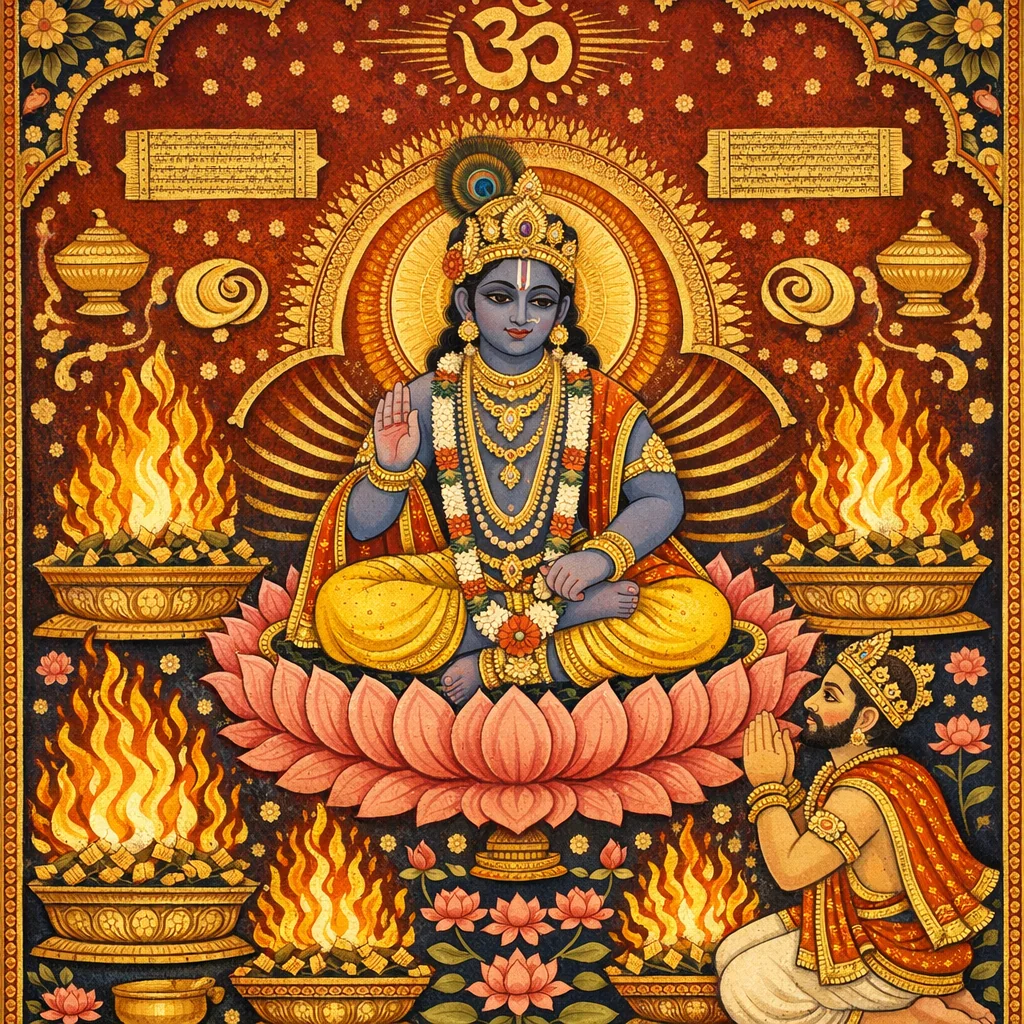
Continuing the Uddhava–Kṛṣṇa teachings, Uddhava asks Kṛṣṇa to judge whether the many Vedic paths praised by sages are equal or whether one is supreme. Kṛṣṇa explains that after cosmic dissolution the Vedic sound was taught again to Brahmā, Manu, and the ṛṣis, and that the variety of rituals and philosophies arises because embodied beings, shaped by the three guṇas, have differing natures and desires. Bewildered by māyā, human intelligence proposes countless “goods”—piety, fame, pleasure, austerity, charity, vows, politics—yet their results are temporary and filled with lamentation. Those who abandon material desire and fix consciousness on Kṛṣṇa share a unique happiness; pure devotees seek neither heavenly posts, yogic siddhis, nor even liberation—only Kṛṣṇa. Bhakti purifies like fire and the refining of gold, and can uplift even the socially fallen; without loving service, other virtues cannot fully cleanse the heart. The chapter then turns to practice: rejecting dreamlike material elevation, avoiding binding association, and introducing meditative discipline (āsana, prāṇāyāma, focus on oṁkāra) that prepares for deeper dhyāna teachings to follow.
Shlokas
Verse 1
श्रीउद्धव उवाच वदन्ति कृष्ण श्रेयांसि बहूनि ब्रह्मवादिन: । तेषां विकल्पप्राधान्यमुताहो एकमुख्यता ॥ १ ॥
Śrī Uddhava said: O Kṛṣṇa, the Veda-knowing sages speak of many auspicious paths for life’s perfection. Among these differing views, my Lord, are all equally important, or is one alone supreme? Please tell me.
Verse 2
भवतोदाहृत: स्वामिन् भक्तियोगोऽनपेक्षित: । निरस्य सर्वत: सङ्गं येन त्वय्याविशेन्मन: ॥ २ ॥
My Lord, You have clearly taught pure, unalloyed bhakti-yoga, by which a devotee casts off all material association and fixes the mind solely upon You.
Verse 3
श्रीभगवानुवाच कालेन नष्टा प्रलये वाणीयं वेदसंज्ञिता । मयादौ ब्रह्मणे प्रोक्ता धर्मो यस्यां मदात्मक: ॥ ३ ॥
The Supreme Lord said: At the time of annihilation, by the power of time, the transcendental sound known as the Vedas was lost. Therefore, at the dawn of the next creation, I spoke that Vedic knowledge to Brahmā, for the dharma proclaimed in the Vedas is My own very self.
Verse 4
तेन प्रोक्ता स्व पुत्राय मनवे पूर्वजाय सा । ततो भृग्वादयोऽगृह्णन् सप्त ब्रह्ममहर्षय: ॥ ४ ॥
Brahmā spoke that Vedic knowledge to his eldest son, Manu. Then from Manu, the seven great brahma-maharṣis, headed by Bhṛgu, accepted the same knowledge.
Verse 5
तेभ्य: पितृभ्यस्तत्पुत्रा देवदानवगुह्यका: । मनुष्या: सिद्धगन्धर्वा: सविद्याधरचारणा: ॥ ५ ॥ किन्देवा: किन्नरा नागा रक्ष:किम्पुरुषादय: । बह्वयस्तेषां प्रकृतयो रज:सत्त्वतमोभुव: ॥ ६ ॥ याभिर्भूतानि भिद्यन्ते भूतानां पतयस्तथा । यथाप्रकृति सर्वेषां चित्रा वाच: स्रवन्ति हि ॥ ७ ॥
From the forefathers headed by Bhṛgu and from Brahmā’s other sons arose many descendants, taking diverse forms—devas, dānavas, Guhyakas, humans, Siddhas, Gandharvas, Vidyādharas, Cāraṇas, Kindevas, Kinnaras, Nāgas, Rākṣasas, Kimpuruṣas, and more. Their varied natures and desires sprang from the three guṇas—rajas, sattva, and tamas—so living beings and their rulers became distinct accordingly. Thus, because of these differences of character, the Vedas describe many kinds of rituals, mantras, and rewards.
Verse 6
तेभ्य: पितृभ्यस्तत्पुत्रा देवदानवगुह्यका: । मनुष्या: सिद्धगन्धर्वा: सविद्याधरचारणा: ॥ ५ ॥ किन्देवा: किन्नरा नागा रक्ष:किम्पुरुषादय: । बह्वयस्तेषां प्रकृतयो रज:सत्त्वतमोभुव: ॥ ६ ॥ याभिर्भूतानि भिद्यन्ते भूतानां पतयस्तथा । यथाप्रकृति सर्वेषां चित्रा वाच: स्रवन्ति हि ॥ ७ ॥
From the forefathers headed by Bhṛgu Muni and the other sons of Brahmā arose innumerable descendants, assuming forms as devas, asuras, humans, Guhyakas, Siddhas, Gandharvas, Vidyādharas, Cāraṇas, Kindevas, Kinnaras, Nāgas, Rākṣasas, Kimpuruṣas, and more. With diverse natures and desires born of the three guṇas—rajas, sattva, and tamas—the many species and their rulers manifested differently; therefore, according to the varied qualities of living beings, Vedic rites, mantras, and their fruits are also manifold.
Verse 7
तेभ्य: पितृभ्यस्तत्पुत्रा देवदानवगुह्यका: । मनुष्या: सिद्धगन्धर्वा: सविद्याधरचारणा: ॥ ५ ॥ किन्देवा: किन्नरा नागा रक्ष:किम्पुरुषादय: । बह्वयस्तेषां प्रकृतयो रज:सत्त्वतमोभुव: ॥ ६ ॥ याभिर्भूतानि भिद्यन्ते भूतानां पतयस्तथा । यथाप्रकृति सर्वेषां चित्रा वाच: स्रवन्ति हि ॥ ७ ॥
Because the three guṇas generate differing natures, the species of beings and their presiding leaders become many and distinct. Thus, according to the varied dispositions of the jīvas, the Vedas describe numerous rituals, mantras, and corresponding fruits.
Verse 8
एवं प्रकृतिवैचित्र्याद् भिद्यन्ते मतयो नृणाम् । पारम्पर्येण केषाञ्चित् पाषण्डमतयोऽपरे ॥ ८ ॥
Thus, because of the great variety of human natures, people’s views become divided. Some inherit theistic philosophies through tradition and disciplic succession, while other teachers openly uphold atheistic, misguided doctrines.
Verse 9
मन्मायामोहितधिय: पुरुषा: पुरुषर्षभ । श्रेयो वदन्त्यनेकान्तं यथाकर्म यथारुचि ॥ ९ ॥
O best of men, human intelligence is bewildered by My māyā, and thus, according to one’s own deeds and inclinations, people speak in countless ways about what is truly good.
Verse 10
धर्ममेके यशश्चान्ये कामं सत्यं दमं शमम् । अन्ये वदन्ति स्वार्थं वा ऐश्वर्यं त्यागभोजनम् । केचिद् यज्ञं तपो दानं व्रतानि नियमान् यमान् ॥ १० ॥
Some say happiness comes from practicing dharma; others praise fame, sense enjoyment, truthfulness, self-control, and peace. Others speak of self-interest, power and opulence, renunciation, or enjoyment; and some extol sacrifice (yajña), austerity, charity, vows, and disciplined observances—yama and niyama. Each path has its advocates.
Verse 11
आद्यन्तवन्त एवैषां लोका: कर्मविनिर्मिता: । दु:खोदर्कास्तमोनिष्ठा: क्षुद्रा मन्दा: शुचार्पिता: ॥ ११ ॥
These worlds, fashioned by karma, have a beginning and an end. The attainments are petty and miserable, rooted in the darkness of ignorance; even while tasting their fruits, such people are filled with lamentation and later reap sorrow.
Verse 12
मय्यर्पितात्मन: सभ्य निरपेक्षस्य सर्वत: । मयात्मना सुखं यत्तत् कुत: स्याद् विषयात्मनाम् ॥ १२ ॥
O learned Uddhava, one who offers his consciousness to Me, free from all material craving, shares with Me a spiritual happiness that those absorbed in sense gratification can never attain.
Verse 13
अकिञ्चनस्य दान्तस्य शान्तस्य समचेतस: । मया सन्तुष्टमनस: सर्वा: सुखमया दिश: ॥ १३ ॥
One who desires nothing in this world, who has subdued the senses and become peaceful, whose consciousness is equal in all conditions and whose mind is satisfied in Me, finds every direction filled with happiness.
Verse 14
न पारमेष्ठ्यं न महेन्द्रधिष्ण्यं न सार्वभौमं न रसाधिपत्यम् । न योगसिद्धीरपुनर्भवं वा मय्यर्पितात्मेच्छति मद्विनान्यत् ॥ १४ ॥
One who has fixed his consciousness on Me desires neither Brahmā’s position and abode, nor Indra’s throne, nor an earthly empire, nor sovereignty in the lower worlds, nor yogic perfections, nor even freedom from birth and death; he desires Me alone.
Verse 15
न तथा मे प्रियतम आत्मयोनिर्न शङ्कर: । न च सङ्कर्षणो न श्रीर्नैवात्मा च यथा भवान् ॥ १५ ॥
My dear Uddhava, neither Brahmā, nor Śaṅkara (Śiva), nor Saṅkarṣaṇa, nor Śrī (Lakṣmī), nor even My own self, is as dear to Me as you are.
Verse 16
निरपेक्षं मुनिं शान्तं निर्वैरं समदर्शनम् । अनुव्रजाम्यहं नित्यं पूयेयेत्यङ्घ्रिरेणुभि: ॥ १६ ॥
I ever follow the footsteps of those serene sages, free from personal desire, without enmity and equal in vision, so that the dust of their lotus feet may purify the worlds.
Verse 17
निष्किञ्चना मय्यनुरक्तचेतस: शान्ता महान्तोऽखिलजीववत्सला: । कामैरनालब्धधियो जुषन्ति ते यन्नैरपेक्ष्यं न विदु: सुखं मम ॥ १७ ॥
Those who are without possessions and self-seeking, whose minds cling to Me, peaceful, free of false ego and compassionate to all beings, and whose awareness is untouched by sensual temptations—such souls relish in Me a detached bliss unknown to the unrenounced.
Verse 18
बाध्यमानोऽपि मद्भक्तो विषयैरजितेन्द्रिय: । प्राय: प्रगल्भया भक्त्या विषयैर्नाभिभूयते ॥ १८ ॥
My dear Uddhava, even if My devotee has not fully conquered the senses and is troubled by worldly desires, his steadfast devotion to Me keeps him from being defeated by sense enjoyment.
Verse 19
यथाग्नि: सुसमृद्धार्चि: करोत्येधांसि भस्मसात् । तथा मद्विषया भक्तिरुद्धवैनांसि कृत्स्नश: ॥ १९ ॥
My dear Uddhava, just as a blazing fire reduces firewood to ashes, so devotion to Me burns away completely the sins committed by My devotees.
Verse 20
न साधयति मां योगो न साङ्ख्यं धर्म उद्धव । न स्वाध्यायस्तपस्त्यागो यथा भक्तिर्ममोर्जिता ॥ २० ॥
My dear Uddhava, neither mystic yoga, nor Sāṅkhya, nor pious works, nor Vedic study, nor austerity or renunciation can bind Me; only the pure, powerful bhakti of My devotees brings Me under their sway.
Verse 21
भक्त्याहमेकया ग्राह्य: श्रद्धयात्मा प्रिय: सताम् । भक्ति: पुनाति मन्निष्ठा श्वपाकानपि सम्भवात् ॥ २१ ॥
Only by single-minded, pure bhakti, with full faith in Me, can one attain Me. I am naturally dear to My devotees; bhakti fixed in Me purifies even dog-eaters from the taint of low birth.
Verse 22
धर्म: सत्यदयोपेतो विद्या वा तपसान्विता । मद्भक्त्यापेतमात्मानं न सम्यक् प्रपुनाति हि ॥ २२ ॥
Neither dharma endowed with truth and compassion, nor knowledge gained through severe penance, can fully purify one’s consciousness if it is devoid of loving bhakti to Me.
Verse 23
कथं विना रोमहर्षं द्रवता चेतसा विना । विनानन्दाश्रुकलया शुध्येद् भक्त्या विनाशय: ॥ २३ ॥
Without ecstatic shivering, how can the heart melt? If the heart does not melt, how can tears of love flow? Without crying in spiritual joy, how can one offer loving bhakti to the Lord? And without such service, how can consciousness be purified?
Verse 24
वाग् गद्गदा द्रवते यस्य चित्तं रुदत्यभीक्ष्णं हसति क्वचिच्च । विलज्ज उद्गायति नृत्यते च मद्भक्तियुक्तो भुवनं पुनाति ॥ २४ ॥
A devotee whose voice becomes choked, whose heart melts, who weeps again and again and sometimes laughs, who feels shy and then sings out loudly and dances—such a devotee, absorbed in loving bhakti to Me, purifies the entire universe.
Verse 25
यथाग्निना हेम मलं जहाति ध्मातं पुन: स्वं भजते च रूपम् । आत्मा च कर्मानुशयं विधूय मद्भक्तियोगेन भजत्यथो माम् ॥ २५ ॥
Just as gold, smelted in fire, casts off its impurities and returns to its pure, radiant form, so the soul, absorbed in the fire of bhakti-yoga, shakes off the contamination of past karma and returns to its original position of serving Me in the spiritual realm.
Verse 26
यथा यथात्मा परिमृज्यतेऽसौ मत्पुण्यगाथाश्रवणाभिधानै: । तथा तथा पश्यति वस्तु सूक्ष्मं चक्षुर्यथैवाञ्जनसम्प्रयुक्तम् ॥ २६ ॥
As a diseased eye, treated with medicinal ointment, gradually regains its power of sight, so the conscious soul, cleansing away material taint by hearing and chanting the pious narrations of My glories, comes to see Me—the Absolute Truth—in My subtle spiritual form.
Verse 27
विषयान् ध्यायतश्चित्तं विषयेषु विषज्जते । मामनुस्मरतश्चित्तं मय्येव प्रविलीयते ॥ २७ ॥
The mind of one who meditates on sense objects becomes entangled in them, but the mind of one who constantly remembers Me dissolves into Me alone.
Verse 28
तस्मादसदभिध्यानं यथा स्वप्नमनोरथम् । हित्वा मयि समाधत्स्व मनो मद्भावभावितम् ॥ २८ ॥
Therefore abandon unreal material contemplation, like the fancies of a dream, and fully fix your mind on Me, imbued with devotion to Me; by constantly thinking of Me, one becomes purified.
Verse 29
स्त्रीणां स्त्रीसङ्गिनां सङ्गं त्यक्त्वा दूरत आत्मवान् । क्षेमे विविक्त आसीनश्चिन्तयेन्मामतन्द्रित: ॥ २९ ॥
Aware of the eternal self, one should keep far away from association with women and with those closely attached to women. Sitting fearlessly in a safe, solitary place, one should meditate on Me with vigilant attention.
Verse 30
न तथास्य भवेत् क्लेशो बन्धश्चान्यप्रसङ्गत: । योषित्सङ्गाद् यथा पुंसो यथा तत्सङ्गिसङ्गत: ॥ ३० ॥
Among all sufferings and bonds born of various attachments, none is greater for a man than the suffering and bondage arising from attachment to women and from intimate association with those attached to women.
Verse 31
श्रीउद्धव उवाच यथा त्वामरविन्दाक्ष यादृशं वा यदात्मकम् । ध्यायेन्मुमुक्षुरेतन्मे ध्यानं त्वं वक्तुमर्हसि ॥ ३१ ॥
Śrī Uddhava said: O lotus-eyed Kṛṣṇa, by what method should one who longs for liberation meditate upon You? What particular nature of Yours should be contemplated, and upon which divine form should the mind be fixed? Kindly explain to me this teaching on meditation.
Verse 32
श्रीभगवानुवाच सम आसन आसीन: समकायो यथासुखम् । हस्तावुत्सङ्ग आधाय स्वनासाग्रकृतेक्षण: ॥ ३२ ॥ प्राणस्य शोधयेन्मार्गं पूरकुम्भकरेचकै: । विपर्ययेणापि शनैरभ्यसेन्निर्जितेन्द्रिय: ॥ ३३ ॥
The Supreme Lord said: Sit on a level seat, neither too high nor too low, keeping the body straight and steady yet at ease. Place both hands upon the lap and fix the gaze upon the tip of the nose.
Verse 33
श्रीभगवानुवाच सम आसन आसीन: समकायो यथासुखम् । हस्तावुत्सङ्ग आधाय स्वनासाग्रकृतेक्षण: ॥ ३२ ॥ प्राणस्य शोधयेन्मार्गं पूरकुम्भकरेचकै: । विपर्ययेणापि शनैरभ्यसेन्निर्जितेन्द्रिय: ॥ ३३ ॥
By pūraka, kumbhaka, and recaka one should cleanse the pathways of prāṇa; then, slowly, one should also practice the reverse order (recaka, kumbhaka, pūraka). With the senses conquered, prāṇāyāma is thus performed step by step.
Verse 34
हृद्यविच्छिन्नमोङ्कारं घण्टानादं बिसोर्णवत् । प्राणेनोदीर्य तत्राथ पुन: संवेशयेत् स्वरम् ॥ ३४ ॥
Meditate within the heart upon the unbroken oṁkāra, like the resonance of a bell and as subtle as the fibers of a lotus stalk. Raising it by the life-breath, one should then again merge that sacred sound within its place.
Verse 35
एवं प्रणवसंयुक्तं प्राणमेव समभ्यसेत् । दशकृत्वस्त्रिषवणं मासादर्वाग् जितानिल: ॥ ३५ ॥
Thus, joined to the praṇava (oṁ), one should diligently practice prāṇāyāma: ten times at sunrise, noon, and sunset. In less than a month, one conquers the life-breath (prāṇa).
Frequently Asked Questions
Kṛṣṇa links plurality to the universe’s many species and psychologies shaped by the three guṇas. Because desires and dispositions differ, the Veda provides varied mantras, rites, and promised results suited to different adhikāras. This diversity is not contradiction but accommodation; the Bhagavata then identifies the culminating path as exclusive devotion to the Lord.
Temporary happiness arises from material work and sense-centered goals; it is ‘meager’ because it depends on changing conditions and carries future distress, even while being enjoyed. Devotional happiness arises when one gives up material desire and fixes consciousness on Kṛṣṇa; it is stable because it is rooted in the āśraya (the Lord) rather than in guṇa-driven objects.
Kṛṣṇa tells Uddhava he is exceedingly dear, illustrating a core Bhagavata principle: the Lord is conquered by pure devotion. The statement is theological, not sectarian rivalry—it demonstrates bhakti’s unique potency to bind the Supreme through love rather than through status, power, or austerity.
The text outlines a stable seat and posture, hands placed on the lap, gaze focused at the nose-tip, and systematic breath regulation through pūraka (inhalation), kumbhaka (retention), and recaka (exhalation), including reversing the sequence. It then introduces oṁkāra-focused inner ascent (from mūlādhāra toward the heart and upward), practiced regularly at sunrise, noon, and sunset as a graduated discipline.
The passage uses strī-saṅga as a paradigmatic symbol of binding intimacy and possessive attachment that intensifies identification with the body and sense enjoyment. Its doctrinal point is vairāgya: any association that inflames craving becomes a primary source of bondage and suffering, obstructing steady remembrance of Kṛṣṇa.