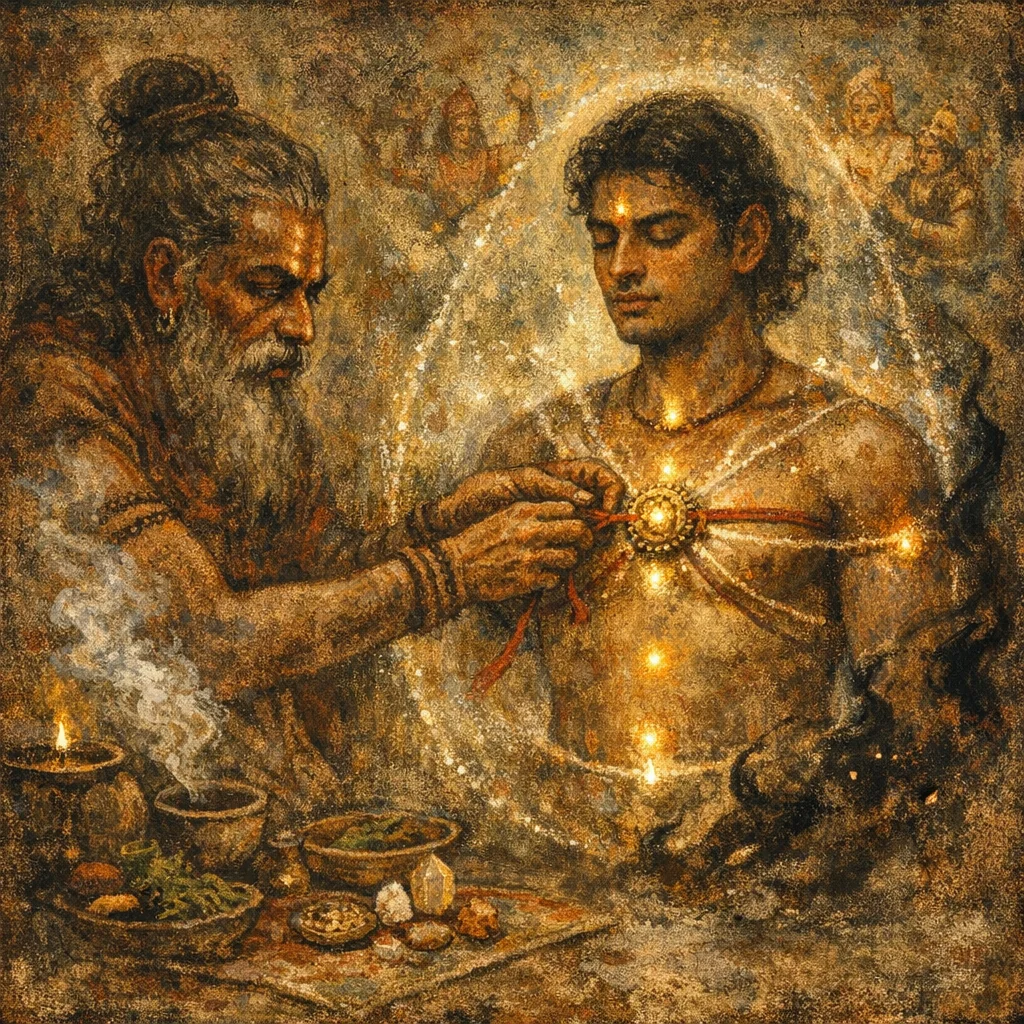
Sukta 118
Rishi: Atharvanic tradition (requires Anukramaṇī confirmation).
Devata: Soma, Varuṇa, and the Viśve Devāḥ (collectively).
Chandas: Mixed/likely Triṣṭubh-like cadence (needs metrical verification; verse is longer than standard Anuṣṭubh).
Mantras
Frequently Asked Questions
It ritually ‘arms’ a person by covering vulnerable vital points (marmāṇi) with protective power, asking Soma to clothe them in amṛta and Varuṇa to create a wider zone of safety, ending with divine support for victory.
Ideally a physical covering (armour, shawl, or consecrated cloth) is used as the varman-symbol, but the core action is the mantra’s protective “covering” of the body’s vital points during recitation.
Soma provides inner invulnerable vitality through ‘amṛta-clothing,’ while Varuṇa secures the outer environment by widening safe space; together they protect both the person and the surrounding field of action.