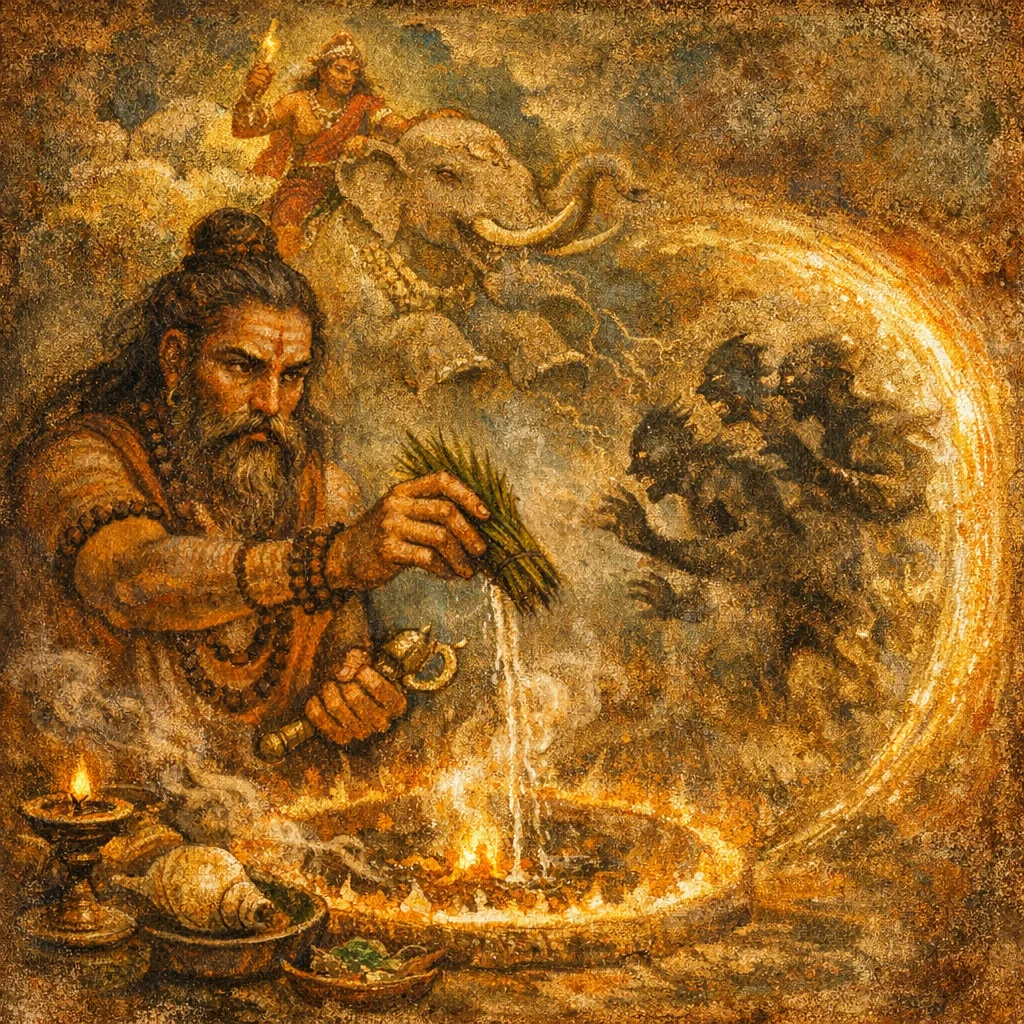
Sukta 117
Rishi: Atharvanic tradition (requires Anukramaṇī confirmation).
Devata: Indra (as martial protector).
Chandas: Likely Anuṣṭubh (verification needed due to textual uncertainty in pāda 2).
Mantras
Frequently Asked Questions
It targets situations where enemies or hostile forces try to restrain, bind, or obstruct you—symbolized as “noose-bearers” (pāśinaḥ)—and seeks unimpeded advance and victory through Indra.
“Mayūra-roma” functions as a protective implement and auspicious marker in the invocation, reinforcing the hymn’s intent of warding off hostile restraint and enabling safe passage.
Recite the verse before travel or a risky encounter while holding or wearing a small peacock-feather tuft, focusing on removing obstacles and preventing any ‘binding’ interference; repetition (3 or 9 times) is commonly adopted in applied practice.