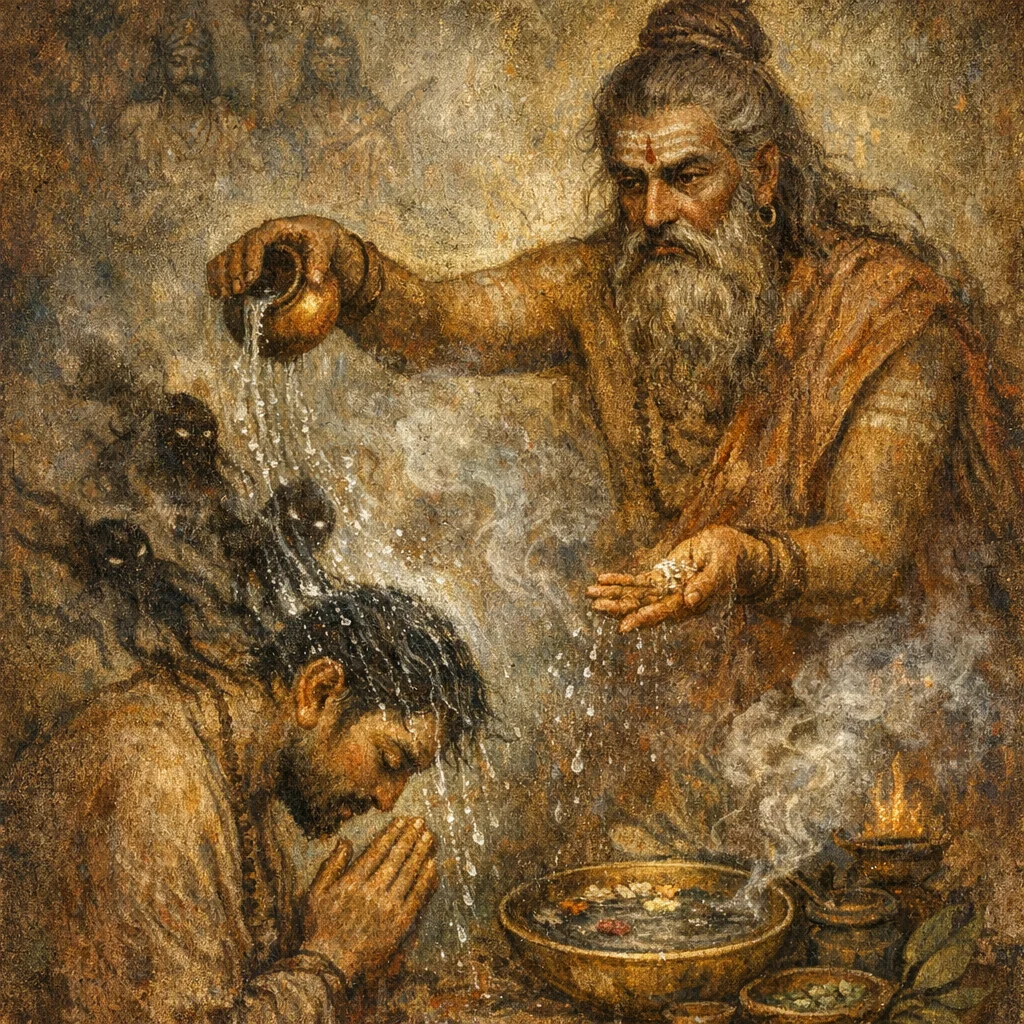
Sukta 112
Rishi: Atharvanic tradition (Anukramaṇī attribution not supplied in input)
Devata: Dyāvāpṛthivī and Āpaḥ (Waters) as purifiers
Chandas: Likely Anuṣṭubh (needs metrical verification against full pada counts)
Mantras
Mantra 1
पापनाशनम्। शुम्भनी द्यावापृथिवी अन्तिसुम्ने महिव्रते । आपः सप्त सुस्रुवुर्देवीस्ता नो मुञ्चन्त्वंहसः
Heaven and Earth, the two brighteners, whose gracious favour is near, whose ordinance is mighty—forth have flowed the Seven Waters, goddesses: may they release us from sin and straitness.
Mantra 2
मुञ्चन्तु मा शपथ्या३दथो वरुण्याऽदुत। अथो यमस्य पड्वीशाद् विश्वस्माद् देवकिल्बिषात्
Let them release me from the sin of oath and curse, and from the guilt that is Varuṇa’s; yea, and from Yama’s binding noose, from every god-wrought offence.
Frequently Asked Questions
It is used for expiation and purification—asking the Waters and the cosmic pair Heaven-and-Earth to release a person from sin (aṃhas), especially after oath-related faults, curses, or feared divine punishment.
Varuṇa represents moral law and the ‘bond’ of guilt that follows wrongdoing, while Yama represents binding consequences associated with death and restraint. The hymn asks to be loosened from these bonds through purification and divine pardon.
Recite 7.112.1 over clean water and sip or sprinkle it, then recite 7.112.2 while symbolically untying a small knot (or opening the hands), intending release from oath-sin and every divine offence.