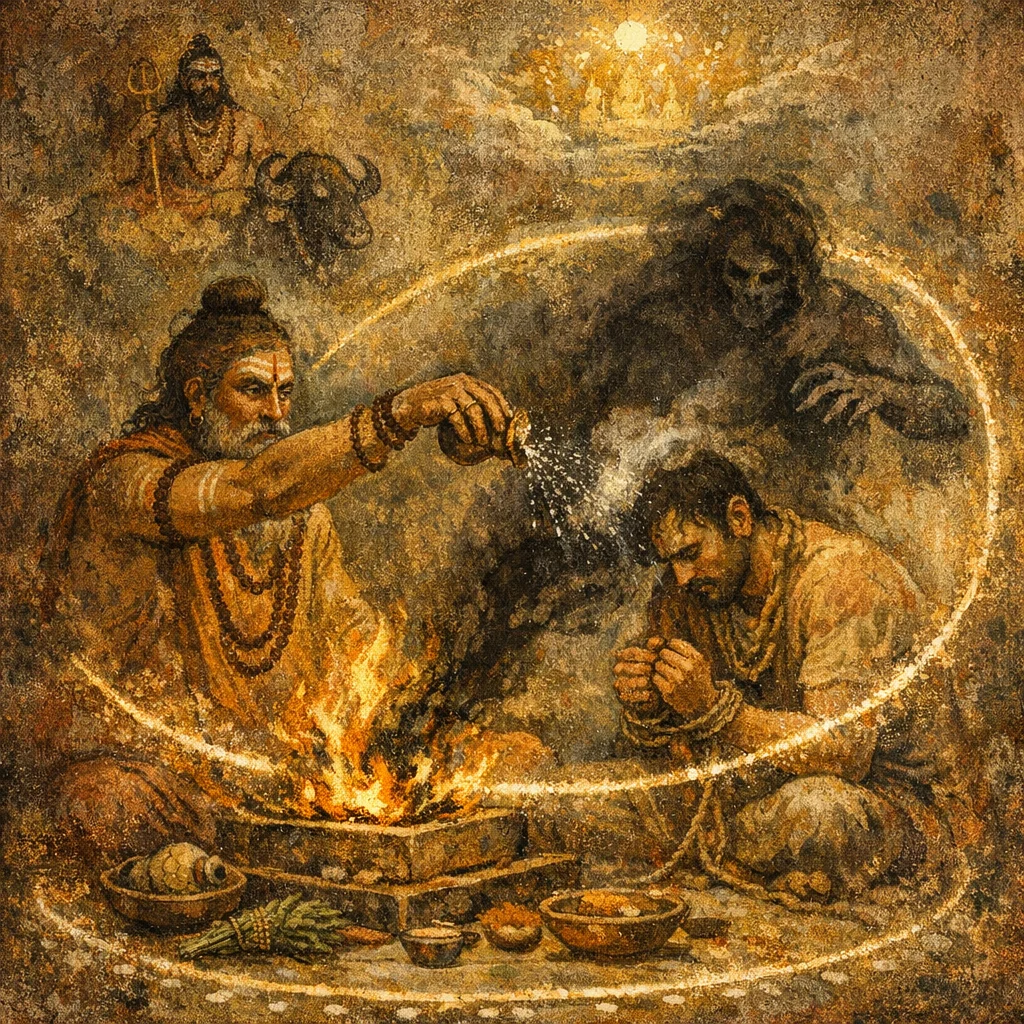
Sukta 84
Rishi: Atharvanic tradition (not specified in the provided excerpt)
Devata: Nirṛti (and implicitly Bhūmi as the receiving/covering power)
Chandas: Mixed/prose-like Atharvanic anuṣṭubh tendency (long pādas; AV style)
Mantras
Mantra 1
निर्ऋतिमोचनम्। यस्यास्त आसनि घोरे जुहोम्येषां बद्धानामवसर्जनाय कम्। भूमिरिति त्वाभिप्रमन्वते जना निरृतिरिति त्वाहं परि वेद सर्वतः
A loosening from Nirṛti. On thy dreadful seat I offer, for the releasing of these that are bound. ‘Earth,’ so men conceive and name thee; ‘Nirṛti,’ so I, on every side, know thee.
Mantra 2
भूते हविष्मती भवैष ते भागो यो अस्मासु । मुञ्चेमानमूनेनसः स्वाहा
O Power, become rich in oblation: here is thy portion, that which is among us. Release these from yonder guilt—Svāhā!
Mantra 3
एवो ष्व१स्मन्निरृतेऽनेहा त्वमयस्मयान् वि चृता बन्धपाशान्। यमो मह्यं पुनरित् त्वां ददाति तस्मै यमाय नमो अस्तु मृत्यवे
So then, O Nirṛti, depart from us: do thou asunder cut the iron bonds, the binding nooses. Yama doth verily give thee back again to me: to that Yama be reverence—reverence to Death.
Mantra 4
अयस्मये द्रुपदे बेधिष इहाभिहितो मृत्युभिर्ये सहस्रम्। यमेन त्वं पितृभिः संविदान उत्तमं नाकमधि रोहयेमम्
In iron, in the wooden stock, thou liest pierced; here pressed down by deaths a thousand-fold. With Yama, in accord with the Fathers, lead thou this man upward to the highest heaven.
Frequently Asked Questions
Nirṛti is the Atharvavedic power of misfortune and dissolution—what ‘binds’ a person into bad fate, illness, or death-pressure. The hymn compels her to depart and be absorbed/contained by Earth (Bhūmi).
Because the affliction is treated as a death-bond. The hymn both commands release and respectfully addresses Death’s jurisdiction so the patient can be ‘given back’—or, if not, be guided safely with Yama and the ancestors.
They are the strongest imagined fetters of calamity—deathlike constraints that feel unbreakable. Ritually they can be represented by a cord (and optionally an iron token) that is loosened or symbolically cut during recitation.