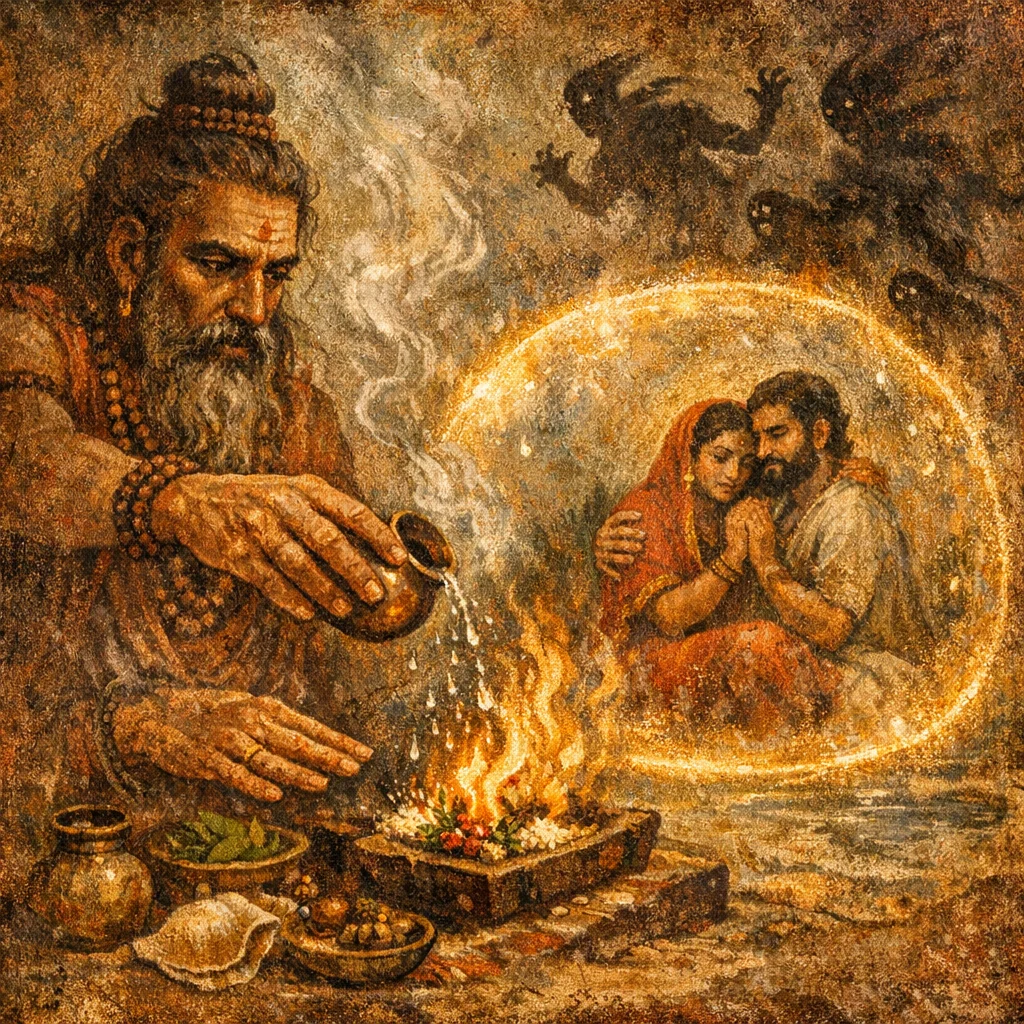
Sukta 80
Rishi: Atharvanic tradition (specific r̥ṣi attribution varies by anukramaṇī lists for this hymn)
Devata: A pervasive divine potency (interpretable as a deified ‘might’/mahimā; sometimes linked with Śuna as epithet)
Chandas: Triṣṭubh-like cadence (mixed; requires metrical verification against pada count)
Mantras
Mantra 1
अरिष्टक्षयणम्। अन्तरिक्षेण पतति विश्वा भूतावचाकशत्। शुनो दिव्यस्य यन्महस्तेना ते हविषा विधेम
Through the mid-air it flieth, looking down upon all beings. With that great might of the heavenly Dog, with oblation will we do thee worship.
Mantra 2
ये त्रयः कालकाञ्जा दिवि देवा इव श्रिताः । तान्त्सर्वानह्व ऊतयेऽस्मा अरिष्टतातये
Those three, the black-anointed, who in heaven are set as though they were gods—those all I call for aid, for this man’s attainment of unharmed estate.
Mantra 3
अप्सु ते जन्म दिवि ते सधस्थं समुद्रे अन्तर्महिमा ते पृथिव्याम्। शुनो दिव्यस्य यन्महस्तेना ते हविषा विधेम
In the Waters is thy birth; in heaven is thy settled station; within the Ocean is thy greatness; on Earth (too) is thine. With that heavenly might of Śuna—therewith would we do thee worship by oblation.
Frequently Asked Questions
It is used for protection—averting harm and ill-omen—and for establishing an “unharmed” condition (ariṣṭatā) for a person and dwelling.
The hymn addresses a pervasive protective potency described as ‘might’ (mahimā) and expressed through the figure/epithet of the heavenly dog (Divya Śvan/Śuna), a vigilant guardian power.
The hymn itself points to havis (a simple oblation such as ghee or food). No specific herbs or amulets are required by these three verses, though water sprinkling may be added as a common śānti practice.