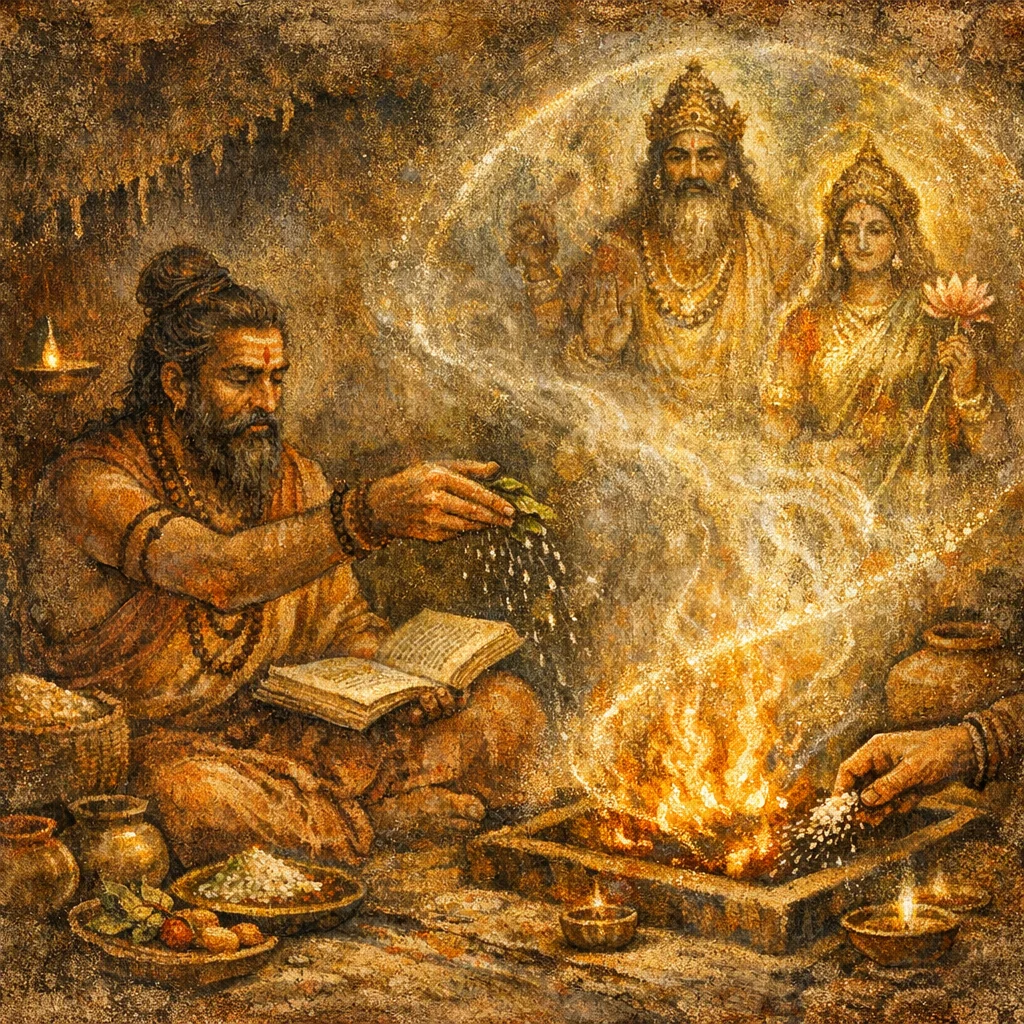
Sukta 79
Rishi: Atharvanic tradition (Anukramaṇī attribution not supplied in input; commonly Atharvan/Āṅgiras-type for paustika charms)
Devata: Nabhasaspati (personified lord of cloud/rain; prosperity agent)
Chandas: Anuṣṭubh (probable; standard for many AV domestic charms)
Mantras
Mantra 1
ऊर्जःप्राप्तिः। अयं नो नभसस्पतिः संस्फानो अभि रक्षतु । असमातिं गृहेषु नः
May this Lord of the Cloud, the Abounder, guard us on every side, and set within our houses freedom from want.
Mantra 2
त्वं नो नभसस्पत ऊर्जं गृहेषु धारय । आ पुष्टमेत्वा वसु
Do thou, O Lord of the Cloud, maintain for us nourishment within our houses: let thriving come hither—yea, wealth.
Mantra 3
देव संस्फान सहस्रापोषस्येशिषे । तस्य नो रास्व तस्य नो धेहि तस्य ते भक्तिवांसः स्याम
O God, O Abounder, thou art lord of thousandfold thriving. Of that give thou to us; of that do thou set for us; of that of thine may we be sharers.
Frequently Asked Questions
Nabhasaspati is the personified ‘Lord of the Cloud,’ a power that governs rain and the abundance that comes from it—food, thriving, and household well-being.
It asks for the home to be guarded, for steady food-energy and supplies to remain in the house, and for scarcity or want to be kept away.
No. The hymn itself mentions no required substances; it can be recited as a spoken domestic charm. Some practitioners optionally keep a vessel of water or a little grain nearby as a symbol of rain and nourishment.