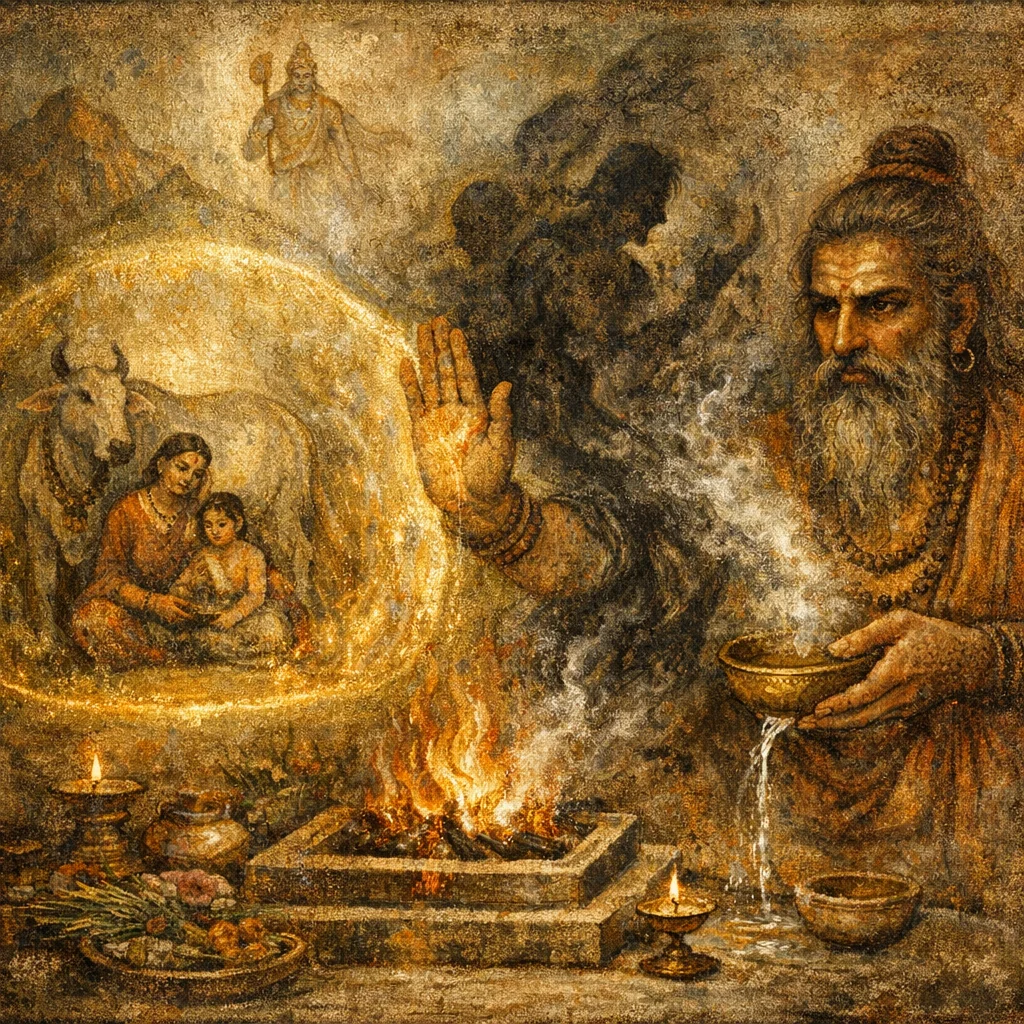
Sukta 77
Rishi: Atharvanic tradition (r̥ṣi not specified in the provided excerpt; to be resolved from AVŚ anukramaṇī).
Devata: A protective ‘guardian’ power (gopā/rakṣitṛ), functionally aligned with Agni/Jātavedas in the following verse-context.
Chandas: Anuṣṭubh (likely; to be confirmed by full hymn metrical scan).
Mantras
Mantra 1
प्रतिष्ठापनम्। अस्थाद् द्यौरस्थात् पृथिव्यस्थाद् विश्वमिदं जगत्। आस्थाने पर्वता अस्थु स्थाम्न्यश्वां अतिष्ठिपम्
For establishment: Heaven stood fast, Earth stood fast, all this moving world stood fast; in their station the mountains stood—within the standing-place have I made the horses stand firm.
Mantra 2
य उदानट् परायणं य उदानण् न्यायनम्। आवर्तनं निवर्तनं यो गोपा अपि तं हुवे
Him who hath driven forth the going-away, him who hath led aright the home-leading; the turning-back, the repelling—him, the Guardian too, do I invoke.
Mantra 3
जातवेदो नि वर्तय शतं ते सन्त्वावतः । सहस्रं त उपावृतस्तभिर्नः पुनरा कृधि
O Jātavedas, turn it back: a hundred be thy succours; a thousand thine encircling guards. With these do thou restore us hither again.
Frequently Asked Questions
It is used to establish firmness and security—especially for movable wealth like horses—and to turn back harmful influences so welfare is restored to the household.
They serve as cosmic models of stability; the mantra transfers that steadfastness to a local ‘standing-place’ so what is unstable or wandering becomes firmly established.
The ‘guardian’ (gopā/rakṣitṛ) is defined by the act of reversing wrong departure and guiding rightful return; Agni Jātavedas is invoked as the powerful protector who repels threats and restores the protected person or property with abundant guarding.