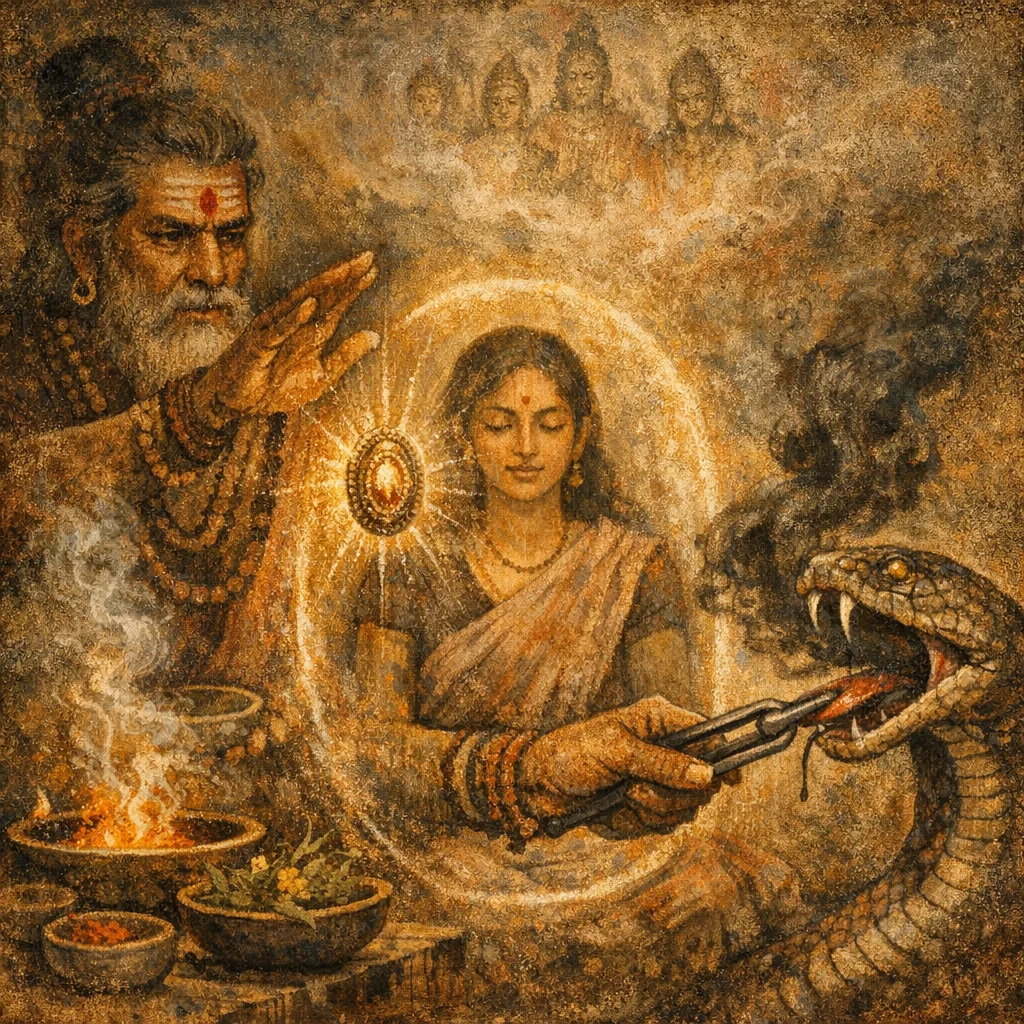
Sukta 56
Rishi: Atharvanic tradition (often transmitted under Atharvan/Angiras lineages; specific r̥ṣi not stated in the provided excerpt)
Devata: Sarpa/Ahi (serpent-kinds) addressed through propitiation; gods invoked as restrainers
Chandas: Predominantly Anuṣṭubh (with Atharvanic cadence)
Mantras
Mantra 1
सर्पेभ्यो रक्षणम्। मा नो देवा अहिर्वधीत् सतोकान्त्सहपुरुषान्। सम्यतं न वि ष्परद् व्यात्तं न सं यमन्नमो देवजनेभ्यः।।१।। नमोऽस्त्वसिताय नमस्तिरश्चिराजये । स्वजाय बभ्रवे नमो नमो देवजनेभ्यः
Slay us not, O Gods, let not the Serpent smite—us with our children, us with all our folk. As one held in, let him not dart abroad; as one whose jaws are gaping, let him be closed again. Homage be to the divine tribes. Homage—be it—to Asita; homage to Tirascirāja; to the self-born, to the brown one, homage, yea homage, to the divine tribes.
Mantra 2
सं ते हन्मि दता दतः समु ते हन्वा हनू । सं ते जिह्वया जिह्वां सम्वास्नाह आस्यऽम्
I smite thy tooth with tooth; yea, I shut thy jaws with jaw. I shut thy tongue with tongue; I shut thy mouth with snout and breath.
Frequently Asked Questions
It is used for protection from serpents—preventing attack and neutralizing the bite by ritually restraining the serpent and ‘closing’ its mouth-organs through mantra.
In Atharvanic practice, respectful address and correct naming pacify dangerous classes of beings; the namo-formula functions as propitiation and as a sealing act of restraint.
Its primary intent is preventive and apotropaic (rakṣā) and includes stambhana (disabling the bite). In lived practice it may be recited in emergencies, but it is not a full medical protocol by itself.