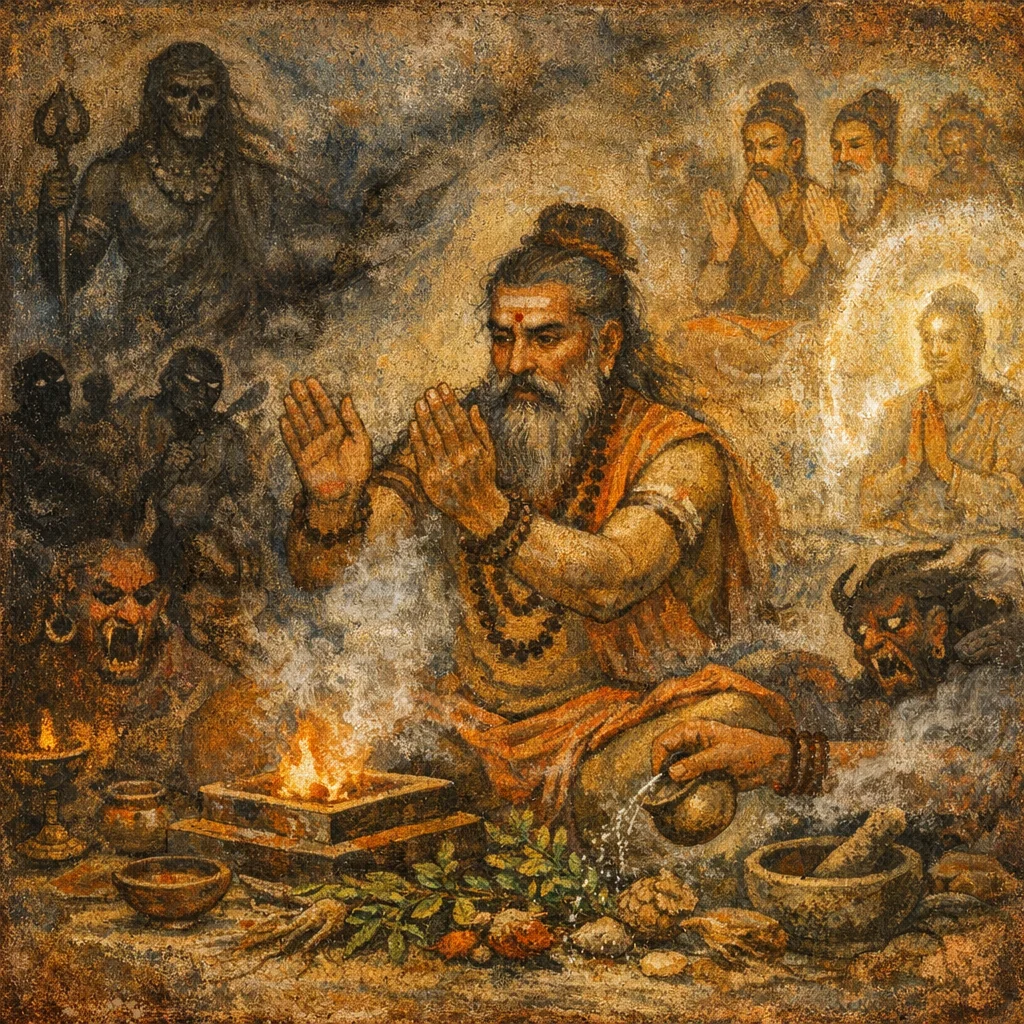
Sukta 13
Rishi: Atharvanic tradition (Anukramaṇī attribution varies)
Devata: Mṛtyu (Death), and implicitly the agencies of vadhá (slaying)
Chandas: Anuṣṭubh
Mantras
Mantra 1
मृत्युजयः। नमो देववधेभ्यो नमो राजवधेभ्यः । अथो ये विश्यानां वधास्तेभ्यो मृत्यो नमोऽस्तु ते
Obeisance to the death-dealings of the gods; obeisance to the death-dealings of kings; and also to those death-dealings that are of the common folk—to them, O Death, be obeisance unto thee.
Mantra 2
नमस्ते अधिवाकाय परावाकाय ते नमः । सुमत्यै मृत्यो ते नमो दुर्मत्यै त इदं नमः
Obeisance to thee for the over-speech, obeisance to thee for the counter-speech. To thy good intent, O Death, be obeisance; to thy ill intent—this obeisance is for thee.
Mantra 3
नमस्ते यातुधानेभ्यो नमस्ते भेषजेभ्यः । नमस्ते मृत्यो मूलेभ्यो ब्राह्मणेभ्य इदं नमः
Obeisance to thee with regard to the yātudhānas; obeisance to thee with regard to the remedies. O Death, obeisance to thee with regard to the roots; to the Brahmans—this obeisance is offered.
Frequently Asked Questions
In Atharvanic śānti logic, namas pacifies and restrains a dangerous power. By honoring every channel of vadhá, the hymn neutralizes it and redirects Mṛtyu toward a non-harmful stance.
They refer to harmful speech-acts and counter-speech—curses, accusations, hostile pronouncements, and the verbal force that can ‘carry’ death. The mantra offers namas to both, dissolving their lethal charge.
No. The sukta works as a mantra-śānti by recitation alone. If available, simple healing roots (mūla) can be kept nearby as a supportive bheṣaja symbol and remedy, but they are not mandatory.