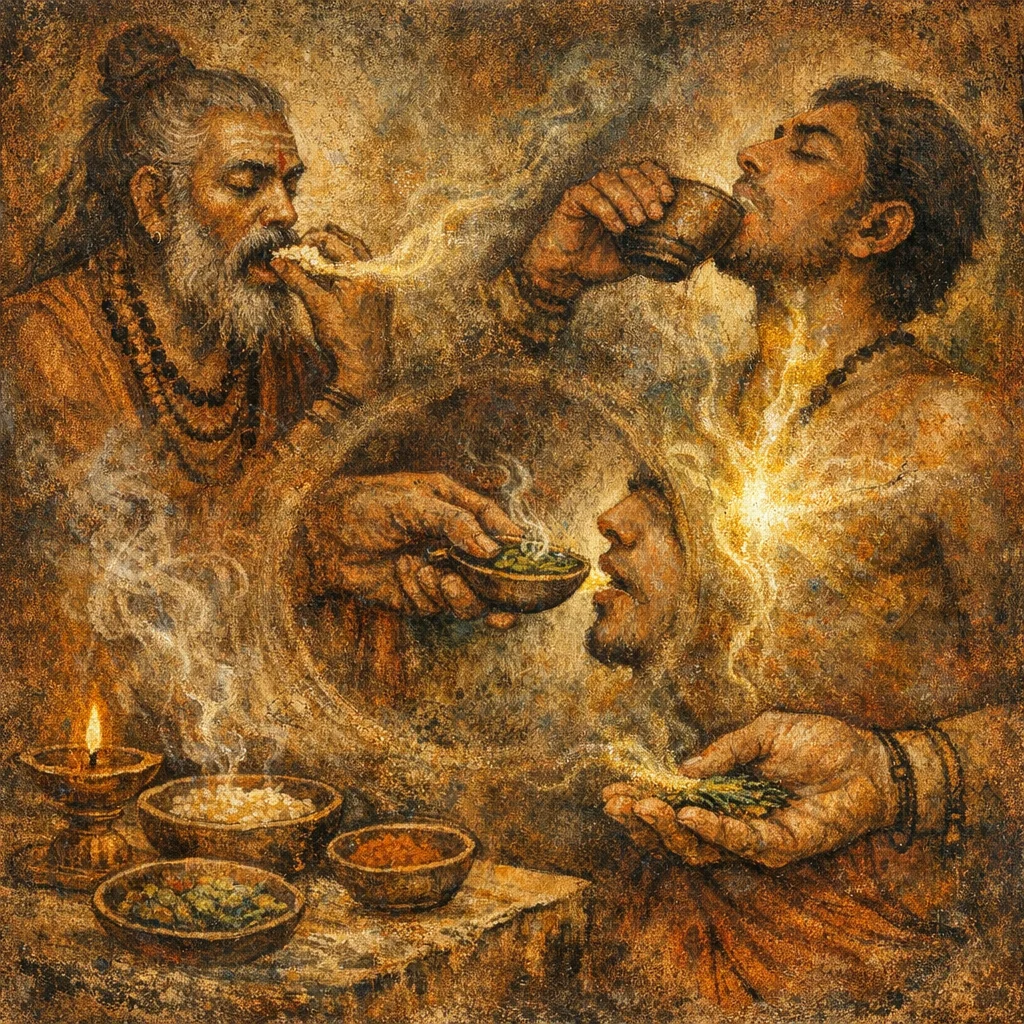
Sukta 135
Rishi: Atharvanic tradition (Anukramaṇī attribution not supplied in input; commonly Atharvan/Angiras-type for such sūktas)
Devata: Indra (Śacīpati) as paradigmatic power; bala as operative ‘deity’ of the act
Chandas: Anuṣṭubh (probable; short pādas with Indraic simile)
Mantras
Mantra 1
बलप्राप्तिः। यदश्नामि बलं कुर्व इत्थं वज्रमा ददे । स्कन्धानमुष्य शातयन् वृत्रस्येव शचीपतिः
What I eat, thereby I make me strength: thus do I take unto me the thunderbolt; shattering the shoulders of that man, as Śacī’s Lord smote Vṛtra.
Mantra 2
यत् पिबामि सं पिबामि समुद्र इव संपिबः । प्राणानमुष्य संपाय सं पिबामो अमुं वयम्
What I drink, that drink I wholly, like the Ocean drinking all: having drunk up the breaths of that man, we drink him up entire, even we.
Mantra 3
यद् गिरामि सं गिरामि समुद्र इव संगिरः । प्राणानमुष्य संगीर्य सं गिरामो अमुं वयम्
What I swallow, that swallow I utterly, as Ocean engulfs: having swallowed up the breaths of that man, we swallow him up entire, even we.
Frequently Asked Questions
It is primarily paustika (strength-giving), but it clearly has an abhicārika tone because it speaks of draining and consuming an opponent’s prāṇa and ‘shattering’ him in an Indra-like way.
They are ritual-psychological and mantra-visualization idioms: the performer consecrates ingestion as a transfer of vitality and dominance, imagining hostile force being absorbed and neutralized.
The hymn itself implies simple substances: food to eat and a liquid to drink. No specific herb or amulet is mandated by the verses; the efficacy is tied to the consecrated act of ingestion with the mantra.