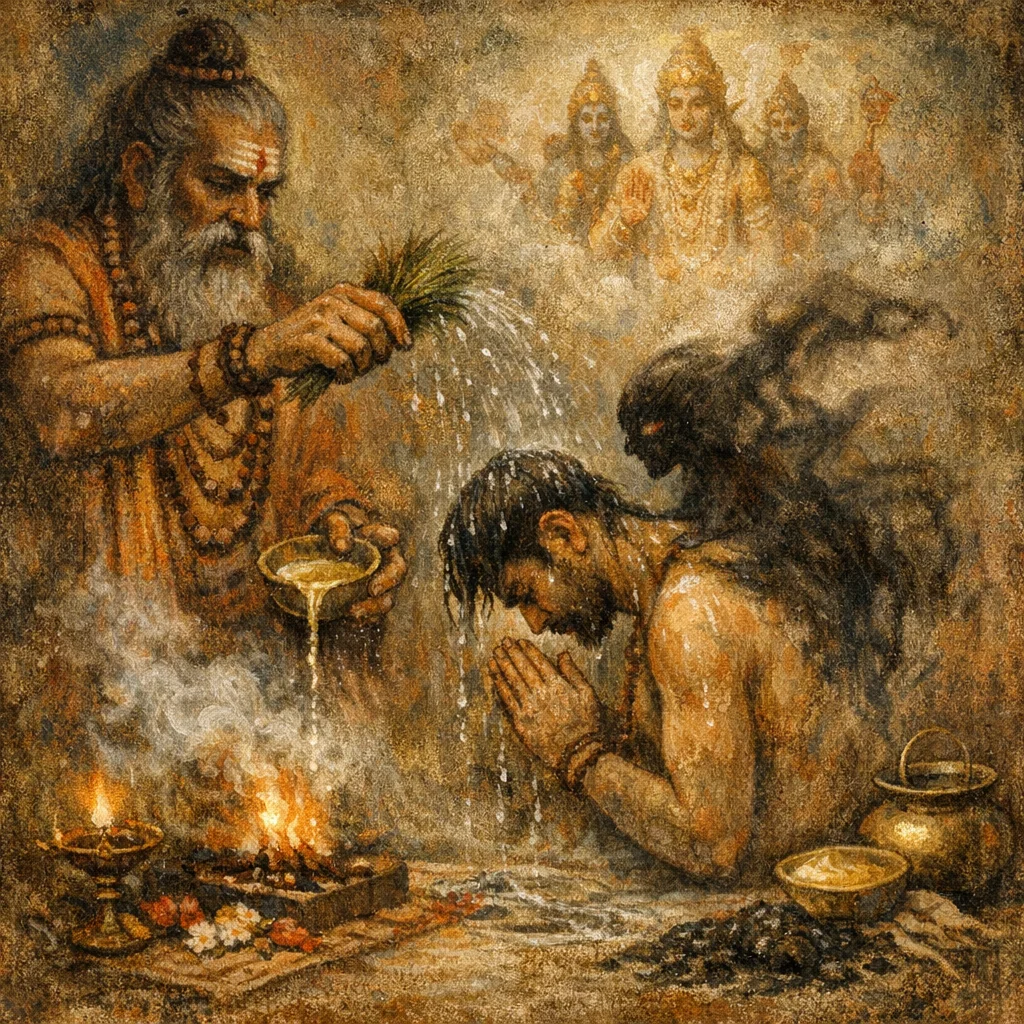
Sukta 115
Rishi: Atharvanic tradition (not specified in input)
Devata: Viśve Devāḥ
Chandas: Anuṣṭubh (probable; not metrically verified here)
Mantras
Mantra 1
पापमोचनम्। यद् विद्वांसो यदविद्वांस एनांसि चकृमा वयम्। यूयं नस्तस्मान्मुञ्चत विश्वे देवाः सजोषसः
A Loosening from Evil. What sins we have committed, whether knowingly or unknowingly—therefrom do ye release us, O all ye Gods, in one accord and gracious unanimity.
Mantra 2
यदि जाग्रद् यदि स्वपन्नेन एनस्योऽकरम्। भूतं मा तस्माद् भव्यं च द्रुपदादिव मुञ्चताम्
If waking, if in sleep, I have wrought offence—then from that, from what is done and what shall yet be, may I be loosed, as from a wooden block.
Mantra 3
द्रुपदादिव मुमुचानः स्विन्नः स्नात्वा मलादिव । पूतं पवित्रेणेवाज्यं विश्वे शुम्भन्तु मैनसः
Loosed as from a wooden block, sweating, having bathed as from foulness—purified as ghee by a strainer—may all powers cleanse the things of the mind.
Frequently Asked Questions
It asks the Viśve Devāḥ to loosen and remove enas/pāpa—fault and its pollution—whether done knowingly or unknowingly, and to cleanse both outer impurity and inner mental residue.
Because expiation is meant to be comprehensive: harm can arise from conscious acts, careless moments, or dream-related impurity. The hymn covers all states so no remainder of fault is left unaddressed.
Not strictly. Clean water for sprinkling or bathing is the main support. If available, a kuśa pavitra (ring/grass) and a little ghee can be used as symbols of purification, matching the hymn’s imagery.