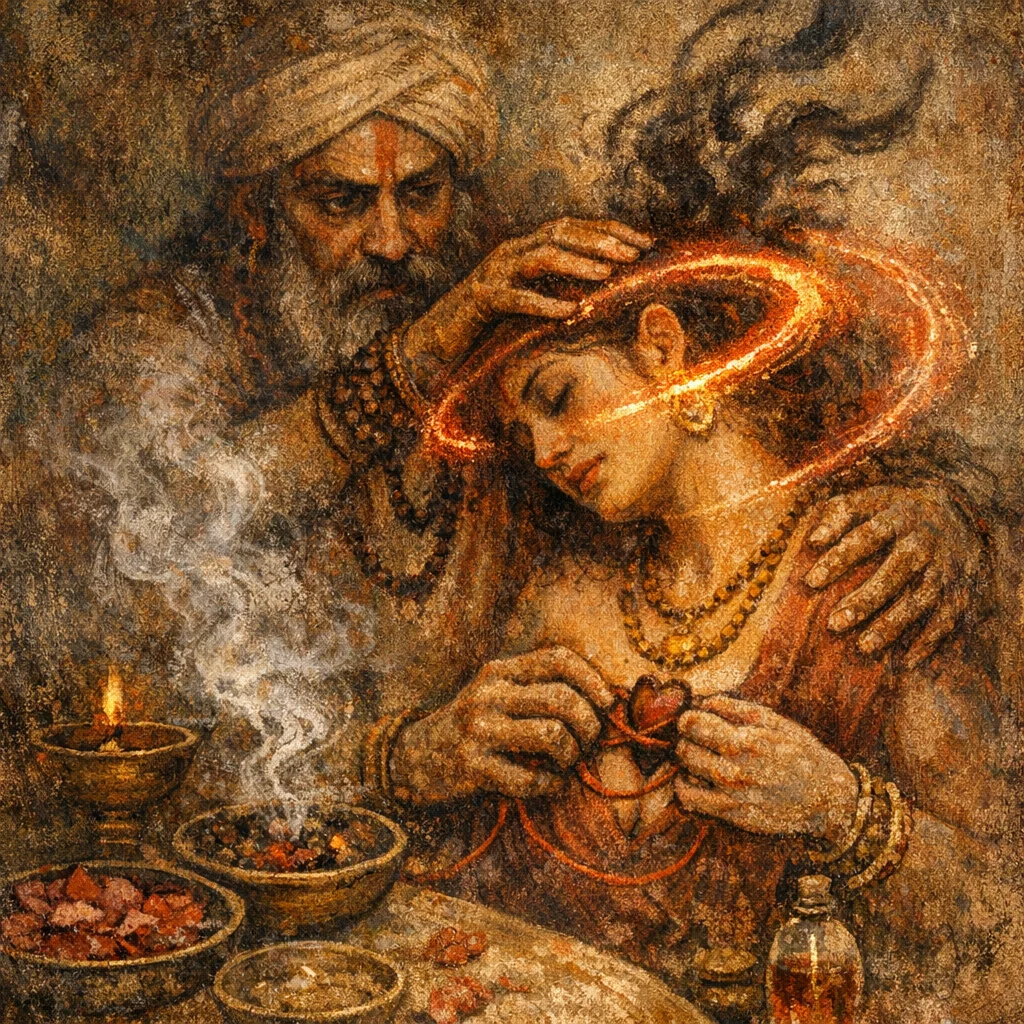
Sukta 8
Rishi: Atharvanic tradition (love-charm corpus; specific r̥ṣi per anukramaṇī varies)
Devata: Kāma (Desire) / the binding power of attraction
Chandas: Anuṣṭubh (probable; Atharvanic love-charms commonly in anuṣṭubh-like cadence)
Mantras
Mantra 1
कामात्मा यथा वृक्षं लिबुजा समन्तं परिषस्वजे। एवा परि ष्वजस्व मां यथा मां कामिन्यसो यथा मन्नापगा असः
As the desire-ensouled creeper clasps the tree about on every side, so do thou clasp me round about—so that the longing maidens may be mine, so that they be not gone away from me.
Mantra 2
यथा सुपर्णः प्रपतन् पक्षौ निहन्ति भूम्याम्। एवा नि हन्मि ते मनो यथा मां कामिन्यसो यथा मन्नापगा असः
As the fair-winged bird, swooping, beats down his wings upon the earth, even so do I beat down thy mind—so that the longing maidens may be mine, so that they be not gone away from me.
Mantra 3
यथेमे द्यावापृथिवी सद्यः पर्येति सूर्यः । एवा पर्येमि ते मनो यथा मां कामिन्यसो यथा मन्नापगा असः
As the Sun forthwith goes round these Heaven and Earth, so do I encompass thy mind—so that the longing maidens may be mine, so that they be not gone away from me.
Frequently Asked Questions
It is a traditional vaśīkaraṇa (attraction/subjugation) charm aimed at producing embrace and attachment, and at preventing the desired person from leaving.
They are ‘models’ of irresistible action: the creeper clings, the bird forcefully strikes down, and the sun inevitably encircles—each image is used to bind and control the target’s mind and presence.
Only 6.8.1 explicitly mentions libujā, a clinging creeper/vine. In practice it functions as a symbolic support for the mantra’s ‘embracing’ effect; the other verses work through gesture and focused recitation.