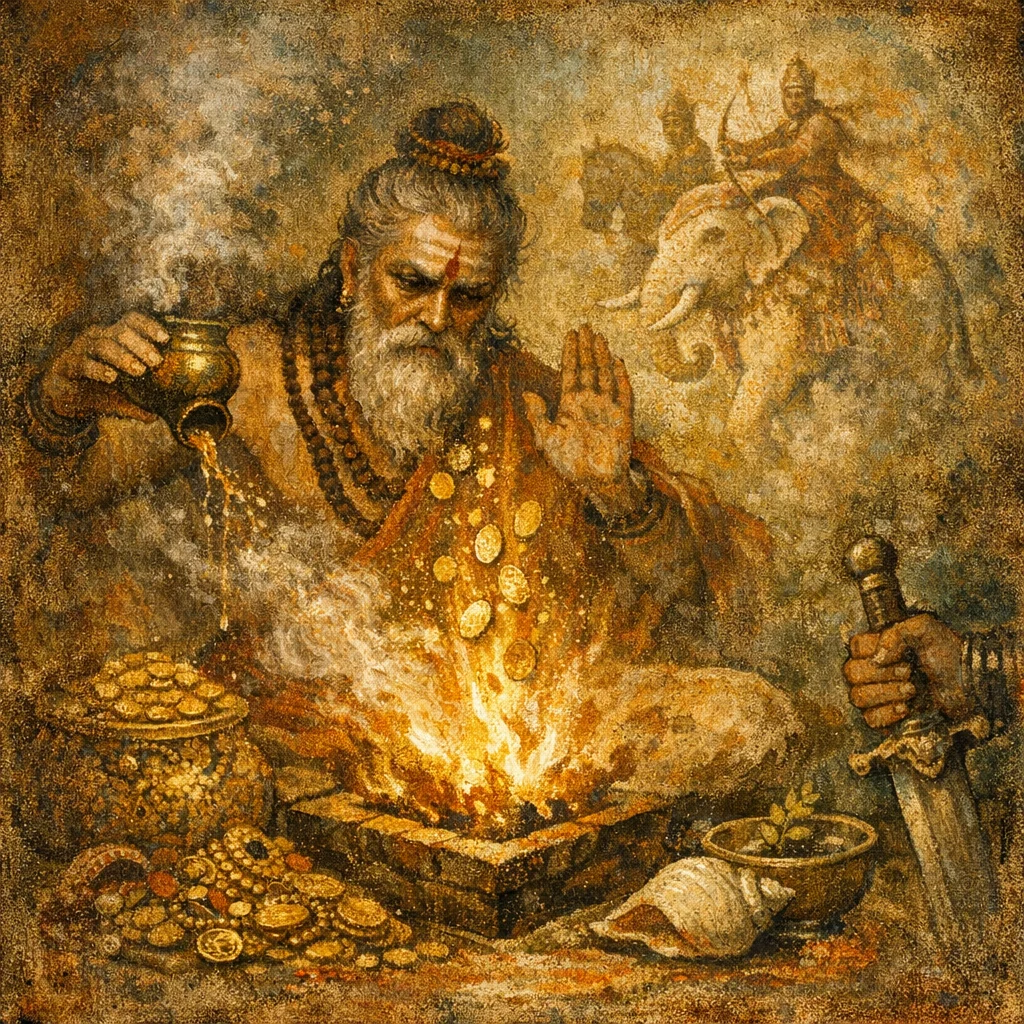
Sukta 118
Rishi: Traditionally attributed to Ṛgvedic Indra-poets (AV 20 is largely RV-recitational); specific r̥ṣi per anukramaṇī for 20.118 aligns with RV source-hymn attribution.
Devata: Indra
Chandas: Triṣṭubh/Jagatī-type RV meter (as transmitted in AV 20 recensional borrowing; verify per RV parallel).
Mantras
Mantra 1
शग्ध्यू३षु शचीपत इन्द्र विश्वाभिरूतिभिः । भगं न हि त्वा यशसं वसुविदमनु शूर चरामसि
Be strong to aid us, O lord of Śacī, O Indra, with all thy succours: for, like Bhaga, thee—glorious, wealth-finding—O Hero, we follow after.
Mantra 2
पौरो अश्वस्य पुरुकृद् गवामस्युत्सो देव हिरण्ययः । नकिर्हि दानं परिमर्धिषत् त्वे यद्यद्यामि तदा भर
O God, thou art the golden well-spring of this man’s kine, the much-effecting lord of horses, the stronghold’s own. For none, in truth, hath crushed thy bounty down: whatso I seek from thee, that bring thou hither.
Mantra 3
इन्द्रमिद् देवतातय इन्द्रं प्रयत्यऽध्वरे। इन्द्रं समीके वनिनो हवामह इन्द्रं धनस्य सातये
Indra alone for godly succour; Indra at the forward-going in the rite. Indra, in the encounter, the gain-seekers call; Indra for the winning of wealth.
Mantra 4
इन्द्रो मह्ना रोदसी पप्रथच्छव इन्द्रः सूर्यमरोचयत्। इन्द्रे ह विश्वा भुवनानि येमिर इन्द्रे सुवानास इन्दवः
Indra, by his greatness, hath spread the two worlds forth—his might; Indra hath made the Sun to shine. In Indra, indeed, all beings have their stay; in Indra rest the Soma-drops when pressed.
Frequently Asked Questions
It is used to request prosperity—especially cattle and horses—along with broad protection and the assurance that Indra’s gift will not be obstructed.
These lines remind the listener that Indra’s power is cosmic (he spreads heaven and earth and makes the Sun shine), so the smaller request for wealth is supported by proven greatness.
Not strictly in a simple recitation setting. Many use clean water (or milk) as a symbolic libation, and may keep a small gold token as a prosperity emblem while reciting.