Adhyaya 208
A Compendium of Vows and Gifts (Vrata-Dāna-Ādi-Samuccaya)
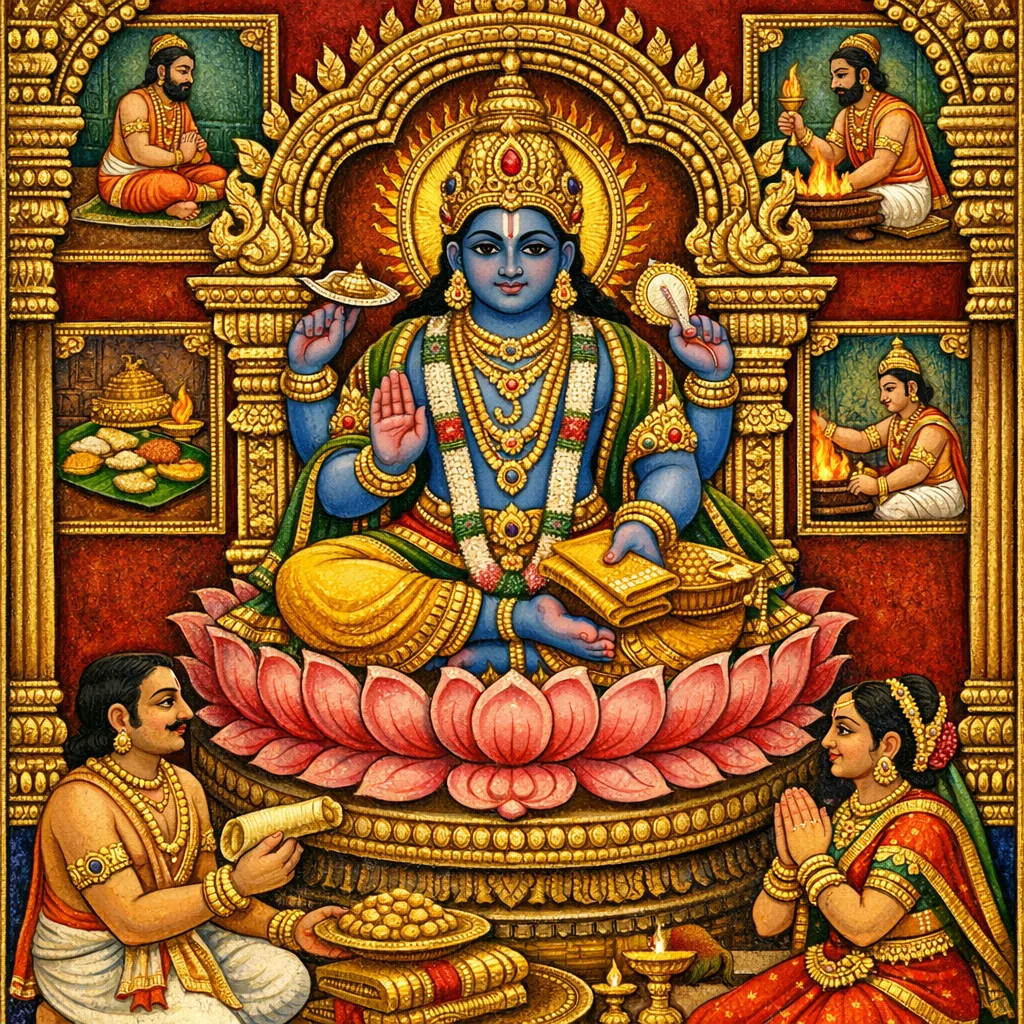
Lord Agni lays out a concise yet systematic scheme of vows (vrata) and gifts (dāna), arranging observances by ritual time-markers—tithi (lunar day), vāra (weekday), nakṣatra (asterism), saṅkrānti (solar ingress), yoga—and by special occasions such as eclipses and Manv-ādi days. He then gives a unifying theology: both “time” (kāla) and “substance/offerings” (dravya) are presided over by Viṣṇu, while Sūrya, Īśa, Brahmā, and Lakṣmī are taught as Viṣṇu’s vibhūtis, keeping diverse rites doctrinally coherent. The chapter supplies a liturgical worship-sequence (āsana, pādya, arghya, madhuparka, ācamana, snāna, vastra, gandha, puṣpa, dhūpa, dīpa, naivedya) and a standard donation formula naming the recipient brāhmaṇa and gotra. The donor’s aims are listed—from sin-pacification and health to lineage, victory, wealth, and finally saṃsāra-mukti—ending with a phalaśruti promising bhukti and mukti to regular readers/hearers, and warning that regulated worship of Vāsudeva and related forms must follow one consistent rule, not mixed procedures.
Shlokas
No shlokas available for this adhyaya yet.
Frequently Asked Questions
A time-and-substance taxonomy for ritual action: vows and gifts are mapped to tithi, vāra, nakṣatra, saṅkrānti, yoga, and eclipse/Manv-ādi occasions, alongside a standardized pūjā-sequence and a fixed dāna-vākya (donation formula) for formal gifting.
It converts ritual into a Viṣṇu-centered discipline: by aligning intention (sin-pacification to mokṣa), correct timing (kāla), correct materials (dravya), and consistent procedure (niyama), the practitioner pursues all four puruṣārthas and is promised both bhukti and mukti through regular study and practice.