Adhyaya 205
Bhīṣma-pañcaka-vrata (The Bhishma Five-Day Vow)
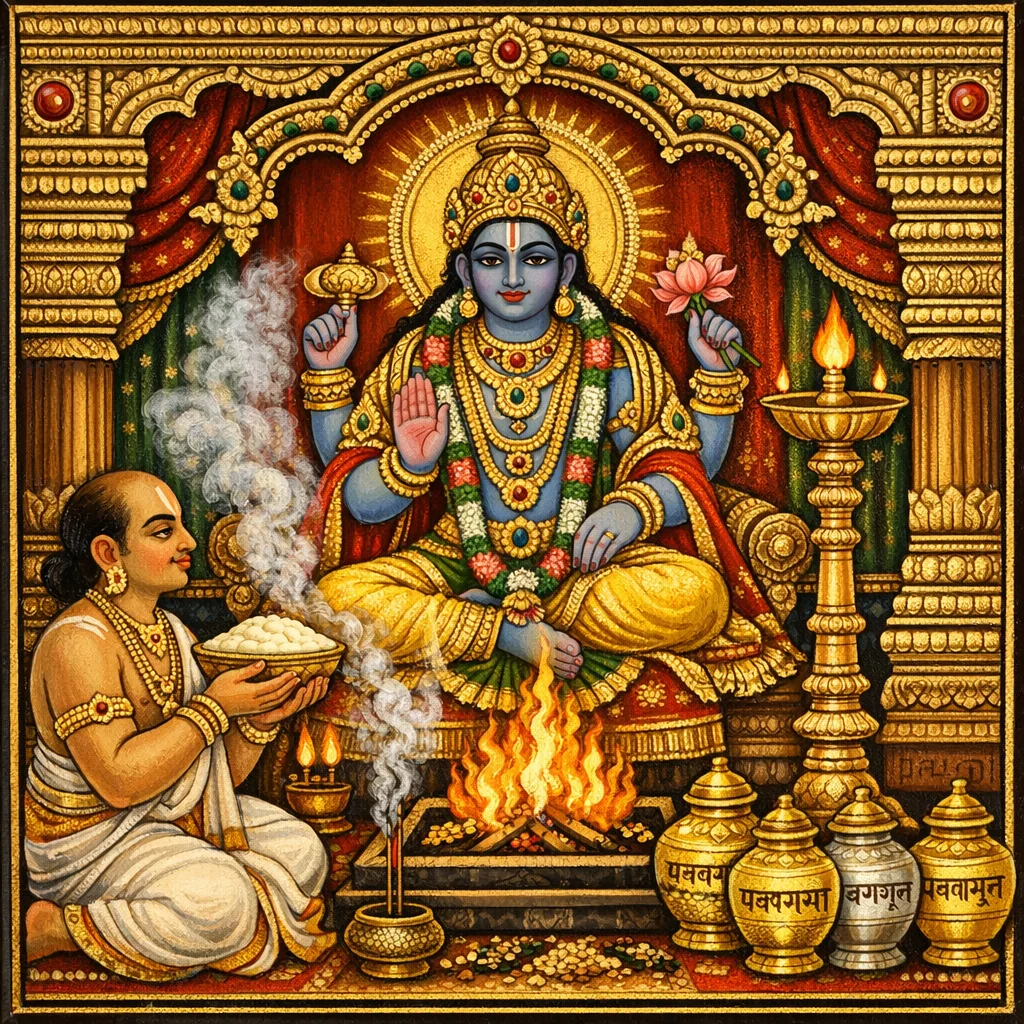
Lord Agni presents the Bhīṣma-pañcaka as the supreme Vaiṣṇava vrata, to be begun on Kārttika’s bright-fortnight Ekādaśī. The five-day observance combines bodily purity (thrice-daily bathing), offerings of reciprocity to devas and pitṛs through tarpaṇa, and inner restraint through mauna (silence), culminating in complete worship of Hari. The rite centers on abhiṣeka: bathing the deity with pañcagavya and pañcāmṛta, then anointing with sandalwood and offering fragrant guggulu with ghee. Continuous lamp-offering day and night, excellent naivedya, and japa of “Oṃ Namo Vāsudevāya” 108 times form the devotional core. A homa is prescribed using yava, vrīhi, and tila with mantra-utterances, including syllabic recitations and a six-syllable mantra with svāhā. The chapter also details graduated flower/leaf worship over the deity’s limbs and austerities such as sleeping on the ground and regulated intake including pañcagavya. Agni concludes by linking the vrata to Bhīṣma’s attainment of Hari and promising both bhukti and mukti to the practitioner.
Shlokas
No shlokas available for this adhyaya yet.
Frequently Asked Questions
It should be observed starting on Ekādaśī in the bright, pure fortnight (śukla pakṣa) of Kārttika.
Thrice-daily bathing for five days, tarpaṇa for devas and pitṛs, mauna, Hari-pūjā with pañcagavya/pañcāmṛta abhiṣeka, guggulu-ghṛta dhūpa, continuous lamp offering, paramānna naivedya, 108 japa of “Oṃ Namo Vāsudevāya,” and homa with yava-vrīhi-tila using svāhā and a six-syllabled mantra.
The chapter frames precise ritual acts (abhiṣeka, japa counts, offerings, austerities) as disciplined bhakti toward Hari, promising both regulated worldly fulfillment (bhukti) and liberation (mukti), exemplified by Bhīṣma’s attainment of Hari.