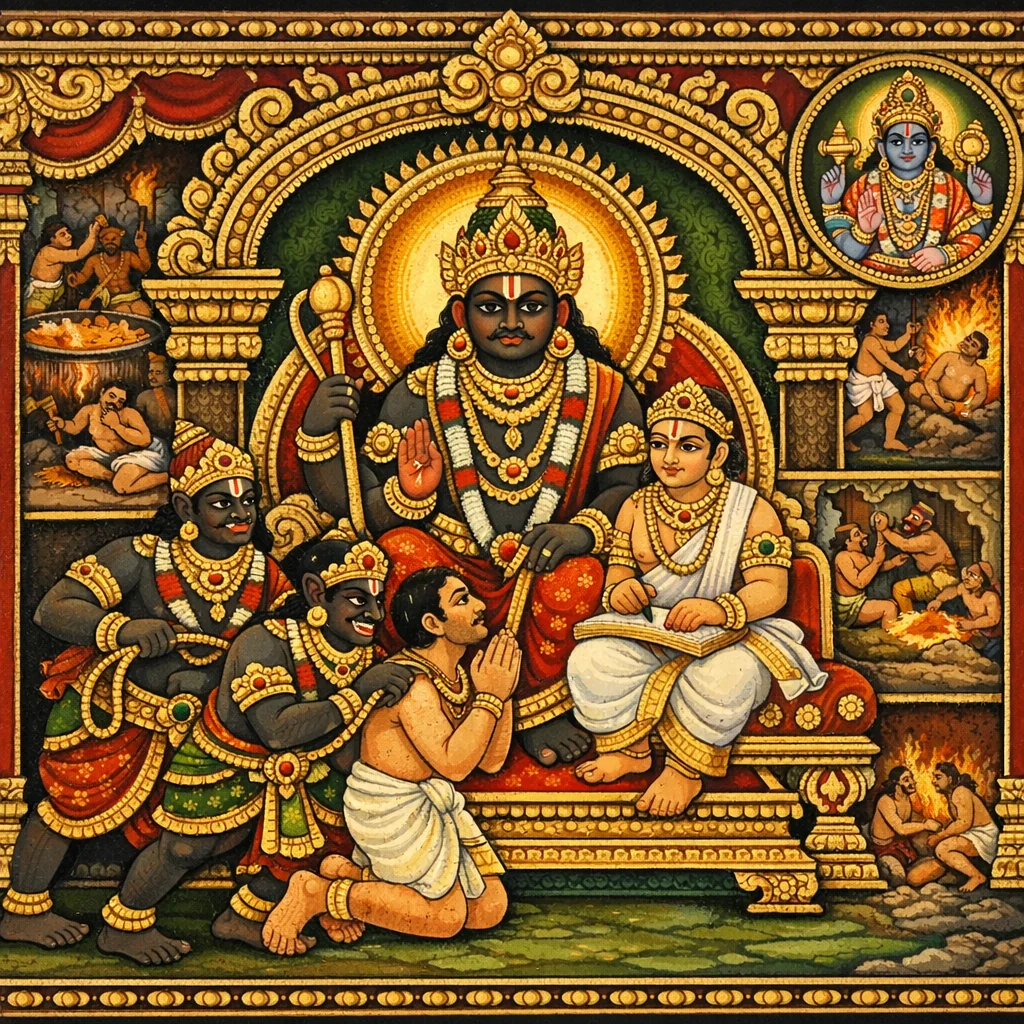
Adhyaya 203
Chapter 203 — नरकस्वरूपम् (Naraka-svarūpa: The Nature of Hell)
Lord Agni explains to Vasiṣṭha how karmic causality unfolds at death and after death. He first affirms a protective devotional rule: worship of Viṣṇu with offerings such as flowers prevents descent into hell; and death occurs when the embodied being meets a proximate cause—water, fire, poison, weapons, hunger, disease, or a fall. The jīva then takes another body suited to its deeds—torment for sin, happiness for dharma. Agni describes the post-mortem route: Yama’s fearsome messengers lead sinners through the southern gate and the “bad path,” while the righteous proceed by other ways. The chapter’s core catalogs specific narakas and punishments, mapping transgressions (violence, theft, sexual misconduct, ritual corruption, neglect of duties) to precise infernal experiences. It closes by turning from fear to remedy: sustained vrata practice—especially month-long fasting, Ekādaśī observance, and Bhīṣma-pañcaka—serves as a dharmic safeguard against naraka-destiny.
Shlokas
No shlokas available for this adhyaya yet.
Frequently Asked Questions
Devotion expressed as Viṣṇu-pūjā—specifically worship with offerings beginning with flowers—functions as a protective dharmic force that prevents naraka-gati, complemented by vrata disciplines (month-long fast, Ekādaśī, Bhīṣma-pañcaka).
It presents a sequence: death via proximate causes, acquisition of a karmically appropriate body, guidance by Yamadūtas toward Yama, and allocation to specific narakas where punishments correspond to specific transgressions.