Adhyaya 202
Puṣpādhyāya-kathana (Account of Flowers in Worship)
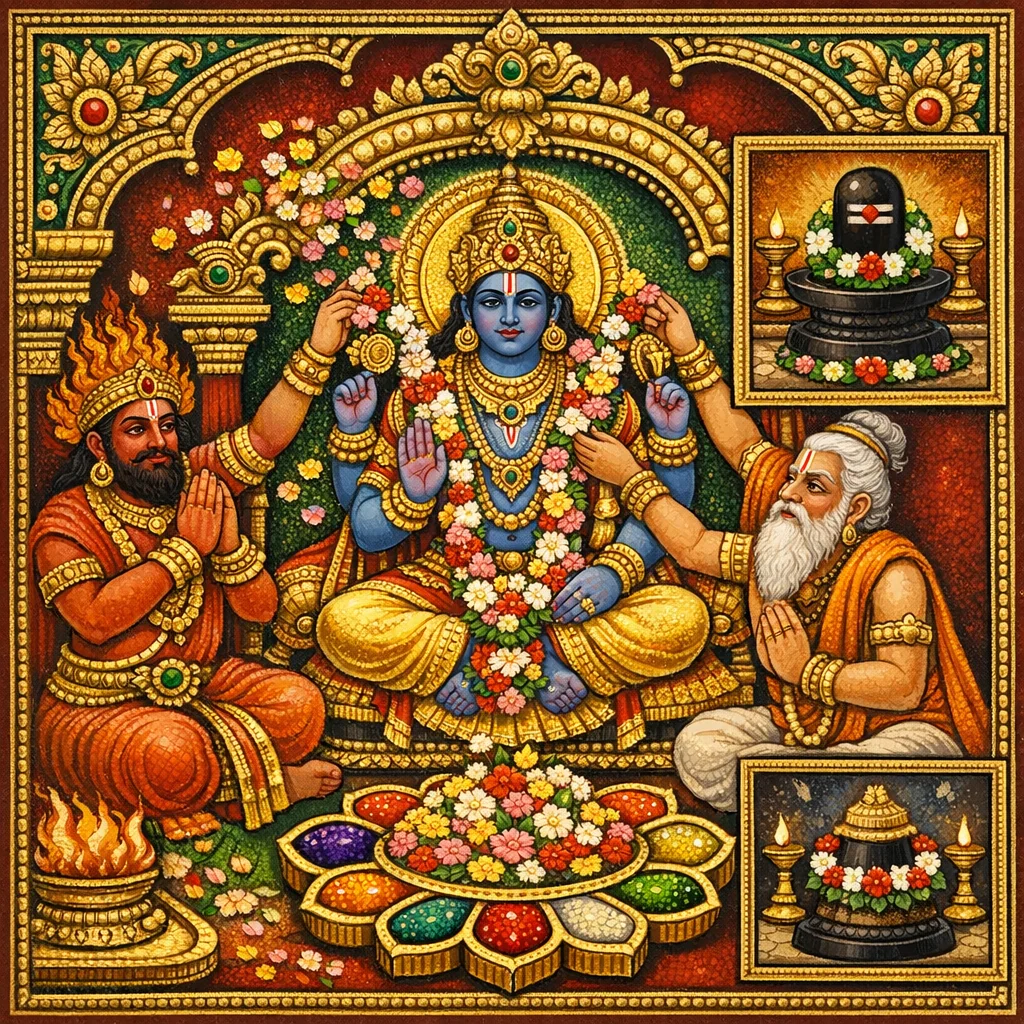
Continuing the Vrata-khaṇḍa’s practical guidance, Lord Agni teaches Sage Vasiṣṭha that offerings—especially flowers and fragrant substances—are disciplined media of devotion that please Hari (Viṣṇu) and yield graded fruits: pāpa-hāni (removal of sin), bhukti (worldly enjoyment), mukti (liberation), and entry into Viṣṇuloka. The chapter first catalogs “deva-yogya” flowers and leaves and links many offerings to specific spiritual outcomes, then sets limits: worship should avoid withered, broken, defective, or inauspicious materials. A sectarian distinction is noted: some flowers suit Viṣṇu, while Śiva is worshipped with different blossoms, and certain offerings are forbidden for Śiva. The teaching culminates in an inward turn: the highest ‘flowers’ are ethical and contemplative virtues—ahiṃsā, indriya-jaya, kṣānti, dayā, śama, tapaḥ, dhyāna, satya (with some manuscript traditions adding śraddhā)—showing the Agni Purāṇa’s encyclopedic synthesis in which outer ritual precision is completed by inner character. The chapter closes by placing these offerings within ordered pūjā-frames (āsana, mūrti-pañcāṅga, aṣṭa-puṣpikā) and deity-name sequences (Vāsudeva-ādi for Viṣṇu; Īśāna-ādi for Śiva).
Shlokas
No shlokas available for this adhyaya yet.
Frequently Asked Questions
Flowers and fragrant substances (gandha, dhūpa, dīpa, naivedya) are emphasized, with extensive lists of specific blossoms, lotuses, aromatic leaves, and also bilva and śamī leaves; the text also highlights that devotion (bhakti) makes all admissible offerings effective.
They are inner virtues presented as worship-offerings—commonly ahiṃsā, indriya-nigraha/jaya, kṣānti, dayā, śama/śānti, tapaḥ, dhyāna, and satya (with manuscript variation also referencing śraddhā). They are central because they complete external pūjā with ethical and contemplative transformation, aligning ritual with mukti.
One should avoid withered/fallen items, broken or damaged materials, and offerings marked by defects (described as “extra limbs/defects”); additionally, certain flowers are disallowed for Śiva, and inauspicious, non-fragrant items (e.g., associated with kuṣmāṇḍa or nimba in the text’s phrasing) are rejected.
It combines (1) catalog-style taxonomies of flowers and offering-types, (2) ritual-legal admissibility rules, (3) deity-specific liturgical distinctions, and (4) a moral psychology of worship via the inner ‘flowers’—integrating technical detail with the spiritual goals of bhukti and mukti.