Adhyaya 201
Worship of the Nine Vyūhas (Nava-vyūha-arcana)
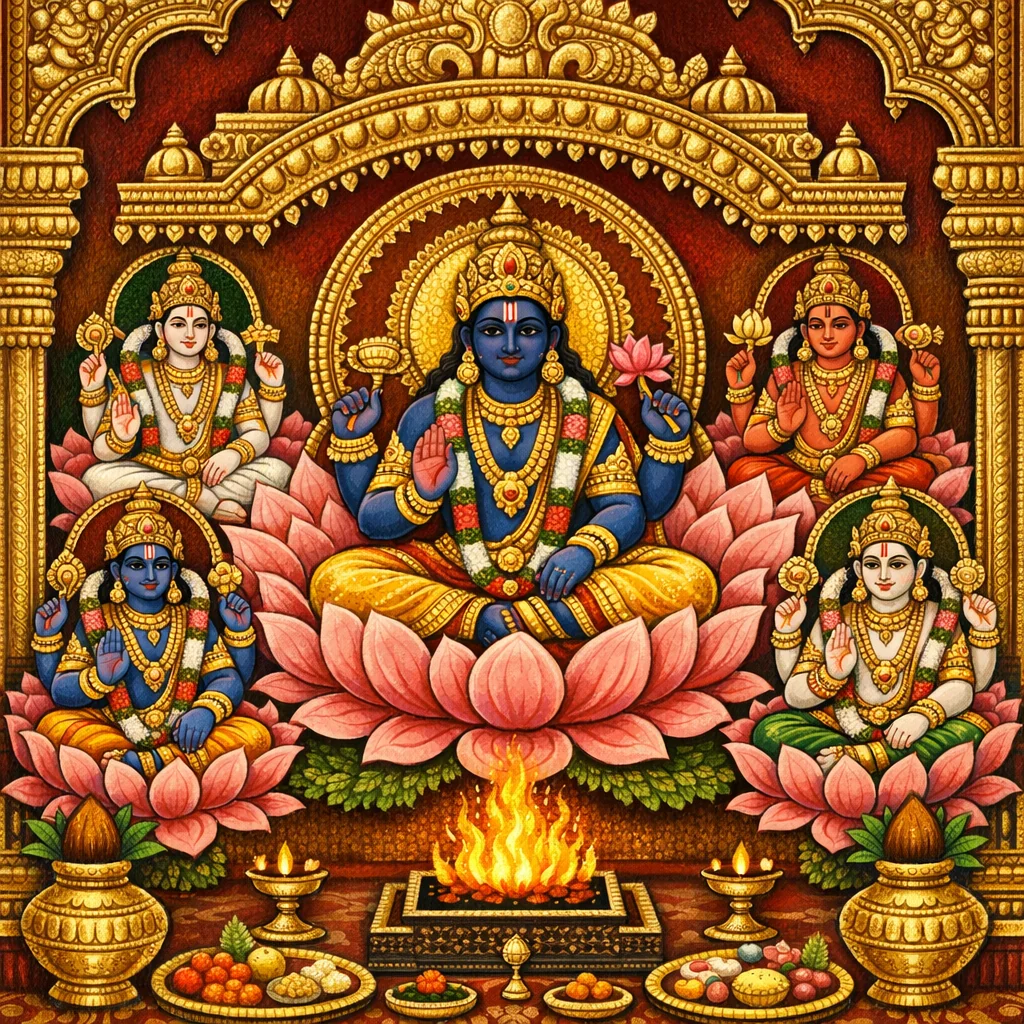
This chapter marks the completion of the Dīpadāna-vrata and immediately turns to the technical liturgy of Navavyūha worship as taught by Hari. Agni explains a lotus-maṇḍala with Vāsudeva at the center and Saṅkarṣaṇa, Pradyumna, Aniruddha, and Nārāyaṇa placed by direction, each tied to specific bīja-syllables and elemental/ritual locations (including water placement). It then details mantra–bīja correspondences for related forms such as Sadbrahmā, Viṣṇu, Nṛsiṃha, and Bhūr-Varāha, with auxiliary placements at the doorway and in the western quarter, plus specialized procedures involving Garuḍa and the gadā (mace) mantras. The rite moves from external construction to internalization: daśāṅga-krama worship, ghaṭa placement for directional guardians, visualization of toraṇas and vitāna, and subtle-body meditation in lunar nectar. It culminates in nyāsa with twelve bījas to form a “divine body,” and also prescribes disciple-identification by flower-casting, homa counts for purification, and dīkṣā fees, presenting initiation as the social and spiritual seal of ritual science.
Shlokas
No shlokas available for this adhyaya yet.
Frequently Asked Questions
A lotus-maṇḍala Navavyūha worship beginning with Vāsudeva at the center, followed by directional deity placements with specific bīja-syllables, then internalization through visualization, daśāṅga-krama, and nyāsa culminating in dīkṣā.
After mandala and mantra placements, it shifts to subtle-body contemplation (lunar nectar), self-identification with Viṣṇu, and nyāsa that produces a “divine body,” explicitly valuing heart-worship of Hari (anirmālyā) as the inner completion of the rite.
Disciples are seated to the left, identify a chosen form by blind flower-casting, perform homa with 108 and then 1000 oblations for purification, and receive dīkṣā after payment of prescribed fees honoring the guru.