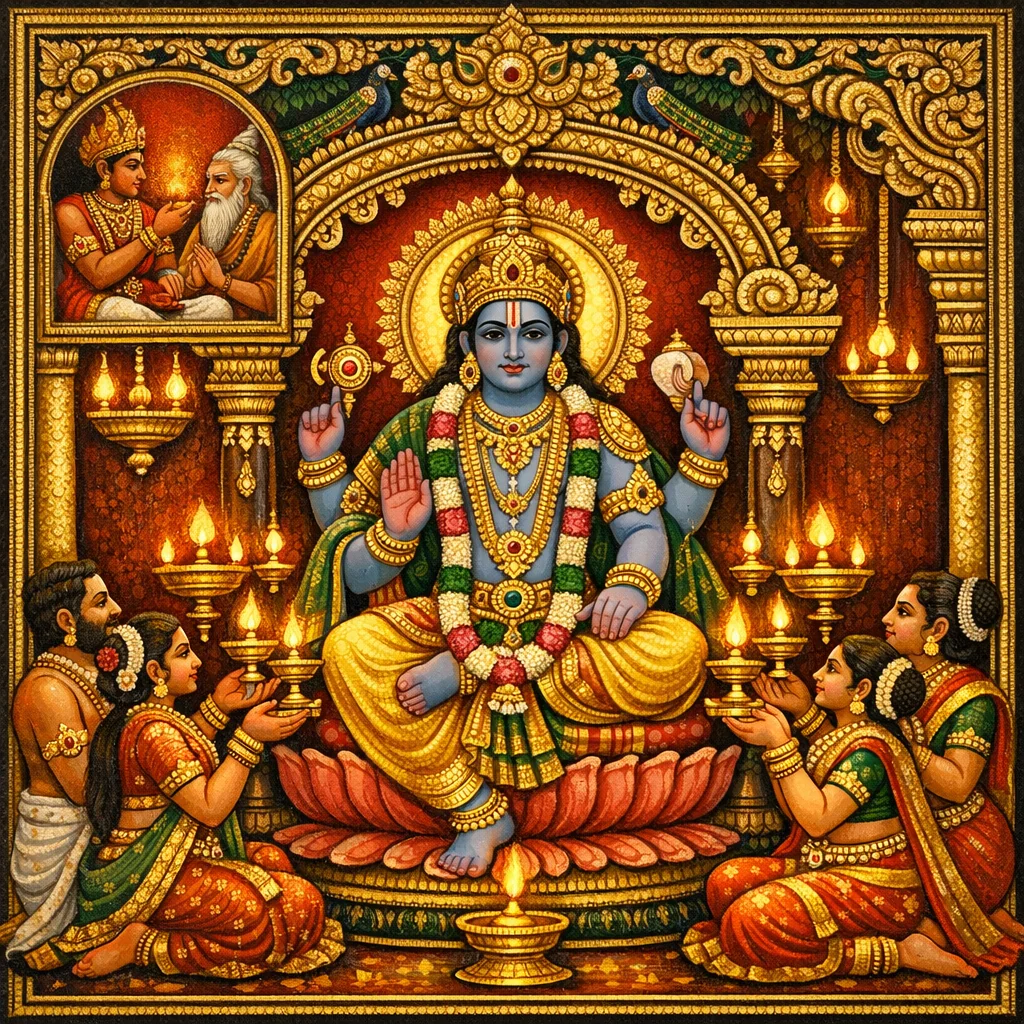
Adhyaya 200
Dīpadāna-vrata (The Vow of Offering Lamps)
Lord Agni teaches the Dīpadāna-vrata (vow of offering lamps) as a discipline that grants both bhukti and mukti, declaring that offering a lamp for a full year in a deity’s shrine or a brāhmaṇa’s home bestows complete prosperity. Lamp-giving is praised as unsurpassed in merit, especially during Cāturmāsya and in Kārttika, promising entry into Viṣṇu’s realm and heavenly enjoyments. Agni then recounts Lalitā’s example: an apparently incidental act connected with a lamp in a Viṣṇu temple—done without deliberate intent—still yielded extraordinary fruit, leading to rebirth in royal fortune and increased marital prosperity. The teaching also warns against wrongdoing: stealing a lamp is condemned, bringing karmic results such as birth as mute/dull and descent into a darkness-hell. A moral exhortation follows, censuring sense-indulgence and unethical desire (notably adultery) and turning the listener toward accessible practice—chanting Hari’s name and making simple offerings like a lamp. The chapter concludes by affirming that dīpa-dāna magnifies the fruits of all vratas, and that hearing and adopting this teaching leads to an elevated destiny.
Shlokas
No shlokas available for this adhyaya yet.
Frequently Asked Questions
Offer a lamp—ideally sustained as a yearly practice—in a deity’s shrine (especially Viṣṇu’s) or a brāhmaṇa’s home; the act is taught as a high-merit vrata granting prosperity, longevity, clarity of sight, and higher worlds, ultimately supporting liberation.
Kārttika is presented as a peak season of ritual potency: lamp-giving then is said to yield exceptional heavenly results, surpassing ordinary times and amplifying vrata-fruit.
It demonstrates that even an unpremeditated or indirect contribution to a lamp-offering in a Viṣṇu temple can generate powerful puṇya, underscoring the vow’s efficacy and the sacredness of temple-based offerings.
The chapter condemns dīpa-theft with severe karmic outcomes and uses hell imagery to caution against negligence, sense-addiction, and sexual misconduct (adultery), redirecting the practitioner toward dharmic restraint and Hari-nāma.