Adhyaya 197
Chapter 197 — दिवसव्रतानि (Day-based Vows): Dhenu-vrata, Payo-vrata, Trirātra-vrata, Kārttika-vrata, and Kṛcchra Observances
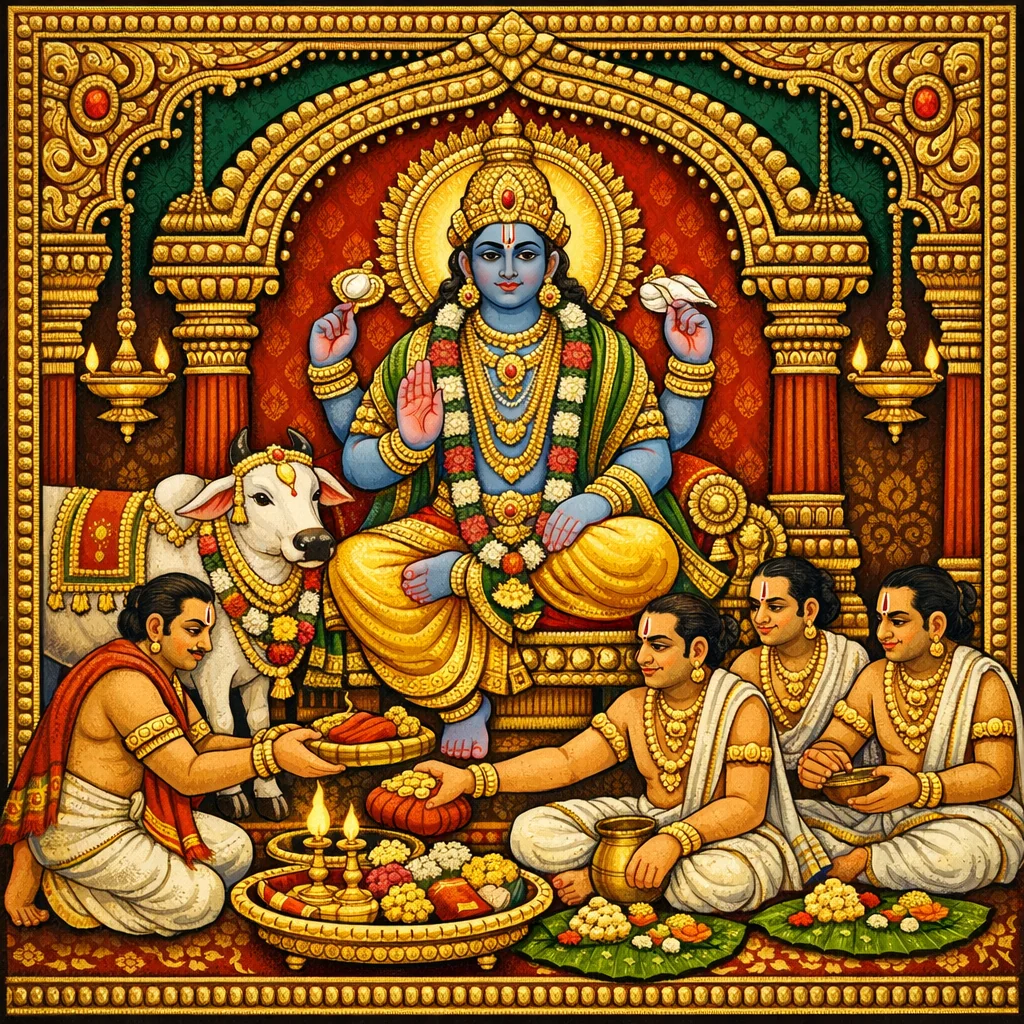
Agni begins a new unit on day-based vows (divasa-vratāni), opening with the Dhenu-vrata—cow-related gifting and the ritual framing of sacred donations. He then sets out the payo-vrata (milk-vow) as a graded austerity: a single day grants “supreme prosperity,” while longer observance is paired with costly symbolic gifts, such as gold models (a wish-fulfilling tree) or a “golden earth” measured by pala-weight. Next comes the trirātra-vrata (three-night vow), to be repeated fortnightly or monthly, with regulated eating (eka-bhakta) and explicit devotion to Janārdana/Viṣṇu, promising results from wealth to ascent to Hari’s abode, even uplifting one’s lineage. The rite is tied to calendrical markers (Mārgaśīrṣa bright fortnight; Aṣṭamī/Dvādaśī) and includes mantra-japa (“Oṃ namo Vāsudevāya”), feeding brāhmaṇas, and donations of garments, bed, seat, umbrella, sacred thread, and vessel, ending with a formal plea for forgiveness for any ritual deficiency. Agni then introduces the Kārttika-vrata as “bhukti-mukti-prada” (granting enjoyment and liberation) and concludes with named kṛcchra austerities—Māhendra, Bhāskara, Śāntapana—defined by sequences of milk/curd/fasting and tithi–weekday constraints, presenting ascetic discipline as a structured, results-oriented dharmic science.
Shlokas
No shlokas available for this adhyaya yet.
Frequently Asked Questions
It is a three-night observance tied to specific lunar dates, featuring regulated intake (often eka-bhakta), Viṣṇu/Janārdana-focused worship, mantra-japa (“Oṃ namo Vāsudevāya”), brāhmaṇa-feeding, and concluding dāna with a formal request to rectify any deficiency in performance.
The chapter assigns concrete worldly outcomes (wealth, prosperity, divine conveyance) to disciplined observances while also promising ultimate ends (attaining Viṣṇu’s abode or Brahman-state), showing ritual, charity, and austerity as a unified ladder from social well-being to liberation.