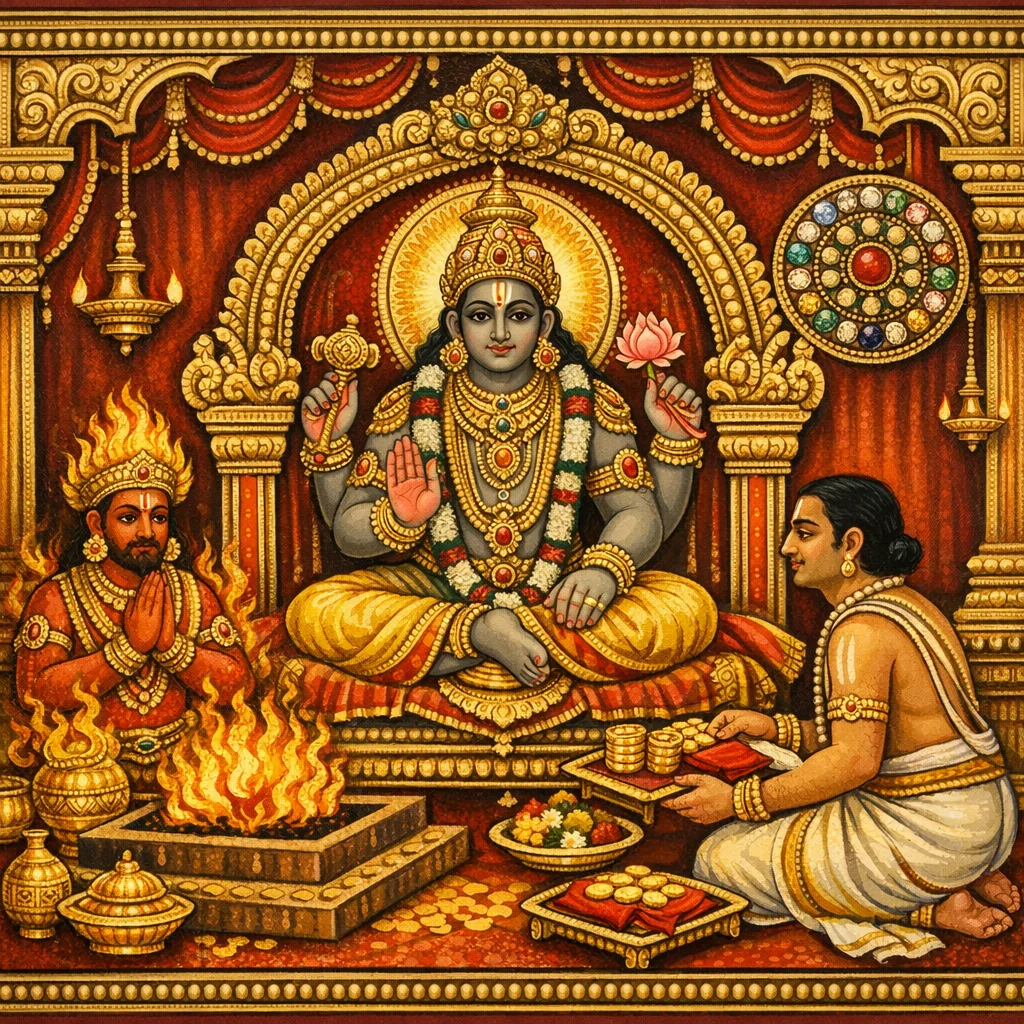
Adhyaya 196
Chapter 196 — Nakṣatra-vratāni (Observances of the Lunar Mansions)
Lord Agni teaches Sage Vasiṣṭha the Nakṣatra-vrata system, beginning with the invocation of the Nakṣatra-Puruṣa and the month of Caitra. Hari (Viṣṇu) is worshipped through a limb-wise mapping of nakṣatras onto the cosmic body—feet, shanks, knees, thighs, genitals, hips, flanks, abdomen, breasts, back, arms, fingers, nails, throat, ears, mouth, teeth, nose, eyes, and forehead—so that celestial time becomes an embodied ritual order. Special worship on Citrā/Ārdrā and at year-end includes installing a golden Hari in a jaggery-filled pot, with dakṣiṇā items varying by manuscript recension. The chapter then details the Śāmbhavāyanīya vrata centered on Kārttika and Kṛttikā, using Keśava-names or the Acyuta mantra, with month-wise food offerings, pañcagavya purification, and a doctrinal definition distinguishing naivedya from nirmālya after visarjana. Concluding prayers seek sin-destruction, merit-growth, undiminishing prosperity, and lineage continuity; seven years of observance yields bhukti and mukti. Agni finally introduces the Ananta-vrata (Mārgaśīrṣa/Mṛgaśīrṣa), emphasizing night-eating without oil, four-month homa schedules, endless merit, and the exemplum of Māndhātā’s birth through this vow.
Shlokas
No shlokas available for this adhyaya yet.
Frequently Asked Questions
It is Viṣṇu envisioned as the cosmic person constituted by the lunar mansions; worship is performed by assigning specific nakṣatras to specific limbs, making the body a ritual map of the nakṣatra cycle.
A substance is termed naivedya only until the moment of visarjana (ritual dismissal); once Jagannātha is dismissed, it immediately becomes nirmālya (the remnant of the offering).
On the Kārttika day when Kṛttikā prevails, the practitioner invokes Acyuta (via Keśava-names or a simple Acyuta salutation), offers prescribed foods across months, maintains purity via pañcagavya, and seeks both enjoyment and liberation.
It is said to generate an endless accumulation of merit, to recur as the ‘gift Ananta’ even in another birth, and to yield imperishable (akṣaya) attainment of desired aims.