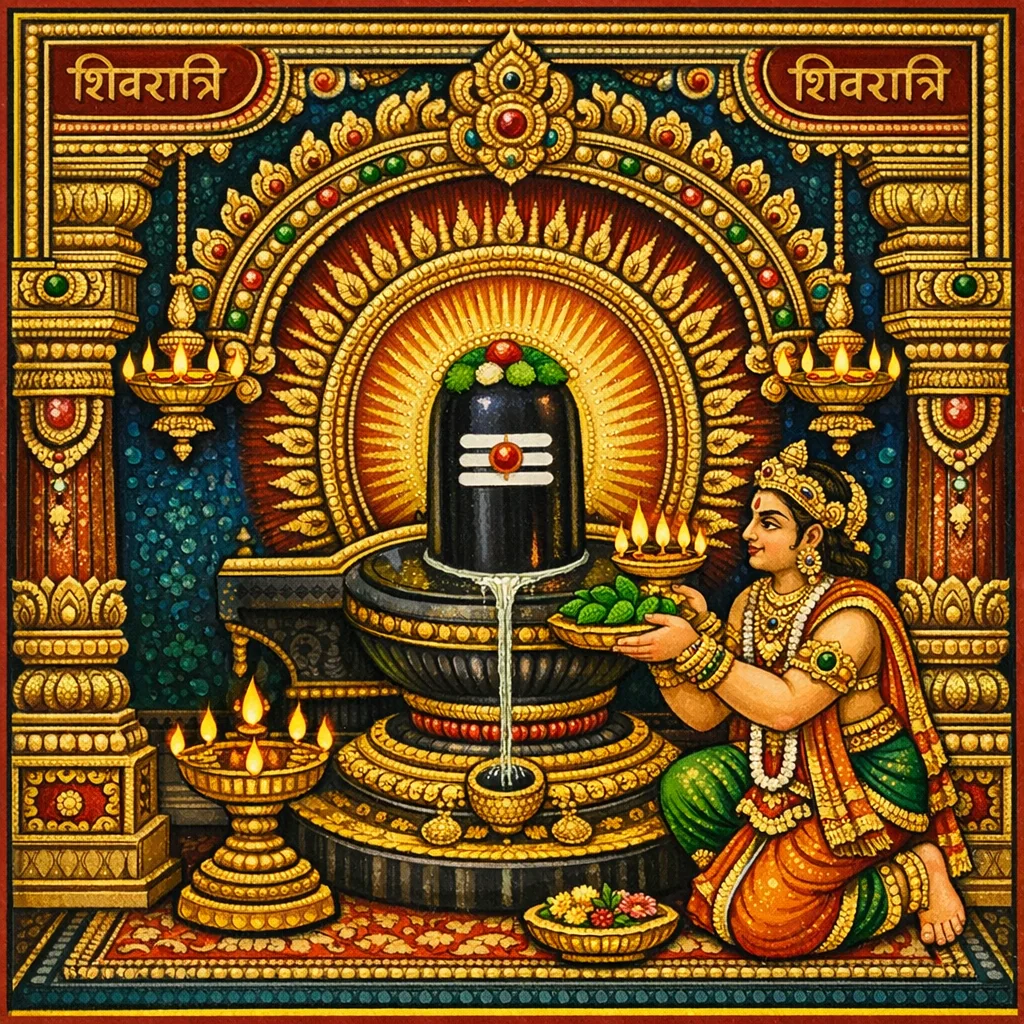
Adhyaya 193
Śivarātri-vrata (The Observance of Śivarātri)
Lord Agni teaches Vasiṣṭha the Śivarātri vow, a rite bestowing both bhukti (worldly enjoyment) and mokṣa (liberation). It is calendrically fixed on the Kṛṣṇa-caturdaśī (dark-fortnight fourteenth) falling between Māgha and Phālguna. The votary observes upavāsa (fasting) on the fourteenth day and performs jāgaraṇa (an all-night vigil) as the central worship. A devotional liturgy follows: Śambhu is invoked as giver of enjoyment and release, Śiva is praised as the boat that carries beings across the “ocean of hell,” and prayers are made for progeny, sovereignty, good fortune, health, learning, dharma, wealth, and finally svarga and mokṣa. The chapter closes by stressing the vow’s accessibility and transforming power, noting that even marginal or sinful persons (a hunter; the sinner Sundarasena) can gain merit through disciplined devotion, a key Purāṇic theme of uplift through dharma.
Shlokas
No shlokas available for this adhyaya yet.
Frequently Asked Questions
The chapter emphasizes the vrata’s calendrical placement (Kṛṣṇa-caturdaśī between Māgha and Phālguna) and the paired disciplines of upavāsa (no eating on the 14th) and jāgaraṇa (night-long vigil) as the operative ritual core.
By combining bodily restraint (fasting), sustained awareness (vigil), and focused devotion (invocation and praise of Śiva), it aligns everyday discipline with purification and grace, presenting liberation as attainable while still permitting dharmic pursuit of prosperity and wellbeing.