Adhyaya 191
Trayodaśī-vratāni — Anaṅga-Trayodaśī and Kāma-Trayodaśī (Chapter 191)
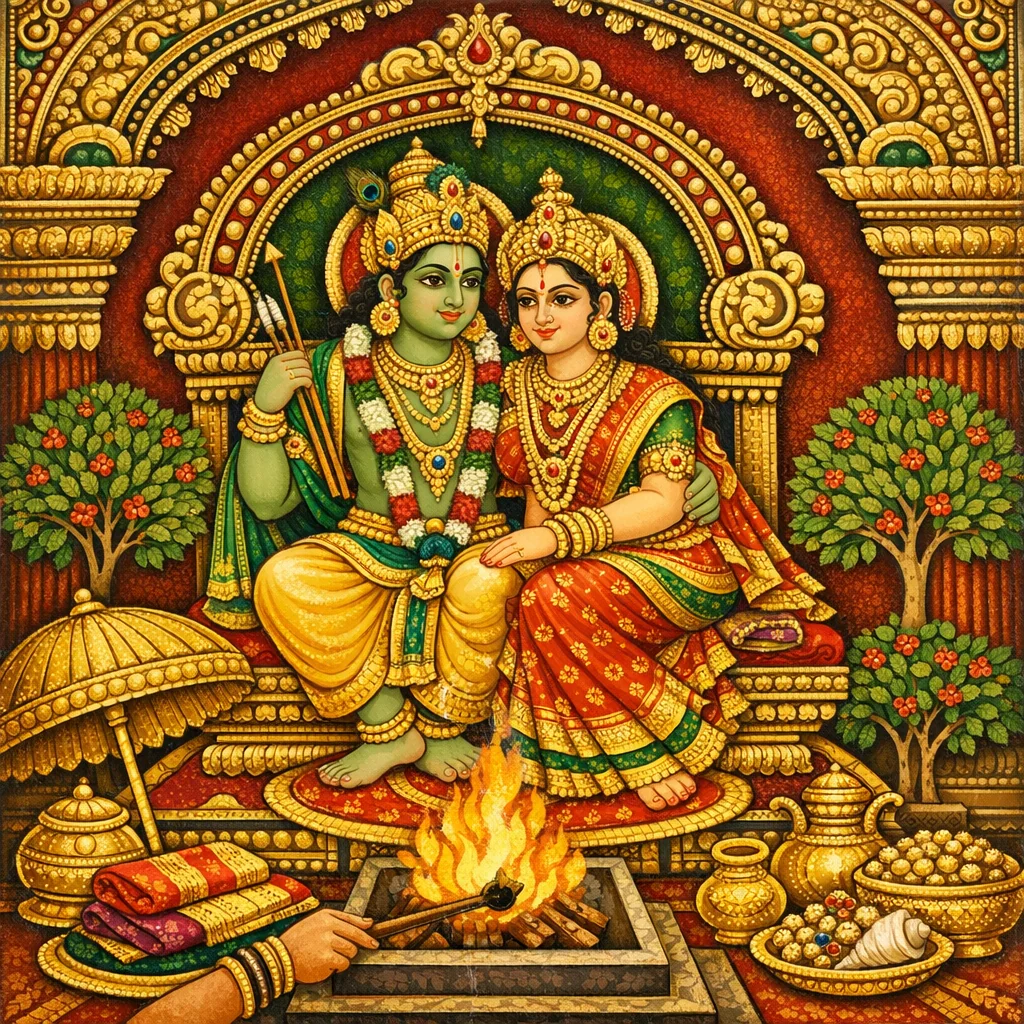
Lord Agni begins a systematic account of Trayodaśī (the 13th lunar day) observances, first teaching the Anaṅga‑Trayodaśī linked to Anaṅga (Kāma) and the paired worship of Anaṅga with Hara (Śiva). The chapter lays out a month-by-month regimen from Mārgaśīrṣa onward, combining deity-invocation, prescribed austerity diets, and nightly homa offerings (ghee with sesame and rice). It culminates in explicit dāna rules—garments, cow, bed, umbrella, pots, sandals, seat, and vessel—showing the vrata’s completion through social-sacral redistribution. A second emphasis appears in Caitra: remembering Kāma with Rati, drawing the aśoka tree with auspicious pigments, and performing a fortnight of worship for desire-fulfillment. Overall, it exemplifies Vrata-khaṇḍa’s dharmic method: time-discipline, sensory restraint, ritual/iconographic acts, and charity integrated as one sādhanā for prosperity, auspiciousness, and higher merit.
Shlokas
No shlokas available for this adhyaya yet.
Frequently Asked Questions
On Mārgaśīrṣa bright Trayodaśī, worship Anaṅga (Kāma) with Hara (Śiva), take honey at night, and perform a ghṛta-homa using sesame (tila) and unhusked rice (akṣata), then continue with month-wise deity-forms and regulated diets.
A garment first, then gifts to a brāhmaṇa including a cow, bed, umbrella, water-pots (kalaśa), sandals (pādukā), a seat, and a vessel.
In Caitra bright Trayodaśī it prescribes remembering Kāma with Rati and drawing an aśoka tree with vermilion and turmeric—an auspicious fertility/joy symbol—followed by a half-month worship for kāma-siddhi.
Variant readings include “golden vessels” attested in kha/gha/ña manuscripts, and a passage on ‘unbroken Dvādaśī’ to ‘attains royal enjoyments’ absent in the jha manuscript, indicating layered transmission around adjacent vrata material.