Adhyaya 190
Chapter 190: Akhaṇḍa-dvādaśī-vrata (The Unbroken Dvādaśī Vow)
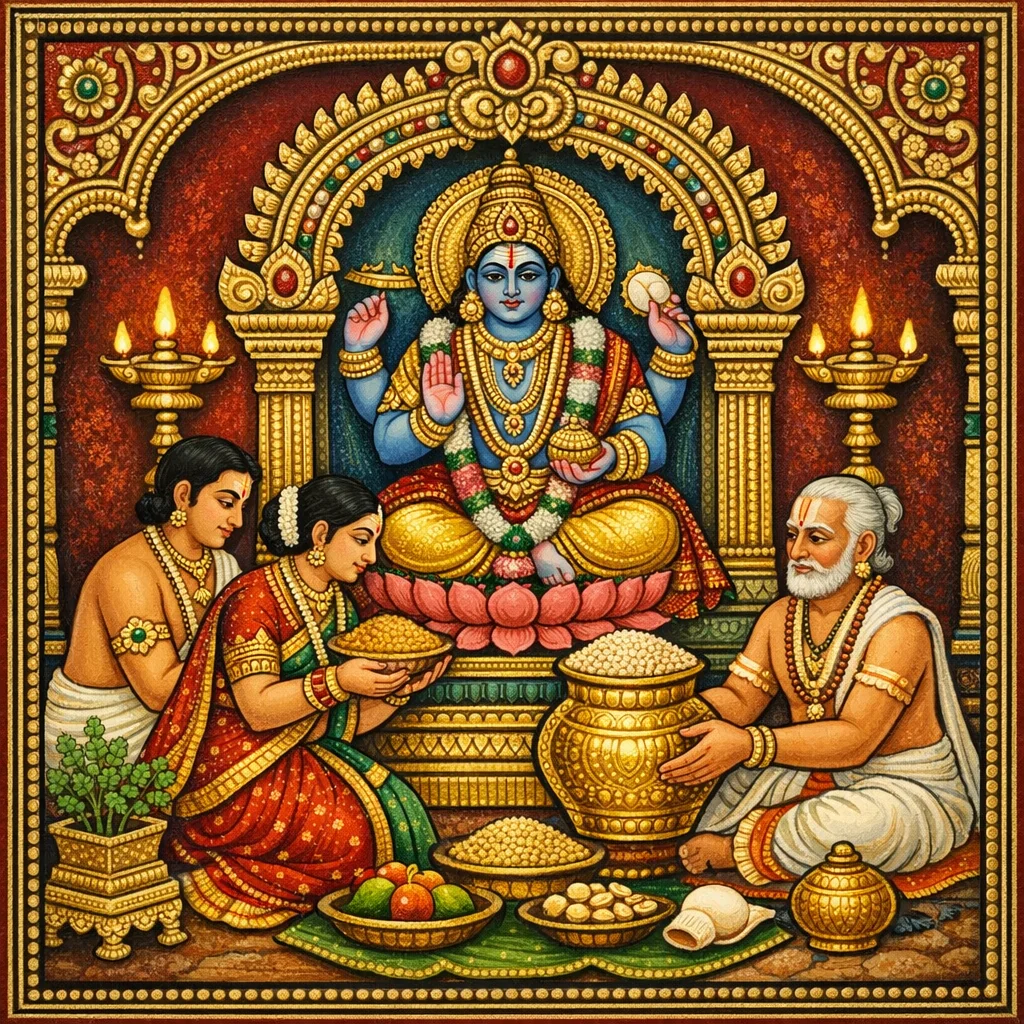
Lord Agni teaches Sage Vasiṣṭha the Akhaṇḍa-dvādaśī observance as a rite of vrata-sampūrṇatā, making one’s vows whole and unbroken. The votary fasts on the bright Dvādaśī of Mārgaśīrṣa in worship of Viṣṇu, after bathing in pañcagavya-water and ritually taking the purificatory substance. A chief limb is dāna: on Dvādaśī a vessel filled with barley and rice is given to a brāhmaṇa. The chapter then sets a theological prayer: the devotee begs Viṣṇu to mend any incompleteness of vows accumulated through seven births, grounded in the metaphysical vision of the universe as “unbroken” in Puruṣottama. Agni extends the pattern into periodic disciplines—monthly observances and Cāturmāsya—with month-specific offerings such as bowls of śaktu (roasted barley-flour). Finally, it stresses correct timing from Śrāvaṇa through the completion (pāraṇa) at Kārttika’s end, warning that defects may echo across seven births, while successful observance grants longevity, health, fortune, sovereignty, and enjoyments.
Shlokas
No shlokas available for this adhyaya yet.
Frequently Asked Questions
It is explicitly framed as a rite for vrata-sampūrṇatā—making vows complete and ‘unbroken,’ including repairing deficiencies believed to persist across seven births through Viṣṇu’s grace.
Fasting on bright Mārgaśīrṣa Dvādaśī for Viṣṇu, bathing in pañcagavya-water and partaking of it, and giving a brāhmaṇa a vessel containing barley and rice on Dvādaśī.
The votary’s prayer links personal vow-completion to the cosmic ‘unbroken wholeness’ of the universe identified with Puruṣottama (Viṣṇu), making ritual integrity a mirror of ontological unity.
The course is described as beginning in Śrāvaṇa and reaching pāraṇa at the end of Kārttika, aligning with the Cāturmāsya-related discipline and its closure.
Long life, freedom from disease, good fortune, sovereignty/kingship, and enjoyments (along with similar prosperities) are stated as outcomes.