Adhyaya 189
Śravaṇa Dvādaśī Vrata (श्रवणद्वादशीव्रतम्)
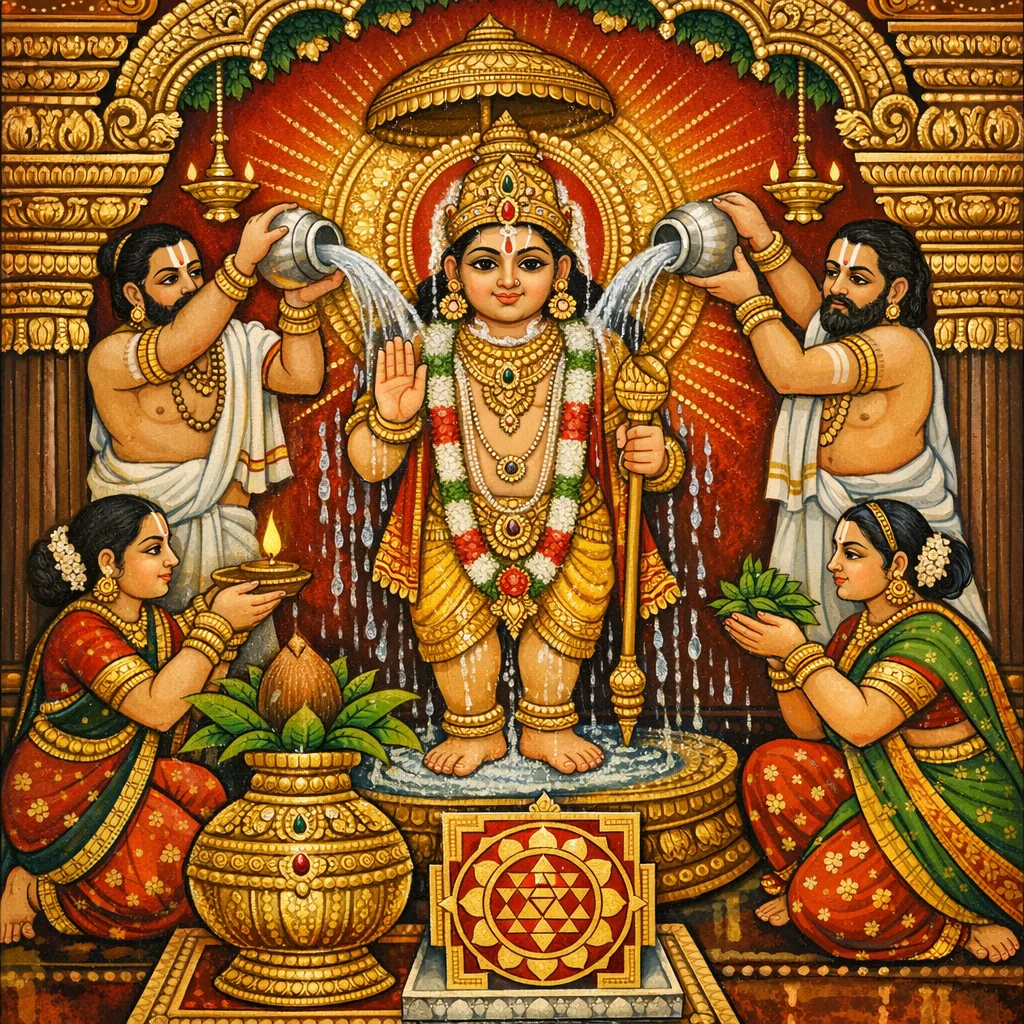
Lord Agni instructs Sage Vasiṣṭha in the Śravaṇa Dvādaśī vrata, to be observed in the bright fortnight of Bhādrapada when the Śravaṇa lunar mansion coincides. The rite is praised as highly potent through upavāsa (fasting) and the auspicious power of sacred listening and wise discourse. The votary keeps nirāhāra on the twelfth day and performs pāraṇa on the thirteenth even if it conflicts with general prohibitions. Viṣṇu–Vāmana is worshipped by invoking Him into a water-pot set upon a golden yantra; abhiṣeka is done with pure water and pañcāmṛta, using formal pūjā items such as white cloth coverings, an umbrella, and sandals. A body-mapped worship assigns mantras to Viṣṇu’s limbs (nyāsa-like), followed by naivedya of ghee-cooked food, gifting pots of curd-rice, night vigil, dawn bathing at a river confluence, and puṣpāñjali prayers to Govinda (Budhaśravaṇa). The observance concludes with dakṣiṇā, feeding brāhmaṇas, and the doctrinal assurance that Vāmana pervades the offering, receives it, and bestows boons—bhukti, kīrti, progeny, aiśvarya, and mukti.
Shlokas
No shlokas available for this adhyaya yet.
Frequently Asked Questions
It is prescribed on Dvādaśī in the bright fortnight of Bhādrapada when it is conjoined with the Śravaṇa nakṣatra; the chapter notes manuscript variants about alternative month/nakṣatra readings, but the main instruction emphasizes Bhādrapada-śukla Dvādaśī with Śravaṇa.
The practitioner remains without food on Dvādaśī (nirāhāra) and performs pāraṇa on Trayodaśī, stated as to be done even if it is otherwise considered prohibited—highlighting the vrata’s specific injunction.
Invocation into a water-pot placed on a golden yantra, abhiṣeka with pure water and pañcāmṛta, arghya, fragrant homa with the Vāmana mantra, naivedya cooked in ghee, gifting pots of curd-rice, and concluding with dakṣiṇā and feeding brāhmaṇas.
It explicitly states results such as enjoyment, fame, progeny, and sovereignty (bhukti-oriented aims) while also promising liberation (mukti), presenting disciplined ritual action as a bridge between worldly order and spiritual release.