Adhyaya 187
Ekādaśī-vrata (Observance of Ekādaśī)
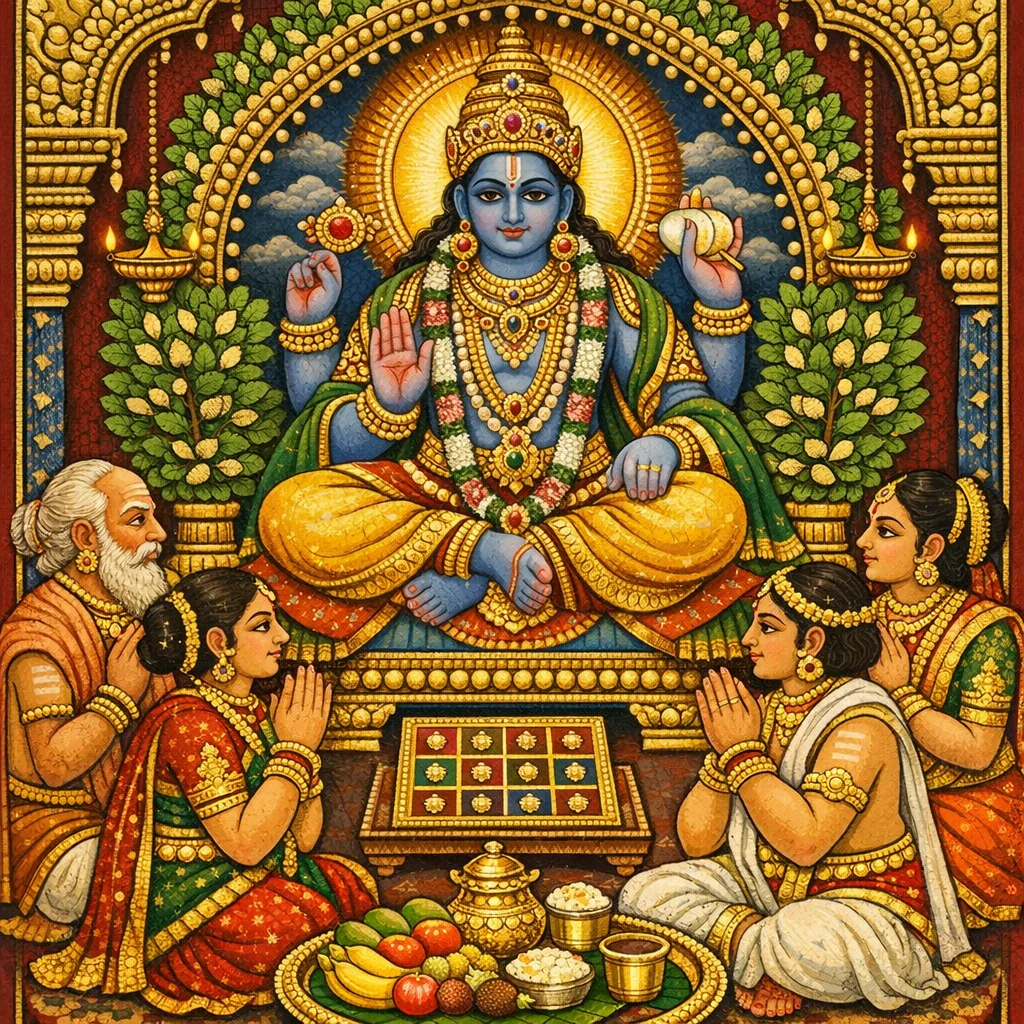
Lord Agni begins teaching the Ekādaśī-vrata immediately after the Daśamī-vrata, presenting fasting as a precisely calibrated spiritual discipline that grants both bhukti (worldly enjoyment) and mukti (liberation). The practice starts on Daśamī with regulated diet and strict abstinence from meat and sexual activity, preparing body and mind for Ekādaśī. On Ekādaśī itself, eating is forbidden in both bright and dark fortnights, with special attention to calendrical junctions: when Ekādaśī overlaps Dvādaśī, Hari’s presence is said to intensify, making the timing of pāraṇa (breaking the fast) decisive. The chapter states that pāraṇa may be done on Trayodaśī under specific tithi-fraction conditions, yielding merit equal to a hundred Vedic sacrifices, while warning that an Ekādaśī mixed with Daśamī should not be observed, as it brings adverse results. The vrata is framed by a devotional saṅkalpa seeking refuge in lotus-eyed Acyuta. Auspicious nakṣatra combinations—Puṣya on bright Ekādaśī and Śravaṇa with Ekādaśī/Dvādaśī (Vijayā tithi)—are highlighted; Phālguna-Puṣya Vijayā promises crores-fold merit when honey and meat are avoided. The observance culminates in Viṣṇu-pūjā as a complete upakāra, granting prosperity, progeny, and honor in Viṣṇu-loka.
Shlokas
No shlokas available for this adhyaya yet.
Frequently Asked Questions
One should eat in a regulated manner and abstain from meat and sexual intercourse, establishing bodily restraint as the precondition for a valid Ekādaśī fast.
By combining ethical restraint, precise calendrical discipline (tithi/nakṣatra rules), and Viṣṇu-bhakti through pūjā and śaraṇāgati, the vrata is taught as karma-purification that yields prosperity and social stability while directing the devotee toward liberation and Viṣṇu-loka.