Adhyaya 186
Daśamī-vrata (Observance for the Tenth Lunar Day)
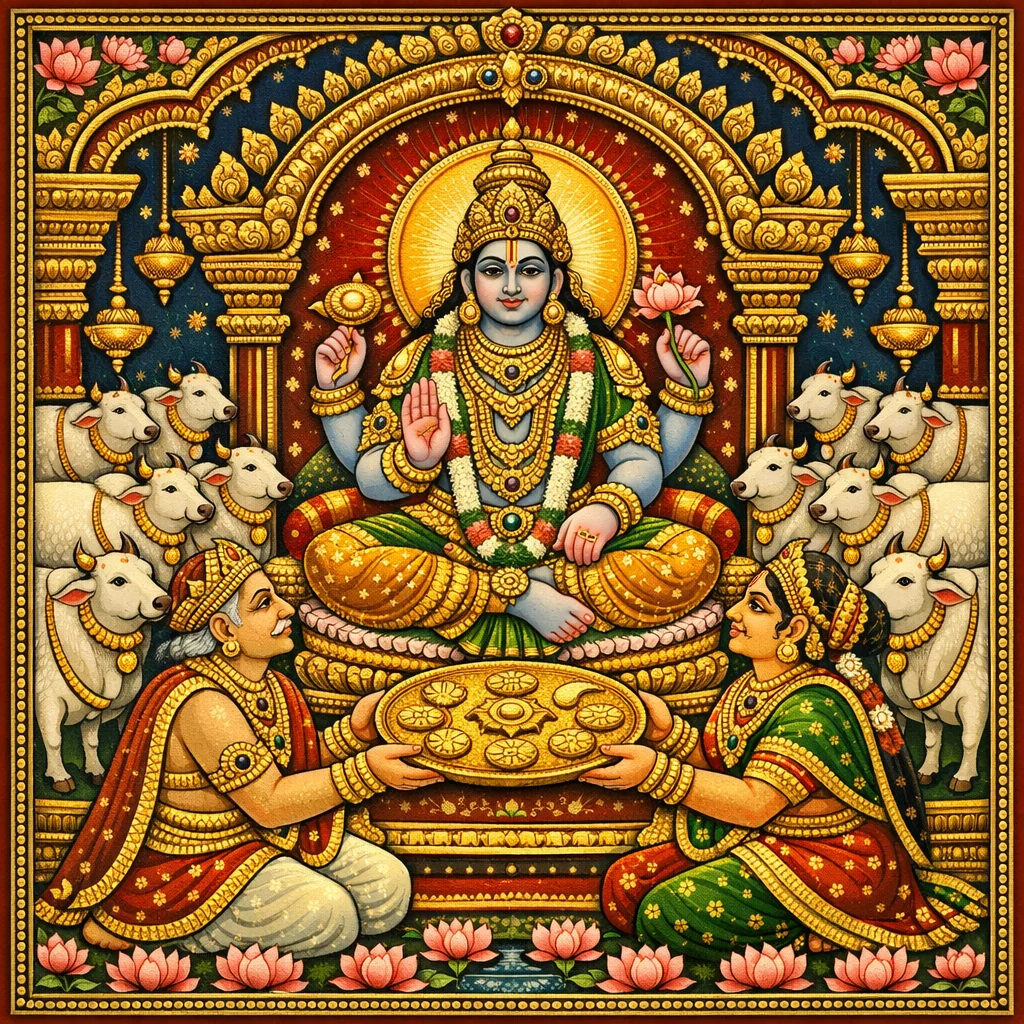
Continuing the Vrata-khaṇḍa’s tithi-by-tithi sequence, Lord Agni introduces the Daśamī-vrata after completing the Navamī observances. He states its fruits in puruṣārtha terms—granting dharma, kāma, and related aims—presenting ritual discipline as a means to both ethical-spiritual merit and orderly worldly prosperity. The central practice is restraint: on Daśamī one observes ekabhakta (a single meal), treating regulated consumption as purification. The vow concludes with dāna, prescribing a socially weighty gift of ten cows, so private austerity is fulfilled through public beneficence. A further prestige-gift is added: offering the eight directions (dik) fashioned in gold, said to raise the donor to lordship among Brāhmaṇas. Thus Agni links inner niyama, sacred calendrical time (tithi), and outward generosity (dāna) into one dharmic program.
Shlokas
No shlokas available for this adhyaya yet.
Frequently Asked Questions
The practitioner observes ekabhakta on Daśamī—taking a single meal—establishing dietary restraint as the vow’s primary discipline.
Upon completion of the vow, one should gift ten cows (daśa-dhenu-dāna), making dana the culminating act that externalizes the merit of the observance.
The text states that gifting the directions (dik) fashioned in gold results in becoming a lord among Brāhmaṇas, indicating social-spiritual elevation linked to high-value symbolic dana.
By combining tithi-discipline (Daśamī), bodily restraint (ekabhakta), and compassionate redistribution (dana), the vrata trains self-control and generosity—core dharmic virtues that support both worldly order and inner purification.