Adhyaya 185
Chapter 185 — नवमीव्रतानि (The Observances for Navamī)
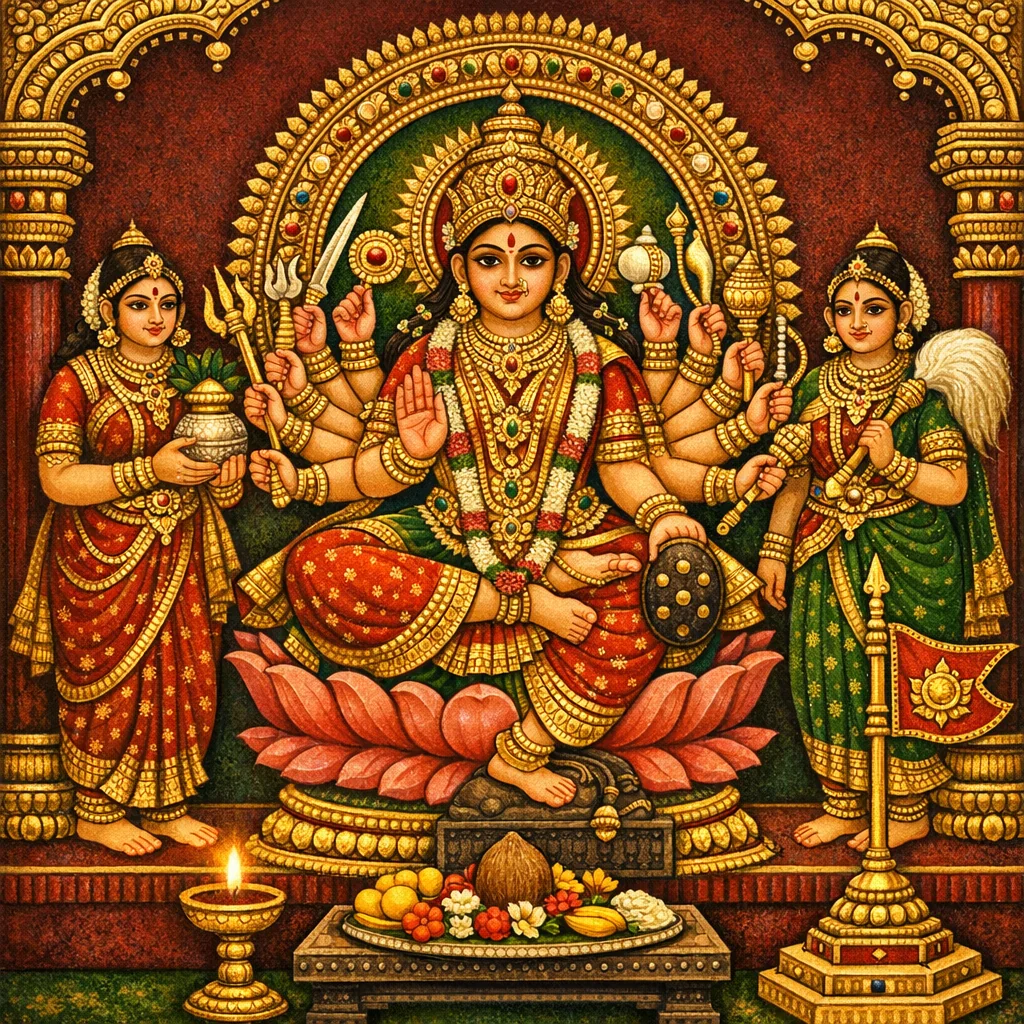
Lord Agni teaches Vasiṣṭha the Navamī-vrata of Gaurī/Durgā, explicitly promising siddhi that grants both bhukti (worldly enjoyment) and mukti (liberation). The observance depends on calendrical precision: Navamī is called Piṣṭakā, with attention to Āśvina śukla timing and nakṣatra conditions, and includes eating flour-based food after worship. The chapter then sets out a royal-protective liturgy centered on Durgā as Mahīṣamardinī, present in nine stations or in a single shrine, visualized in prescribed multi-armed iconography with specific weapons and implements. Mantra practice is detailed through a ten-syllabled Durgā protection mantra, additional formulae, and bodily nyāsa from thumb to little finger, stressing secrecy and freedom from obstruction. The rite extends to weapon-worship, fierce goddess-names, and directional offerings (including blood/flesh in some readings), culminating in state-protective acts such as neutralizing an enemy effigy made of dough, night worship of the Mothers and fierce forms, pañcāmṛta bathing, bali, and public festival markers like dhvaja and ratha-yātrā—integrating devotion, iconography, and Rājadharma-oriented protection.
Shlokas
No shlokas available for this adhyaya yet.
Frequently Asked Questions
It is presented as siddhi-giving—supporting worldly accomplishment and protection (bhukti) while also generating merit conducive to liberation (mukti) through disciplined Durgā worship.
The chapter gives a ten-syllabled protective mantra: “Oṃ, O Durgā, O Durgā, protect (me)! Svāhā,” used as a rakṣā (protection) formula within the Navamī observance.
It includes a royal-protective procedure: in front of the invoked fire, the king bathes and ritually removes/neutralizes an enemy represented by a dough effigy, aligning goddess worship with victory and protection of the realm.
Durgā is visualized in multi-armed forms (notably eighteen-armed and sixteen-handed variants) and associated with a defined set of implements and weapons, which are themselves to be worshipped as part of the observance.